VideoPocketGamer.biz
Session: Webshops: You Don't Need To Be Big To Start, But You Need To Start To Get Big.
20 Jun 202521 min video
Transcript
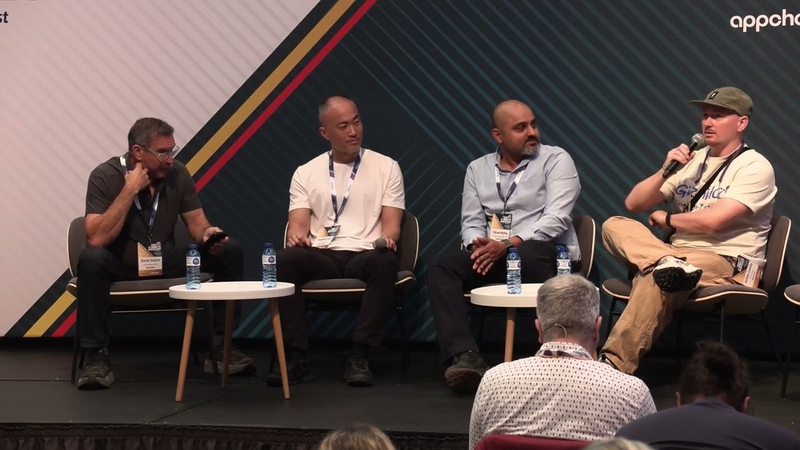
[Music] So we have the first workshop which is um you don't need to be big to start but you need to start to get big. So this is Tony Marov from our brilliant sponsor Fastpring and Harry Vanlow from Reactor.
[Applause] Yeah. Hi everyone. Thank you. Thank you for joining. So um despite the quirky title, I think everybody here probably knows the news about Apple and everything that's going on right now. Um there's a lot of both excitement in the industry as well as fear and or fudding as we call it, fear, uncertainty and doubt. And I guess when Hari and I have kind of spoiler alert, we had a couple of conversations already in preparation for this and we had to save it for the stage. Um what we kind of agree on is that there seems to be this big oversimplification in the market about hey now you can just circumvent the 30%. and boom, you no longer have to pay as much, which is true probably at the early stages, but not so true once your web shop starts to scale. So, what Har and I feel really strongly about is kind of removing all the fluff from all of that and having a
discussion around the reality of growing your web shop. What are the really exciting things that going to happen to you if you do grow it and what are the things you're going to run into that may stall that? So, um, for me, I'm Tony. I work at Fastpring. I've been in payments for about seven years. So that's really kind of my core. Um Harry, I'll let you introduce yourself as well. Yeah, good afternoon everybody. My my name is Harry and I work for Reactor, a Finnish consultancy and and we'll do a lot of work in gaming mostly on web shops out of game services. We do a lot of work with the industry leaders Supercell and some other nondisclosed parties and and uh yeah it's a really interesting time to be here and and the past months have been crazy around this. I mean a lot of expectations, a lot of uncertainty as you said Tony. Yeah, exactly. So I'm very happy I have my questions written out so I feel like a little like a like a quiz show host. Um you did mention that that kind of last few months
changed everything for you guys. Um what exactly do you mean that by that like what shifted for you guys and why do you think this is a turning point everything that's happening right now? Yeah, I think I think the main thing is that we're definitely now can say that web shops are coming. There is no way that this is going back to the monopolies and only inapp purchases with the 30% commissions. There is so much happening, so many decisions in the EU with the DMA and now the US decision and I think we should probably look at Asian market as well where the significant part of of of sales is going through web shops right now or marketplaces, cod shops and stuff like that. So definitely we now can say that the change is coming and from our part I think everybody's as you said everybody's talking about the commissions and and reducing from 30% to whatever you go with a payment provider or stuff like that. But I mean the big thing for us is that it kind of changes the way how you approach building and optimize a web shop because I mean
before this moment the most work that you had to do with a web shop was about getting people in the web shop. I mean working with Supercell they have the inboxes and creators programs and all this is meant for getting people in in the web shop. Now suddenly you're in a situation where you can directly link from the app to your own web shop. And this changes a way that you your first MVP of the web shop can be really simple. It doesn't have the burden of getting people in because you can just redirect the traffic there, make the first transaction and off you go. Yeah, exactly. I mean there's never been a straight shot to it's literally a straight shot to payment, right? Because on one side you could have it link right now to a web shop which can have all the bells and whistles in the world or not, right? It can just be a bunch of SKs and a cart and everything like that or it can go directly to to a purchasing experience which is which is really good for a few other reasons that we'll be talking about now. Um
what's the wrong reasons to start one though? Because everybody's talking about the right reasons. Go save some money but what's the wrong reason? There are at least couple of wrong reasons. First one being that if your game doesn't motivate people to to buy stuff to buy items, a web shop is not going to save it. I mean, all the bells and whistles with the web shop, it's not going to save a game that is not there for selling items. If if it doesn't motivate you, that's it. And I think one of the bigger one of the other big one is that a web shop shouldn't just replicate what you can do in app store. I mean, if you just take your app store offering as is and put it on a web shop, it doesn't work. It's not never going to work. So, there are at least two things that you have to consider. You have to offer better deals. You're getting better commissions yourself. So, share some of that love with your players and offer better deals. And the other one is that it really opens up your capability of having great relations with players.
And in the long term, if you're thinking about stuff like lif lifetime value and stuff like that, definitely those are the right reasons to go for it. If it just get a fast buck from your players, even try to kind of rip them off, it's going to backfire. Definitely. Yeah, I agree. I think I think that's why it needs to be careful that it's okay if the motivating reason for it is let's save some money. And as we'll talk about later, it can be a way for you to convince your very own organization to go down the web shop route as a more of a strategic direction of the company. But if it's a bunch of people in a room saying, "Let's save some money," that's probably not that shouldn't be the only reason for it. Although that will be an outcome just because of the economics of the whole thing. Yeah. It to be honest, you have to test that road first as well. Just make the first deals and and get there. But I mean in the long run you have to be conscious of what you're doing. Yeah. So then that brings me to the next thing. Let's say somebody does
launch a web shop. Whether it's a web shop or whether it's just a checkout, doesn't matter. You've now broken the seal of Apple and you're doing stuff in the unholy land of on my own. What should they be measuring? Like what what does a good first month look like or a first few months? What are the success metrics they need to measure? Because you and I have both talked to people that just kind of launch it. Yeah. Yeah. And it does nothing and it's not measured and it does $12 or or as I like to say, you know, dozens of dollars. Yeah. So, what's what's a good success metric? Yeah. I mean, if you're building your first web shop, I mean, success starts from the first item sold. I mean, that's the great thing. You get get your pipeline running. But I think what you should be measuring is that do you have any influence? for example, luring in the big spenders or your most most valuable customers or stuff like that because what you want to do in the beginning is it's not about creating the
volume first on time, but you have to learn. You get the first deals in and get those customers in there that really have some feedback that you can learn from and it's all about then looking at the data and the feedback and then then it's off to races. But I mean I wouldn't concentrate on the volumes in day one by no means. If it's dozens of dollars I mean that's great. I mean but but of course you have to learn you have to start to iterate one by one. Yeah. And then the other one that I'll give you from the payment side is you get a lot more you get data ownership through your own means that you don't get out of Apple. And one of the really interesting things is that whether you're on the payment side, you build the web shop, or you use a merchant of record or a PSP for processing, it really doesn't matter. There's a lot of talk about the margins and the cost savings of what this involves. It's very hard to measure what they are. Yeah. Right. You can take a percentage and whatever you're given by
the different platforms that doesn't tell the full story really. the first time that you get to see it is once you get a like a statement out and you see what it costs on a average order size. So another one that I'll give people is when when you inevitably hopefully start with something the first realization they'll have is that this notion of it it you save 25% of your revenue is true for some order values and not for others. It might be true for 59 $10 order value but for a dollar typically not depending depending on how you're using it, how you're doing it. So that then it allows you to actually see real costs on a per order value and as you said figure out who do we actually send to steer or to the web shop that's going to give us the most bang for our buck to give you the most disgusting American term I can figure out and I think that's another thing that you get to learn as well. Yeah. And I mean it's a delicate balance on on the whole retail. We do a lot of retail outside gaming of course with Reactor and the whole balance of volume times conversion times average
purchase. It's it's a really delicate balance and and if you don't know what to do with it and if you don't follow the right indicators and find the right segments, you're going to burn because it's it's not going to be long term then. Yeah, you you have to be playing for the long game. Now, when we see people launched, there's either a turnkey web shop or a kind of homegrown web shop. In my eyes, I don't see wrong with any of them. I think they're both great and they all serve their own purposes. I think starting with a turnkey web shop is a really good idea, right? If you don't have the development resources to do it, if you just want to push something out quickly, I think it's wonderful. Whether it stays like that forever, that's a different story. So when does it make sense to go from turnkey to custom and where does it not make sense to go from turnkey to custom? Yeah, that's a really interesting question and and and I think if you're in the game of of for example improving player relations and and really then you need to own the data,
you need to have access to the first party data. And if if long-term is your game, then you should really be looking at custom. That's that's my opinion because then you get into this cycle where you learn and you create exactly the features that you want want to your web shop. But I mean as you said it's really easy to start with a turnkey solution and okay we all know from press releases that Epic is doing something with their web shop. So of course something is going to happen there and it's going to be easy to get started. But I mean if at any point you think that there is more to it than making the buck, if you want to improve relations, if you want to own the data, if you want to act upon it, if you want to create a relationship where your players can tell you what they can expect from the web shop or the games, then I think you should have more personal relations and the web shop should be more reflective to the game itself. And then I think going custom is is really good idea. And
I have to say that going custom isn't as frightening as it might sound because the the initial MVP can be really simple. I mean just type in your player ID, couple of consumables there as an offering and a checkout and that's it. It's a one pager. Yeah. Yeah. We we make it we over complicate it by calling it like a web shop. The strategic direction of going away from Apple is scary. the technical infrastructure. If you really consider what a early MVP is, it's a web page with a bunch of SKES on it. Yeah, that's really what it is. And you pick stuff and you buy them. Now, there's some backend stuff that's a little different, right? There's a lot of live ops things, but that's later, right? Yeah. Yeah. Exactly. Um, so this is one of my favorite questions because it's I guess focused around destruction. What's the once a web shop scales and starts making a lot of money, there's a lot of traffic on it, there's a lot of demand for it, what's the first thing that typically breaks? first thing that breaks. Okay, I mean
there is this kind of realization that that that uh once you start with let's say flash sales or stuff like that and when you're starting with dealing with people's money, you're going to invite trouble because you you know it better than me that but I mean it it's just the thing that when you're talking about money, there's going to be fraud attempts. There's you have to provide support for it. You have all the taxation, you have all the all these issues that you have to suddenly deal with. You have got become overnight a global retailer which is a kind of daunting thing to say. But I mean at the same time the thing is that you have to pick and choose the partners that you work with. Nobody is a retailer by heart. If you're a game company, if you're a publisher, retail is quite different and you have to have partners to do it. Yeah. Yeah. When you and I spoke the first time, you talked about which at first when you were talking about it, I couldn't connect the dots and then I did. Yeah. But that's probably I think Yeah, that's probably
my problem. But you were talking about how retailers taught you this this what was it one feature at a time mentality. Yeah, we call it oneup. I mean it's it's it's really retailers not as such but I mean the best retailers have simplified things a lot. I mean when you have a a digital store the thing is that you you want to develop it by understanding what is needed and we have this kind of idea that we can create these long-term road maps that are next Christmas I'm going to launch this and that but that's never going to happen because what happens in retail is that you push a feature out and then you listen you listen to the data and you listen to the feedback and the major Retailers know that in 24 hours they're going to know what the next feature is that they're going to push out and they don't have that decided before that because they know that if they have a list it's going to
when you push something out it's going to be renewed. The list is going to trash and and you suddenly understand that when I push this feature out, this is the next thing I have to do. And it's really obvious and really quickly from the data and the feedback that you receive. I I tend to agree with that because in our conversations as well, I guess a lot of people overwhelm themselves by the amount of possibility because when everything is possible, nothing is possible. You just go, well, we could build a web shop and then we can do a checkout and then we can do login bonuses or not. We can do it ourselves or not. And decision-m starts to become really muddy and slow. We've all been in that position in a company where we just can't get through. And it's really helpful to focus on one thing. My personal experience has been if you base that decision based on data, then everybody shuts up. Yeah. And something gets done. If you base it around opinions, that's going to take forever. And I think exactly that's why having a web shop in place, even if it makes $12, it's $12 worth of data. This guy's loving it. There you go. Um,
so that's I think the biggest thing and and that's a good motivator to get to get a web shop in place. Yeah. Yeah. And then I mean that's something that goes for a custom solution as well because then you really own the data and you understand what the next feature is going to be and you're free to choose exactly the feature that you want to develop next. I mean of course it's easy to go with with turnkey solutions as well because they have all the features there and you just pick and choose. But I mean in order to get to the data and own it and kind of own the player relations I think then custom is is a really good choice. Yeah I agree. So I have two more questions for you before we wrap up. One of them is again kind of to this notion of oh you save some money that's true on the processing costs right let's say you're paying five six% for the you know platforms and then you keep 25% in your pocket that's true when you start probably as you scale it you need to involve people like anybody that tells you guys that you don't need you can just run itself and it's all good is lying that's not true you do need some
bisdev person to probably ask me for lower pricing at At some point you do need uh payments people unfortunately somebody to be talking to the platforms whether you're running PSPs or MOS or a mix of them you do need somebody to go we need this feature um we're working on you know noticing this thing so what are the kind of roles that people are not thinking about that they should be thinking about if they anticipate that the shop is going to scale yeah I mean I think the key roles are to deal with ownership I mean business ownership you have to have that and you have to have the kind of as you mentioned you have to have the people who push for for the results and push for the partners to to to to be in line but I mean product ownership as well you really need to have a clear way of making decisions and I mean decision- making as you mentioned is it's it's really difficult when you're going down with the opinions so you need to have somebody to say that
okay shut up this is what we're going to do and listen to the data and all that so I think these Ownership roles are really key here. I think product ownership and business ownership being the two major ones because there's a lot of thing you can buy teams to build a web shop or you can go with a turnkey product and and and you can get it done easily. But the thing is it's not a tech effort by any means. It's not a technology thing. building the first version might be, but after that it's definitely going to be business steering, operational work, and it's it's almost treated like a live ops. Yep. And then for the last one, let's say there's a bisdev person in this crowd that kind of walks up to you afterwards and say, "My leadership has not given me like development resources. They've told me go and get it done." Yeah. How do I convince them to to help me out with it? Yeah. Well, I think right now it it's all about the business case at at the moment. I mean, when we go from the fact that the initial
investment to a web shop doesn't have to include the work of luring customers in anymore, the initial investment of the MVP is going to be really low. And if you compare that to the possibilities that you bring in with the commission, I think anybody who does business at this moment understand the potential there. And then you use the old consultant trick and you just put the numbers with a really big font to your slides. $50 million, you know, that usually works. It's just somebody cares about money somewhere. Exactly. Awesome. Yeah. Time for one question. Um, two years from now, where do you see all of this going? Like do because it might get appealed, right, in 30 days and all of a sudden Apple wins, which none of us want, but like where do you see it going? I think web shops is going to be the one. And I think the earlier you get in the game, the better it's going to be. You're just put the baseline out there, start the optimization work, and and you
have to be able to adopt. I mean, we're in the business of selling virtual diamonds, something that has been around for like 10 or 20 years. I mean, people have been selling bread for like thousands of years. So, it's new. Everything is going to change every now and then. By 6 months, we know more. But be prepared. Be prepared. That makes sense. Well, fantastic. You just talked about virtual diamonds, but I think you two are both diamonds. Thank you very much. So, big round of applause for Tony and for Harry. Heat. Heat. N. [Music]
Auto-generated captions from YouTube — names and numbers may be misheard.
Key insights
Distilling the key insights…
Ask AI about this video
Cite this video
Citation
Generating citation…






















Comments