Transcript
Heat. [Music] Heat. [Music] Hey guys, thank you for joining today. Um, I'm from Rolik. I'm in charge of business development. Uh, Rolic is a company that's famous for casual puzzle games. Uh, our latest game, Color Blog Jam, is in top 20 grossing for the last couple of months, which we're very proud of. And, uh, we're also working with
Exola on some stuff. So, yeah, passing the mic. Hi everyone, this is Andre Kavisani. I'm um leading the publishing and the marketing area at Fun Plus globally and I'm thank thanking uh Exola for inviting us into this amazing panel and also we're really really good clients of you. Apart from this we are really um proud developer of DC Dark Legion the last game that we recently launched as well as some other big titles like State of Survival Gans of Glory King of so on. So, thanks Chris for for having us. I'm not an Exola customer yet. Hopefully, we can fix that soon. Uh, I'm David Fernandez. I'm the CEO at Sansoft. Sansoft is a mobile first game developer and publisher. We are uh looking mostly for game studios we can help grow and scale their games. Uh, mostly focus lately on uh I casual games and trying to you know scale some of these games is really
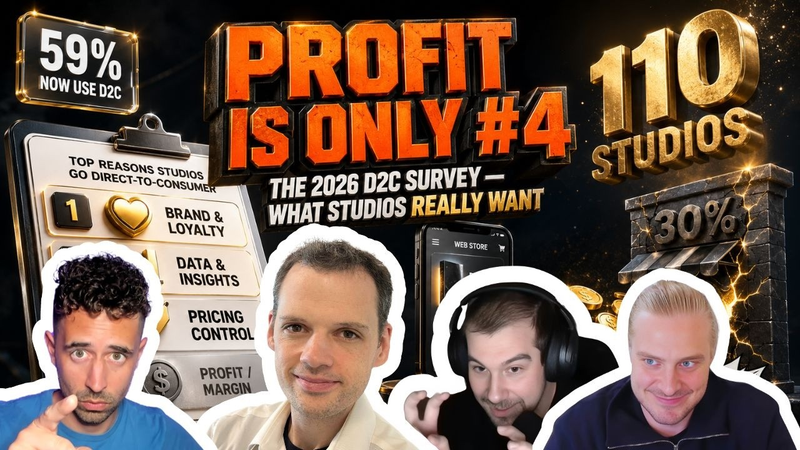
interesting. Um I would say that in terms of the games we have released, we released a game called Wizario um action RPG game uh a few weeks ago and we are really you know happy about the early KPI is really showing a lot of promise. So Chris back to you. Thank you so much. Appreciate it. Thank you all. So let's jump straight in. Um we've got a lot to cover today. A lot of interesting areas that we want to really dig into. So let let me just start off by saying that given over 60 of the top 100 grossing mobile games now use web shops and more more than 40% of mobile revenues are shifting off platform. Are we witnessing a a solidification of web shops as a new industry standard to in direct consumer monetization? And the second part to that question is in light of the Epic Apple ruling, do we think webshop model has gone truly mainstream or will it still be a niche
strategy for publishers? I'd really like to get your opinions on both of those areas because I know they come together. But let's start off with Jane and then we'll roll through. Well, I'm representing casual games here. So I have to say that even IP is not a mainstream thing for some people you know. Um I think that it's a direction that obviously with the new regulations it became uh uh clearer that it's a new big thing and that it's not something that is sanctioned or prohibited and uh it's going to be tested probably but by most of the developers that uh do have a large portion of IPS but it's something that still has to be tested. We're still like we're we didn't roll it out in all our games yet. Very unfortunately we're still in testing phase. So I think that it will become mainstream probably like in a year or so but most of the big companies are still like in the rolling out stage in the testing phase etc. Great stuff
Henry. So on our side I think it's uh following the strategy on that we have as direct to consumer uh kind of offering. Um, we try to follow up a little bit our contact with our users in order to promote and to provide them new different ways to access to our uh products to our games and I think that with uh the web services is a natural product that even as we've been discussing before in the old times with the other industries like value services it used to happen. So I think it's a natural situation that it's happening in the market right now. Uh on our case our games are forex strategy. Um we had a lot of uh users for a long time that we've seen that they've been playing through Android emulators this kind of stuff right and um that move was uh really really natural for us in order to try to to engage some of them initially more bigger clients and later on more broader type of users that we have. So it's a continuing journey. It's a
continued process of evaluating as you progress that it's it's not a straight line although we know where the destination is. Right. Exactly. Yeah. Makes a lot of sense, David. Well, I presume that um I agree with with the with the people here regarding this not being mainstreamed yet. Is it still an option for developers to consider how they can monetize better, you know, their audience building these relationships uh with them directly without getting a proxy with the app stores? Yeah. Um but it's true as well that when you think about what we are trying to fix here, we are trying to fix two things in my humble opinion. One is about the margins. I think generally speaking, uh the game development space, mobile free-to-play games are really having a lot of problems on how we can increase growth because of the lack of margins and to what extent this is really driven by U efforts rather than having organic traffic which was something that you used to have before in the app stores and you don't have anymore. Right. Second is about trying to build post IDFA more data sets for
your consumers in the end is about trying to gather first party data that can help you to manage your consumer in a better way than you can if you have just have you know an app store as a proxy. Yeah. No, I I I I I take your point and there are so many peripheral and incremental parts of this journey that you need to wrap around and I think certainly the data acquisition and the data management is a key part of that and ensuring that people have that ability to work with that and exploit it in the best possible way. That journey is still being learned you know as we go on the direct to consumer and I think sometimes the the direct to consumer is just the throwaway line. It's more about the journey that we need to be focused on. So, thank you for that. So, as mobile developing developers continue pushing forward with direct to player channels, there's still a lingering question regards about player behavior that web shops can offer better margins, more control. We know that. But, but do
players actually need it? Do players actually want it? Are they willing to go off platform or are we still talking about this as a as in developer terms? So the question for you guys is do we truly understand or even care making purchase or do players truly understand or care about making purchases outside the ecosystem or is this a shift still being driven more by studios by rather than player demand? Where's the balance right now between those two points as you guys see it? So let me let me start myself on this one. Presume in the end is about what value you are adding to the consumer, right? And to what extent you can provide something different in terms of value proposition on the game itself through the app store and what you can do in your own web shop in this case. Yeah. And the first thing that comes to mind is, you know, what's the actual value for money? And that's where the starting point comes in. It's like, am I
getting it a better deal when I'm getting this through the, you know, web shop rather than the app store. And this is something that I don't know how many of people here have kids. I have a 17 years old kid. And he, uh, used to be one of the Epic, you know, guys, uh, consumers. He was playing Fortnite. And as you know, this is a crossplatform game. and he was just buying the the coins the the currency for the game in the actual platform that was providing more value for money. Yeah. He was going to Nintendo one time he was going to expose another time. He was going actually to PC other time just to get you know the actual offer that was working for him. Of course I think that's maybe the first step you know to what extent you have a really value proposition for consumers to engage. Second is what additional value you can provide and I think that point there are plenty of additional things you can propose. There are specifics around loyalty programs trying to understand how you can offer more recurrent value if they are recurrent consumers on that front. There are things connected about building communities to what extent you
know this webshop can be a proxy for a broader community. There are things connected to actually if you are operating more than one game what are the synergies you have in your game portfolio. So many of things you can do off platform in this case that can benefit the consumers right but eventually in any case start with a value proposition that comes from value for money. Yeah I I think you make a very good point to be honest because the data show exo are bringing out shows that 60% of repeat purchases um are coming from this environment um and that's supported by loyalty programs rewards bonuses all the things you were alluding to. So maybe we are turning a corner on that and we're seeing that direct BFM in regards to what you're talking about. Henrik, what what's your view on this particular point? I'm I'm majority agree with what David has been saying. Uh so I think that one of the important points that we are uh trying on the beginning we were focusing more in offering something specific for these big clients that you've been
mentioning before but right now we're trying to uh managing our own ids on every uh as a fun plus in order to try to make them uh enjoy from the community of the games that we have abroad. So creating some specific loyalty programs that can be uh really really helpful for them. So on top of what we can offer on the game as itself, we're offering a layer of different kind of services or different kind of products that can be beneficial for them. And this is what we're trying to focus with the pipeline of games that we have. Not just focusing one by one, just focusing more as a as a conglomerate of our own uh fun plus ID and then moving on into that one. So that so you're having to go through a learning experience with your customers to understand what their needs are before you can then provide them with a a value prop that then suits their needs. So I guess that's a that's a mutual exchange of value right that but it needs to be done and does that fit sit into your marketing or does that sit
into a separate group or how do you manage between those two points because it's a new new aspect of the business in a lot of ways that data management data mining it's something that we manage in between product and and marketing so it's something that definitely you need to deal with product in order to define these kind of value propositions but then on the top level you need to just manage a little bit on the different needs that every game uh is requiring because not all the users are the same. Sure. So, and if we want to offer different kind of products uh for each of them, it's easy. But if you want to offer uh a specific product that can be more fitting for the type of users that you are having, you need to create some value on a marketing level as well. And and and Jame, what what are your thoughts? Yeah, I mean I agree with everything that was said that the value proposition has to be both for consumer and for the developer or publisher. So basically the the margin that you're getting has to be somehow distributed between your pocket and the consumer's pocket. Um but I want to say that look I
I have some some some some experience in admonetization and I always used to tell people that monetization can be like uh built as a must know parameter you know like when the the very bottom and the easiest is banner then comes interstitial then comes rewarded video then comes overall then comes in a purchase so probably like uh exola is going to be on on the top of the pyramid you know that's going to be the biggest gain yet the most complicated like conversion. So it doesn't work for everybody, but for the games that for the janitors and for the consumers that it works, it's going to be like uh so much better than than the previous because it's going to uh bring again the repurchase rate that you're mentioning 60% already shows that users that like the product they they they come back because the value is better. Yeah, very much. But the problem is that for for our games for instance the inner purchases are done like when you're out
of lives and when it's like an instant decision you know that uh it's hard for us to learn now how to make sure that this transition from the simple popup that is like that the user is used to the casual user is used to uh is going to be transferred to to direct to consumer thing that is slightly different that looks slightly different and yeah so that's like the the challenge that we're trying to overcome now while the obviously the the gain is clear there's more margin you can give bigger value for the user you know in the end of the day but it's still on the on the top of the of the pyramid you know of the necessities of the user yeah it's a climb to get to that top of the hill right exactly it really is but I think also one of the factors that runs concurrent along all of this is speed of action where it's one thing bringing data but then actually recognizing what
that response needs to be and actioning that and and that that can be a challenge right David you must experience that in regards to how how do you make sure that you are on point all the time it's multiple spinning of plates every single day right but this this is the new wave and I think we we work very closely with our partners to make sure that that ability to translate data into meaningful responses is is where the real truth of it is and makes the climb to the top of the hill that much easier when that works. But we're also relevant to the fact that the organizations like you guys have a journey and make sure how do you do that cuz it's it's a variety of people in depending on the organization pro from product through to marketing um and operations as well gets involved in that and some of the companies now have their own data margin aspects as well. So it is a it's a it's a it is a challenge but at the same point of time this is where the glory is right I think we all recognize that. So okay so one of the
biggest historical objections to web charts has been friction um we've all heard that if it's not one tap players will drop off but with the rise of deep linking Apple Pay and seamless redirect flows is this still a valid concern do you think? Um, so the question for you guys is, is friction still a deal breakaker for web-based purchases or do you think now we've reached a a point where the user experience is is finally seamless enough where we can compete with inapp flows? Do you think we are there's more to do or do you think we are now at a place where friction is less of an issue? So David, what what are your thoughts on that? It's not seamless. Okay. So there is friction. Sure. Uh is that something that people can tolerate? I think so. I think the problem is not on the friction. It's on the on the trust. I think when you are in the Apple you know
or Google environment, you know that there is a trusted vendor behind you that ensure that this transaction is real that you are keeping some form of confidence that the actual money is going to be used in the right way. you are getting the product you are buying and eventually your data is not flowing in internet right so that trust is something that you need to build with your consumers and from that perspective I think it's not a problem of in this case uh I would say integration or discovery or even friction as you mentioned in the user flow it's more about how you build the trust for consumers to make this first payment once this is gone through then you have the consumer always there as long as you have the right value proposition Just on that point as well and guys you can bring this into your answer. David makes a really good point about trust. So part of you're building this value proposition for the end consumer through web shops but at the same point in time are you making any special efforts in regards to really harnessing trust so
they know that the destination that you're promoting where they can purchase and where they can participate is trustworthy is is compliant. How do you are you working with that as part of your solution? Maybe Jane, you've got an answer on that. I I think that it's not about the trust of uh a developer and a game precisely. It's a trust that the user has to see across multiple products that he's using. So I think that what we're missing here is a bit of time and for more publishers, for more devs to integrate the solution and for it to be an industry standard. Yeah. Because I mean according to the data and obviously users are not playing our users are not only playing our games they're playing tons of games they're playing fun plus games and other dubs and if only as we are promoting this solution and it looks like that then it looks like something weird yet if 50% of the games that user
is playing has the similar interface not the same it may be native it may be something that but it's not a standard Apple thingy that they're used to see for the last 10 years of of using the iPhone. It's uh it's becoming a new standard. They see that it's giving them more and this becomes a a new thing, you know, and this gains trust. I think that Rolic as a developer and the publisher cannot give this trust to to the users because it should be a wider thing. So, so just before you get your response though, if login setups removed, browser browser checkouts are now more instant and players are rewarded clearly, does friction even matter anymore with all of those things that are now inherent in what we do? Sorry, adding more onto your response, but what what are your thoughts on that? I guess the data is going to tell you the the answer is the the a bit test is is going to be there
but um I guess there will be still some friction because it simply doesn't look the same. Great. Thank you sir. On my side that I I I want to follow up a little bit on what they've been saying. So trust is is something that we built across the years that we've been building games and our users are playing our games and they realize that uh those games are really really good for them and then they move into one game or another game from the same company then when we offer up something for them that it's valuable they they trust us. So building our own brand as as fun plus games uh building our own IP our own loyalty programs our own specific connection uh that we have with them through our communities. So this is something that builds trust and make them to purchase over there. So for us one of the things that we really care about is the direct contact with them. So as much as we can our communities are really really looked into our own people. We shown them what we're doing,
what we're offering. Direct communication with them is so relevant and so important. As Max, as Max as you show them how they can do these kind of things, showing them through the communities of each of the games or the community as the company as itself, you make them believe more in you and then spend more in your products or on the way that you want them to spend in your products. I I mean, it's the hardest thing to do, right? To build trust because it's not an instant gratification. It's something that has to be invested in and that's something built over time. So you have to give to get that kind of repeatable value. Right. It's totally true and and you know we have games that have been in the market for in and leading the markets on the strategy generally king of ablon been there for almost eight nine years and been on the top grossing worldwide. And why these users are trusting us because we're doing great communication with them. We're connecting with them. We're using our community to work with them and then
we're offering a specific promotions directly to them. So as much as we work for them in order to provide them the better quality products for them is the way that we win the trust. Of course, if you are sometimes uh if you are a new company that you are setting up something from from the beginning, you need to try to build this trust and you need to try to follow all the steps in order to try to make them make the payments on a secure way. Right? if you they are going out from the things that they already know. But as much as you build your trust in your customer customers and as much as you build your trust in the way that you communicate that you exchange information with them, they're going to be following up and trying to to buy more things on your site. Fingers crossed, right? That's the goal. I guess the difference in the answers comes from the different of genres, you know, and the communities and the the audience, you know, and all of that because for us it's uh it's important that the games well we understand that our games are
faster like uh people do not play them for 10 years. It's an obvious fact and uh for us it's more important that our competitors uh join forces you know and we as a segment you know of a fast bite games let's say uh have the similar setup while you indeed have the core audience you know that have been with you for for a decade you know 100% agree with you I I think it's with trust it's all about continuity in your offering how you respond how you provide future value and We have the same commitment at Gizola in regards to how we try and work in a consistent way. So that then for therefore brings the results that are that people they know are going to be repeatable and can trust in. So I think those points are really really important. So as we move on um and and we talk more about web shops obviously we're seeing um often web shops being the pinnacle of revenue play cutting platform fees and moving margins which
you've already talked about. But what about the long game? Are these tools actually helping us build stronger relationship with players or are they just trading and shifting short-term lift for long-term loyalty? So the question to that point, guys, is does the web shop actually improve player retention or is it just a lever for boosting short-term sales revenue? It may it seems a little cynical in that regards and maybe it's both but I would love to get your perspective from the three different aspects of how what you think of that David let's start with you sir presume you know AB test will tell first and foremost um well I think that you know as you mentioned uh I think that something was surfaced before uh web shows are not for all of the consumer segments there might be you know many people in the game that will never consider to There will be people that will monetize through us. There will be people that eventually will pay and and
will be benefiting from from webshops. Um I think in my humble opinion is not just about uh the the initial engagement through these offers that we mentioned before. how you can leverage these direct to consumer relationship to ensure that you know you build these communities that the gentleman at plus have been for the last 10 years and maybe others don't you know have the opportunity but maybe in that in that kind of segment uh of thinking I would say that maybe for for companies like like yours and mine the brand component is not about the game it's about actually the company sure they can brand games because they have really strong games in the market living there for forever But here is about this is a kind of sans of game. This is a royal game. This is a game that you have your stamp on and that's a secure quality you know eventually that's going to be uh a you know quality you know stamp for consumers to to build that trust. Um being more pragmatic I think that uh it's true as well that usually the
people that pay are the more engaged consumers. Yes. So eventually if you are giving more of the things they need I will completely show that will be increased retention and monetization overall. So that's really a sub segment of highly engaged players no matter what. Okay. I think it it's that the balance the the balance that developers have to have between revenue goals and actually making sure that they are providing meaningful player engagement between those two points because one should one would hope drive the other in that respect. But what what are your thoughts on this Andre? It's going back on what David has been saying, you know, it's I I totally agree that uh on our side when we've been building this uh trust for a long time with the users is because we had this capability for a long time before, right? that when you are new when you need to build your own uh new strategy or the type of games that you have that don't have this direct uh connection with the users at the same time or that
these kind of changes happen so fast you need to build this as a brand itself and that's where uh these kind of uh programs like loyalty programs can be really really worthy for the for the users for the new companies and it's something that really really um help them to to recognize themselves as something that is really really powerful and then the users can trust them more in order to keep consuming. So it's it's not only not only accelerating the brand of their product, but it's also supporting that with the brand values of the publisher, the developer that stands behind it as well. Exactly. And getting that imbalance to make sure that it's the sum of the parts then that really matters, right? depending on what you want to offer. But yes, definitely it's it is and that's one of the reasons why considering that loyalty programs is something that really really can help. Yeah. Or this uh it fits to to so many
companies in order to make it happen. No, it makes makes a lot of sense. And Jane, what are what are your thoughts? I would say that potentially the the margin versus the the second part uh margin has to lose uh against the the second point because the second point the the testing with the first party data that we mentioned in the beginning that David mentioned in the beginning the loyalty programs that you can um do with the uh with the stats that value is way higher than the up to 30% that you can get from the uh store commission you know right which for many publishers is up to 20% right um so yeah I would say that the access to data and what you can do with the loyalty programs etc etc is uh is way more juicy because the uh potential is uh doesn't have a ceiling there no okay that's that's a really good point I I I would love to know if if any of you guys have
seen any evidence of web shops driving deeper um player habits or improving lifetime value. Is there any any value points that you can um refer to in your businesses that that you've seen that happen? As I mentioned before, so in the beginning we discovered that so many of our players used to play on these kind of emulators on the beginning, right? So they were finding different uh ways to improve their player experience through bigger screens and so on. So that was one of the initial um not reclex but uh advis to us that hey we need to find out new ways right uh to to ensure that the players are going to be finding what they want not just on the mobile side. So then we jump into that we don't want to become anymore just a mobile game company. So we want to be a crossplatform game company right then
there there is uh something else that helped us to jump into this new new way uh to find out um new revenue streams right and also um I want to mention that um the big competition that we're finding in order to try to acquire users the the way that we're struggling with the competition that we have globally in our ecosystem also make us to to find out different ways to to to increase the revenues in one side but also to keep bringing new users uh from different sources and that's one of the reasons why I think that uh web services is something that works and it's going to be for some time in the strategy for most of us. I remember when we start speaking about these web services let's say four years ago five years ago and then right now this is
becoming really really uh common sense for most of us yes and uh increasing day by day on the revenue side that we're getting from that side so I think that this is the most important in order to secure that one of these channels that you are feeling that are going to be really really well addressed to the users is having a future and this is something that I'm seeing you. Yeah. Well, we I mean, we've been building web shops for probably 12 years or more by now and and so we've been on that journey and seen where that that flash of opening is now really starting to harness. But I think as you well illustrated within that as well, this journey of learning allows you then to migrate that learning into other parts of the business as well because ultimately this is all about going direct to consumer and it's harnessing that and any learnings you can take value from with that. have got to be positive thing, right? So good. Thank you so much. So as we move on and let's talk about web shops now in regards to tactics. Um great for
launching offers obviously running promotions, improving margins that we've said. Um but can they evolve into something bigger? Um can they support a longerterm strategy that's going to go beyond flash sales and and and and bonus packs really? Can you build really build a long-term monetization strategy around web shops, do you think? Or is it a short-term revenue generator lever that you turn on, you turn off? So, and what I'm what I'm walking towards now that this this was an ad hoc now it's becoming more strategic and is the way forward this fact that this is going to evolve and become more mainstream in regards to your strategies going to market. So maybe I can propose a couple of directions. Sure. Um both connected with customer value management in the end. So one if you go to really heavy spenders, you know, call it Wells, Krakens, however you like to call them, right? Is through that many companies have BIP customer services for those consumers,
right? And in the end, having this builtin web shop enable you to offer things that app store cannot offer. So if I'm tomorrow would like to buy in a game a you know $10,000 pack I can't okay I can't maybe there is not a price point for that you can use on the app store right so these kind of consumers may require a different approach to them and eventually you need to be ready to deliver the value they require a certain point in time so that's one thinking on your high value segment on this Kraken and whales different needs that other consumers may have and this driver relationship with them will enable that second you are eventually having a way to access to the consumer itself. So that can eventually uh have opportunities to have business models that doesn't exist on the app store right I think that you know it was not so long ago where in other maybe era of the mobile gaming you have things like you know paper play or you have things like you know you have a a week subscription to a game or you have a
subscription to multiple games. I think all of these things is something that you might not be able to do on the app store ecosystem, right? By you managing a web shop, you can do because you own already the consumer data. You have this building integration in place that enables you to provide these services and eventually depending on your games portfolio and as well as your strategy, you can be more sophisticated business models as well. Some great points. Thank you, David. Jane, let me give you to give give you a little break in between that. And what are your thoughts on that, Jane? Well, I definitely don't see it as a short-term thing that you turn it on and off because it's um it contradicts the the the common sense basically, right? Right. Um again, the uh the power of data is uh was the most important in gaming and in any IT industry and probably not even IT. Um the access to data that you get allows you to build strategy around it. Again,
the the other question is like the percentage of users that um that is going to be using that, but we're talking about the the the VIP cluster, you know, that you're going to be able to manage through that and you're going to be able to to increase your purchase rate to to offer better deals. So, yeah, indeed like the the comparison was uh was great. It's it's VIP launch. and and Rita just before you answer I I also want to add into onto your side do you think operating a web shop with the same care and Candice um takes as the same that you do for live game ops is it is it the same is it different do you have to apply the same sensitivities the same process what are your thoughts I think it's very similar in a way I mean you can also call it live ops uh just managed like um not for content but for monization purposes, right? I mean, in a way, so live ops mostly it's for everybody. It's
uh it's normally um answering the question of the content. Obviously, it's for monetization as well, but you're you're doing it for content purposes and this is more like uh live ops and segmentation for monetary purposes. Great. Thank you. focusing on on on on our our side a little bit is something that merge in between. Uh I think that on the beginning as mentioned before uh we used to use these web shops in order to try to be addressed to these kind of whales as they would say or big sharks or players that are spending a lot of money into us in order to create something uh really specific for them. But across the years, we've been learning that this kind of situation is not just uh built for them. It's something that we can move across the border audience that we have in our games. And that's one of the reasons why what we're trying internally is to mix the information that we're
getting from live ops and customer support. Yeah. and then mixing that information with what we can get from the web shops. It's something that can provide us better information about our clients and what we need to provide to so there's a synergy fit between synergy that needs to be definitely linked. Yeah, that makes a lot of sense in terms of the journey of the desk to to getting direct to consumer. Great. Thank you very much. So, we're already incredibly down to the last three minutes. So I'm going to I'm going to put one final question into play which we can then talk about and hopefully get a couple of minutes just uh or 30 seconds to ask any questions. So we've heard today all perspectives from a friction retention policy pair behavior but let let's focus on the clear verdict here. Let's talk about where we think this is. after years of experimenting with webshop um and platform tension is the webshop finally more than just a workaround that
it has been over the years. So the question to the point of the whole thing is is this fact or fiction are web shops the future of mobile monetization? Quick summary from each of you David your thoughts. I don't say it's the future. I think it's the present. Right. I think that you don't need to wait to jump into this opportunity as long as you have the you know conditions to leverage that. um presume that uh one of the thoughts that come on on on this conversation was just about how we can know better our customers, right? And in the end is about how you can tailor your game, how you can tailor your proposition in a way that consumers, you know, are more engaged because they feel heard, they feel they are getting the right, you know, value for money and eventually they connect with the mission of your game or your company. So building that bond, that building that trust is the important thing to me. Um then the commercial transaction margin is
important for the business for sure. But that's for the short term. For the long term you need to build this consumer loyalty. Yes. And then it's everything around not just thinking of merchandising for that given game about you know cross-selling upselling is about as well how you build this long-lasting relationships for them. When they see you know the fun plus brand they see you know Rolex brand they see brand recognize hey I know these guys. That's a game I like to play. So I trust these guys. Let's make it happen. Perfect. So, so, so they they are a tool for optimizing that aspect in regards to the building the trust. So, a key part of the the journey going forward. So, Enri, what what are your thoughts? Sorry. On my side, what I will say is that um webshops are here to stay for long. Um in our case, it will be one of the strategies that we will be following up among so many others. It's not just going to be the unique one. Of course, we're going to keep working and trusting our partners that had helped us to build
this business for a long time like the stores, but I think um web shops are going to be there. But I think that so many other ways we're going to be seeing in the future uh in order to connect with the users, in order to exchange data with the users, in order to make uh different packaging monetization plans. But webshops definitely is the thing that we have right now or for for stay for longer because is the way that we're trying to look for for the new clients and to improve a little bit the profitability in our games. Definitely I think it's fair to say that they are the the pebble in the pond in regards to generating the journey towards direct to consumer that have the value as you've explained really well in across a multiple multiple areas. So Jane final thoughts from you. Yeah, again I think that web shops are present. It's not for everybody, but IPS I mean how much people from your games purchase IPS? 1 3 5 10% if you're like super lucky. So
it's also not for everybody. Um yet um is an interesting solution that that can be used and that can be worked on strategically. Thank you so much. Thank you all everybody. We we've gone through nearly 40 minutes. That was really really quick. Some great conversation there. I'm sorry, we've actually run out of time to ask any questions, follow-ups. But everybody around is going to be around after this. So, if there's any follow-up questions you've got, please do um engage with the guys. They know more about this subject than most people. So, if there's any questions you've got, follow up, please do with them. So, thank you guys today. Thank you very much for your time. Really appreciate it. And thank you everybody for making the time. Thank you. [Music] Heat. Heat.
[Music]
Auto-generated captions from YouTube — names and numbers may be misheard.
Key insights
Distilling the key insights…
Ask AI about this video
Cite this video
Citation
Generating citation…




















Comments