Mobile reports and market data
Documents

↪️ Simple ARROW design FTW. You don't need super high-polished art to make $250k/day!
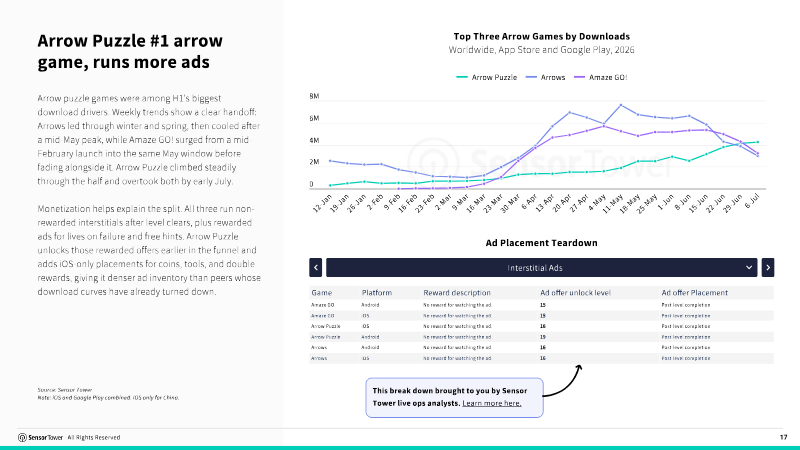
The mobile gaming landscape increasingly favors functional, minimalist design over high-fidelity aesthetics, as evidenced by the rapid ascent of Arrow Puzzle Escape.
- Arrow Puzzle Escape achieved 4 million daily active users and $250,000 in daily revenue within four months by prioritizing functional, minimalist 2D design over high-fidelity art.
- The game's success relies on a distribution-first model that utilizes AI-assisted level design and creative generation to rapidly optimize for lower cost-per-install metrics.
- Monetization is driven by a high volume of interstitial and rewarded video advertisements, leveraging the game's low barrier to entry to maintain profitability across the US, Japan, and European markets.

🚨 Under 16 Social Media Ban: What It Means for Gaming
The global trend of implementing social media bans for individuals under the age of 16 is gaining momentum, with several countries, including Australia, Denmark, and Malaysia, adopting or considering such legislation.
- A growing global trend, currently adopted by seven or eight countries including Australia, Denmark, and Malaysia, is moving toward banning social media access for children under 16.
- From a gaming industry perspective, the removal of social media platforms like TikTok and Instagram as primary entertainment competitors is expected to drive a 'halo effect,' increasing daily active users (DAU), session lengths, and engagement for gaming studios.
- The shift in the attention economy suggests that children restricted from social media will reallocate their time—often spent 'doom scrolling'—toward alternative digital entertainment, including video games and streaming services like YouTube, Netflix, and Prime.

🧠 MVP UA template: How to set up your Google Ads campaigns for Success by Matej Lancaric
This analysis outlines a strategic framework for managing Google Ads campaigns for mobile games, emphasizing a structured, data-driven approach to user acquisition.
- Integrate Firebase with your Mobile Measurement Partner (MMP) to track high-quality engagement events like tutorial completions and in-app purchases, rather than relying on low-quality install metrics.
- Optimize for faster algorithmic feedback by adjusting the conversion window from the default 90 days to a 7-to-14-day period.
- Consolidate campaigns by grouping countries into tiers—such as US, Tier 1, and Rest of the World—to ensure sufficient data volume for machine learning models.
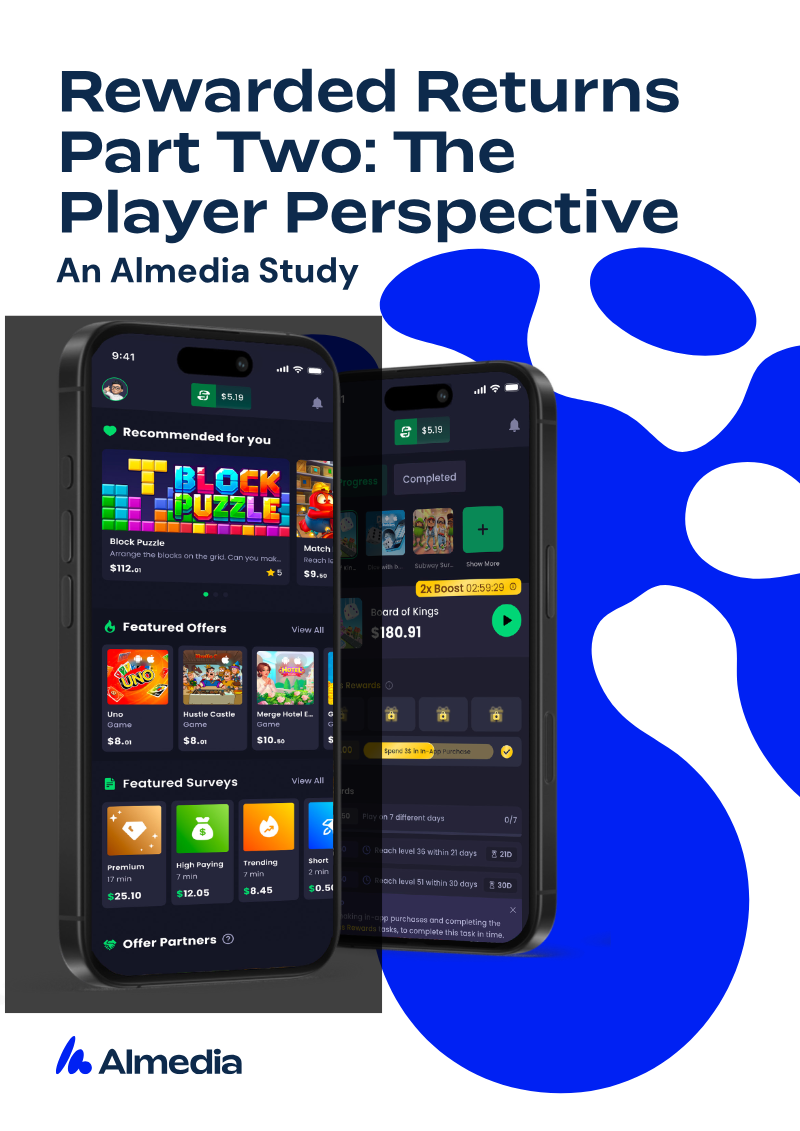
Rewarded Returns: The Player Perspective
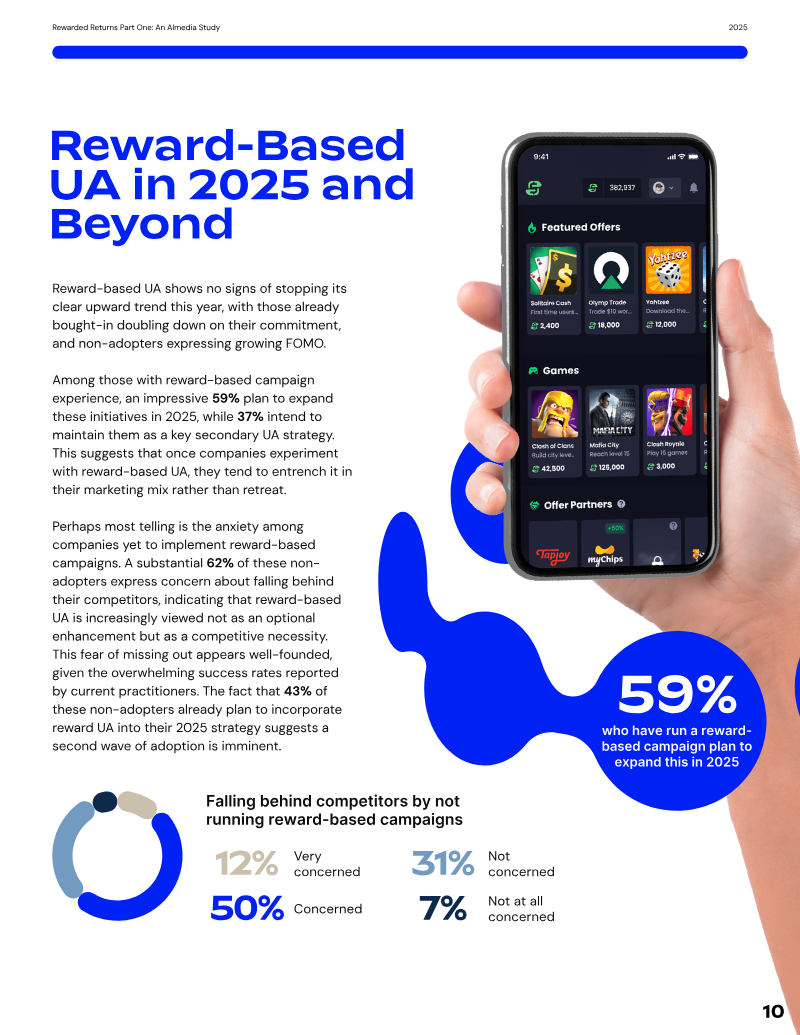
Reward-based user acquisition has emerged as a transformative strategy for mobile game developers, shifting from traditional incentivized downloads to a model focused on deep-funnel engagement and real-world value.
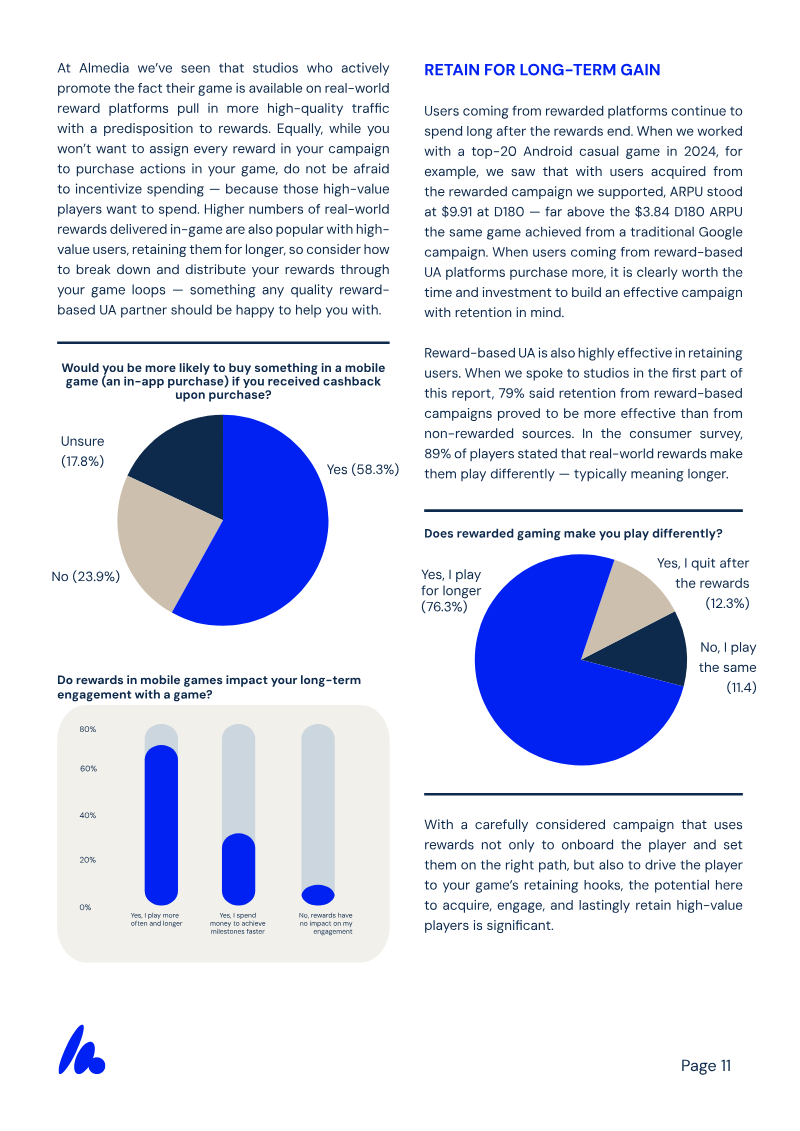
- 75% of mobile gamers hold a positive view of titles offering real-world rewards, and 72% of experienced users actively seek out games that provide these incentives.
- 85% of players who engage with reward-based platforms continue playing even after the initial incentives have been exhausted, indicating strong long-term retention.
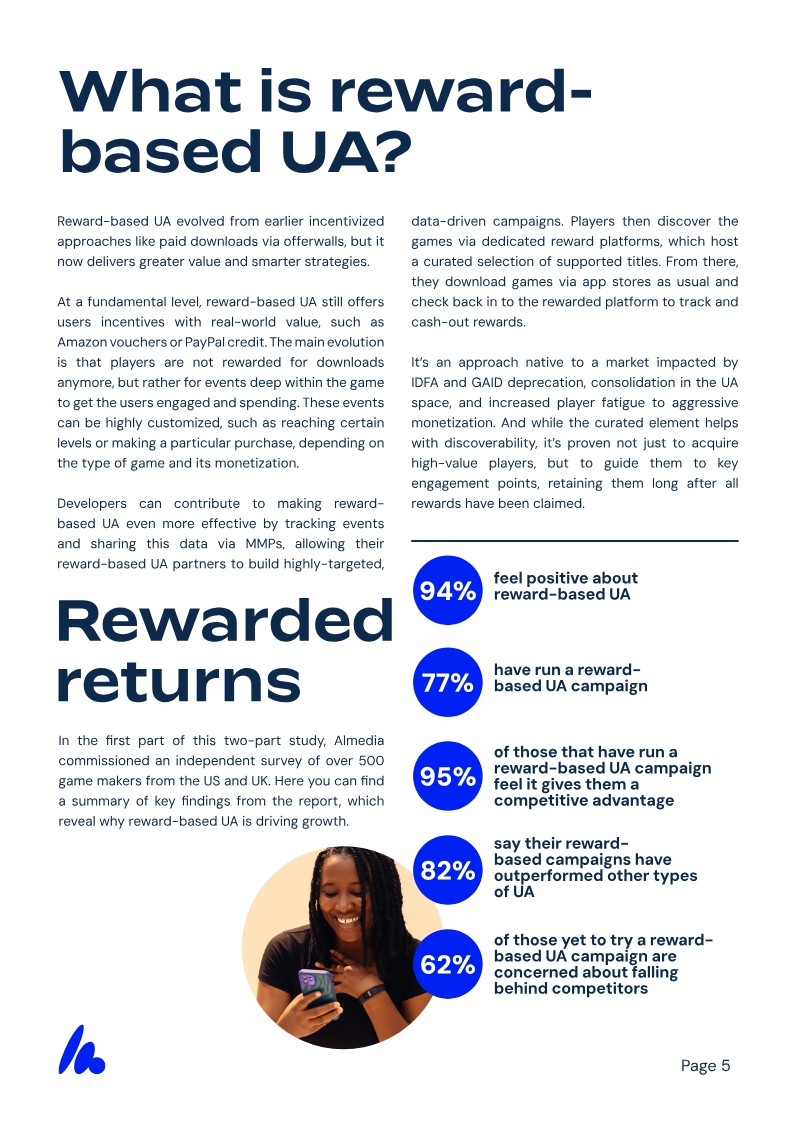
- 95% of surveyed game developers express confidence in reward-based acquisition, with 77% having already implemented such campaigns to gain a competitive advantage.

Rewarded Returns: The Developer Perspective
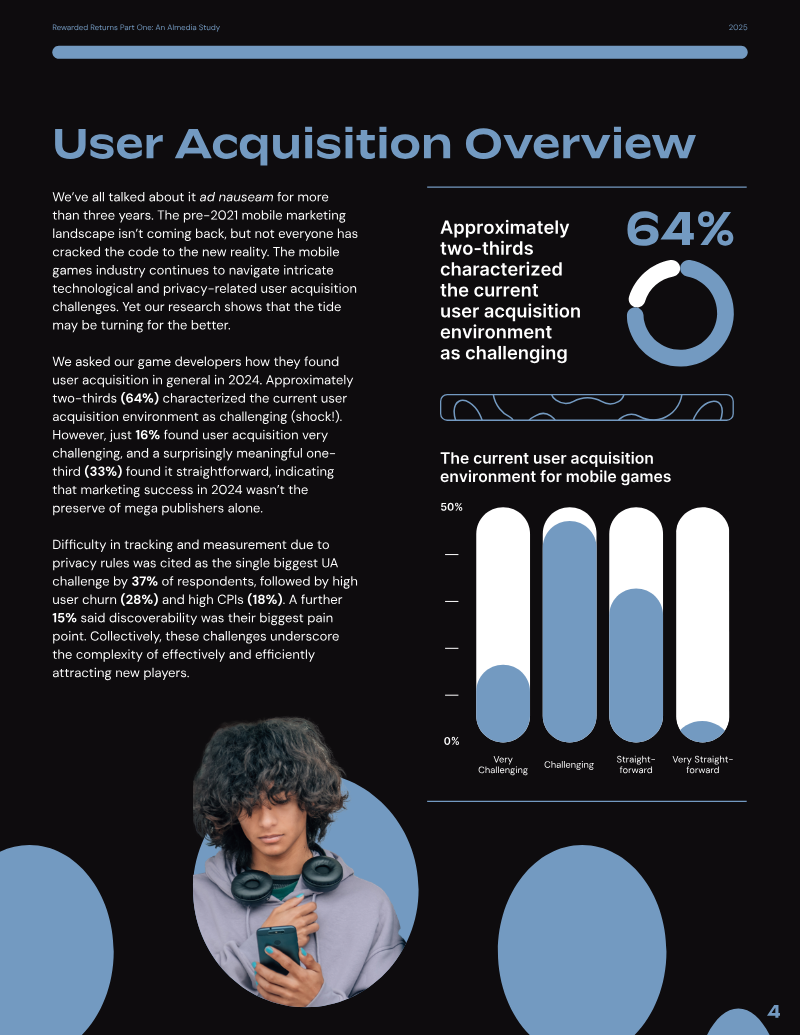
This study examines the evolution of reward-based user acquisition (UA) within the mobile gaming industry, arguing that the practice has transitioned from a controversial, legacy tactic into a sophisticated, data-driven marketing strategy.
- 82% of developers report that reward-based user acquisition (UA) campaigns outperform traditional non-rewarded methods.
- 95% of practitioners view reward-based strategies as a competitive edge, with many allocating up to 50% of their total UA budgets to this channel.
- 77% of surveyed developers have already implemented reward-based UA, and 62% of those who have not expressed concern about falling behind competitors.

Mobile Dev Memo Podcast, Season 7, Episode 1: GenAI in CTV advertising (with Jonathan Moffie)
Generative AI is fundamentally reshaping the Connected TV (CTV) advertising landscape by dismantling the high financial barriers that historically restricted the medium to large-scale brand advertisers.
- Generative AI is lowering financial barriers to entry for Connected TV (CTV) advertising, allowing smaller, performance-focused businesses to compete alongside large-scale brand advertisers.
- By automating creative asset production and adapting social media content for television, AI is unlocking previously dormant CTV inventory for local and performance-driven marketers.
- The integration of generative AI with ad servers and mobile measurement partners enables real-time optimization of creative variants based on downstream KPIs like app installs and direct purchases.

Retargeting Masterclass: From Angry Birds to AI Ads
Retargeting has transitioned from a peripheral marketing tactic into a foundational pillar for maximizing player lifetime value and optimizing advertising expenditures within the mobile gaming industry.
- Retargeting inactive users is a critical strategy for evergreen games, with a 14-day window often serving as the optimal period for paid re-engagement campaigns.
- Updating game icons can significantly boost organic returns, with some developers reporting a two to three times increase in organic returning users after implementing new icon designs.
- To accurately measure the effectiveness of retargeting and avoid cannibalization, studios should utilize ghost bidding or hold-out groups where a percentage of the audience is excluded from seeing ads.
India Mobile Gaming 2026 Report: Market Size, Trends
The Indian mobile gaming market is currently positioned as one of the most significant growth opportunities for the industry heading into 2026.
- The Indian mobile gaming market is projected to reach a value of $4.4 billion by 2030, supported by a 31% compound annual growth rate since 2023.
- Average revenue per user (ARPU) in India increased 9x between 2020 and 2025, driven by a rising middle class and higher discretionary spending power.
- The monetization model is shifting from a reliance on in-app advertising toward in-app purchases as the market matures.

Why short drama is beating games at Engagement & UA (Holywater's Bogdan Nesvit Explains)
The entertainment landscape is undergoing a fundamental shift as short-form drama platforms emerge as primary competitors to traditional mobile gaming for user attention and acquisition budgets.
- Short-form drama platforms are directly competing with mobile games for user attention and acquisition budgets by utilizing web-based, direct-to-consumer funnels that bypass traditional app store constraints.
- These platforms operate on high-volume production cycles, releasing hundreds of series annually to maintain continuous user acquisition funnels and optimize payback periods.
- Artificial intelligence is the core production engine, enabling the rapid generation of thousands of creative variations that function simultaneously as high-performing advertising assets and narrative content.

Game Rewiew Radar #10: What happened to these games?
The mobile gaming industry is currently defined by a volatile landscape where long-term viability depends less on innovative design and more on aggressive user acquisition, sophisticated live operations, and hybrid monetization strategies.
- Long-term viability in mobile gaming is increasingly driven by sophisticated live operations and hybrid monetization rather than creative innovation.
- High-performing puzzle games, particularly the 'block blast' style, are currently outperforming other genres due to their superior capacity for sustained engagement.
- Top-tier titles like Gossip Harbor demonstrate the scale of the current market, reaching $80 million in monthly revenue.
Gaming Digital Market Index: H1 2026
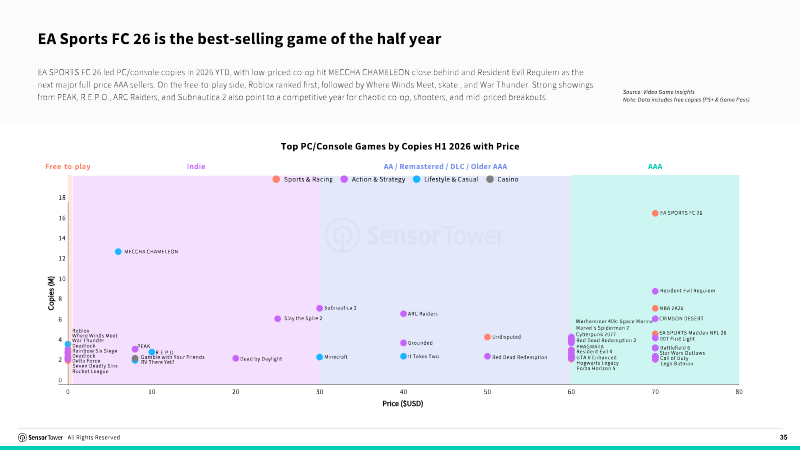
The global gaming market in the first half of 2026 reflects a period of structural maturity characterized by stagnant mobile in-app purchase revenue and a persistent decline in global download volumes.
- Global mobile gaming is experiencing structural stagnation, characterized by flat in-app purchase revenue and a persistent decline in total download volumes.
- Browser gaming has reached 9.5 billion global visits, driven by significant growth in Asia despite a contraction in European engagement.
- Monetization strategies are bifurcated by region, with developing markets relying on in-app advertising for up to 70% of revenue while mature markets remain dependent on in-app purchases.
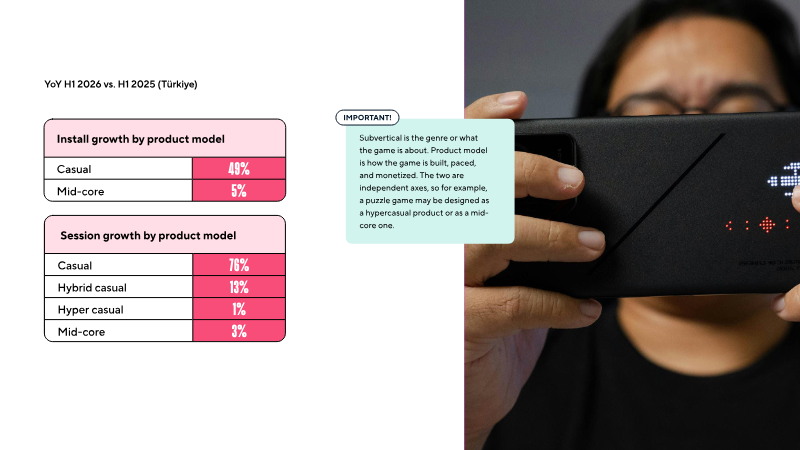


Mobile App Trends: Türkiye 2026
Türkiye’s mobile ecosystem has reached a state of high maturity, underpinned by a 93.3% connectivity rate and a demographic profile that positions the nation as a critical global testing ground for emerging digital products.
- Türkiye’s mobile market has reached high maturity with a 93.3% connectivity rate, serving as a critical global testing ground for new digital products.
- E-commerce sessions in Türkiye grew by 4% year-over-year, significantly outperforming the global average growth rate of 0.3%.
- Gaming engagement remains robust as of H1 2026, with a 6% year-over-year increase in sessions and an average session duration of nearly 34 minutes.