Mobile reports and market data
Documents

Monetizer: Backyard Monsters: Unleashed
Backyard Monsters: Unleashed represents the mobile transition of a foundational Facebook real-time strategy title.
- Backyard Monsters: Unleashed adapts a legacy Facebook real-time strategy title for the mobile market, testing whether brand heritage can compete against established mobile-native leaders like Supercell and Kabam.
- The monetization model utilizes a dual-currency system centered on 'shiny' hard currency, which is used to accelerate construction timers, bypass wait times, and offset resource deficits.
- The in-game shop features five distinct price tiers for hard currency, ranging from approximately $5 to $100.

Fishing Cactus reveals why their next game will teach everyone to code
Fishing Cactus, a Belgian game development studio, is currently prioritizing the creation of educational titles that teach programming logic, reflecting a broader industry shift toward recognizing video games as powerful pedagogical tools.
- Fishing Cactus prioritizes game design over educational objectives, operating on the principle that a title must be inherently entertaining to function as an effective learning tool.
- The studio utilizes a dual-track business model, balancing consumer-facing projects with B2B work-for-hire services to provide the financial stability required for high-risk educational development.
- The studio aims to demystify computer science by formalizing the inherent learning processes found in all video games, such as resource management and reflex development.

Monetizer: Pocket Trains
Pocket Trains, developed by the indie studio NimbleBit, serves as a case study in minimalist monetization and user-centric design within the mobile simulation genre.
- NimbleBit prioritizes long-term user retention over aggressive early-stage monetization by utilizing a low-friction onboarding process that avoids intrusive tutorials and mandatory notifications.
- The game employs a restrained pricing strategy where no in-app purchase options reach double-digit dollar amounts, favoring brand reputation over maximizing immediate revenue per user.
- The economic model is built on three tiers: coins for soft currency, bucks for hard currency, and crates for item-based progression.

Iconicfuture explains the extra value of branded virtual items
Iconicfuture serves as a specialized intermediary in the gaming industry, facilitating the integration of licensed intellectual property (IP) into social, mobile, and online games.
- Since its founding in 2011, Iconicfuture has facilitated the sale of nearly four million licensed virtual items by integrating branded IP into social, mobile, and online games.
- The company acts as a specialized intermediary that secures umbrella licensing agreements with major rights holders, including Hasbro, CBS, and Sony Pictures, to simplify the integration process for developers.
- Iconicfuture provides a proprietary marketplace platform that allows developers to search for and license branded content based on specific game genres, target demographics, and keyword relevance.
Overlooked - The Hidden Potential of Hidden Object Games - Extra Credits
Hidden object games represent a significant, often overlooked segment of the gaming industry that operates within its own ecosystem, largely disconnected from mainstream gaming media and discourse.
- Hidden object games represent a massive commercial segment that frequently outperforms high-profile mainstream titles like Madden, despite being largely ignored by industry analysts.
- The genre has evolved from simple visual puzzles into complex narrative experiences that effectively preserve and modernize the legacy of classic point-and-click adventure games.
- Hidden object games have consistently featured female protagonists for years, successfully normalizing women in lead roles without the performative constraints often seen in male-oriented gaming.

GameSparks' Griffin Parry talks backend services
Mobile game development has become increasingly complex due to the rising necessity of robust server-side infrastructure.
- Backend-as-a-service (BaaS) platforms provide a unified, cloud-based engine that allows developers to manage server architecture, multiplayer functionality, and game logic without building systems from scratch.
- The platform architecture is structured into three core layers: a merchandising and player management e-commerce engine, a suite of social mechanics for leaderboards and virtual currency, and an integration layer for third-party analytics.
- BaaS providers utilize expertise derived from the broadcast television, betting, and e-commerce industries to manage the technical complexities of global content delivery and ad insertion.

Monetizer: BitMonster's Gunner Z
Gunner Z, a mobile title developed by BitMonster, blends the mechanics of vehicle-based combat with zombie-themed survival.
- Gunner Z utilizes a dual-currency system supported by currency packs ranging from $0.99 to $99.99 and a $5.00 permanent money doubler to accelerate progression.
- The game incorporates incentivized advertising, allowing players to watch videos to earn currency or repair items as a method to lower the barrier to premium features.
- Progression is managed through time-gated weapon upgrades that require waiting periods unless bypassed by spending currency.
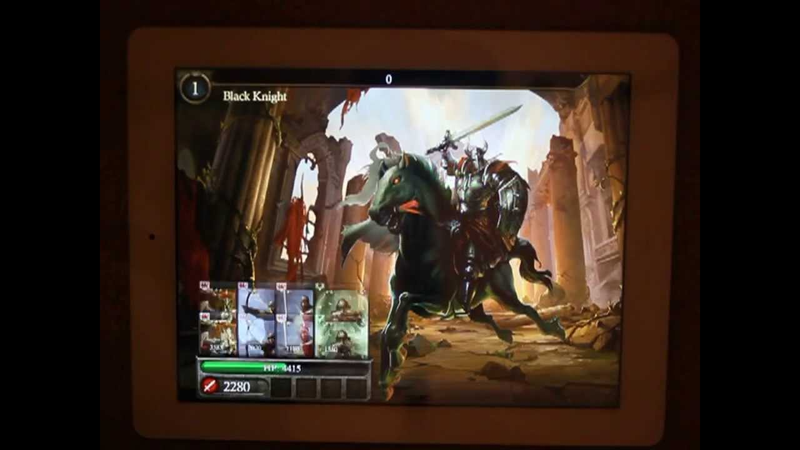
Monetizer: Kabam's Heroes of Camelot
Heroes of Camelot, a mobile card-battling spin-off of the established Kingdoms of Camelot franchise, utilizes a standard free-to-play monetization model centered on card collection, evolution, and resource management.
- Kabam utilizes a dual-currency model for Heroes of Camelot, featuring earnable gold and a hard currency (gems) purchased through a six-tier pricing structure ranging from £0.99 to £69.99.
- The game employs aggressive monetization tactics, including time-limited beginner offers and mandatory hard currency requirements for specific activities like player-versus-player arena participation.
- The title leverages the existing Kingdoms of Camelot intellectual property to convert an established audience into a card-battling ecosystem centered on card collection, evolution, and resource management.

Monetizer: Gameloft's Total Conquest
Total Conquest, a mobile strategy title developed by Gameloft, functions as a Roman-themed iteration of the established Clash of Clans formula.
- Total Conquest utilizes a standard six-tier monetization model ranging from $2.00 to $99.99, explicitly highlighting that larger currency bundles offer up to 50 percent more value than the entry-level tier.
- The game employs a dual-currency system that allows players to convert premium 'crowns' directly into soft resources, creating a friction-free path to bypass construction and training wait times.
- Monetization is prioritized early in the user experience by aggressively incentivizing the use of hard currency to accelerate initial base building and resource accumulation.

Monetizer: DeNA's Blood Battalion
Blood Battalion, a tactical role-playing game developed by DeNA, serves as a prequel to the successful title Blood Brothers.
- DeNA’s Blood Battalion utilizes a high-barrier entry strategy by mandating Mobage network login, effectively filtering for dedicated users over casual players.
- The game prioritizes long-term engagement over mass-market accessibility by omitting traditional onboarding and utilizing a minimal, abstract tutorial process.
- Gameplay mechanics are largely automated, shifting the player's focus from active tactical input to strategic preparation, inventory management, and character leveling.

Monetizer: GREE's Dragon Realms
Dragon Realms, a city-building card-based RPG developed by GREE for Western markets, serves as a case study for analyzing free-to-play monetization strategies and user experience.
- GREE’s Dragon Realms utilizes a hybrid genre approach by combining Western-style city-building mechanics with Asian-market card-based combat systems.
- The monetization model employs a dual-currency system where gold manages resource progression and gems facilitate premium actions like speed-ups and summons.
- To drive revenue, the game utilizes transaction bands ranging from $2 to $100, incorporating a discount currency ratio to incentivize larger real-money purchases.

News roundup: Gamevil buying Com2us, Kabam and GREE reorg and Kixeye's mobile entry
The mobile gaming industry experienced a period of significant structural realignment during the first week of October 2013, characterized by tactical downsizing at established firms and aggressive expansion by others.
- Gamevil is acquiring its primary competitor, Com2uS, marking a major consolidation in the South Korean mobile gaming market.
- Kabam closed its Austin studio and GREE offered voluntary redundancies to 200 staff members as part of a broader industry shift toward smartphone-centric platforms.
- Established developers including Kixeye, Stardock, and Jagex are pivoting toward mobile-first strategies to target the core gaming demographic.