Mobile reports and market data
Documents

FTUE: Light: Fellowship of Loux
The mobile action RPG Light: Fellowship of Loux, developed by Polygon Games and published by Com2uS, serves as a case study for the challenges Asian developers face when localizing complex RPG titles for Western markets.
- Excessive, unskippable narrative exposition and confusing nomenclature in 'Light: Fellowship of Loux' create significant friction that threatens day-one player retention.
- The game’s onboarding process is hindered by intrusive event notifications, which delay the player's transition into the core gameplay loop.
- While the game features high-fidelity 3D models and fluid animations, the density of its meta-game systems can overwhelm Western audiences accustomed to more streamlined experiences.

How Build Away! integrates rewarded video ads
The idle mobile game Build Away, developed by Helsinki-based studio Futureplay, serves as a case study for the integration of rewarded video advertising as a primary monetization strategy.
- Futureplay’s Build Away! utilizes rewarded video ads as its primary monetization strategy rather than relying on traditional direct in-app purchases.
- The game’s core loop incentivizes ad consumption by offering players tangible benefits, such as doubling offline earnings, accelerating production timers, and extending resource delivery windows.
- The design prioritizes a low-friction, minimalist experience to achieve the massive user scale necessary to make an ad-supported revenue model lucrative.

Rewarded video ads in Pele Soccer Legend
Pele Soccer Legend utilizes rewarded video advertisements as a primary monetization strategy within its free-to-play mobile framework.
- Pele Soccer Legend monetizes its free-to-play model by integrating rewarded video ads into both macro-level energy management and micro-level mission mechanics.
- The game uses a heart-based energy system that allows players to replenish depleted energy by watching rewarded videos, providing a non-monetary alternative to waiting or spending currency.
- Rewarded ads are embedded directly into core gameplay, offering players additional kicks or level restarts after a failure to reduce friction and maintain session length.

How Glu has evolved UX in its celebrity games
Glu Mobile’s evolution of its celebrity-branded mobile game portfolio demonstrates a strategic refinement of user experience (UX) and interface design, moving from generic, low-fidelity mechanics to highly polished, brand-integrated environments.
- Glu Mobile’s transition from the 2011 Stardom titles to Kim Kardashian: Hollywood—which generated over $250 million in revenue—demonstrates that shifting to an aspirational aesthetic and intuitive UI is critical for commercial success.
- Early titles failed to resonate with the target demographic due to low-fidelity graphics, clunky navigation, and the use of obscure RPG-style terminology like experience points.
- The studio’s evolution shows that prioritizing visual clarity and thematic immersion over complex mechanics significantly improves user engagement.
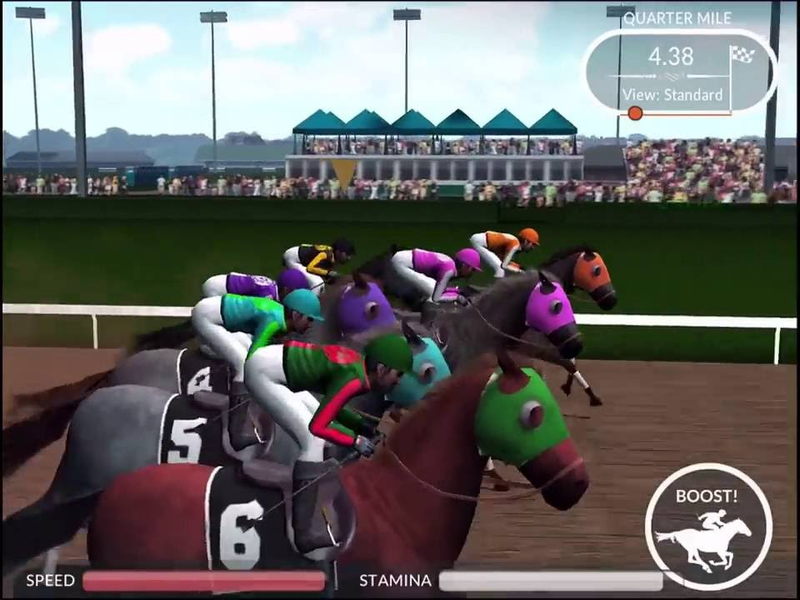
Monetizer: Photo Finish Horse Racing
Photo Finish Horse Racing serves as a case study for the efficacy of post-launch publishing partnerships in the mobile gaming industry.
- A publishing partnership with Tilting Point enabled Photo Finish Horse Racing to achieve a 32-fold increase in total revenue and a 1,000 percent growth in downloads.
- Strategic alignment of user acquisition campaigns with the real-world US horse racing season was a primary driver for the game's commercial revitalization.
- Post-launch implementation of advanced analytics and refined monetization systems resulted in a nearly 2,000 percent increase in daily player retention.

FTUE: Sky Force Reloaded
The mobile shoot-em-up genre has historically functioned as a staple of arcade-style gaming, but recent market trends show a shift toward integrating these classic mechanics into free-to-play (F2P) frameworks.
- Sky Force Reloaded successfully integrates traditional skill-based arcade gameplay with modern free-to-play meta-progression systems.
- The game utilizes a cyclical resource-collection loop, requiring players to gather stars to upgrade ship components like health and main cannons.
- Progression is managed through a gating strategy that mandates repeated mission play, which serves to balance the game's difficulty curve.
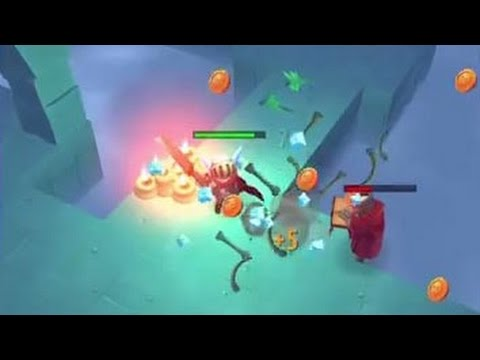
FTUE: Nonstop Knight
Nonstop Knight, an idle RPG developed by Kopla Games and published by Flaregames, represents a Western adaptation of the autoplay mechanics popularized in Asian mobile markets.
- Nonstop Knight, developed by Kopla Games and published by Flaregames, adapts Asian autoplay mechanics for a Western audience by shifting focus from active combat to meta-game progression.
- The core design minimizes active gameplay, allowing the protagonist to fight autonomously while the player manages character upgrades and resource allocation.
- The game features an idle progression system that continues to accumulate rewards while the application is closed, providing a summary of gains upon the player's return.

FTUE: Transformers Earth Wars
Transformers: Earth Wars is a mobile build-and-battle strategy game developed by Space Ape Games and published by Backflip Studios, a subsidiary of Hasbro.
- Transformers: Earth Wars is a 2016 mobile build-and-battle strategy game developed by Space Ape Games and published by Backflip Studios, a subsidiary of Hasbro.
- The game utilizes a core loop of base building, resource management (alloy and energon), and tactical combat to leverage the Transformers intellectual property.
- Progression is driven by a gacha-style crystal system used to unlock characters with unique roles, alongside leveling mechanics for both the player's headquarters and individual Transformers.

FTUE: Monster Sweeperz
The analysis of the mobile title Monster Sweeperz, developed by 4:33 Creative Labs, highlights significant friction points in the first-time user experience (FTUE) that hinder player retention.
- The 5-minute initial download time for Monster Sweeperz creates a prohibitive barrier to entry that significantly undermines player retention and return on high customer acquisition costs.
- Mobile games should prioritize a seamless onboarding experience with a target launch time of under 30 seconds to successfully convert new installs into engaged users.
- Technical instability, such as the tutorial crash observed in this title, negates the value of innovative mechanics and high-quality art by preventing users from experiencing the core gameplay.

How RAID HQ implements its VIP system
The implementation of VIP systems in Western mobile games represents a strategic shift in monetization, traditionally dominated by Asian markets.
- Eight Pixels Square’s RAID HQ uses a six-tier VIP system to convert non-paying users into consistent spenders and improve long-term retention.
- The entry-level VIP tier is triggered by any hard currency purchase, serving as a psychological bridge to overcome the initial barrier to spending.
- Low-tier VIP benefits focus on quality-of-life improvements, such as removing forced advertisements and providing a 25% increase in cards from free chests.
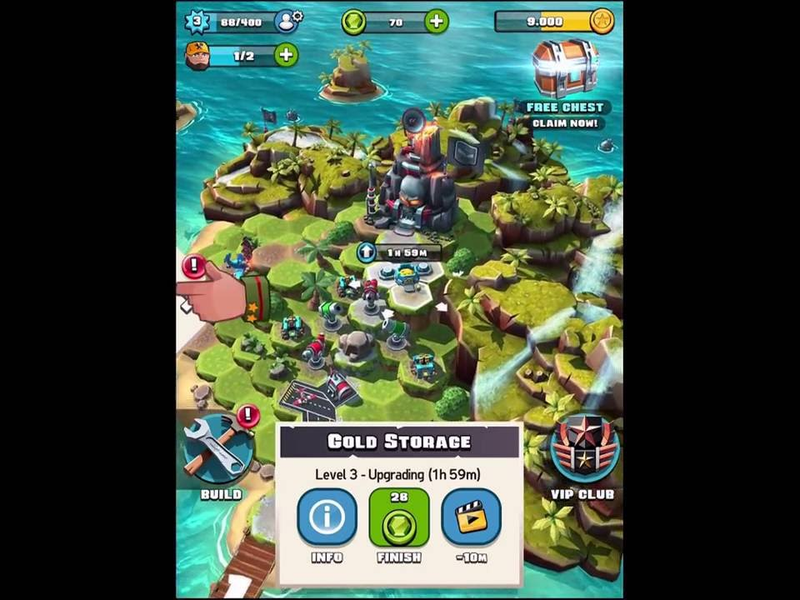
Monetizer: RAID HQ
RAID HQ, a portrait-oriented, card-based shoot-'em-up developed by the UK-based studio Eight Pixels Square, serves as a case study in the integration of Asian-market free-to-play monetization and retention mechanics into a Western mobile game.
- RAID HQ by Eight Pixels Square integrates Asian-market monetization strategies, such as VIP tier systems and Gacha-style card collection, into a Western-style shoot-'em-up framework.
- The game employs a VIP tier system that provides permanent account benefits, including increased card yields and ad removal, to drive consistent player spending.
- Progression is gated by a complex system of randomized rewards, resource-based color-coding, and time-limited tasks that allow for hard-currency bypasses.
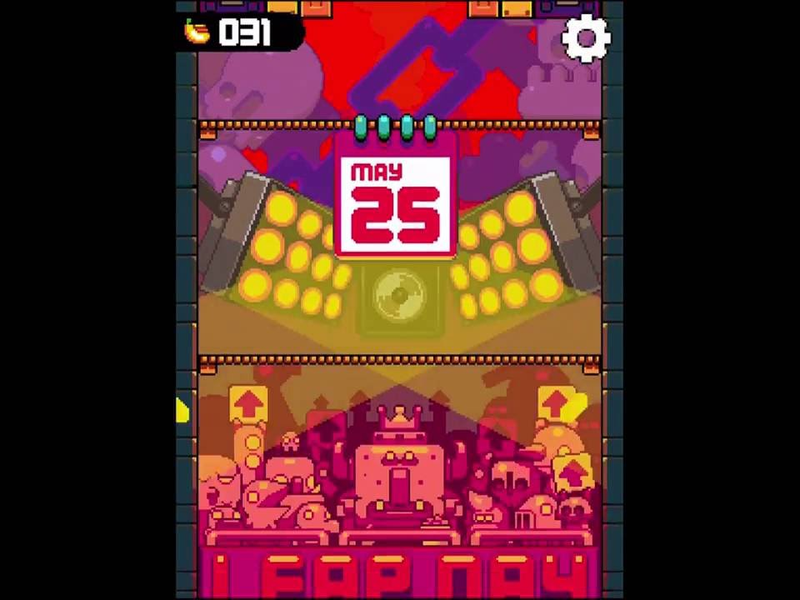
How Leap Day integrates rewarded video ads
Leap Day, developed by the London-based studio Nitrome, serves as a case study in utilizing daily content updates and rewarded video advertising to drive player retention in mobile gaming.
- Nitrome utilizes a daily content cadence in Leap Day, where levels reset every 24 hours to establish a consistent habit loop and reduce player churn.
- The game employs an opt-in rewarded video model that allows players to bypass in-game currency requirements for unlocking checkpoints or accessing past levels.
- The core retention strategy relies on time-gated, fresh content to prevent the player fatigue typically associated with static mobile gaming titles.