Mobile reports and market data
Documents
Working with big partners: The PlayRaven way
PlayRaven, a Helsinki-based mobile game studio, has shifted its strategic focus toward developing large-scale multiplayer experiences in collaboration with major industry partners.
- PlayRaven pivoted from single-player mobile games to a multiplayer-first model to overcome high user acquisition costs and poor long-term retention.
- The studio maintains a business development pipeline of approximately 20 potential partners to ensure a consistent flow of collaboration opportunities.
- Project viability is determined by a proprietary forecasting tool that evaluates seven core performance metrics, including long-term retention and ARPDAU, against external analytics data.
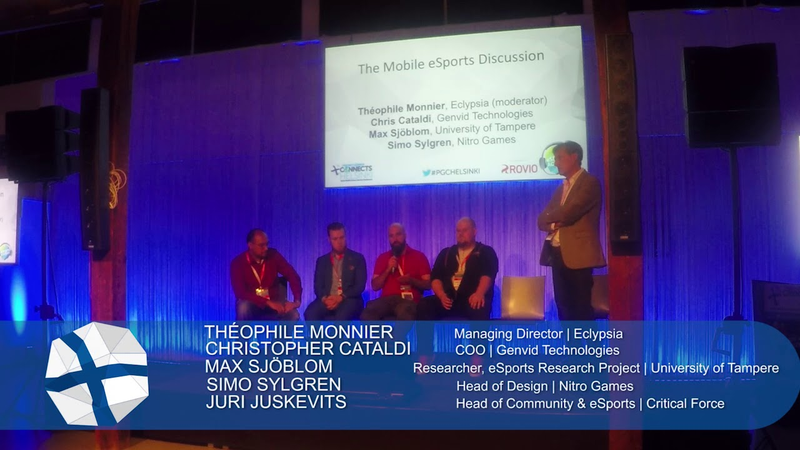
The mobile esports games discussion
The mobile esports sector is currently transitioning from a nascent, marketing-heavy phase toward a more sustainable model defined by organic community engagement and platform-specific innovation.
- Mobile esports must move away from imitating PC-based models and instead leverage the unique technical accessibility and platform-specific features of mobile devices.
- As of 2016, mobile titles already accounted for 30 percent of total esports prize money, demonstrating significant market scale.
- Long-term sustainability relies on developer-provided infrastructure that empowers grassroots tournament organization rather than relying on unsustainable, high-budget tournament production.
The myth and reality of the China games market
The Chinese mobile gaming market represents the world’s largest sector, boasting approximately 570 million gamers and generating $28 billion in annual revenue.
- The Chinese mobile gaming market is the world's largest, with 570 million gamers generating $28 billion in annual revenue.
- Western developers face high barriers to entry but find success by focusing on casual genres like racing, puzzle, and simulation games, rather than the RPG and strategy titles dominated by local firms.
- The Android ecosystem is highly fragmented, with handset manufacturers (Huawei, Oppo, Vivo, and Xiaomi) now controlling approximately 50% of the market share.
Facebook on mobile gaming's next wave
The mobile gaming industry is currently defined by explosive growth, driven primarily by the global adoption of smartphones and the prevalence of free-to-play business models.
- Mobile gaming is projected to reach 2.5 billion players by 2019, with two-thirds of industry growth currently originating from emerging markets in Asia and South America.
- Mobile platforms have surpassed console gaming in popularity, functioning as the primary entry point for new players who lack access to dedicated hardware.
- The transition from 4G to 5G technology is enabling more complex, synchronous, and competitive gameplay by significantly reducing latency.
Lessons from Asia for mobile games developers
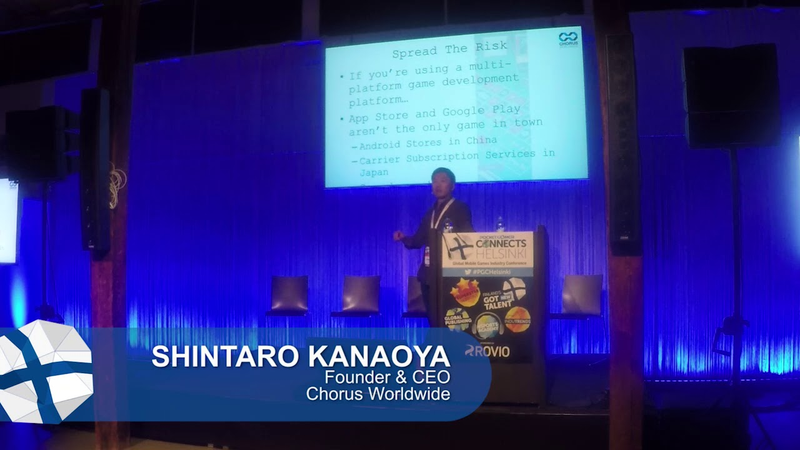
The mobile gaming market in Asia, particularly in Japan, China, and South Korea, represents a critical growth opportunity for independent developers.
- Asia represents a massive, high-growth opportunity for mobile developers, with Japan having been identified as the world's largest app store by revenue as early as 2013.
- Avoid 'over-localization' by using native-language game experts rather than literal translation, as direct translation can result in incorrect terminology, such as using outdated phrasing or failing to use established genre-specific terms.
- Developers should budget an additional 5–10% of their total development costs upfront to account for Asian market requirements, such as text display adjustments and cultural content considerations, to avoid costly post-development fixes.
5 things Next Games learned from The Walking Dead: No Man’s Land
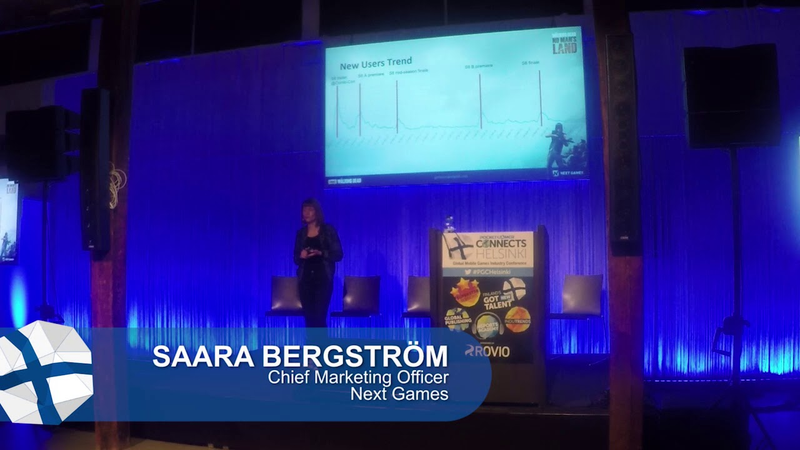
Next Games, a mobile developer specializing in licensed entertainment franchises, identifies five core strategic pillars for successfully translating global intellectual property into engaging mobile experiences, based on the development and operation of The Walking Dead: No Man’s Land.
- Synchronize game updates, marketing, and community management with the source material's broadcast schedule to maximize user acquisition and retention.
- Integrate IP owners as core partners rather than external entities to gain access to exclusive content and ensure authentic brand representation.
- Conduct deep audience research to identify specific demographics, such as younger fans prone to FOMO, and tailor game mechanics to their behavioral tendencies.

Building brands over time: The story of Best Fiends developer Seriously so far
The development of the Best Fiends franchise serves as a case study in prioritizing long-term intellectual property (IP) growth over short-term mobile game performance.
- Seriously prioritized long-term IP growth by conceptualizing the Best Fiends franchise as a multi-game trilogy and cohesive world rather than a standalone mobile title.
- The franchise achieved significant scale by 2017, surpassing 70 million downloads and hitting record revenue months.
- The studio allocates approximately 50% of its marketing budget to creative content, such as high-quality animations and short films, to build a lasting brand legacy.
Superstar Session: A few words from Angry Birds developer Rovio
Rovio Entertainment’s strategic evolution centers on its transition from a premium game developer to a "games-first" entertainment company powered by the free-to-play model.
- Rovio has transitioned to a 'games-first' entertainment model, shifting from one-time premium purchases to a free-to-play service strategy that extends game life cycles to three years or longer.
- The company’s financial stability relies on a portfolio approach where its top five titles generate approximately 80% of total revenue.
- Rovio aggressively scales user acquisition, having increased performance marketing spend from 20 million euros in 2016 to 45 million euros over the following 12 months.
Why attribution matters for a successful game
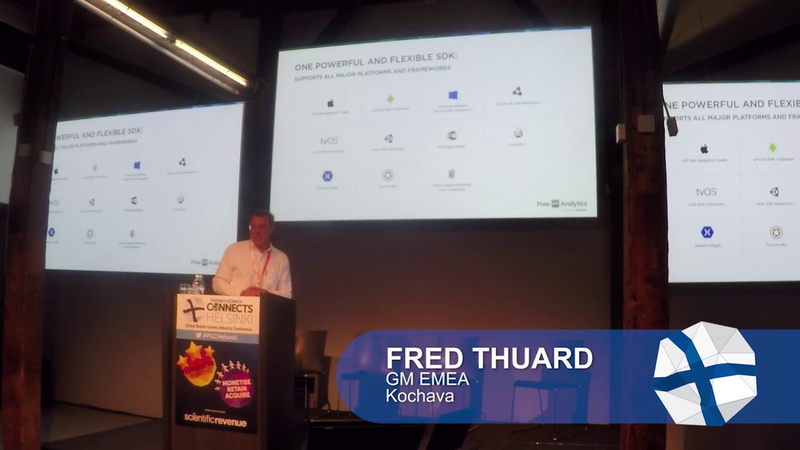
Effective mobile game marketing relies on robust attribution, which serves as the foundational layer for all analytics and strategic decision-making.
- Attribution is the foundational layer for mobile game marketing, acting as a referee to link advertising spend to specific user actions like installs and post-install events.
- Industry data indicates that approximately 15% of clicks and 5% of installs are fraudulent, necessitating real-time detection to prevent financial losses from tactics like click spoofing and ad stacking.
- Developers should implement a lightweight, server-side SDK to enable configurable attribution without requiring frequent app updates.

Build smarter, grow faster and monetise better
Facebook aims to solidify its position as a central hub for the global gaming community by providing end-to-end solutions for discovery, engagement, and monetization.
- Facebook leverages a social graph of 800 million monthly active users to integrate gaming directly into social contexts like Messenger, groups, and feeds to improve retention and re-engagement.
- The platform's video strategy targets a monthly audience of 665 million gaming content viewers by integrating live streaming and eSports content into the dedicated Watch tab.
- The Instant Games platform utilizes HTML5 technology to facilitate frictionless, social-first mobile gaming experiences driven by leaderboards, messenger bots, and turn-based notifications.
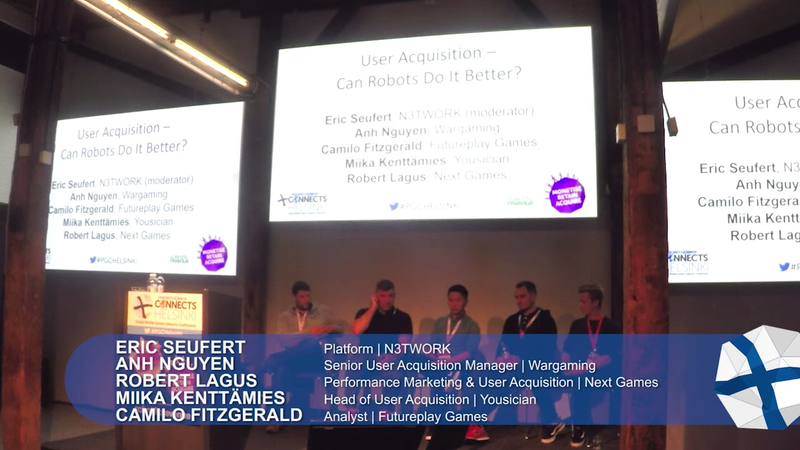
User acquisition – Can robots do it better?
Automating user acquisition requires a foundational shift toward robust data infrastructure, where the integration of cost data with lifetime value and return on investment metrics serves as the primary engine for growth.
- Automating user acquisition requires building a robust data infrastructure that integrates cost data with lifetime value (LTV) and return on investment (ROI) metrics to enable dynamic, profit-reinvestment strategies.
- Transitioning from manual reporting and fixed-budget models to automated systems allows marketing teams to shift focus from administrative tasks to high-level strategic variables that drive competitive advantage.
- A hybrid approach is currently necessary because technological limitations, such as fragmented API integrations and the inability of ad networks to optimize for post-install events, prevent full automation.

Lifetime value for mobile apps
This discussion explores the methodologies and strategic applications of Lifetime Value (LTV) modeling within the mobile gaming industry.
- Lifetime Value (LTV) serves as the primary predictive metric for determining sustainable customer acquisition costs to ensure paid marketing efforts remain ROI-positive.
- Industry strategy is shifting from basic Cost Per Install (CPI) metrics toward Cost Per Action (CPA) models, which optimize campaigns by targeting high-value behavioral milestones like tutorial completion or PvP engagement.
- Effective LTV modeling must move beyond simple retention curves and average revenue per daily active user to incorporate organic uplift (K-factor) and specific in-game events.