1 free read left. Create a free account for unlimited reading + AI research.
Create free account
The myth and reality of the China games market
Key insights
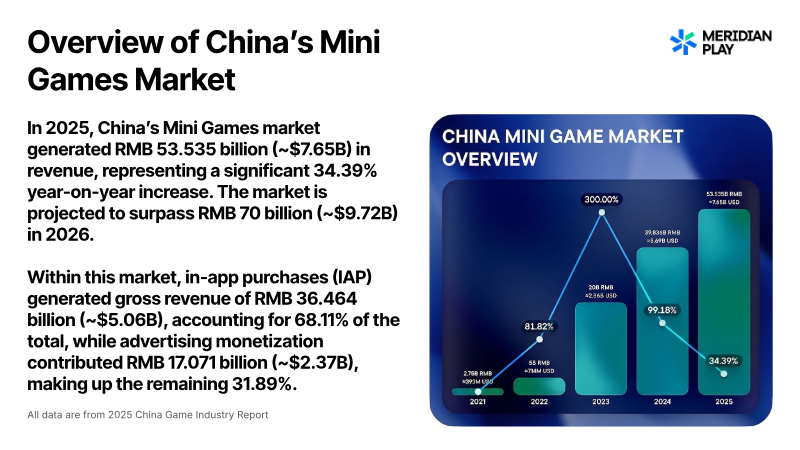
6 takeaways- 01The Chinese mobile gaming market is the world's largest, with 570 million gamers generating $28 billion in annual revenue.
- 02Western developers face high barriers to entry but find success by focusing on casual genres like racing, puzzle, and simulation games, rather than the RPG and strategy titles dominated by local firms.
- 03The Android ecosystem is highly fragmented, with handset manufacturers (Huawei, Oppo, Vivo, and Xiaomi) now controlling approximately 50% of the market share.
- 04Revenue retention is challenging for local studios, who typically keep only 40% to 45% of gross revenue after accounting for app store fees, carrier billing, and local publishing partner cuts.
- 05Since July 2016, all mobile games must obtain a government-issued publication number and adhere to strict content guidelines prohibiting gambling, extreme violence, and politically sensitive topics.
- 06The industry is driven by a high-intensity '996' work culture and aggressive, performance-based compensation structures that prioritize rapid user monetization and engagement.
Ask AI about this video
Transcript
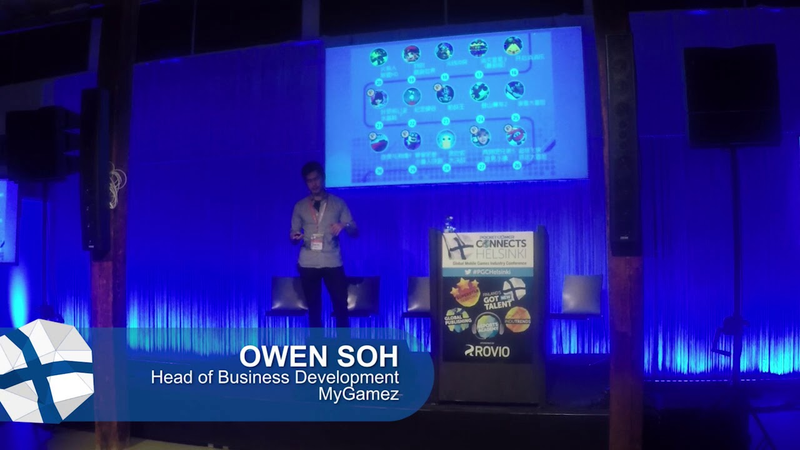
[Music] [Music] let's say China China China China China China China China China China China yeah in case anyone is wondering what I'll be talking about for the next 20 minutes it will be about China so China is a big country and a big subject so in order to cover this in 20 minutes I can only talk about it from a 30,000 feet view very macro give you a few slight flavor of what's happening behind the scenes
mainly I'll be talking about the competition and opportunities for a Western game studio the Apple and Android app store ecosystem the Chinese publication number regulation which came out last year July 1st and how effects publishing in China and if we have some time left we will talk a bit about the Chinese game company culture see if there's any difference between your company and Chinese game company a bit about myself my name is Owen I am responsible for game sourcing and studio relationship at my games so we are a Chinese game publisher actually sort of a mix baby one founder is finished one founder is Chinese so we are based in Shanghai Helsinki and we also have an office in Bali we are working with guys like fingers off flag games Zeptolab
Halfbrick clerics bring their games to the china android market and we have published games like the hill climb racing series non-stop knights cut the rope magic until now in three to four years we have about 270 million downloads all right so the first thing everyone thinks about in China is it's the biggest mobile market depending on which report you are looking into this one I just pulled from News ooh it says 570 million gamers 28 billion in game revenue number one market in the bowl honest view the thing is it's number one since for like two to three or four or five years and everyone is thinking about this how do I get a piece of that pie not sure what the audience makes some of you might have deals with Chinese publishers you might
be Scrooge swimming in money or you might be Donald in the background looking at others swimming in the money but what could also happen if you get into a bad deal in China is you could hurt yourself in to Japan in the long term so the first thing I want to talk about is that it's a hyper competitive market I didn't coordinate this with Taurus just now it seems like it's the same slide I just we prove this from probably the top hundred okay we probably have the same different dates so I have someone at war here compared to NBA from DNA so half stone clash clash of clans gardenscape township summers war this is basically the top hundred grossing games that are non Chinese in in China so it
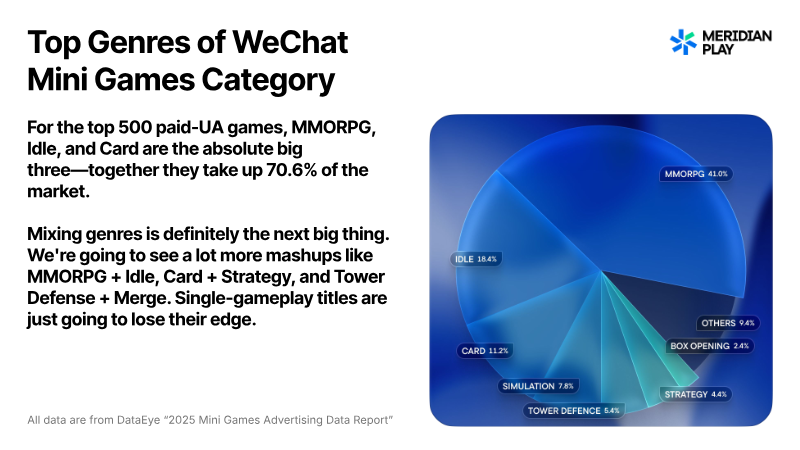
seems like a pretty bleak picture but if you sort of dig a bit deeper when I say dig a bit deeper just filter by genre and you could see that's a slight different story so on the more competitive side you have RPG card game strategy games action games and this top hundred by genre dominated by the Chinese game companies something like RPG game only have two non Chinese games but on the other hand on the casual side of things you have racing games that have 70% of Western games that are represented in the top hundred grossing of racing games puzzle simulation adventure the quite well represented in the top grossing there are many things to our angles to think about this you could say that there's just way more
money and RPG strategy action game Tan's is more competitive there are more players in the market from China or you could say in the casual games that Western games are just more innovative it's just more fun and hence the players recognized quality casual games and they like to play those or we could say you need really good local life ops and local UA to make RPG strategy game work in China but the point is that casual games has opportunity for West games and this is only just data I pulled from a penny so here is a report I pulled from China Mobile China Mobile prints out a monthly report and a bit of a background here so chair monville is the largest telco in China they represent about sixty seventy percent of the market and this is relevant because in China from
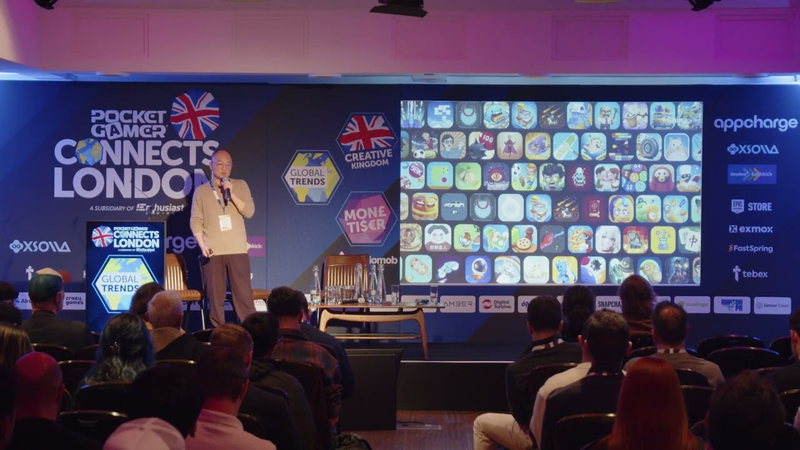
the casual game markets do you primarily use this carrier billing as the main method of payment so China Mobile basically has the most users and the most data points and this is what you are saying for the casual game market for in terms of top downloaded so this is the second slide and this is the first slide I'll just give you like 5 to 10 seconds to see how many games you recognize here [Music] all right so on the top we have like subway surfer Temple Run 2 talking Tom run Hungry Shark evolution angry birds transformers Stampede rodeo and here climb racing the next click one Ski Safari hill climb racing to monument valley minion rush and the Chinese still
die oh the point here is that even on the edge right side it's well represented by google games from the global studios the many ways to think about this and personally I would like to say that quality games just shined through in any market they are and this is this is all IEP focus all the games represented here are IP focus and games in China are primarily IP focus so they are also making quite a bit of money not just like just ad money so I'm gonna skip this because just saying that casual eSports is on the rise they even have tournaments for casual eSports this is a Chinese version of a guy oh all right so we've
established that casual game market for Western students is still pending room to maneuver and a lot of studios that thing about China actually a bit like Walter White when you suddenly just see a pile of cash lying in front of you usually you publish globally and you check the China box and in two to three months you see that China is your maybe top five markets your top three or maybe even the best market that you have and then you start to think about I'm I'm not even putting any effort in this and it's the best market so what happens if I do put some effort into the China market so you then start looking to the Android Market and Android the market in China is still 80 to 85 percent right now it's an all-time high personally I think it's gonna grow even higher in the future and Google Play is not there yet so they
mentioned that they were gonna get into the market last year and then recent report says this year soon maybe soon so we'll find out enough but the problem here is most impactful they have when they do enter the market and are they actually a bit too late to the market so what I mean is that's actually hundreds of Chinese Android app stores out there and the top 10 or top 15 of these guys actually own covers 90 to 95 percent of the market nobody actually published their own data so nobody actually knows the true user base of each episode it's sort of a secret thing that they all have the incumbent for the since the beginning is $0.10 by the 360 so when the handset market was too quite
fragmented the online stores came in with the original user base so $0.10 had reached out by do you have a search engine 360 has a web browser so do they were able to leverage on existing user base to quickly get get into the app store market and dominate it for quite some time however for the past two to three years and even especially in the last year we have seen like the rise of manufacturer stores so these are Chinese handset manufacturers Huawei oppa vivo Xiaomi not sure how popular they are in the West but in China they are pretty much the dominant brand for handsets so right now they take about 50 percent as of q3 last year 50 percent recent reports say the outselling Apple by way much and they have been upping their App
Store game is investing significant amounts of money into the App Store so the beginning they were just trying to figure out how to dominate the market apps are the handsets and now that they have established sort of skill that they are looking into how to provide phone users the best experience and of course the best experience me in the most content and hence they invest heavily in the in their own app store so imagine for a new Huawei user you buy the phone you get a faraway app store and it has all the content you need so this will in effect negatively impacts the market share of a third-party app stores and I think this is a trend that we will see to continue going forward so if in any case you do find yourself in a room with this guy's Oprah Viva Huawei do take them seriously
and so you decide against Android how much can you actually make in the Android Market so the 40% is actually for a local studio if you are dealing with the app stores and you have to deal with them individually so let's say you want to cover top 20 as a local - you have to talk to them individually for the 20 studio 20 app stores the App Store take about a 30% cut to 40% if your clash Royale or a bigger game you can negotiate down and then they'll take like 10 20 % the stickler here is building takes another 25 to 30% so carry building takes 30% and usually even if you use the online payment like Ally pay or reach at the app store will bundle it together with the our App Store SDK and give you wholesale telling you the die cut is 55 or 60 percents so
at the end of day a local studio is expected to take back 40 to 45 percent and western studio have to share this with also a Chinese publisher all right so if you have a game that's really doing well in China and you would really like to see it stay there on the App Store one of the thing is the regulations I guess some of you have heard about this news we need a pure censored or banned in China right now for reasons that you can search online this is recorded so what I want to say is that the Chinese authorities do take content regulation really seriously and what the regulation that came out last year July is basically a Content regulation so what you're saying is they want to regulate mobile games just as they regulate movies books music TV
series and make sure this content are safe consumption for the general public so games that are extreme violence so you have if you have limbs cutting off blood splashing around no go immoral games so gang games that involved gangs probably being stealing from other players like inducing gamers to steal from other players if you put suicide as a game play you know those are definitely not a bit not allowed politically sensitive topic that covers China have to tread really carefully and gambling contents is not allowed in China so these are just 20 these are just a few items on the list of like 20 to 25 and the government do keep this updated quite regularly so we have to check back with the government on a weekly or monthly basis to make sure
that we are complying with the rules and if you have a game that is out on the App Store after launched after first July 2016 that was original that was the original regulation date that came out you have to take down the game when you apply for the applet for the publication number of license all right we do have some time all right some final interesting company culture stuff there's about 40,000 game studios in China that is three times the amount of Starbucks in the u.s. in the West we have a 9 to 5 working culture in China you have a 99 six working culture so this basically means 9:00 a.m. to 9:00 p.m. six days a week and this is just like bare minimum like a 9:00 to 5:00 and so there's a lot of game
companies and as people are working really hard and also heavily heavily paid to do so so the bonus structure this I just pulled this from a Chinese Korra and I validated smelling it at this with a with my team in Shanghai and the number sort of checked out if so the team gets a three percent bonus if the game is making five million renminbi that is about 800,000 US and up to if the game is revenue is 20 million team gets 15 percent if the game is a profit of 5 million it's 5 percent and 50 million profit the team gets 30 percent so you could think of it almost like the Finance era like in the financial sector where teams get heavy bonus and they worked really hard to make sure they they get the most value out of the users
in China and that's it for today if you have any questions about China we've talked about the regulations you have games in the App Store the games that are doing well and globally and you want to talk about China feedback about this presentation just drop me an email Thanks thank you very much [Music] [Music]
Summary
The Chinese mobile gaming market represents the world’s largest sector, boasting approximately 570 million gamers and generating $28 billion in annual revenue. Despite this scale, the market is hyper-competitive and presents significant barriers to entry for Western developers. While Chinese companies dominate high-revenue genres like RPGs, card games, and strategy titles, Western studios find substantial success and market share in casual categories such as racing, puzzle, and simulation games. Quality, IP-driven titles consistently perform well, suggesting that Western developers can find viable opportunities by focusing on innovation and localized live operations.
The Android ecosystem in China is highly fragmented, with 80% to 85% of the market share distributed across hundreds of third-party app stores. While traditional giants like Tencent and Baidu historically dominated, the market is shifting toward handset manufacturer stores—specifically Huawei, Oppo, Vivo, and Xiaomi—which now account for roughly 50% of the market. Navigating this landscape requires careful financial planning, as revenue splits are complex; after accounting for app store fees and carrier billing, local studios typically retain 40% to 45% of revenue, a portion of which must be further shared with local publishing partners.
Regulatory compliance is a critical operational factor. Since July 2016, all mobile games must obtain a publication number to operate legally. Authorities enforce strict content guidelines, prohibiting extreme violence, gambling, politically sensitive topics, and immoral gameplay. Furthermore, the Chinese game industry is characterized by a high-intensity work culture, often referred to as "996" (9 a.m. to 9 p.m., six days a week). This environment is supported by aggressive, performance-based compensation structures, where development teams receive significant bonuses tied directly to revenue and profit milestones, driving a relentless focus on user monetization and engagement.
















Comments