1 free read left. Create a free account for unlimited reading + AI research.
Create free account
Working with big partners: The PlayRaven way
Key insights
6 takeaways- 01Founded in 2013, the Helsinki-based studio is currently prioritizing the scaling of multiplayer titles over experimental technologies like blockchain or augmented reality.
- 02PlayRaven pivoted from single-player mobile games to a multiplayer-first model to overcome high user acquisition costs and poor long-term retention.
- 03The studio maintains a business development pipeline of approximately 20 potential partners to ensure a consistent flow of collaboration opportunities.
- 04Project viability is determined by a proprietary forecasting tool that evaluates seven core performance metrics, including long-term retention and ARPDAU, against external analytics data.
- 05Integrating external intellectual property has served as a strategic lever to lower user acquisition barriers while providing creative freedom to adapt established universes for mobile.
- 06The partnership-driven model has improved internal operational efficiency, leading to faster concept development and more disciplined project planning.
Ask AI about this video
Transcript
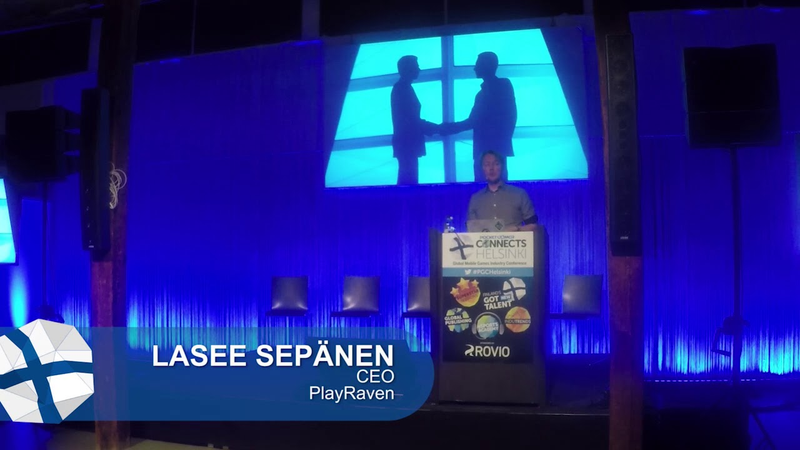
[Music] [Music] anyway I'm not be talking about working with big partners and I'm kind of curious how many here are currently working with a bigger partner so clearly bigger company than yourself either IP or publisher or something okay there's a few there yeah okay that's cool how many of you are aspiring in the future or are looking for a deal with a bigger like a partner okay yeah nice all right here we go these are my slides so I'm gonna talk about working with big partners the play Raven way so this is of course our experience your mileage may worry about
myself to get started my name is luster Zeppelin I've been working on games for almost 20 years now my first game commercially released was in 2000 and it won a Nokia global award so first prize in one of their competitions and then 2003 I had the opportunity to work with the guys who would later found supercell so he'll call me plus C and so on and that studio was called soo Miah which was acquired by Tripp Hawking's the founder of EA in 2004 and we were rebranded Digital Chocolate and digital chocolate is probably a name that many of you recognize here but I left that company then in 2005 because I was offered an opportunity to work on the Triple A and I just couldn't resist so I became the executive producer for Alan Wake at remedy entertainment and spent six years there shipped Alan Wake Alan
wakes American Nightmare and then wanted to get back into mobile because there was such interesting things now happening there and my experience in the past career working with big partners was first at Summa Digital Chocolate where we were making quite a few pre-installed games for Nokia so games that were already on the phones when they when they were bought in the store excuse me and of course that remedy will work with Microsoft for five years on Alan Wake so big huge partner ten time zones away and now we play Rabin you may be familiar with us from the past we've been around for almost five years now so founded in 2013 we based of course here in Helsinki Finland we have a triple-a / mobile background as you may have gotten from my sort of intro here so remedy Rockstar basically is the it's a triple-a site there's there's also a person from
Ubisoft and so on then digital chocolate googa Rovio and so on on the mobile side we are completely focused on free-to-play mobile we have released three games I'm gonna talk about that in a moment but the last bit here is quite important we we always aspire to be a category creator kind of like think of the soda market before coca-cola when coca-cola entered it became a whole new thing that has its own shelf and its own category and it was imitated by others that's the dream and every game we launch has some way of attempting to create a new category he will look at the games that we have released globally so our first came in 2014 was quite the learning experience to be honest because it was our first game fresh fresh into this space we took a lot of like board game elements made a fully single-player replayable
algorithmically generated game and the category creation part was the theme so we wanted to create a spy game to kick-start a whole what category of spy games because there are like not really spy games on the market and yet it is very popular in the movies TV series books and so on as a theme however that game didn't do so well initially we hit top 5 strategy in more than a hundred countries but huge learning experience single-player fully and so on we incorporate a lot of those learnings into the next two titles which did considerably better so Rob a site where we introduced a whole new mechanic very addictive we already knew when we launched the game this is an addictive thing this warm we're removing these little robots with your finger so that
was something unique that no other game on the market really had and did really well for the first time we hit number one strategy in the u.s. 41 other countries number one and top five in more than 100 countries we also released winter state last year which was our attempt to look what could we bring from PC real-time strategy to this platform and it's super high fidelity if you have a chance maybe you can look at some of the videos online and so on but then that game was quite demanding long sessions and so on okay so that's the past portfolio when we have launched all these games and we had it hit number like top 5 repeatedly three times in the top five but then had difficulty sustaining that success because of two reasons we had to go back to the drawing board think about what we're doing why are we getting all this initial success
but then not being able to sustain it for a long time and what we identified was really two reasons one is the UA costs it is extremely difficult to penetrate this market unless you have some means of lowering the UA cost because but just acquiring one user can cost you know six dollars eight dollars even ten dollars the other reason was we felt we were still even though the second wave of games was much more leaning towards multiplayer we still had quite significant single-player elements in those games and that's something we felt that's really not working when we are looking at the data it's great for a day but it will not keep you in the game for 30 days or 60 days or 90 days at least in this in this genre where we are so what we defined about a year ago was
a new strategy we want to stay true to the category creation mission that's important for us it's our passion but also we feel it's a solid business idea if you can create that new thing like Pokemon go they'd be the first one up there you can hit it really big and others will follow and try to imitate you and create a whole new category but then the second point is really important we decide to scratch all that single-player stuff and just focus on multiplayer and go all in so MMO and social all the games release released from now on will be multiplayer in a big way we have some experiments still also on the social side but most people leaning towards them and most and the third point quite the big shift in terms of how we operate
partnering with bigger companies and adopting external IP where it makes sense this is for the UA side of things so to reduce that cost of UA to make it more easier to penetrate that market we wanted to start partnering up and this is really what I wanted to talk about I mean it's a very very substantial change if you have made one of those deals it takes a lot of work and it takes a lot of this just have to go around meet with people shake a lot of hands and when I say a lot of hands I mean a lot of hands yeah I can't remember how many times I've been at the airport this year it's it's way too many and I'm flying again on Thursday but next week and the week after but you know salafi it's this is how business operates and of course getting from pista you know shaking hands is a good start but you need a few other things as well so you need to first identify the prospects
who might be willing to work with you of course which companies grr like good targets to show your stuff to talk about ideas total of brands and so on we have a list of about 20 companies right now that we are actively talking to pitch is very important now when you go into that meeting you're gonna be very concise very clear have a really strong idea that you present and of course preferably you already understand a little bit what they are thinking what would you know get them excited as well business cases this is something that we didn't put enough effort into previously but now that we are working with external partners we really wanted to improve this area as well and I'm gonna show a little like internal tool that we built it's coming up real soon and of course on the development side if you're just working in development there's a big shift towards being more like determined and planned you make
better project plans and you have mitigated some plans for the risks and so on rather than just going away the seat-of-the-pants well I hope nobody's really doing that and contracts you know when everything's agreed basically you should Cannes and you know you you kind of know the deal you want to make picking that damn contract it takes so much time it's it can take two months three months four months even six months so you gotta be ahead of the game in your business development you gotta be already doing business development for stuff that you want to sign maybe six months from now and that's what we are doing constantly and of course you know eventually you get to start one of your projects and this is one of the things we signed with our new strategy I wanted to talk about the business case specifically and I don't have much time so I want to be quite concise just picking this one example because it's quite quite a like a big thing for us
internally so we built this in-house forecast model earlier this year we acquired access to a penny data so we can see the revenues to retention data and so on and we've been building our own stuff that is connected to a penny so we can use the API and get the data automatically from a penny and we have this little Google sheet which we're trying to make as usable as possible internally so it goes step by step you choose your genre you know you insert your estimated early retention parameters you define your superfan goals and so on we have seven things we always expect from every game we have and this is our sort of philosophy codified into a tool that automates it and that anybody in the company can fiddle around with but of course it's most important for the leads and myself and you know the business and and leadership and here's another example from the tool so this is your projected retention curve once you have
selected your stuff and there's also like a gray curve that shows you the benchmark from a penny so it takes the top 100 top crossing games and creates a retention curve based on those parameters you chose and doesn't just a little bit of magic behind it so I'm not going to go into that but and here's another example another you know curve it looks pretty similar but this one is your date third it retention and the ARP Dao because these are dependent on each other so if your retention goes down you have to increase the arc tau you have to make more money per user if you're losing more users or other way around if you have if you can increase your retention then your ARP now can go down you can afford it or you can afford to have a lower rpm let's put it that way of course we don't want to lower our art out and the last thing here kind of shows the seven points we have and still work in progress
there's a few things that are sort of not applicable yet but we are pretty close to getting all these boxes ticked so I'm just gonna read it because you probably can't see it all the way there but first one is long-term retention second one is proven monetization thirty superfans fourth a small scope and fast iteration which we feel is important for our process to produce good stuff number five is quick engagement and UX 60s gameplay and seven is built in marketing so there's something attractive in the game of a theme or maybe that's an IP or something but this this model has been very helpful in sort of solidifying our thinking and going into those meetings with partners having already a strong idea about what are the performance metrics we're looking for not just you know fluffy gonna make a good game but rather we're gonna hit this R tau and that retention and so on okay I'm gonna
leave some time for questions so I'm gonna talk about the results next we've been doing this for almost a year now I can happily say that we have really stayed true to our mission we're still on a mission to discover the next big thing in mobile that's really what we want to do a category we have been working with external IP that's a new thing in this company of course many of us have done it before we have a guy who worked on Star Wars before and so on but for us it's a new thing and what do you get from an IP from a developer perspective you get a universe which means backstory you know the overall look and feel style assets you know maybe you can use the same assets they already have maybe it's a game or maybe it's a movie or something but quite surprisingly we discovered that there's way more creative freedom than we expected as well so we can take these
assets as a starting point but then really apply and you know take the styling different direction because quite a few partners understand that mobile is a different world where different things work for instance in terms of color palette this so you might not be able to bring something that is super dark and like gloomy into mobile without doing a little bit of tweaking and making it well first of all usable on a glossy screen but also attractive to the audience which might be a little bit different than in there in the other media where that IP is appearing and I would say that so far the typical project for us has been a well-defined sandbox kind of the contract and all that but then having creative control ourselves not not having to go through this like a massive approval loop fortunately which was of course a little bit like a concern that are we gonna have to approve you know get approval for everything you know it's been super
relaxed so far I think the last point here also killing your darlings it's you know as developers I was I was a designer when I started it's so easy to get excited about something that oh that's such a cool feature we just have to have it in there but you know when you're working with an external partner you have an established universe you have a timeline and so on it's far easier to kill those things that are non-essential rather than start diverging into something that is not really at the heart of the game make the heart of the game great and then maybe we can add that thing later as an update you know some more like internal results I would say that we're way faster concepting now because we have to go into meetings all the time so we just you know we can come up with new concepts in just two days or so with a nice presentation attached to it way better communication of course cuz we get to communicate all the time and all
that handshaking improves your talking speaking skills well maybe better project planning better business case definition already talk about that stuff the last thing I wanted to share with you is what are we actually working on right now so we have two big things going on unfortunately I was hoping I could announce something here that's why I picked this topic but you know we're still under NDA yeah yeah don't tell anybody yeah but you know maybe next time maybe next time but we're working to big things here and the third one I would say is a little bit like a passion project maybe because we know that Rob Assad was super addictive so we're still exploring for ways to take that mechanic from Rob aside and make a sequel or us or maybe a variant or spin-off that uses the same mechanic that everybody knows is addictive but make it fully multiplayer like real-time PvP and that's what we're exploring right now as a small sidetrack then you know where's the next big thing I think
everybody would love to know that but from our perspective we just have to look into multiple directions and look at what's next in this space and these are some of the examples we are putting active Rd into so special OS from improbable super exciting MMO technology especially on mobile I don't want to go into technical detail there but then augmented reality you know it's it's it's a challenging thing Pokemon go did in one way but we are looking into you know what other things could you do with augmented reality in this space let's see and then blockchain there's so much talk about blockchain now I went to dice conference in Portugal last week and you know everybody was talking about blockchains so it's it's way more than just currencies and especially for mmo's
quite an interesting topic you know in terms of owning your virtual items being able to trade them and outside the game and so on but of course those are R&D things we are looking into those things you know trying out staff doing prototypes you know testing technical tests just brainstorming and so on but we haven't really committed to to these things as a like a big project that's all I had 19 minutes so thanks okay we have time for just one question I know the audience is overwhelmed with questions today this is the natural finish exuberance okay anybody got a question for or come on let me ask you something some interesting so you've got that internal internal tool there and is that is that something you're ever thinking of maybe you know the finish of race sherry is that something you've maybe thinking of ever licensing out or
sharing with other studios yeah yeah of course I mean we're become sharing of course we got to be careful if there's anything proprietary like you know the app any data access is something that we can't use they don't mind bothering well yeah yeah yeah it's quite strict with that bunny okay thank you very much people pause please for lasses fabulous thank you see you later on [Music] [Music]
Summary
PlayRaven, a Helsinki-based mobile game studio, has shifted its strategic focus toward developing large-scale multiplayer experiences in collaboration with major industry partners. Founded in 2013 with a background in AAA and mobile development, the studio aims to create new game categories that offer long-term engagement. After experiencing initial success with titles like RoboSquad and Winterstate, the studio identified that high user acquisition costs and an over-reliance on single-player mechanics hindered long-term retention. Consequently, the company pivoted to a model centered on multiplayer-first design and the integration of external intellectual property to lower acquisition barriers.
To support this transition, the studio implemented a rigorous business development framework. This includes maintaining an active pipeline of approximately 20 potential partners, prioritizing concise pitches, and utilizing a proprietary internal forecasting tool. This tool integrates data from external analytics platforms to model retention curves and average revenue per daily active user (ARPDAU), ensuring that every project aligns with seven core performance metrics, including long-term retention, proven monetization, and built-in marketing potential.
The studio reports that working with external IP has provided unexpected creative freedom, as partners often allow developers to adapt established universes to suit mobile-specific aesthetics and usability requirements. This partnership-driven approach has improved the studio’s internal processes, resulting in faster concept development, more disciplined project planning, and a clearer focus on core gameplay mechanics. While the studio continues to explore emerging technologies such as augmented reality, blockchain, and advanced MMO infrastructure for future projects, its current operational focus remains on leveraging established partnerships to scale multiplayer titles effectively within the competitive mobile market.













Comments