Mobile reports and market data
Documents
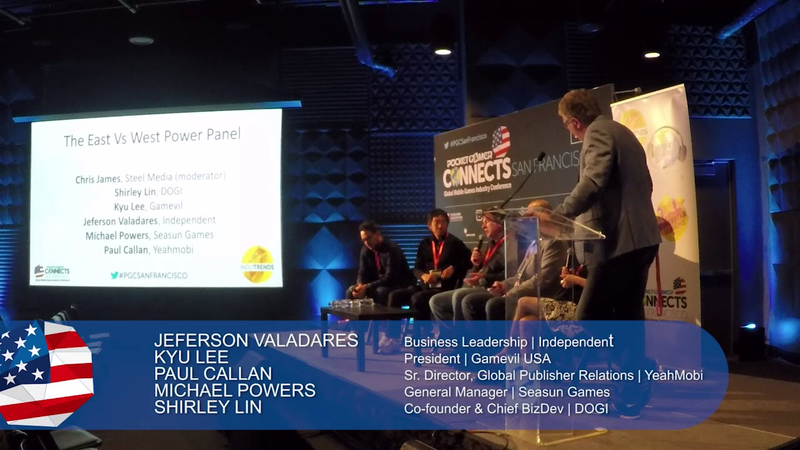
Mobile gaming: The East versus West power panel
The global mobile gaming landscape is currently defined by a strategic tension between the mature, high-barrier markets of East Asia and the expansive, growth-oriented opportunities in the West.
- The Asia-Pacific region, led by China, Japan, and South Korea, remains the primary driver of global mobile gaming innovation and revenue despite extreme market saturation and complex regulatory barriers.
- Chinese gaming giants Tencent and NetEase maintain dominant control over their domestic market, requiring foreign developers to secure strong local partnerships for successful entry.
- Asian conglomerates are actively acquiring Western intellectual property and talent to offset domestic growth plateaus, with Chinese firms favoring autonomous studio management while Korean firms prefer integrated, hands-on structures.
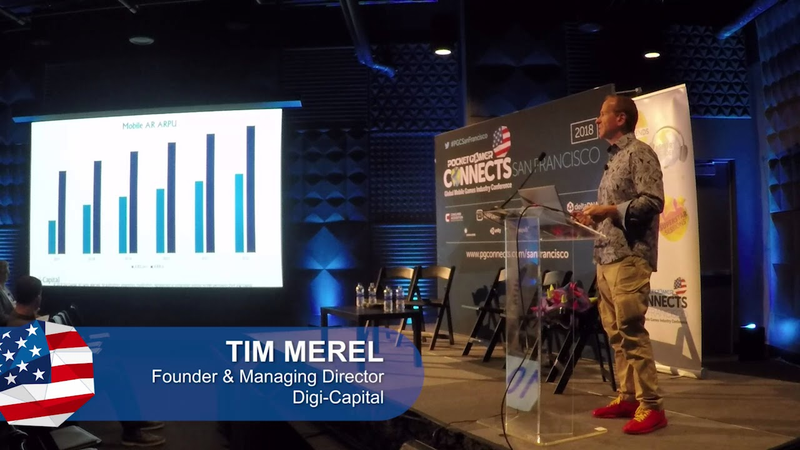
Mobile AR/VR/MR – Where's the market headed and what do the numbers look like?
The mobile augmented reality (AR), virtual reality (VR), and mixed reality (MR) market represents the fourth wave of consumer technology, characterized by rapid growth and increasing scale.
- Mobile AR is the dominant growth sector, projected to reach a 3.5 billion user base and $85–$90 billion in revenue over the next five years, significantly outpacing VR.
- VR is forecast to remain an entertainment-focused niche, reaching 50–60 million units and $10–$15 billion in revenue within five years.
- Asia is set to become the largest regional market, eventually accounting for over 50% of global AR/VR revenue, with China leading in mobile AR and the U.S. maintaining a lead in VR.
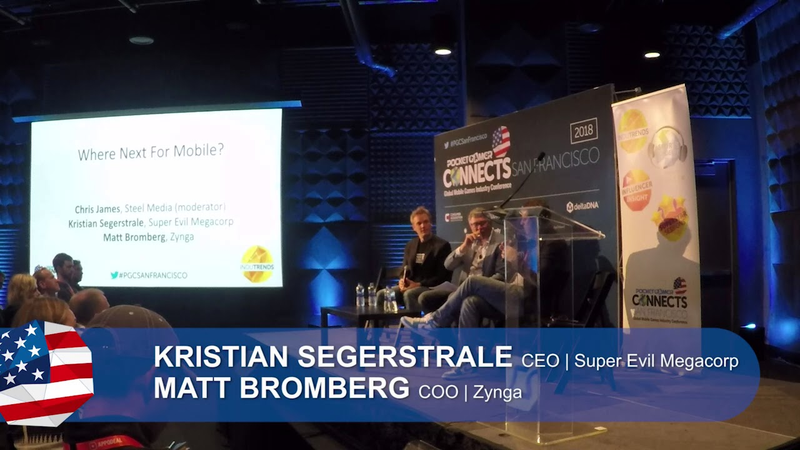
Fireside Chat: Where next for mobile?
The mobile gaming industry is currently defined by a fundamental shift toward social connectivity and the convergence of core gaming experiences.
- The mobile gaming industry is shifting toward a post-platform model where success is defined by community engagement and seamless cross-platform accessibility rather than hardware-specific ecosystems.
- Growth is currently sustained by hardware advancements, the expansion of emerging markets like India, and the widespread adoption of cross-platform play.
- Artificial intelligence is becoming a critical tool for developers to personalize user experiences and optimize internal development workflows.
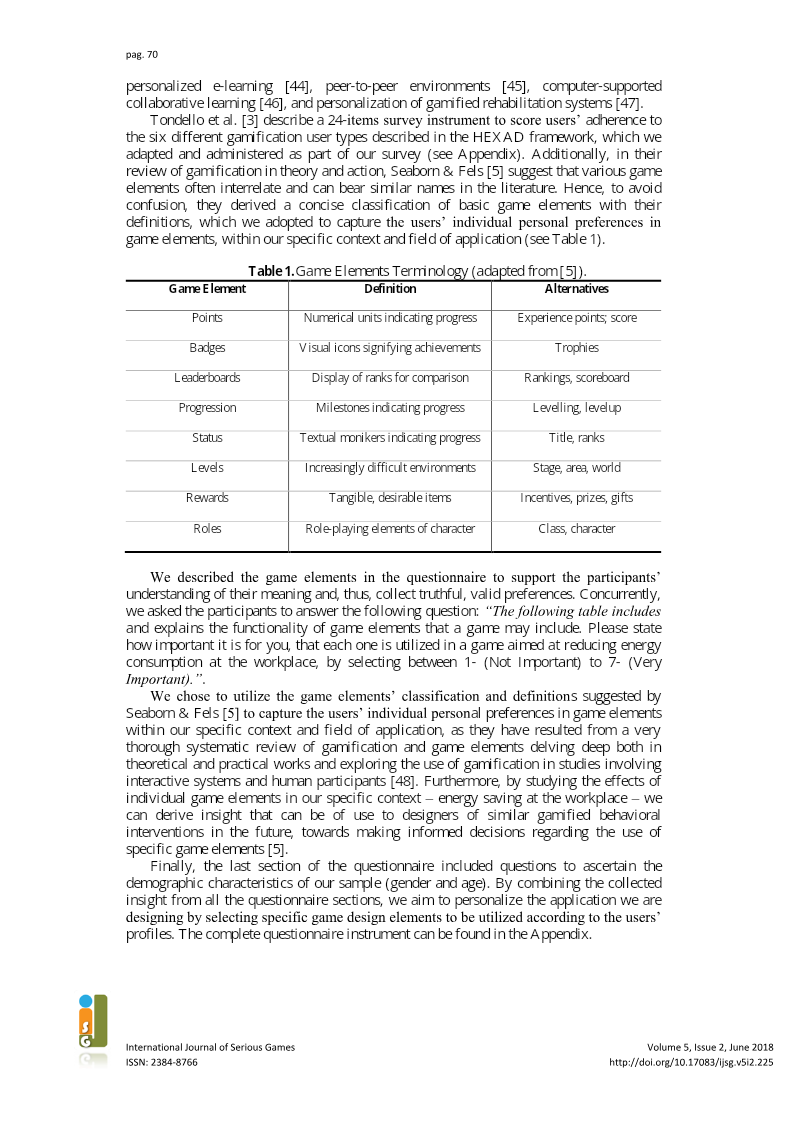
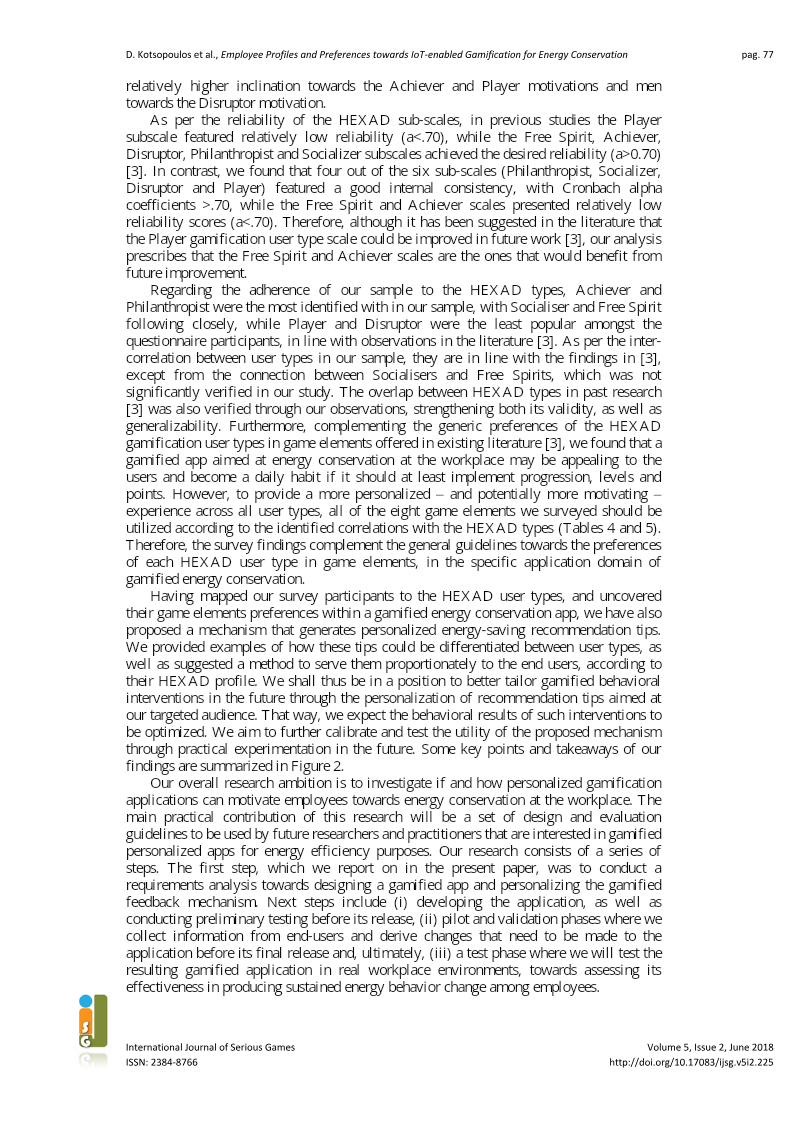
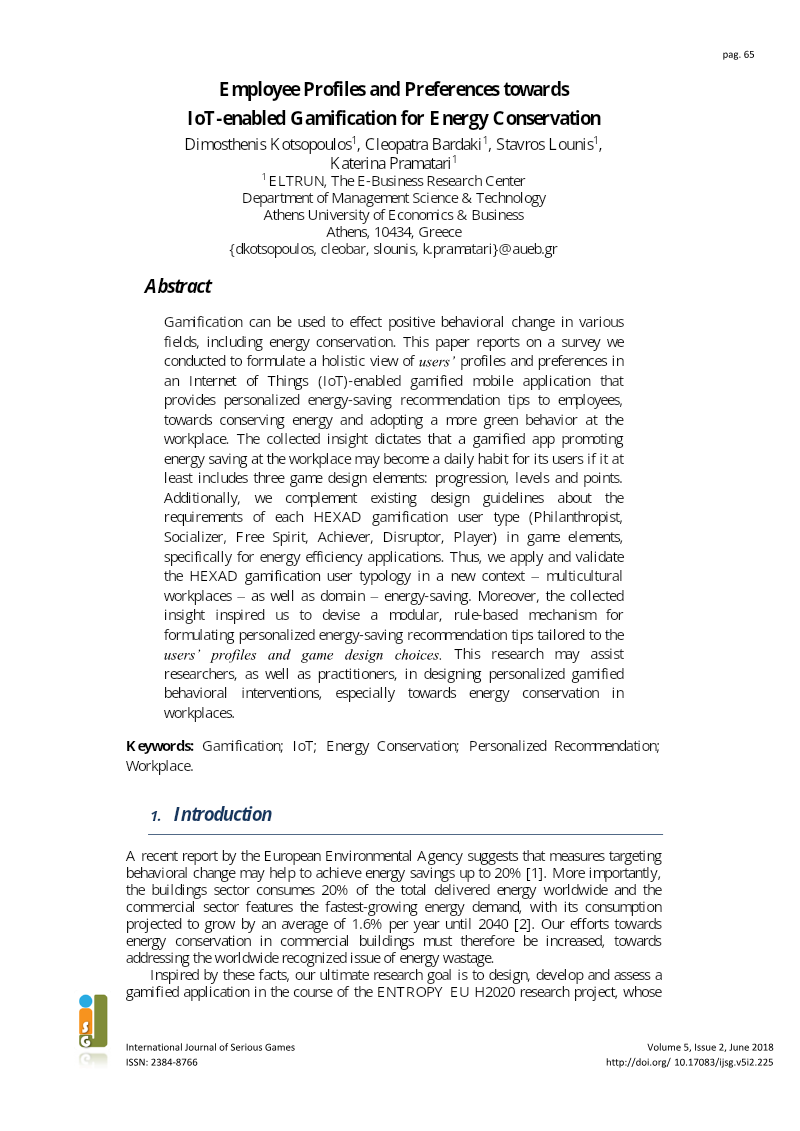
Employee Profiles and Preferences towards IoT-enabled Gamification for Energy Conservation
IoT-enabled gamification serves as a strategic tool for fostering long-term energy conservation within multicultural corporate environments.
- Achievers and Philanthropists are the most prevalent user profiles in corporate environments, making them the primary targets for energy-saving gamification strategies.
- Progression, levels, and points are the most effective gamification mechanics for driving employee participation in energy conservation initiatives.
- A study of 99 participants across three European countries confirms that mapping gamification mechanics to specific HEXAD user profiles significantly improves engagement and behavioral change.
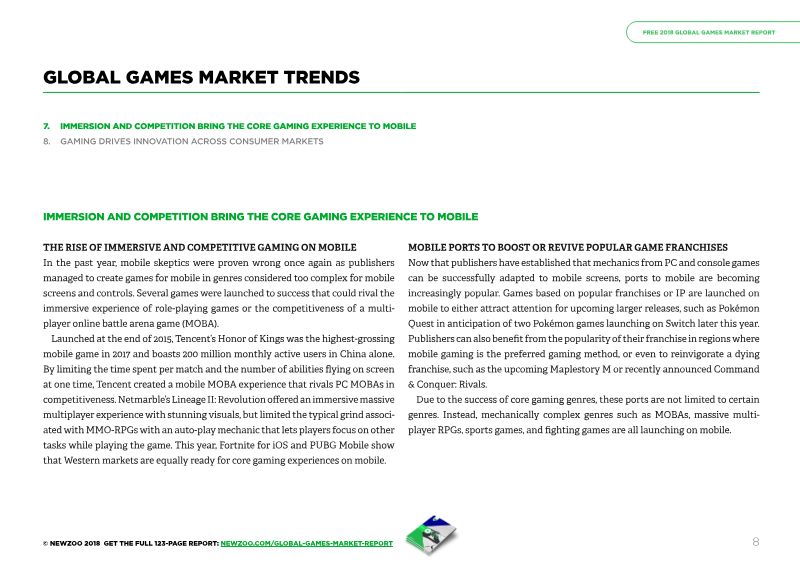
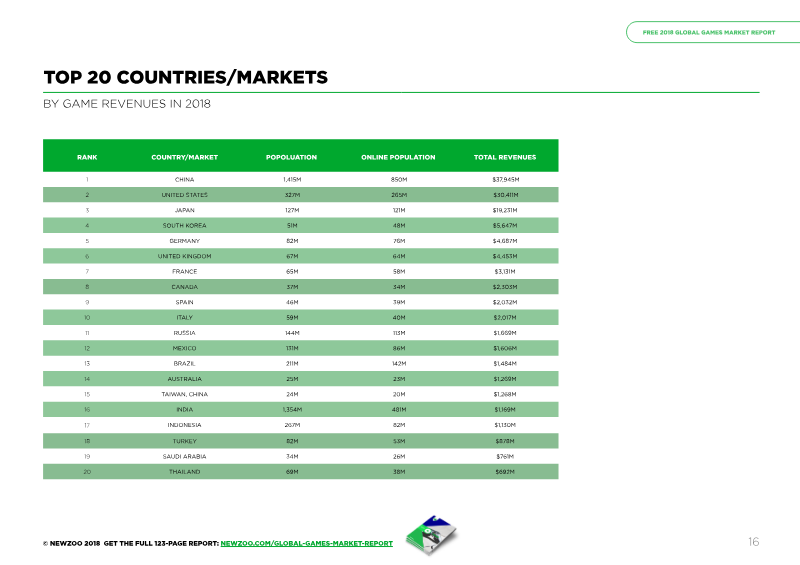

2018 Global Games Market Report: Trends, Insights, and Projections Toward 2021
This report provides an overview of the global games market in 2018, analyzing key trends, market segmentation, regional performance, and projections toward 2021.
- The global games market is projected to reach $137.9 billion in 2018, driven by a strategic shift from product-based sales to long-term engagement models.
- Mobile gaming is the industry's dominant segment, generating $70.3 billion and accounting for 51% of total global revenue.
- The Asia-Pacific region remains the largest market, contributing 52% of total global gaming revenue.

FRAMED: A Recipe for Critical Success
The primary objective of this analysis is to outline a strategic framework for positioning premium indie titles for success in the mobile market.
- Strategic participation in the global festival and awards circuit can secure long-term commercial viability for premium indie titles, even when initial launch performance is underwhelming.
- The game FRAMED achieved 400,000 paid unit sales despite an initial launch that failed to meet expectations relative to its $500,000 development budget.
- Developers should structure production around ten-week milestones that align with major industry events to ensure a constant, high-quality, submission-ready build.
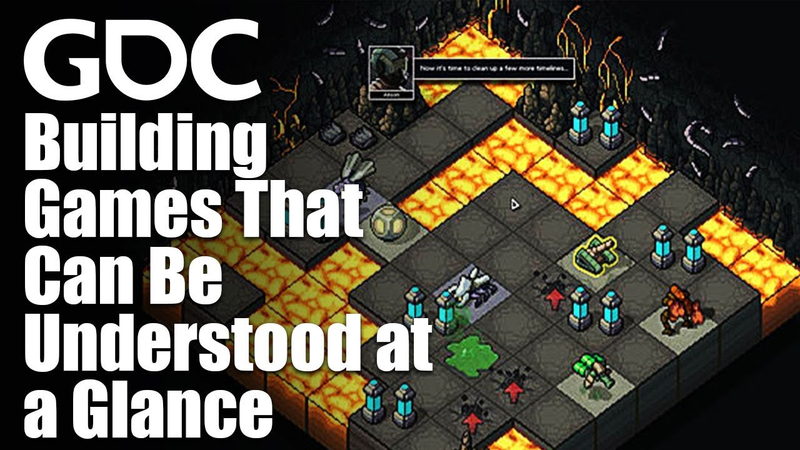
Building Games That Can Be Understood at a Glance
Designing games that are immediately comprehensible to an outside observer—a concept termed subway legibility—serves as a powerful tool for indie developers to improve tutorials, organic discovery, and marketing.
- Apply the 'three reads' principle to UI design: the first read establishes the genre or hook, the second communicates core mechanics, and the third provides secondary contextual information.
- Prioritize visual hierarchy by scaling and positioning UI elements based on their importance to ensure the game state is immediately understandable to both players and observers.
- Utilize 'subway legibility' to lower the cognitive load on new players, which simplifies tutorial design and allows marketing materials to convey value without needing extra context.

How does Harry Potter: Hogwarts Mystery monetise?
Harry Potter: Hogwarts Mystery, developed by Jam City, utilizes a narrative-driven, energy-gated monetization model common in mobile role-playing games.
- Jam City utilizes an energy-gated monetization model where players consume energy to complete narrative missions, with recharge rates set at one unit every three minutes.
- The game employs a dual-currency system consisting of gold (soft currency) and gems (hard currency), with gem purchase price points reaching up to $99.99 USD.
- Monetization is designed to prioritize long-term player retention and ecosystem engagement over aggressive, high-velocity spending or pay-to-win mechanics.

Wappier on improving mobile game monetisation by up to 50 per cent
Wappier provides a cloud-based platform designed to optimize mobile game monetization through machine learning, dynamic pricing, and loyalty programs.
- Wappier’s machine learning platform claims to increase mobile game revenue by 30 to 50 percent by replacing static pricing with automated, data-driven engagement strategies.
- The platform processes over one billion data points daily to automate real-time store provisioning, regional price adjustments, and personalized bundle offers.
- Dynamic bundling strategies are used to increase revenue without destabilizing in-game economies, avoiding the risks associated with traditional single-item discounting.

How does Marvel Strike Force monetise?
Marvel Strike Force utilizes a complex, multi-layered in-app economy typical of squad-based mobile RPGs, centered on the acquisition and development of iconic Marvel characters.
- Marvel Strike Force utilizes a dual-currency model consisting of gold as a soft currency and power cores as a hard currency to drive its squad-based RPG economy.
- The monetization strategy centers on loot boxes known as 'orbs,' which provide players with character shards and gear components necessary for progression.
- The game minimizes early-game friction by distributing resources generously, ensuring players rarely face progression bottlenecks during the leveling process.

SimCity BuildIt - What Did I Learn as a Game Designer?
Adapting the SimCity franchise for mobile requires a fundamental reimagining of core mechanics rather than a direct port of PC-based systems.
- Adapting legacy PC simulation titles for mobile requires a fundamental reimagining of core mechanics rather than a direct port, focusing on simplified interfaces and non-punitive gameplay loops suitable for short sessions.
- Development teams should transition to agile, collaborative structures that prioritize radical honesty and player-first thinking to enable rapid iteration based on data-driven insights.
- High-quality mobile products can be delivered within compressed timelines, as demonstrated by the ability to move from initial concept to worldwide release in under 18 months.
Data Analytics of Mobile Serious Games: Applying Bayesian Data Analysis Methods
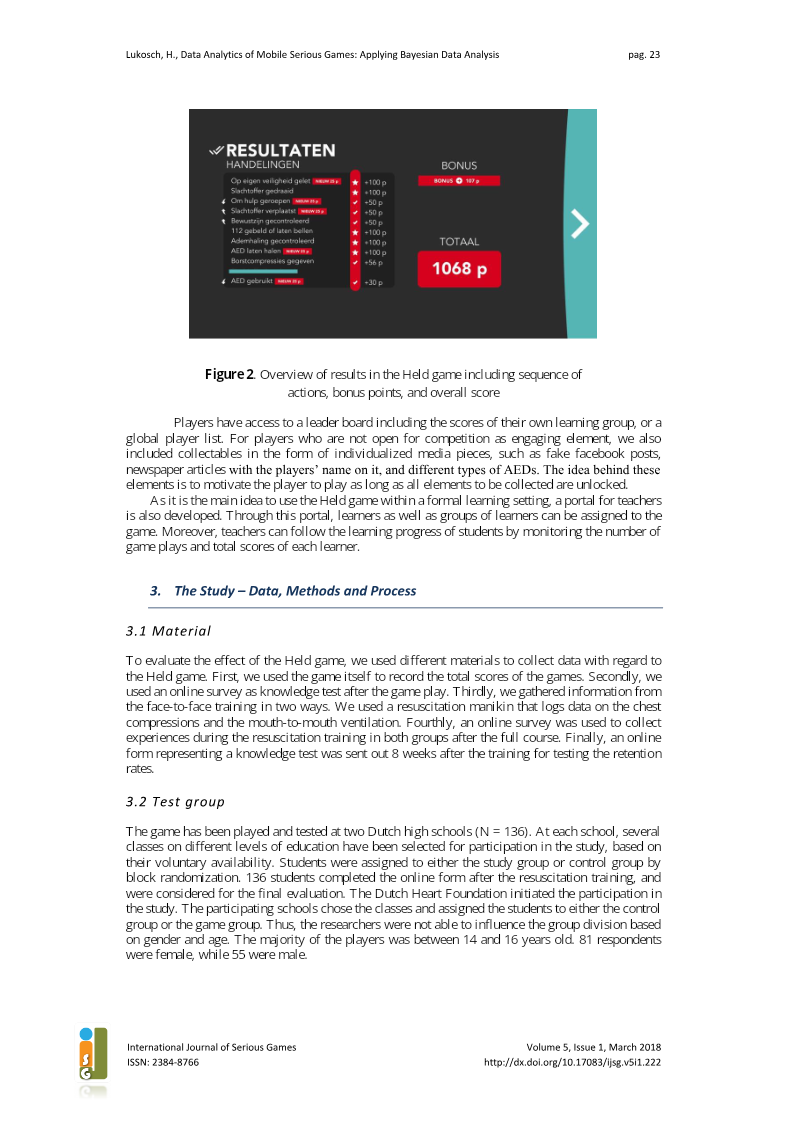
The mobile serious game Held functions as a highly effective pedagogical tool for teaching resuscitation theory and practical skills to secondary school students.
- Mobile serious games like 'Held' achieve knowledge transfer outcomes equivalent to traditional classroom instruction for teaching resuscitation skills.
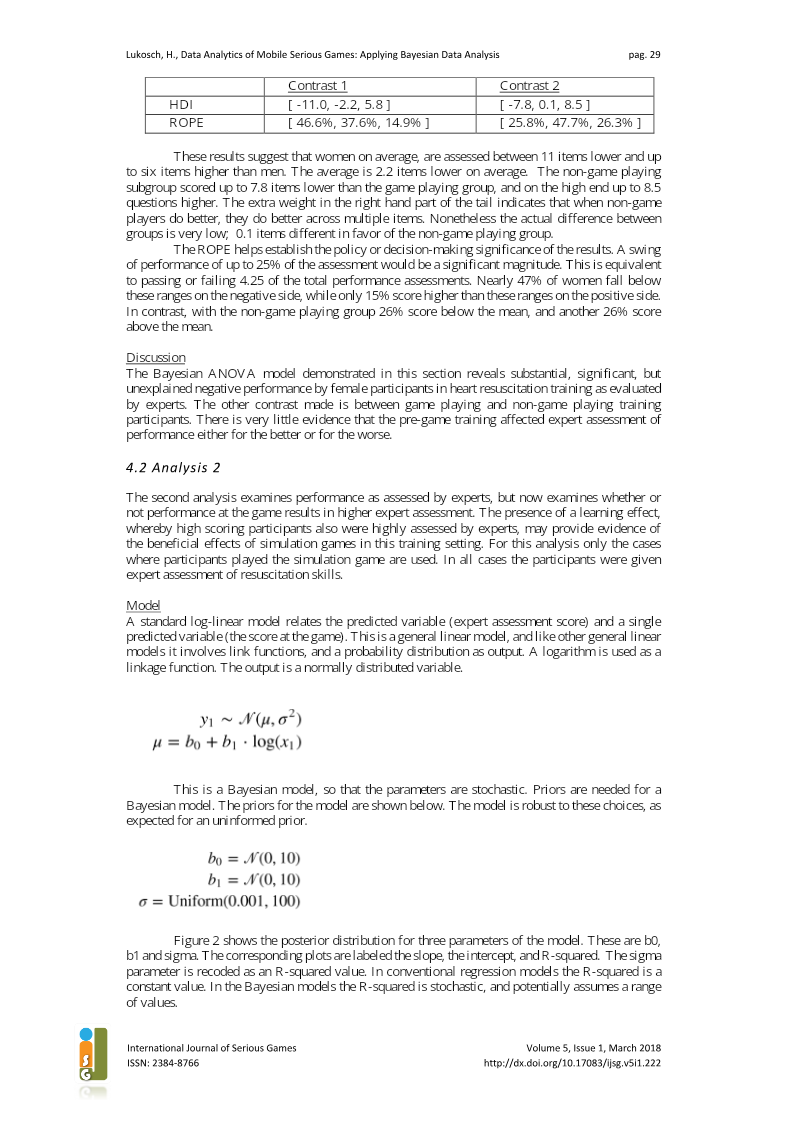
- Bayesian data analysis, specifically using Beta distribution models, provides a more accurate assessment of student performance than frequentist methods by isolating metrics from subjective variables like motivation.
- Objective game-log data reveals that female students consistently outperform male students, despite a systematic bias against female participants found in expert observer ratings.