ReportNewzoo
2018 Global Games Market Report: Trends, Insights, and Projections Toward 2021
25 pages~20 min full read
Key insights
6 slides
Market size
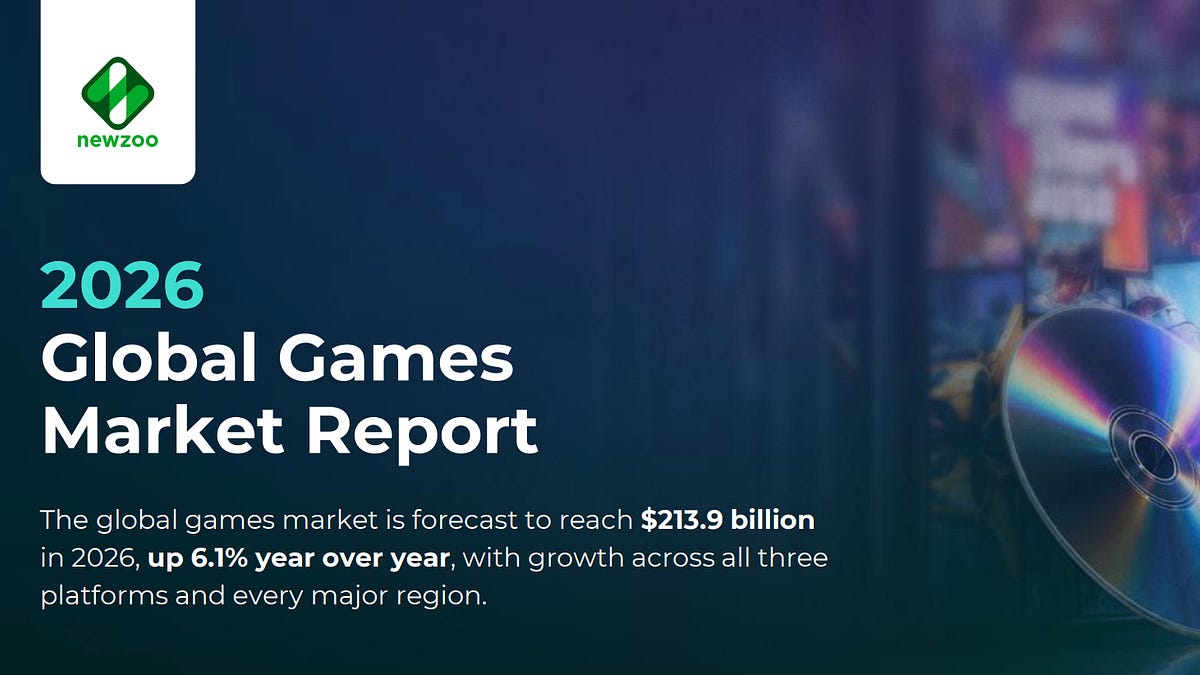
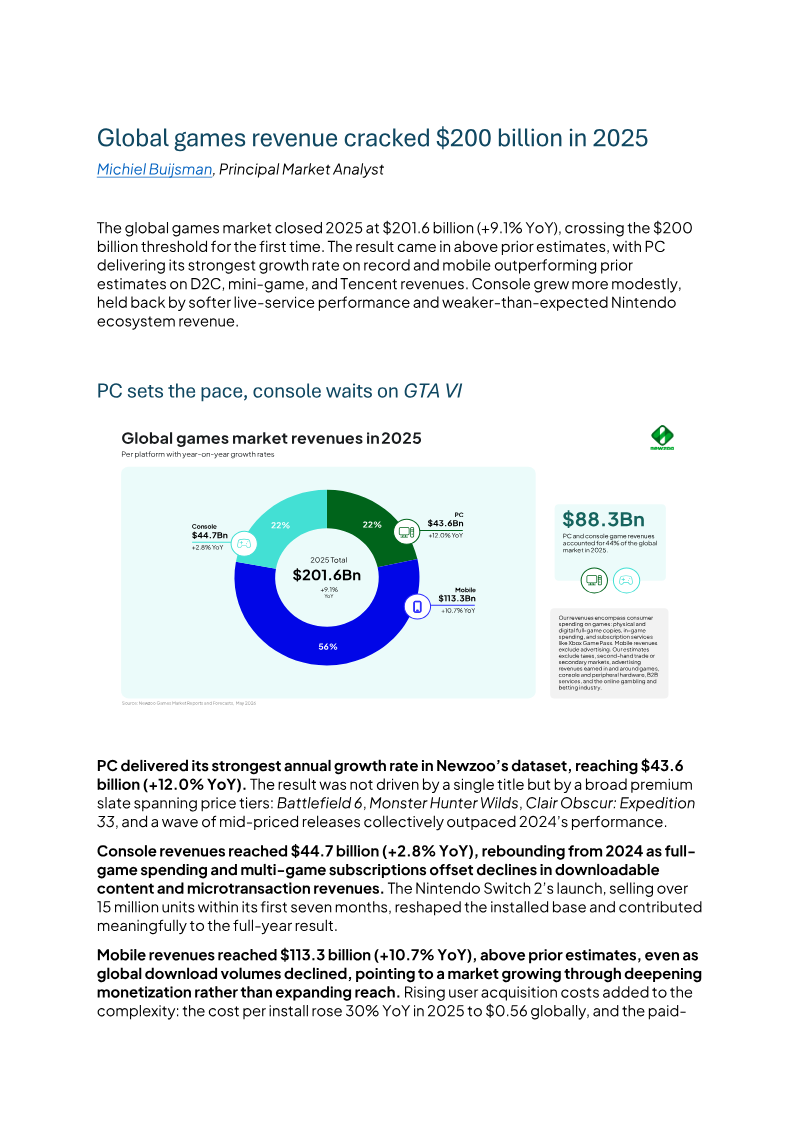
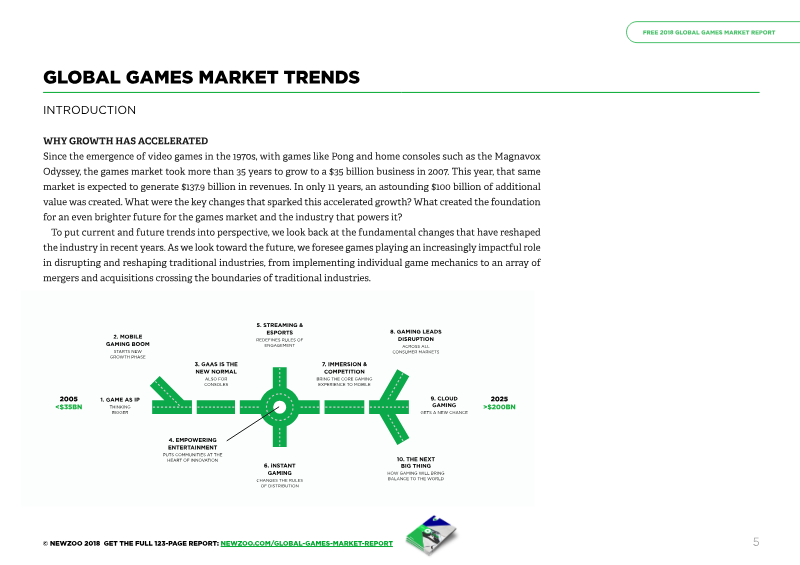
The global games market is projected to reach $137.9 billion in 2018.
This growth is driven by a strategic shift from product-based sales to long-term engagement models. The industry is entering a new phase of accelerated growth.
Segment dominance
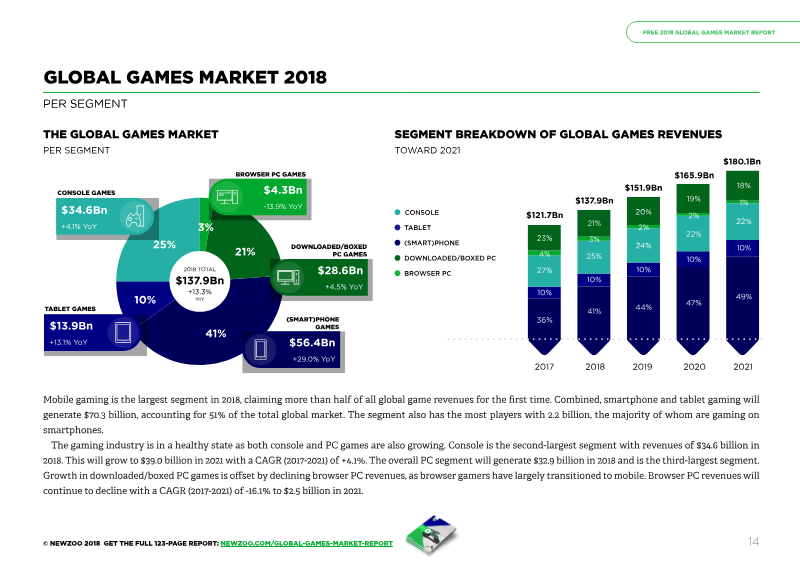
Mobile gaming is the industry's dominant segment, generating $70.3 billion.
Mobile gaming accounts for 51% of total global revenue.
Regional share
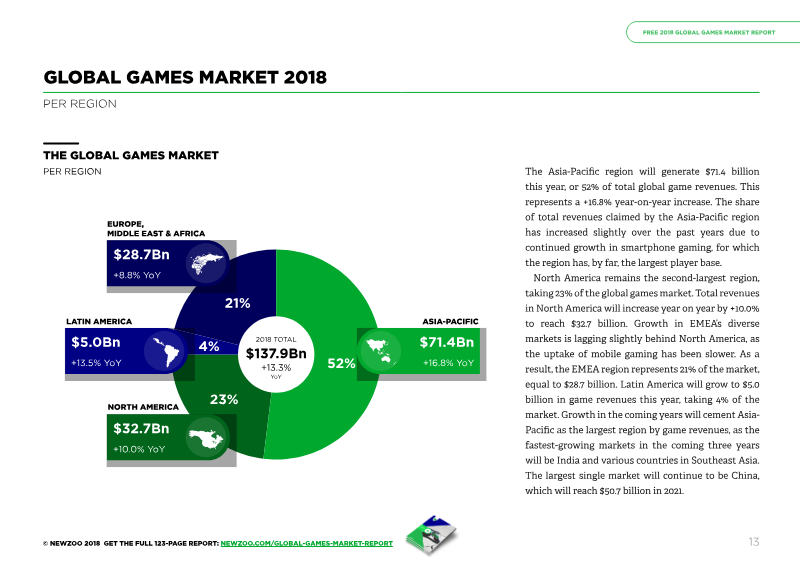
The Asia-Pacific region remains the largest market, contributing 52% of total global gaming revenue.
Significant growth is observed in emerging markets within this region. In-app advertising is increasingly vital in these emerging markets.
Engagement model
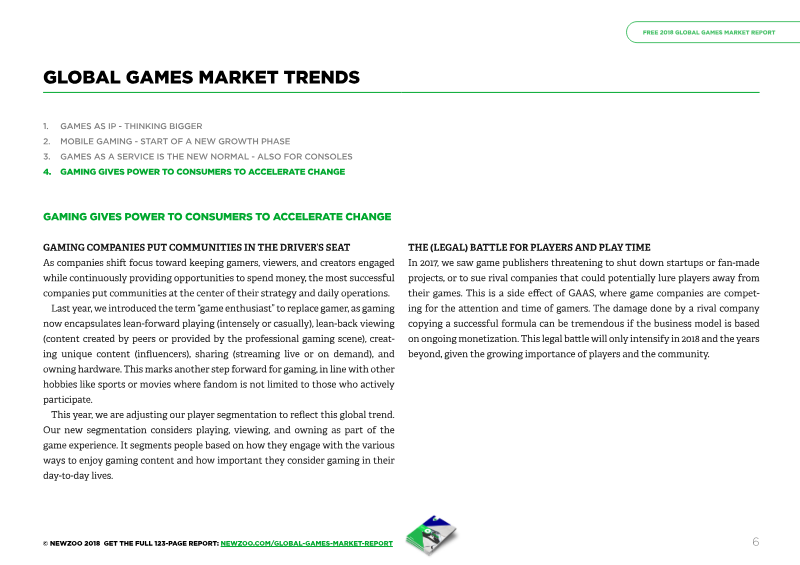
Industry growth is increasingly defined by the 'Games-as-a-Service' (GaaS) model.
This model emphasizes continuous engagement through playing, viewing, and owning content. It represents a fundamental shift in how the industry operates.
Distribution disruption
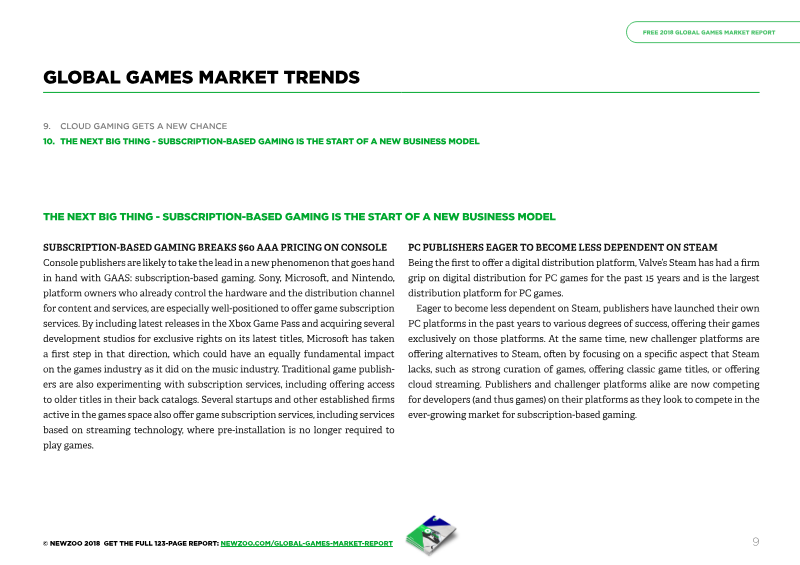
Subscription-based services, cross-platform play, and 'instant gaming' are disrupting traditional distribution models.
These trends are challenging the dominance of established platforms like Steam. 'Instant gaming' on social networks is a key driver for reaching casual audiences.
Entertainment influence
The industry is increasingly influencing broader entertainment sectors.
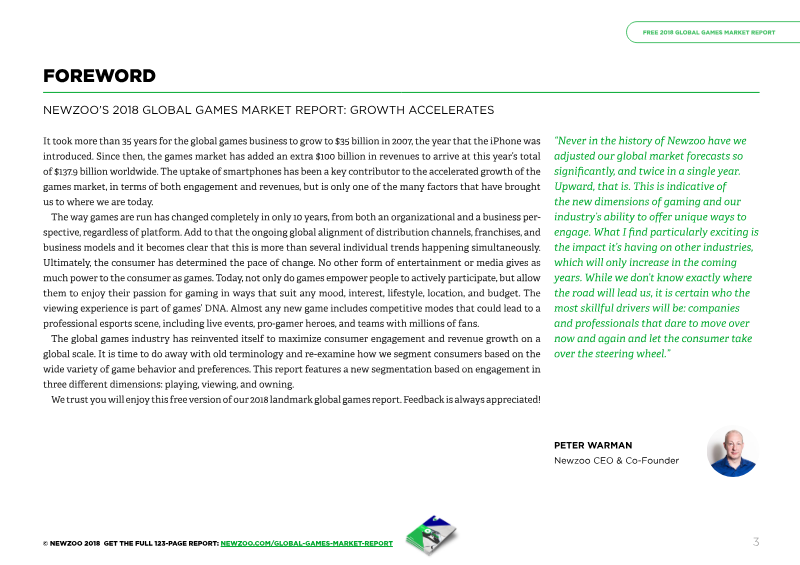
Competitive gaming and streaming are becoming central components of the modern user experience.
1 / 6
Ask AI about this report