Mobile reports and market data
Documents
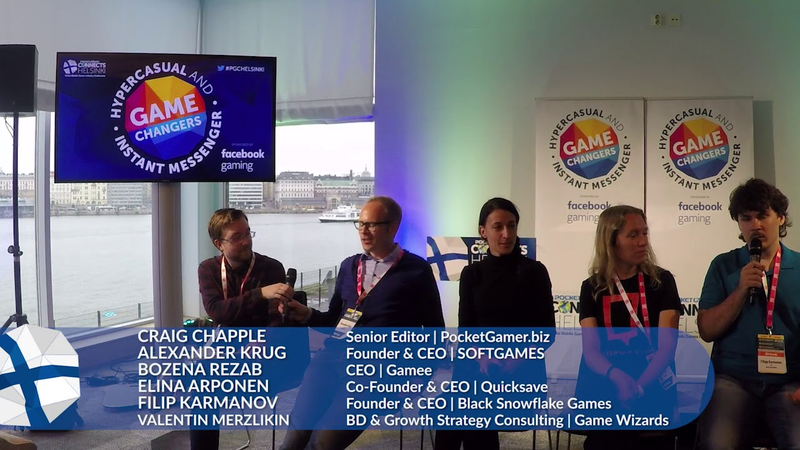
Keys for success in hypercasual and messenger games
The hypercasual and messenger gaming sectors are currently undergoing a significant evolution, driven by the rise of super apps like WeChat, Facebook Messenger, and VK.
- Messaging apps like Facebook Messenger and WeChat are emerging as secondary discovery layers that sit within the primary App Store and Google Play ecosystems, acting as powerful gateways for game distribution.
- Hypercasual games succeed by focusing on simple, one-touch mechanics and high-frequency engagement loops, such as collecting coins to unlock skins, rather than complex graphics or deep meta-gameplay.
- Long-term success in the instant gaming market requires developers to move beyond simple launches by providing consistent, fresh content updates to maintain user retention, rather than relying solely on initial viral spikes.
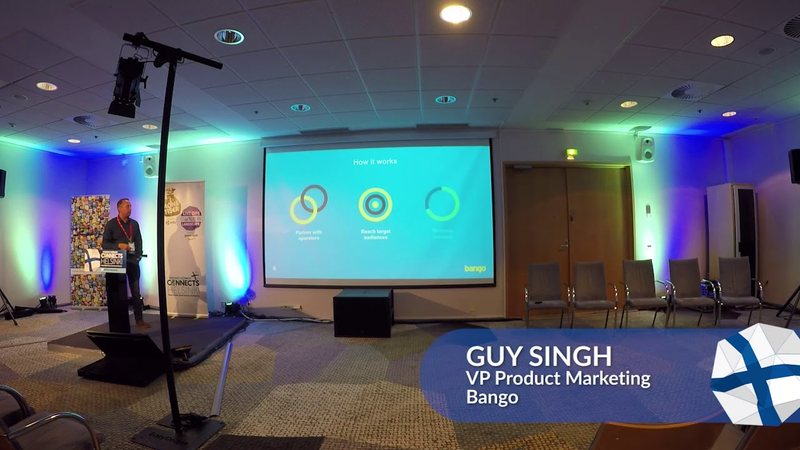
Unleash the power of operator data to convert 9x more paying users
The primary objective of leveraging mobile operator data in user acquisition is to shift marketing strategies from broad, browsing-based targeting to precise, behavior-based targeting.
- Targeting users based on verified mobile operator purchase history rather than general browsing behavior can increase conversion rates for free-to-play users by up to nine times.
- A Smule case study in Indonesia demonstrated that targeting high-value spenders who had not yet made an in-app purchase resulted in a conversion rate nine times higher than standard organic rates.
- Rovio’s Angry Birds campaign in the U.S., which utilized Verizon network push notifications to offer incentives to top spenders, achieved a 17% increase in new customers and improved overall lifetime value.
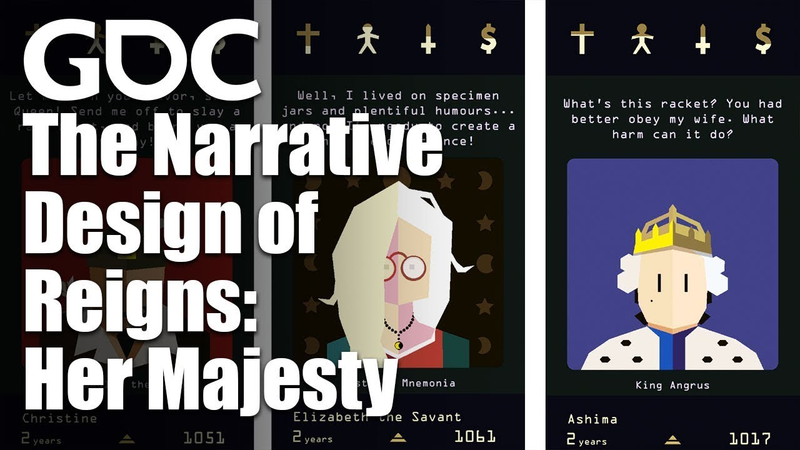
Queens of the Phone Age: The Narrative Design of Reigns: Her Majesty
Reigns: Her Majesty functions as a critical exploration of power dynamics, utilizing a modular, swipe-based interface to simulate the constraints of navigating a patriarchal society.
- Reigns: Her Majesty uses a swipe-based mechanic to simulate the constraints of a patriarchal society, forcing players to navigate power through indirect influence and strategic compromise rather than overt authority.
- The game’s narrative design balances four kingdom pillars—church, people, army, and finances—to explore the complexities of self-care and the commercialization of feminism within restrictive environments.
- The project functions as a meta-commentary on the video game industry, critiquing the ethics of corporate-branded progressivism and the limitations of empathy-driven design.
The Business & Development of #Sworcery
The development and commercial performance of Superbrothers: Sword & Sworcery EP demonstrate that prioritizing creative integrity and niche appeal is a more sustainable business strategy for independent studios than chasing broad-market trends.
- Prioritizing creative integrity and niche appeal over mass-market trends proved commercially viable for Superbrothers: Sword & Sworcery EP, which sold over 350,000 copies.
- The iPad served as the primary revenue driver for the project, accounting for more than 75% of total sales and validating the strategy of tailoring high-quality experiences to specific hardware.
- Maintaining a unified creative vision through cross-disciplinary collaboration and a commitment to a polished final product mitigated development risks and established a strong brand identity.
Design in Depth at Supercell: Why Great Ideas Aren't Enough
Game development functions as an iterative navigation of complex systems where initial concepts serve only as starting points rather than blueprints for success.
- Game development success relies on iterative navigation of complex systems rather than rigid adherence to initial conceptual blueprints.
- Economic stability is best achieved by anchoring in-game goods to production time, creating scalable frameworks that allow for adjustments as player behavior evolves.
- To sustain engagement in competitive titles, developers should decouple personal progression from character-specific performance to encourage experimentation with new content.

How does Legend of Solgard monetize?
Legend of Solgard, a mobile title developed by Snowprint Studios and published by King, functions as a mid-core, lane-based match-three game that integrates tactical unit positioning with a complex, multi-layered progression economy.
- Legend of Solgard utilizes a multi-layered progression economy that forces resource scarcity, compelling players to make strategic choices about character upgrades and creating natural demand for additional currency.
- The monetization model combines standard free-to-play mechanics, including hard and soft currencies, loot boxes, and time-gated progression, to sustain long-term player retention.
- The game employs a subscription-based model that provides a steady stream of hard currency in exchange for daily logins, effectively driving both revenue and daily active user counts.

How Chocolate helps developers monetise "more intelligently"
Mobile game monetization is increasingly shifting toward intelligent, data-driven video advertising strategies that prioritize user experience alongside revenue generation.
- Developers must transition from basic ad integration to sophisticated, data-driven strategies like real-time and header bidding to optimize floor prices and maximize yield.
- Monetization performance should be managed through granular user segmentation based on behavioral data, geographic location, and progression milestones.
- A/B testing is essential for analyzing how specific ad placements impact player retention and churn rates.
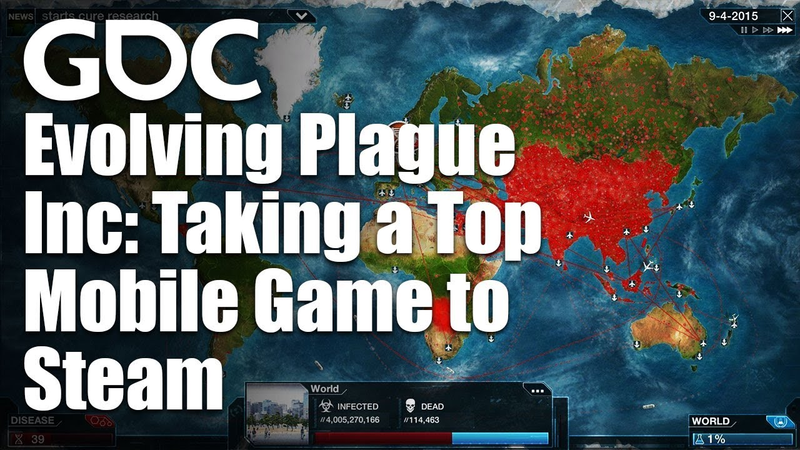
Evolving Plague Inc: Taking a Top Mobile Game to Steam
The transition of mobile titles to the PC market requires a strategic departure from simple porting to avoid the pervasive mobile stigma that often alienates desktop players.
- Plague Inc: Evolved achieved a 95 percent positive review score and sold 500,000 units in its first year on Steam by prioritizing a comprehensive rebuild over a simple mobile port.
- Successful platform expansion requires replacing mobile-style monetization with a premium pricing model that aligns with PC gaming community expectations.
- Developers must implement platform-specific enhancements, such as bespoke user interfaces, upgraded 3D engines, and features like multiplayer and custom scenario creators, to avoid the 'mobile stigma' on desktop.
The Year in Mobile Games
The mobile gaming industry in 2018 underwent a significant transformation characterized by the decline of legacy top-grossing titles and the emergence of innovative engagement models.
- Long-term retention in 2018 mobile gaming is increasingly driven by meta-game structures like social guild systems and collection mechanics rather than traditional progression maps.
- Developers are successfully utilizing a 'meta-game transplant' strategy, which involves integrating competitive progression loops from core games into casual genres like sports.
- Traditional social integrations are failing, with adoption rates for connecting personal accounts falling below 50% due to user friction.
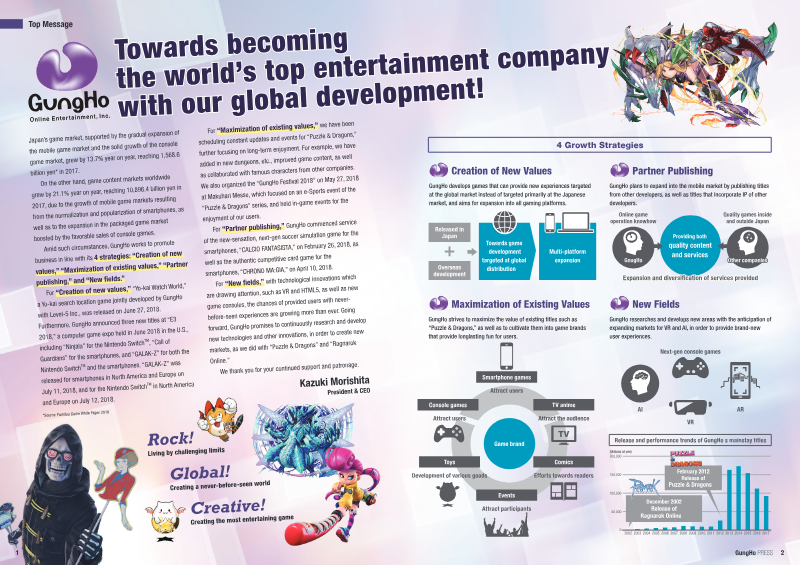
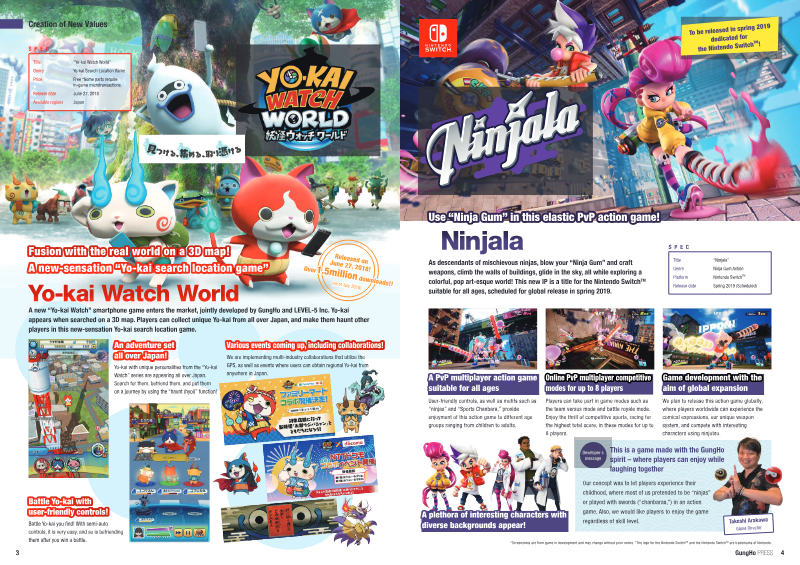

Yo-kai Watch World: Market Summary
This document provides a market summary for GungHo Online Entertainment, Inc., focusing on its strategic direction, key game titles, and financial performance.
- GungHo Online Entertainment is shifting from a Japan-centric mobile model to a global, multi-platform strategy to counter the maturing domestic market.
- The company is diversifying its development pipeline beyond smartphones to include console and PC platforms to reach international audiences.
- Flagship title Puzzle & Dragons remains the primary revenue driver, sustained through continuous updates, in-game events, and high-profile collaborations.
Game design tactics
The molecular design methodology offers a systematic approach to game development by breaking down complex game mechanics into fundamental, player-centric components.
- The molecular design methodology reduces game development time by at least 50% by replacing subjective, character-based design with a universal language of standardized player skills.
- Game mechanics are broken down into 'molecules'—quantifiable units based on specific player inputs like reaction time, spatial navigation, and decision-making—rather than character skins or animations.
- Designers organize these molecules into blueprints that dictate the temporal and spatial distribution of gameplay, providing a measurable overview of progression and identifying development bottlenecks.
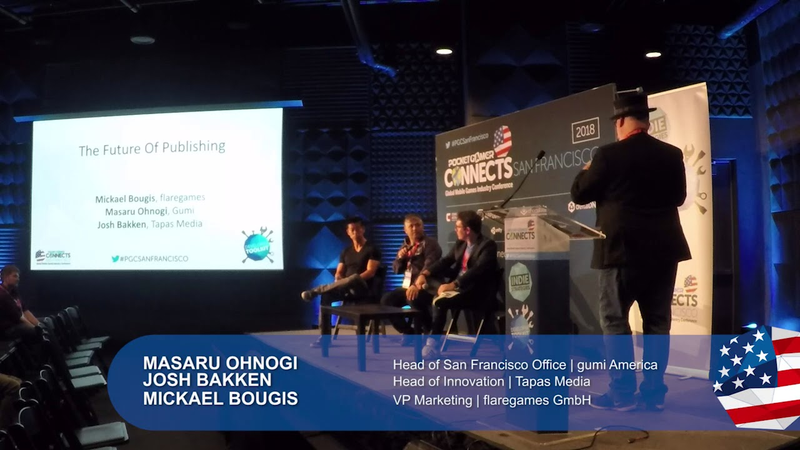
The future of games publishing
Game publishing has transitioned from a traditional marketing-focused model into a multifaceted partnership defined by technical infrastructure, strategic curation, and long-term operational support.
- Modern mobile game publishing has shifted from a 'no publisher needed' model back to a reliance on publishers due to the increasing complexity of marketing, live operations, and the integration of numerous SDKs—sometimes as many as 26 per game.
- Publishers now prioritize long-term sustainability, often asking developers if they are prepared to commit 4–5 years to supporting a single title, as games with long-term live operations often maintain revenue levels similar to their launch period.
- Publishers are increasingly cautious about funding development for unproven teams, preferring to sign established studios or projects with high market potential to mitigate the high risks associated with mobile free-to-play development.