Mergers & Acquisitions reports and market data
Documents
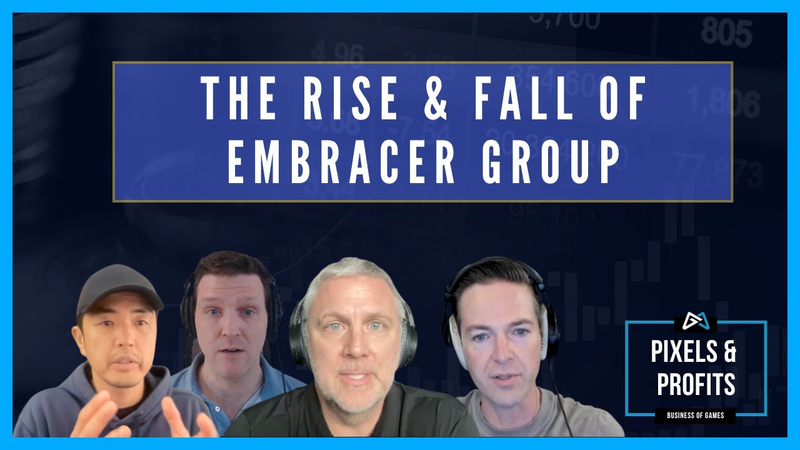
The Rise and Fall of Embracer Group
The decision to split Embracer Group into three independent, publicly traded entities—Asmodee, Coffee Stain, and Middle-earth Enterprises—signals the collapse of a decentralized corporate strategy that prioritized financial engineering over operational cohesion.
- Embracer Group is splitting into three independent, publicly traded entities—Asmodee, Coffee Stain, and Middle-earth Enterprises—marking the abandonment of its decentralized 'city-state' acquisition model.
- The 18-month restructuring process is a direct result of the company's failure to generate operational synergies from its debt-fueled acquisition spree, which prioritized financial engineering over organizational cohesion.
- The gaming industry is shifting away from large-scale consolidation toward a 'fewer, better, best' philosophy that emphasizes quality over quantity and light-touch parent company support.
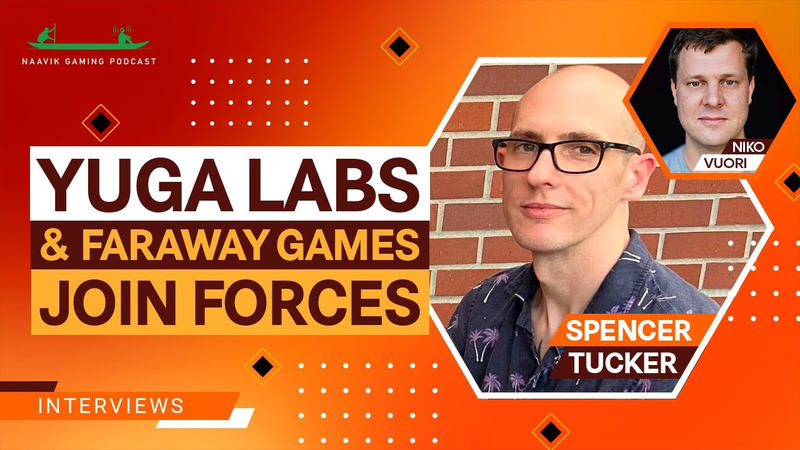
Yuga Labs: 1 Year After Dookey Dash
Yuga Labs is fundamentally restructuring its gaming strategy to transition from exclusive, token-gated activations toward sustainable, mass-market mobile experiences.
- Yuga Labs is pivoting from exclusive, token-gated activations to a mass-market, mobile-first gaming strategy to ensure long-term ecosystem scalability.
- The company has partnered with Faraway Games to manage key intellectual properties, including Legends of the Mara and Heavy Metal, to leverage specialized development resources.
- The strategy employs a dual-track model that combines 'degen-first' Web3 utility with 'Web 2.5' free-to-play mechanics to convert casual players into high-value participants.
two & a half gamers session #27 - Unity - Applovin bomb, Zynga gambling, worst career mistakes
The mobile gaming industry currently faces a period of significant structural and operational volatility.
- AppLovin proposed a merger with Unity, a move that would require Unity to terminate its pending acquisition of ironSource and pay a $150 million termination fee.
- Netflix has struggled to gain traction in mobile gaming, with only 1% of its subscribers engaging with its 23.3 million total downloads since the initiative launched in November 2021.
- Zynga reached a $12 million class action settlement regarding its gambling-themed mobile applications.
two & a half gamers honest interviews #2 - Elena Egorova (Can you even M&A bro?)
Mergers and acquisitions in the mobile gaming sector are primarily driven by the strategic necessity to consolidate services into comprehensive, one-stop-shop platforms capable of supporting top-grossing publishers.
- M&A activity in mobile gaming is currently driven by a strategic shift toward building comprehensive, one-stop-shop platforms that support top-grossing publishers.
- The standard acquisition timeline spans four to six months, beginning with market gap identification and concluding with rigorous financial and legal audits.
- Valuation methodologies are bifurcated: established, profitable firms are valued using EBITDA multiples, while high-growth companies are valued based on revenue multiples.

Unpacking Krafton’s Strategy: PUBG, New IPs, Investments & More!
Krafton is currently undergoing a strategic evolution, transitioning from a company defined by the singular success of the PUBG franchise to a diversified global publisher focused on scaling creative innovation.
- Krafton is diversifying its portfolio beyond the PUBG franchise by investing in a multiplatform pipeline that includes inZOI, Dark and Darker Mobile, and Dinkum Mobile.
- The company utilizes a decentralized operational model, supporting specialized spin-off studios with infrastructure and resources while maintaining studio autonomy.
- Krafton is aggressively integrating deep learning and artificial intelligence to improve development efficiency, enhance anti-cheat security, and create more immersive NPC experiences.

TWIG #281 Switch 2, Moon Active 💗 Spyke Games, Helldivers vs. PSN
The global gaming industry is currently navigating a period of intense structural realignment, defined by aggressive cost-cutting, strategic consolidation, and a volatile relationship between developers and their player bases.
- The gaming industry is undergoing a structural shift characterized by aggressive cost-cutting and studio closures, exemplified by Microsoft’s recent efforts to reconcile high subscription-model costs with sustainable profitability.
- Community sentiment has become a critical operational risk, as demonstrated by the successful player backlash against Sony’s mandatory account-linking policy for Helldivers 2, which forced a policy reversal.
- Mobile gaming remains a primary growth engine, with titles like Monopoly GO! achieving massive revenue run rates and successfully attracting new demographics.
Games Investment Review: Q1 2024 Executive Summary Report
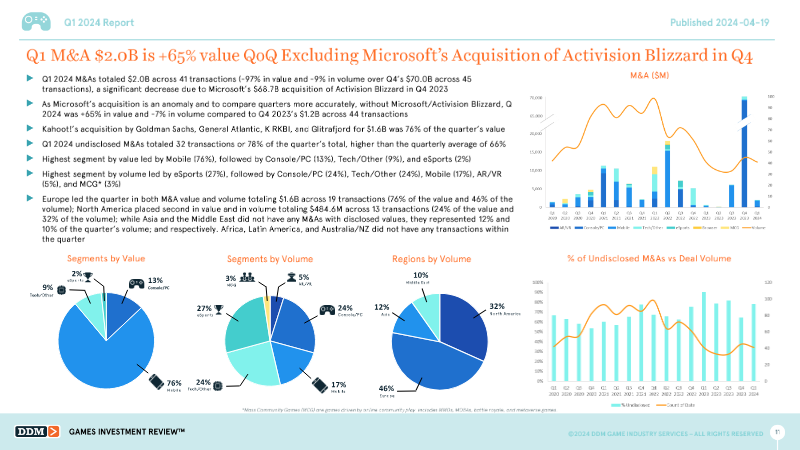
The Q1 2024 Games Investment Review provides a comprehensive analysis of financial activity within the global video game industry, focusing on investments, mergers and acquisitions (M&A), and initial public offerings (IPOs).
- Q1 2024 saw $2.2 billion in total investments across 178 deals, marking the first time quarterly investment value has exceeded $2 billion since Q3 2022.
- M&A activity reached $2 billion across 41 transactions, representing a 65% increase in value when excluding the previous quarter's Microsoft-Activision Blizzard acquisition.
- A $1.5 billion investment in Epic Games served as the primary driver for the quarter's total investment volume.

Secrets to Sustainable Success on Roblox with Andrew Rose, CPO at Voldex
The Roblox ecosystem represents a unique paradigm for game development, characterized by high organic discovery and a creator-led culture that prioritizes community engagement over traditional marketing.
- Roblox enables sustainable profitability by leveraging organic discovery and social graphs, which effectively eliminates the need for traditional paid user acquisition.
- Firms like Voldex achieve scale by acquiring successful user-generated content titles and applying professional live-operations strategies rather than developing new, high-risk games.
- Operational success requires a hybrid model that balances nimble, community-driven development with structured, data-informed processes like A/B testing and roadmap planning.

Embracer Group: Transformation into Three Standalone Publicly Listed Entities
Embracer Group is undergoing a fundamental corporate restructuring to split into three independent, publicly listed entities on Nasdaq Stockholm.
- Embracer Group is splitting into three independent, publicly listed entities on Nasdaq Stockholm to improve operational focus and unlock shareholder value.
- The three new entities are Asmodee Group (tabletop gaming), Coffee Stain & Friends (indie/AA focus), and Middle-earth Enterprises & Friends (AAA development).
- The combined financial performance for the twelve-month period ending December 2023 reached 39.7 billion SEK in net sales and 10.4 billion SEK in adjusted EBITDA.
Embracer vs. Ubisoft: A Deep Dive into Two Struggling Gaming Giants (Pixels & Profits)
Embracer Group and Ubisoft represent two distinct archetypes of instability within the modern gaming industry.
- Embracer Group is managing a severe liquidity crisis by divesting major assets like Gearbox and Saber Interactive to satisfy debt covenants and avoid insolvency.
- Ubisoft recorded a 500 million euro loss in the 2022-2023 fiscal year, driven by operational inefficiencies and excessive organizational overhead.
- Embracer’s decentralized model has failed to achieve economies of scale despite its portfolio of over 850 intellectual properties, leaving the company dependent on the success of 135 active projects.

TWIG #278 The AAA Studio Model is Dead??? And who are the BIG Gaming VC Funds good for?
The modern gaming industry is currently navigating a period of structural tension between traditional AAA development and the evolving demands of venture capital and transmedia integration.
- Despite industry speculation, high-budget AAA titles remain the primary drivers of revenue and player engagement according to data from Newzoo and Circana.
- The pursuit of Hollywood-style transmedia adaptations often fails to yield significant incremental revenue relative to high production costs, indicating a lack of strategic alignment for long-term growth.
- Venture capital firms like a16z and Bitkraft are creating market instability by pressuring portfolio studios to pursue high-risk, unicorn-style returns that conflict with sustainable development.
GDC Vibes / data.ai x Sensor Tower / Epic Announcements / US v. Apple
The gaming industry is currently navigating a period of significant structural adjustment, defined by a transition from speculative growth toward an era of efficiency and operational discipline.
- Mobile consumer spending is projected to decline in 2024, with 32% of all users and 41% of high-value spenders planning to reduce their in-app purchases.
- The gaming industry is shifting from speculative growth to operational discipline, characterized by widespread layoffs and a trend of experienced developers launching new studios focused on core quality.
- The U.S. Department of Justice’s antitrust lawsuit against Apple and Epic Games’ launch of a mobile store represent a direct challenge to the dominance of closed, vertically integrated mobile ecosystems.