Mergers & Acquisitions reports and market data
Documents



Global Sports Tech Market Report H1 2025
In the first half of 2025 the global sports-technology sector recorded approximately $52 billion in announced or closed transactions, underscoring a rapid acceleration of both merger-and-acquisition activity and capital raising.
- The global sports tech market reached a total deal value of $51.9 billion in H1 2025 across 503 announced or closed transactions.
- M&A activity dominated the sector with $32.2 billion in disclosed deal value across 233 deals, led by TSG Consumer’s $1.5 billion acquisition of EōS Fitness.
- Private placements hit a record $6.6 billion across 239 deals, highlighted by Infinite Reality raising $3 billion and DAZN securing $1.8 billion.



Global Gaming Report 2025
The analysis focuses on the accelerating consolidation of the worldwide gaming ecosystem, emphasizing the unprecedented scale of mergers and acquisitions (M&A) and private-placement financing observed in the final quarter of 2025 and projecting a further surge into 2026.
- The gaming M&A market reached a landmark $161 billion in total disclosed value across 759 announced deals in 2025.
- Netflix announced a major $82.7 billion acquisition of Warner Bros. and its gaming division, which triggered a hostile $108.4 billion bid for Warner Bros. Discovery by Paramount–Skydance.
- A consortium led by PIF completed a $55 billion leveraged buyout of Electronic Arts (EA) in September 2025.



Sports Tech Market 2025
The 2025 sports-technology market experienced an unprecedented surge of private capital, with roughly 500 announced transactions totaling $14.3 billion.
- The sports tech market reached a record $200 billion in total deal value across 1,026 announced transactions in 2025.
- M&A activity was dominated by two mega-deals: Netflix's $82.7 billion proposed acquisition of Warner Bros Discovery and Saudi PIF/Silver Lake's $55 billion acquisition of EA.
- Private placements hit a record $14.3 billion in 2025, a 1.5x growth in value since 2023, despite the total number of financing deals declining to 500.
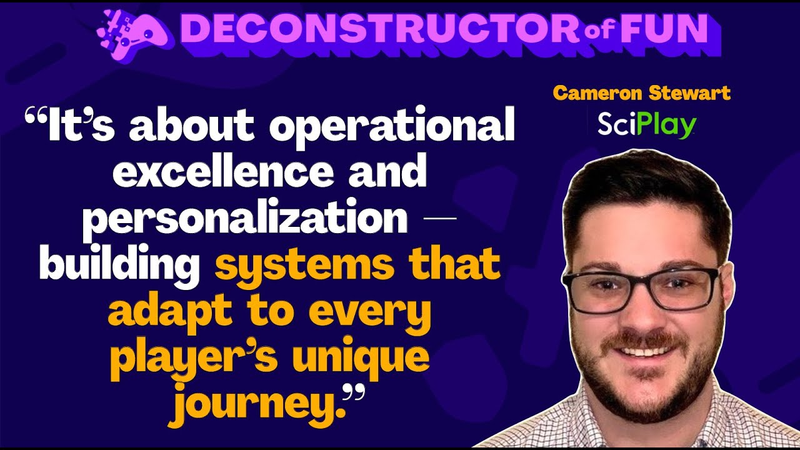
From Segmentation to Personalization: The SciPlay Approach to Success
The social casino market demands a strategic shift from broad player segmentation toward highly personalized experiences to ensure long-term retention and sustainable growth.
- Social casino developers must transition from broad player segmentation to highly personalized experiences to improve long-term retention and combat user rotation between competing applications.
- Operational success relies on separating long-term product vision from daily live operations to refine core game loops while simultaneously managing personalized user journeys.
- Firms should prioritize a unified, modular infrastructure and cross-platform content deployment using existing intellectual property rather than relying on standalone branded titles.
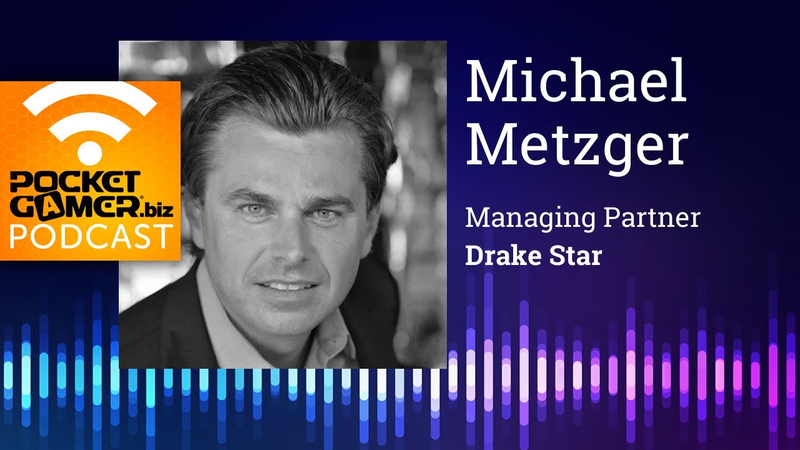
Investor Trends Set to Dominate Gaming M&A in 2025 ft. Drake Star’s Michael Metzger
The global gaming mergers and acquisitions market is undergoing a robust recovery, evidenced by a 70% year-over-year increase in deal volume during the third quarter of 2024.
- Gaming M&A activity surged in 2024 with a 70% year-over-year increase in sales, driven by a shift toward profitability-focused deals and strategic consolidation.
- Private equity firms have become major players in the gaming sector, evidenced by the year's two largest acquisitions: CVC’s purchase of Checkex and EQT’s acquisition of Keywords.
- Standard deal structures for private and venture-backed companies currently consist of a cash payment at closing followed by an earnout based on future performance metrics.

Week in Mobile Games E36 - Games industry M&A hits overdrive with Plarium and Easybrain deals
The mobile gaming industry is currently undergoing a period of intense structural realignment, characterized by high-profile mergers and acquisitions and a strategic pivot toward more sustainable monetization models.
- Major mobile gaming M&A activity is accelerating, highlighted by Miniclip’s $1.2 billion acquisition of Easybrain and MTG’s $620 million purchase of Plarium.
- Publishers are shifting from hyper-casual advertising models to hybrid-casual strategies to improve long-term revenue sustainability.
- The Indian mobile gaming market is forecast to reach a valuation of $7.5 billion by 2028, signaling significant regional growth.

TWIG #308 Plarium Gets Raided / Take-Two Divests / EA CEO Flirts With Disney
The gaming industry is currently navigating a period of significant structural realignment, characterized by a cooling of mobile valuations and a strategic retreat from non-core assets among major publishers.
- Aristocrat divested its mobile studio Plarium to Modern Times Group for $820 million, a valuation reflecting a cooling mobile market and geopolitical risk.
- Take-Two Interactive is offloading its ad-tech platform Chartboost and the Private Division publishing label to prioritize high-margin core intellectual property over operational complexity.
- The gaming industry is experiencing a structural shift as traditional venture capital models struggle to reconcile with the hit-driven, creative-led nature of AAA development.
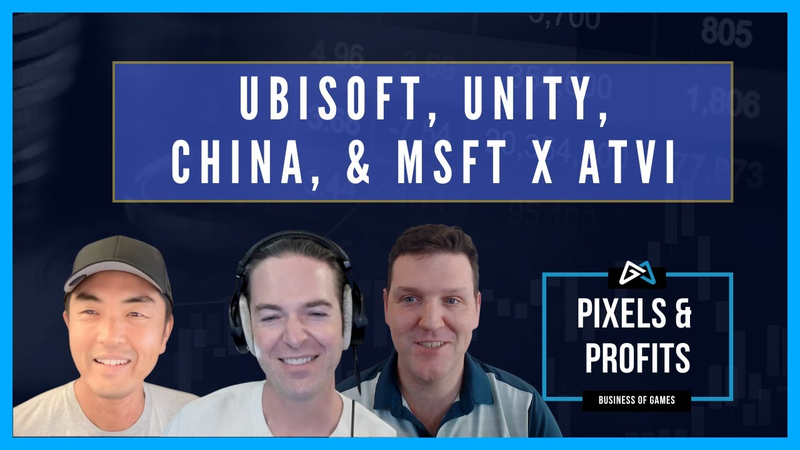
Game Industry Hot Takes: Ubisoft's Struggles, Unity's Revival, and Microsoft's Game Pass Gambit
The global gaming industry is currently navigating a period of intense structural volatility, characterized by the decline of legacy development models and the struggle to integrate massive acquisitions.
- Ubisoft faces significant operational challenges, with analysts suggesting the company should pivot to a leaner model focused on its core Assassin's Creed franchise rather than high-budget, underperforming titles like Star Wars Outlaws and Avatar.
- Unity is undergoing a corporate turnaround under new leadership, marked by the strategic decision to eliminate controversial runtime fees to stabilize its 70% market share in game engine technology.
- AppLovin has emerged as a dominant force in mobile advertising, generating $1 billion in quarterly revenue and demonstrating strong free cash flow that positions it as a high-growth, maturing tech entity.
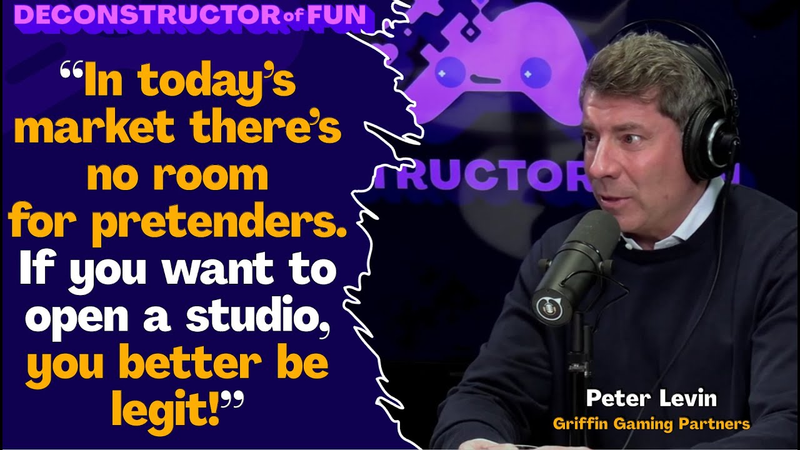
Peter Levin on Transmedia Trends, the Future of Global Gaming and Finland’s Gaming Legacy
The global gaming industry has transitioned from a niche hobby into the apex predator of the entertainment landscape, fundamentally altering how intellectual property is developed and consumed.
- Gaming has evolved into the primary entertainment medium, necessitating that legacy media companies treat it as a core business unit rather than a secondary licensing revenue stream.
- Successful transmedia adaptations require authentic creative leadership that prioritizes the player experience and deep integration over superficial brand licensing.
- The Finnish gaming ecosystem serves as a global model for success, characterized by a data-driven approach to mobile development and a disciplined, global-first entrepreneurial mindset.
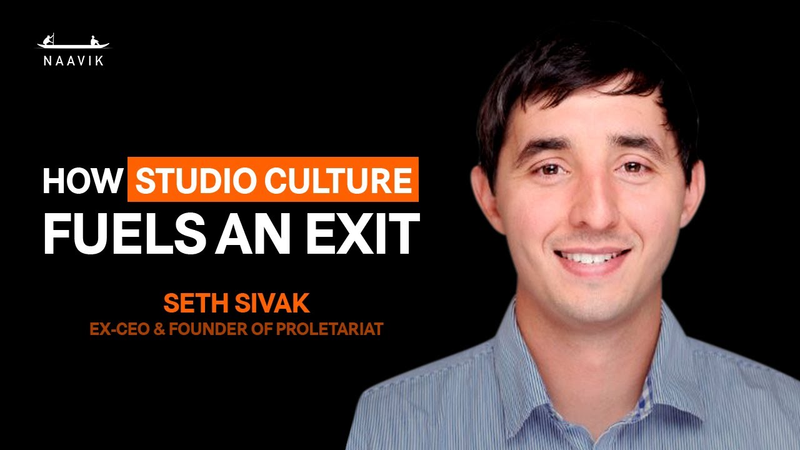
How Studio Culture Fuels an Exit (with Seth Sivak)
Organizational culture serves as a fundamental driver of success in the game industry, acting as the primary mechanism for attracting top-tier talent and building the resilience necessary to navigate market volatility.
- Studio culture must be treated as a core operational foundation rather than a peripheral concern to effectively compete against larger industry incumbents.
- To avoid cultural debt during rapid scaling, studios must transition from informal, ad-hoc communication to structured, intentional operational processes.
- Effective organizational culture is built on actionable norms like rapid iteration and accountability, which should be integrated into daily operations and performance reviews rather than static slogans.
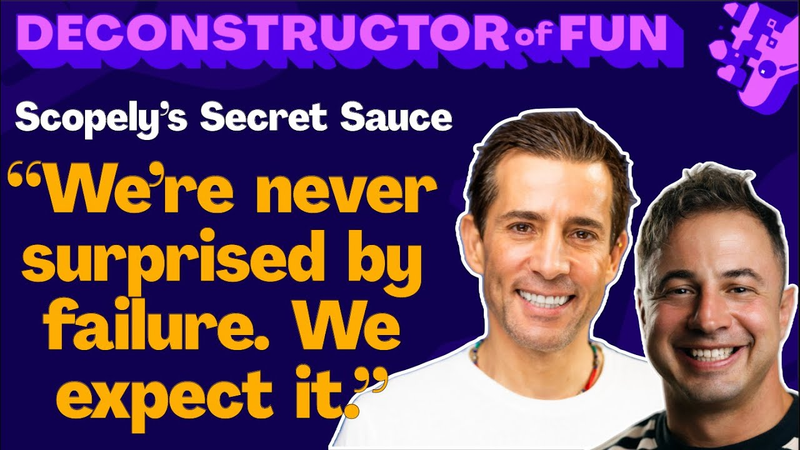
Scopely Co-CEO, Javier Ferreira, on the Gaming Industry's Future and Strategies for Success
The gaming industry is currently defined by a shift toward long-term engagement, where success is predicated on deep product-market fit rather than superficial reliance on intellectual property.
- Commercial success in the current gaming market is driven by high retention rates and robust social loops rather than reliance on intellectual property, as evidenced by Monopoly Go! achieving $3 billion in lifetime revenue.
- Operational success requires a leadership model that balances team autonomy with rigorous, iterative oversight to mitigate the risks inherent in the creative development process.
- Corporate growth should be managed through a disciplined M&A strategy that defaults to rejecting deals, prioritizing high-conviction partnerships and testing potential acquisitions through collaborative projects before formalizing ownership.

Ubisoft is Falling Hard | 355
Major Western game publishers are currently facing a profound crisis of identity and financial sustainability, characterized by the collapse of high-budget projects and a growing disconnect between development strategies and consumer expectations.
- Ubisoft’s stock value has suffered a significant decline over the last five years due to a rigid, siloed development structure and a reliance on repetitive, formulaic open-world game designs.
- Sony’s Concord project serves as a critical example of financial failure, incurring estimated development costs of nearly $400 million while attempting to chase live-service trends without a clear strategic foundation.
- Western AAA publishers are currently trapped in an unsustainable cycle of prioritizing hyper-realistic graphical fidelity and bloated budgets over core gameplay innovation.