VideoPocketGamer.biz
Investor Trends Set to Dominate Gaming M&A in 2025 ft. Drake Star’s Michael Metzger
4 Dec 202450 min video
Transcript
[Music] Hello world. Welcome to the pocket gamer.biz podcast. I'm one of your hosts, Peggy Unsalt, and I have Craig Chapel. Craig, it's so great to have you because you're usually over at Weekend Mobile Games, and here you are here. Yeah, I'm very excited to be on the uh the interview version, I guess, of of the podcast. It's about time and and we have you here, so I'm going to take advantage of the opportunity, you know, weekend mobile games. It is about hot trends, hot topics. Only the beginning of the week, but what is high on your radar right now? Yeah, I guess for anyone that hasn't listened to that one yet, it's the editorial team. We get together, talk about the week's news, and attempt to provide some analysis, uh or look silly doing so. But uh this week it's quite early to think uh what the big news of the week is. There's been some interesting sort of data around
Pokemon trade car game Pocket uh doing very well. Couple hundred million potentially gross revenue according to AppMagic Dungeon of Fighter. Well only app store in China but a billion dollar revenue which probably means a couple a few billion maybe third party address store. So a few things to talk about. also might rant about Google. But that's uh isn't that every week? Yeah. Yeah. Not just what it does to apples, what it does to uh search in general. Another hot topic is of course the one we're going to be looking at because first of all, we're near the end of the year. So we look ahead to the future and the trends shaping the mobile gaming industry and of course that very exciting explosive dynamic landscape of gaming investments and M&A and uh yeah it you see it yourself Craig you know it's either like it's in the billions or it's further on down and what's happening in that magical middle. So, we
have someone who's going to tell us what he thinks about the industry and give us, I think, a good glimpse into the trends because he does this, right? Our guest is Michael Mezer. He's managing partner at Drake, which is a global media and tech investment bank. So, this is his day job. This is the real deal. And he does it because he's advised over 20 gaming M&A deals in the last few years. That includes the sale of Spike Trap to Reddit, Extra Games to Zingga, Singularity 6 to EG7. I could go on. It is a who's who of the industry, but we've got a who's who of the industry as well because we've got you, Michael. Welcome to the show. Thank you so much. Excited to be here. Great to have you, Michael. And before we get into the data because that's where we all want to go. But, you know, everyone's more than a title. And to kick things off, you have been really involved in the industry. That means you have memorable experiences from the early days in M&A as well as what you're seeing right now.
What continues to influence your approach today because the gaming industry is evolving. How has your own approach to gaming M&A evolved? One item which I think is very crucial on on every deal is timing towards close. So time is kind of the enemy of M&A and um any any time like a a client signs a term sheet um with a goal to close, we're always pushing to make that get to that point as quickly as possible and in many cases in less than 30 days. Um it's um there's all kind of scenarios. One interesting case was actually last year where we worked with a company called Tasty Pill. They had a a large portfolio of hyper casual games. Um we in the end sold them to Azour and you know the deal was kind of done. All the documents were done. we uh had
finalized kind of the announcements and that's when Unity announced the UAF fee and that fundamentally changed the business of both Azour and Tasty Pill and you know we we thought gosh if it had just closed a day earlier this deal would be done and um so it was was put everything in limbo for a while. In the end, Unity withdraw the UAE and and the deal closed. Everybody was happy. But that was just one of the uh fairly extreme examples where like where everybody was saying, gosh, if you had been like just one or two days faster, this would be all behind us. And um as as you started off with one of the earlier deals, one one of the earlier deals I worked on was a merger of um UGIO which is part of the Hurst Corporation with IGN which at the time was part of News Corp. That was maybe 2010 or 2011 that time frame. And um that was one of the examples where we
were able mainly due to pressure and a high level agreement between Hurst and News Corp that this deal would need to close very fast. And um and there was one of the example where time from signing a term sheet to um closing um the transaction happened in less than a week. So if uh all party are motivated to make it happen and it was obviously very stressful for all parties involved but it is easy not easy it is possible to close some of those deals fairly quickly. You sign as quick as possible which kind of a week kind of sounds mad but uh what but what happens before like you know signing the term sheet to actually finishing the deal like how long is that process? Maybe it's like a piece of string, but so like someone's interested in acquiring another company and then like how long is the whole process take? Generally, it all depends on the situation. Um,
so we typically say from the time we're engaged to close anywhere between four to six months. That's kind of a good ballpark number. Um and that assumes that a there are parties interested in the end so getting towards a close towards the six months range and it doesn't necessarily assume there are any external pressures to get it done fast. Um so it's typically you know several weeks in preparation and typically spending a little bit more time on preparation. Preparation meaning just working with a company on the story. um the positioning, doing a PowerPoint, a management presentation, doing the financials, historical financials and projections that typically takes about you know normally three four weeks can be done much faster but it's normally also worth spending some time on that and then reaching out to the different
buyers and then you know um buyers typically then at some point sign NDAs and then their management presentations and and then different buyers buyers make, you know, there's a lot of back and forth and then at some point we ask buyers to make make offers, they provide offers and then there's a lot of negotiations there. And um also in the spirit of getting to a close quickly or quicker after we sign a term sheet, we typically put in a lot of additional terms in the term sheets where both the the seller and the buyer agree on those early on. That's kind of, you know, has to do with some of the reps and warranties and um um is there any escrow and and and if so, how much and a lot of items which um from a seller's point of view, it's good to agree on when you still have the options to go with multiple buyers. Um
and it also really helps having reached agreement on those terms before signing exclusivity. It just um makes things a little bit easier getting towards a close too. And then after six months, external factors completely shake it all up potentially. Absolutely. That that's why time is the enemy. It's we had deals. I mean the the the unity announcement was kind of extreme as it kind of one morning just put everything off. But you know there had been situations where buyer had a not so good quarter and the stock drops 40% and it says look we can't proceed or you know it's it's a lot of unknown and um let's want to try to get to the finish point as quickly as possible. Well, it looks like a number of deals are getting to the finish point because and you've seen it too, Craig. We've been writing about this forever and
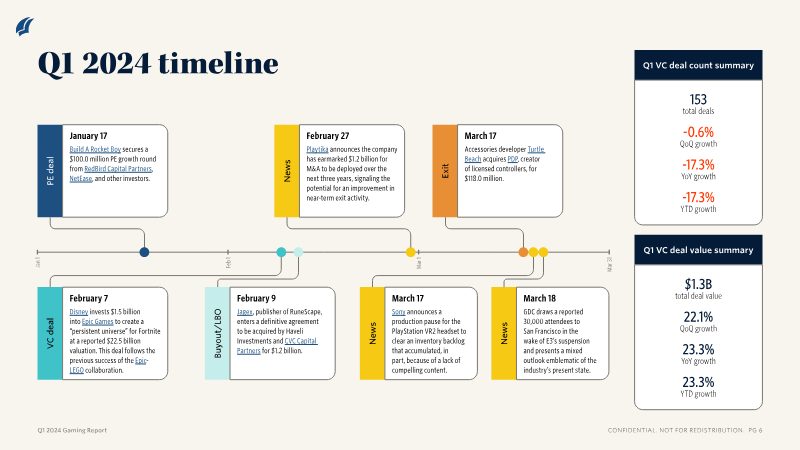
there was, you know, the the winter it was always, you know, there there was this and here we are in winter. So, it makes me think about it, you know, oh, it's, you know, it's going to be hard. It's going to be difficult. But then we're looking at your Q3 global gaming report and it's saying, okay, 70% year-over-year increase in M&A sales totaling 2.5 billion in disclosed value. And we always hear about consolidation in the industry. So yes, that would make sense. That all comes together. But from your perspective and from this report, what is it that's driving the gaming M&A? F first I would say it has been a slow and gradual improvement. So um which I think is good. Um it's been a a fourth quarter of a steady increase of number of deals. And when we look at it we we look a little bit more in number of deals than absolute deal value. Deal
value obviously matters a lot too and I'll talk about that in a second. Um but deal value is often only disclosed for the very big deals and the smaller medium size often don't have one disclosed. Um so um just number of deals were like at 33 in Q3 last year uh and we you know Q3 this year we ended up at 56. So that's kind of the increase um steady increase and um drivers are [Music] um more buyers, more strategic companies are slowly getting back into exploring M&A deals, making offers um after just pausing for an extended period of time. So that's I think one driver. Um and you know play tikka's deal of super
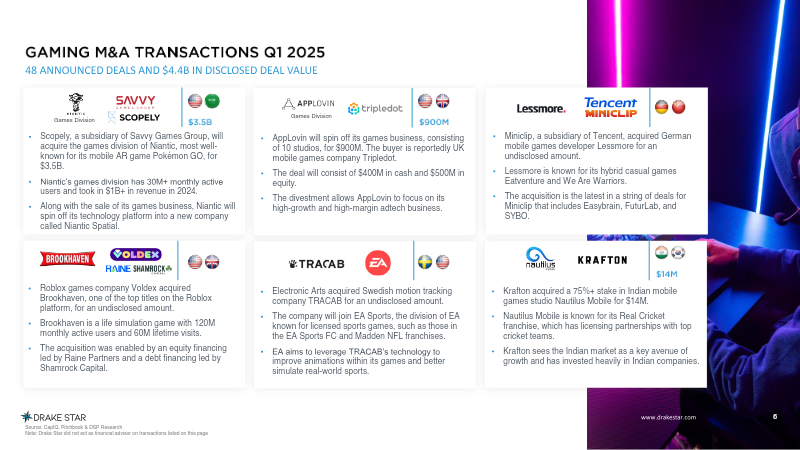
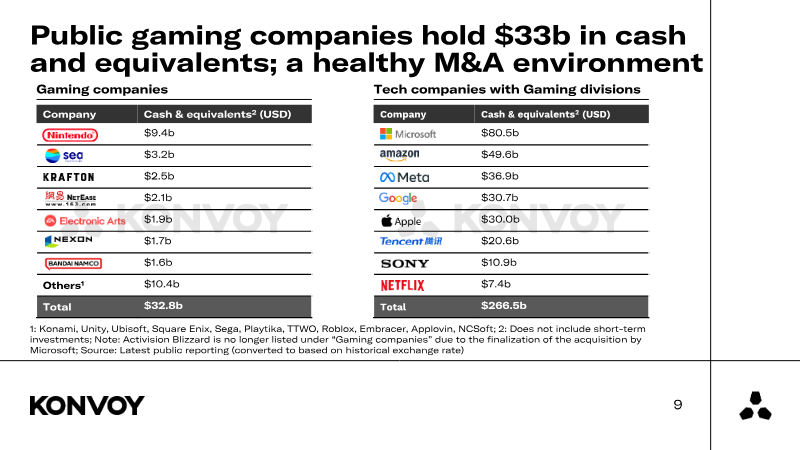
play is one great example at the last quarter at the at the great valuation. Um second driver driver driver driver is probably um valuations are generally fairly attractive and PE firms are now very engaged. Historically, PE firms were not very active in the gaming sector, but the two largest deals of the year were the acquisition of Checkex by CVC and keywords by EQT, two PE deals. And if you look at the dollar value year-to- date, those are the two biggest ones. So, that's definitely a key driver. Um if you look what happened this quarter so far, it's also kind of um realignment of strategies between um by by some of those larger strategics. Um one was a divevestature of Blum um from Aristocrat. Risto got
decided we really want to focus down on the um on the gambling aspect um whether that's real money or or um virtual but just doesn't fit into that and they decided to sell Pllearium and MTG picked them up for um I think um a great valuation for for MTG and the second one was Mini Eclipse acquisition of Easy Brain for was was reported at 1.2 two billion. Um, and and that's one of the situations where Embracer had bought up all those companies and and they also have a good amount of pressure and the intention to u to get some more cash and um so that was part of Embrace strategy to divest some of those assets too. So that probably has been a driver um for for this year as well. when when it comes to company M&A is that like some of those deals that you mentioned there
and then you said uh I guess uh investment and M&A is kind of slowly on the rise again after a long time but is that actually going to be sustainable these kind of actually oneoff kind of deals so you know some of these rollout companies that have been selling off kind of because they're ether moving out of the business say roll up guess roll up uh but Embracer kind of had to sell off but that's not going to happen again I guess after so is that sustainable into next year so so we report both um deal value that was announced as well as the number of deals and that includes deal where no deal value was included and that's why when we look at the trend the number of deals is we felt it's a little bit more meaningful as as you mentioned there's there's one or two of those deals with a big deal value and then it comes down again and that's much harder to predict. Um I believe the deal
value will continue to increase it. Number of deals will continue to increase steadily. Um so I don't think there's going to be a huge spike in Q1. I mean it would be great if it if if that happens but looking forward it's just a couple of factors. more buyers are leaning in um looking starting to look at M&A again. Um one factor is also the public company valuations um you know was flat really until Q2 this year. We we came up with this trade star index which looks at the third largest gaming companies um traded and we equally weighed them because otherwise Tencent would take up a line share and others uh don't but all of those have at least a billion valuation and if you look at how they
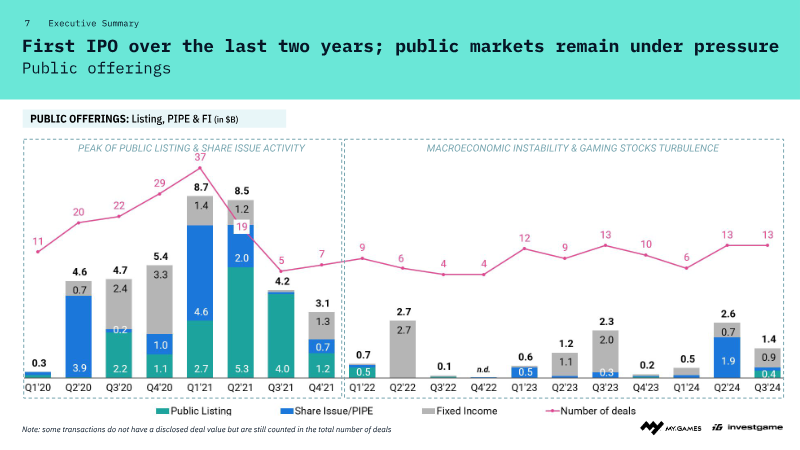
perform compared to the broader market they were clearly lagging and uh in Q3 for the first time at least for this year that index is up 10% for the year. So if somebody had bought um essentially same dollar value for all of those 30 shares um they're up at 10% and believe is the you know the gaming public equity market will hopefully continue to recover. That's additional driver. um a lot of the PE firms looked at what um what CBC and EQT did and they're going to buy more and it's also if you look at the bias category and we can talk about who are the top buyers next year and so on but another driver is a lot of those PE deals they typically buy a platform company and then w with a goal to resell it or or list in a few years um at a
significant higher valuation. Um, but the key strategy for those private equity firms is do a lot of tuck in acquisitions, smaller midsize acquisitions and I expect that uh to happen with CVC and Jagex as well as with EQ and keywords. Um, so they're just a few drivers. Um what's also like on the macro economy it's it's um everybody is much more bullish on M&A next year has to do a little bit with a change of administration here maybe um removing some you know regulatory hurdles maybe making that easier um so there's the the sentiment that M&A across all sectors will to some extent bounce back next year. Um, and I think gaming will will benefit from that. And then um interest rate likely will go
further down than further up um and that's maybe also a driver to u to accelerate that. If we look back at the significant deals like Placica for example, right, acquiring Super Play for 700 million um potentially rising to uh nearly two billion, not look at the numbers because that might muddy it a bit. I'm looking for the common thread, you know, what are acquirers looking for? What are they prioritizing? Are they thinking, as you said before, Michael, might be a platform play that they're looking at. they want to buy something that's going to maybe have stronger um live ops, more more mileage to it before then, you know, thinking about selling it later on. Um you have a feeling for that. Is there a common thread of like what makes these acquisitions particularly attractive or what the acquirers are looking for? A common
thread on most of those kind of venturebacked deals or or private companies is kind of first thing is looking at the structure first. It's like a good amount of money at close and then more money later in form of an earnout and that's actually a very common structure across most almost all gaming deals. Um if you take some you know company divestature aside most of them have a structured cash close plus earn out and earn out being based on future performance. So that's kind of a common theme uh across all of them. Um most of the buyers really care about profitability and growth. So and it's a balance between those two. So a lot of deals trade based on profitability. IBIDA um and then the growth comes in uh how is the the value at close determined. It's to some extent a mix of what's your
current kind of um profitability and um what the buyer believes the profitability could be including their synergies um as well as uh organic growth within their titles over the next few years. So it's kind of profitability now plus synergies plus growth. Um and and and that's what everybody's looking for. It's people are looking at increasing profitability. Profitability means profitable growth. Uh organic growth. You said it yourself. So a bit of a shift. Yeah. I mean if you look several years ago um focus was really for a lot of companies much more on pure topline growth and less profitability. It's definitely shifted on shifted towards profitability. I I'm actually curious uh mentioned briefly about uh rollups uh uh what do you it's like especially in Europe we've had companies like Embracer I guess Steelfront and MCG which just
did a deal like do you believe that or do you think that these strategies kind of have a sustainable future? uh because I think when they started probably talking about stuff I don't know about so I'm glad we got the expert but uh when they when they uh started I think it was kind of unproven if that kind of strategy of just acquiring lots of various different companies that maybe not really related other than being in games and then companies done that and maybe had some mixed success uh to some that to be Bitcoin. Uh what what do you think is kind of the future of that? So I think rollups will continue to happen. Um and there's actually um several new companies that are really focused on rollups and um and then it's a it's a difference. Do you call it a rollup or a strategic acquisitions? a roll up in the in the way which Embracer has done it for many years where you know the very
very fairly fast to shoot did a lot of deals and then left those companies totally alone not doing any integration that was probably one of the main issues so I see that happening much less or maybe not at all anymore it's um when companies are being acquired D um a lot of buyers really much focus on the integration. there's maybe sometimes a short earnout period of a year or two where you need to give them an an autonomy to do the things within a general framework but buyers typically also add value and that's in the embracer story um was a structure of like I mean seven to nine year long earnouts and keeping them alone not having any common infrastructure I think that was just that specific issue and I don't see that happening anymore. But if you look at
MPG, I mean, they're they're they're um working much closer with those companies they're acquiring and there are several other kind of pebacked um companies and some of those deals have not been even announced yet and they're all very much focused on the opportunity of combining some of those assets. Some of them are, let's say, within the mobile space where some of the smaller to mid-size mobile companies just having a harder time really getting getting to scale on a standalone basis, but putting them all together, having much higher volumes, having more users, maybe you can cross-promote them to it just makes much more sense. But there's also then a common UA strategy and and much more integration. So I believe it will continue to uh be a ton of acquisitions but probably more strategic what's what's important to a different buyer and certain buyers focus on you know
certain IP they like companies or studios with their own IP and uh sometimes it's it's a good idea to have a mix of revenue of your own IP your own games and maybe have some um branded IP games where you work with somebody else because that helps helps on the UA side but different different bias have different strategies and that's what they're going to pursue for for acquisitions and um those broad roll up what Embracer had I think that was a specific time in the past and don't see that happening as much anymore yeah you mentioned IP I have a number of colleagues in the industry that's exactly what they're doing they're like yes we have to build up our value our value is in our community it's in our profitable able growth, sustainable growth, a lot of effort made in content or even we had them on the pocket gamer.biz podcast before, you know, building up your brand like Ku Apps for example, you know, wants to be a brand, a real brand. Um, so that's going to
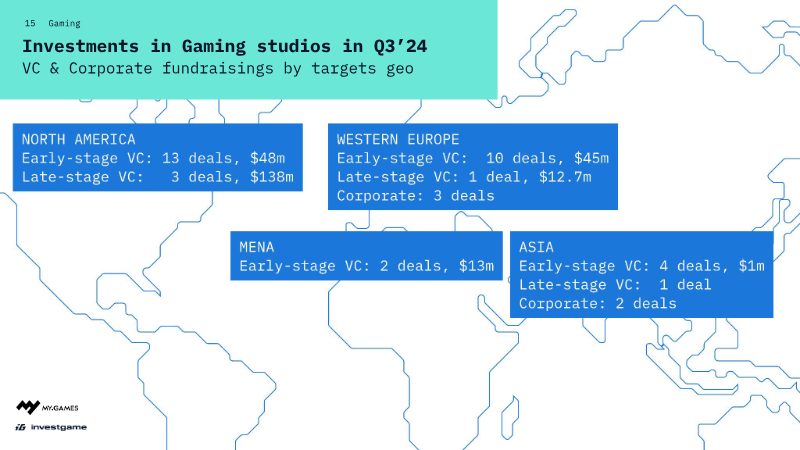
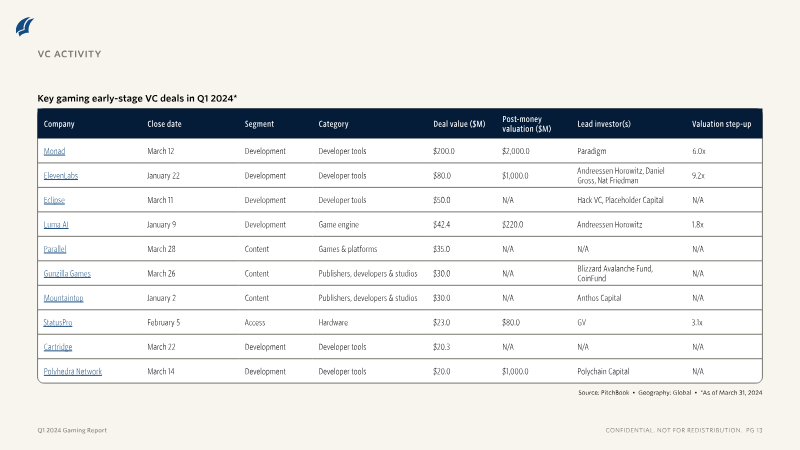
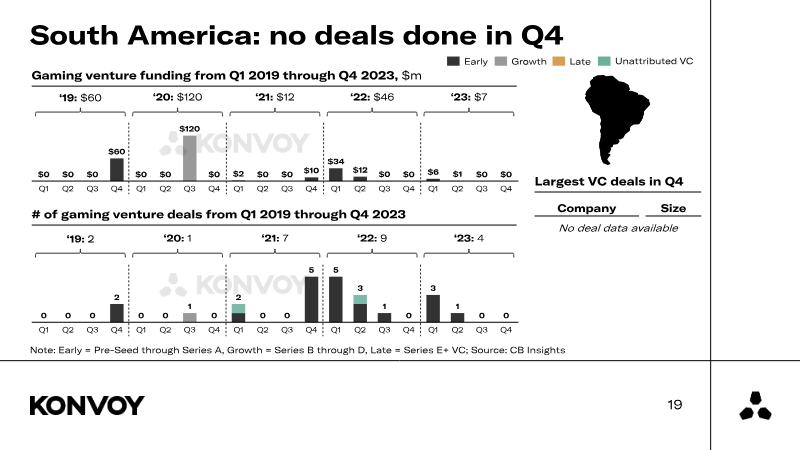
make them attractive and that's going to attract investment or at least that's part of the strategy. How about the investment scene? You know, we talk about M&A, but some people don't want to sell. They want to build. And for that, they're going to need investment. And uh we've got private financing um I believe increasing from Q3 20 uh 2024. What's it looking like the current state of gaming investments? I mean, is this the time? Are there like seed series A where it's really active, really hopeful? because of course I think about our audience you know it's uh uh Indian midsize um wanting to grow in this market I would say the financing climate is much more difficult than the M&A climate um so just number of deals so we had we counted about 181 deals in Q3
um and if you look at the total numbers like above 200 um like two years ago and we slightly came down from Q1 but a very large number of those I think we said like um 169 of those were really early stage in C deals um and that's where still there's a lot of activity happening we were kind of surprised that the blockchain blockchain gaming space still captured the largest number of investments in this early stage segment compared to others. So I would say on the seed stage and maybe early stage um you know things are fairly healthy but in um a little bit later stage growth stage phase things are fairly difficult I would say and if you
look at the investments that happened in in Q3 um and and before it's um very little money going into studios. Um, very little VC money. And that's kind of a challenge for gaming companies that have maybe not launched a next major title yet and still need some additional capital and they maybe raised some money before or they maybe just did an early access and need more money to to to scale up the game. That's a segment where things are still very challenging and um hopefully we'll get better over the next two years or so, but that's one segment that's I would say is still pretty tough. I guess uh to just follow up on that like why but why is it so much tougher for the studios that I guess are looking or for studios and studios that are looking for growth? Is it this is a total guess like is it because of like slow growth generally in
the industry? uh and obviously privacy changes and kind of waiting on regulations. Is that is that the issue? That's maybe one issue. Um but then also just you know to some extent more uncertainty about some titles. Some of the bigger titles didn't perform well and it's just predictability and when the market was very frothy everything was going up and up. Uh investors were less concerned about the possibility of some titles maybe not performing well. And now with some of the big big titles maybe didn't perform well the whole market has been more challenging. Um so that's probably one segment. Uh the second on the VC side so um VCs goes through the same cycle right they raise a fund for them to raise a new fund they need to have a lot of LPS to put in their money and then they invest in companies and at some point there's an exit. exits have been slow
the last year, year and a half and um and for for some of those venture funds have been very active to raise new meaningful funds. They need to show to the LPS look what what you invested in the past it actually worked out. We already got the first amazing exits and that's where I guess V Games did really well with the Super Play investment. And I'm sure for them it's going to be much easier to raise money for the next funds. But for some of the other funds, I guess the LPs are asking, well, I'm not sure if I want to put in more money into your next fund right now. I just want to see more proof points. So that's a whole cycle um where more M&A exits will lead to more LP money flowing back into VC funds and that then coming back to um um the go going into the ecosystem. That's one. Um, another shift that really happened over the last two years was Tencent and to some extent
Netis too were very very active both I mean Tensson was a very active acquirer and extremely active investor and Netis also was fairly active on um at least on the investment side and a lot of deals were actually not even announced and both of them scaled back a lot. So often for studios, money came from strategics for growth stage financings and and and and Biden's obviously with the whole Tik Tok situation and so on at least for the US market kind of totally freezing that too. So there's also less money from strategics um or from the biggest investors let's say two years ago. Um they're very cautious now. Others to some extent stepped in. Craftton is very active right now. Um just saw today Nazara investing out of India investing doing minority investments in in several gaming assets.
Um but you know those are probably less strategic money going in and VC money just being tighter and yeah combination of all of those. I'm also uh uh you mentioned blockchain. I feel like it's it always it goes away, it comes back, goes away, it comes back. It's kind of the cycle forever for years. It kind of goes through. Uh I guess if you're if you're a a company looking for investment, you know, what are the kind of the big buzzwords at the moment? Do you have to mention AI in your in your pitch deck? Uh I guess is better verse still a thing? And and also do you kind is building a game enough? Do you have to be building a platform or building up your tech stack? But what's interesting I guess to investors at the early stage I haven't heard metaverse in a while. That was a good buzz word a while back and and maybe not as popular anymore these days. And uh yeah I mean it really depends. Is it a studio? Is it a content play? Is it a
tech play? A platform play. There's a good amount of AI gaming stuff. There's obviously a good amount of blockchain stuff. So it kind of depends on the segment. Um I mean from my perspective you know using responsib um depending on the stage of the company kind of team I would still rank very high or top kind of if if there are accomplished people that have shown exits and maybe even work together as a team that's still probably the most important for early stage and then um you know showing early traction with the title and maybe um you know possibly being a little bit more frugal to show this early traction versus um building massive things. I mean um those are probably key items on blockchain
specifically. I you know it always comes in in cycles and um I personally think with a crypto economy getting a significant uptick I think Bitcoin as an example just hit an all-time high like last week close to 100K and and regulation around blockchain and um and and blockchain gaming being adjacent to that probably going to be um reduced um at least in the us. Um, I believe blockchain gaming will have another kind of a very exciting very exciting moments next year where more money is flowing in and hopefully we're going to see some great um great games coming out um in in a in a blockchain space or at least other games that implement blockchain elements for some of their virtual goods or something like that. So I I'm pretty
bullish on the blockchain side for next year. Interesting one to note because it was a while there. I remember doing a couple interviews where it's like we're not even going to use the word anymore. We're going to call it something something different because it had such a such a stigma attached to it. Seriously, I still see that where companies they call themselves we're blockchain gaming two years ago and now say we're gaming company and we implement some blockchain elements but if they do any content the goal is to do an amazing game reach a broad audience and um that that positioning yeah has definitely changed. Just a followup because to the point that uh Craig made about you know what's attractive. Another thing I've been hearing that's attractive is when you diversify. So you say oh let's go into non-gaming sectors. If you think of for example Voodoo's acquisition of the social app be real or just companies looking outside themselves maybe they're doing crossplatform they're looking at
steam. I mean it seems that diversification is exciting is attractive. or is that just us looking in? Some of the large gaming companies are looking for example at the broader mobile app space and that's where Wudoo would come in too with a be real acquisition. And they're looking at does it need to be a game or can it be a utility app or any uh entertainment app which in essentially follows the same model where you need to be very good in user acquisition, acquire the right users, use your internal engine, need to focus on retention, retaining those users, monetizing those users and um we see several acquisitions happening running by large gaming companies in those adjacent areas specifically as the traditional free-to-play games and mobile just got much more harder because it's harder to target the whales. That
was kind of a big way to monetize and leveraging the expertise those large gaming companies have built internally with mobile UA and monetization leveraging that for other segments definitely going to be a thing for next year. Yeah, that's really interesting. It's something I've been writing about a fair bit I feel like now where games companies kind of diversifying into gaming like Craft Dog did it like short short videos back. Not like Tik Tok style. I mean like short short night dramas uh like Quirby tried to do and craft like invested heavily into that. So it's quite interesting just how games companies are changing it up. We're nearing the end of the year and uh obviously one of the things that we're kind of talking to to everyone about is is predictions classic uh end of year questions. But I guess looking ahead, how do you anticipate kind of a busy 2025 for gaming investments in M&A? What we going to see next year? Yeah. So, as I mentioned, we predict kind of a steady
increase of deal number of deals over the next few quarters. So, not a hockey stick increase, but a steady increase. And we think, you know, companies like Playa, Take Two will continue to be active. Uh very hopeful that we're going to see some major deals from Scopely, which is now owned by Savvy. Um then um Craftton has been very active. Nazara is one also worth highlighting. Uh it's kind of the the largest gaming companies listed in India and they've been very very acquisitive. Um I'm hopeful that we're seeing some more deals from Tencent and Netis. And Tencent just announced the first deal in a long time um from Tencent proper, not like a Supercell or Minute Clip deal. So hope they're going to come back. As I mentioned before, Keywords and Jagex are definitely two to watch as they now have PE backers and the goal is to further
grow. Um Hasbro just announced that they want to invest over over 100 million more in the PC console space. That was very exciting. So hopefully we're going to see a deal uh a company being acquired by Hasbro next year. Um, I I thought it was interesting that Phil Spencer mentioned Microsoft while still digesting Activision, which Blizzard, which is obviously massive, they're considering acquiring kind of mid-stage, midsize mobile uh gaming companies. Um, um, I I think it needs to be the right fit. I think they're still very um, very selective. Um but if it's I mean he he didn't mention it you know he mentioned it for a reason probably a to maybe get more deals that that are in the market in the mobile space and they felt um probably
with Activision Blizz is outside of King in the casual space um very strong in kind of the PC console segments and maybe a little bit less strong on mobile. So doing some additional acquisitions there seems to make sense. Um, but who knows? It's really hard to say. Um, another interesting one to watch is also what's going to happen with the uh with Elden Ring uh with From Software um um out of Japan if Sony will be able to acquire acquire them um or will um could um kadaava or something I think is the name of the company who I can't remember the name of the frog software but obviously the parac can't remember what it's Yeah. So, so that's interesting one. Um, but also as I mentioned before for gaming studios, um, I see a good amount of
them kind of some venturebacked companies that are maybe not profitable yet to settle for a exit. And the exit might be not like a 10 or 100x return for investors but more like finding the right home because it's very hard to find additional growth financing. So also see a good amount of deals where you know companies join larger ones. It's not a big outcome but it's it's a safe home and if the games perform well over the next few years there will be additional payments. But I also see a good amount of that. um see more PE deals happening similar to the Jackax and um um um keywords deal um further recovery of the listed company. So we hope we'll be able to report that the Drake index is up a lot middle of next year but but we will see um hopeful that the IPO window will open
up again. I mean we had a fantastic IPO in Korea with Shift Up. Um, but that was the only really major gaming IPO um I can recall in the recent past. But with um global M&A picking up, it's predicted that IPO will um pick up a lot too. And you know, Reddit obviously had a fantastic performance since they listed. So hopefully we see some of those gaming companies listing and then um yeah hopefully some of those exits will lead into more money flowing into the VCs and they reinvested and seeing continuous growth in the whole ecosystem. I just wanted to pick up on one thing you said there which was uh companies kind of finding like a home uh rather than like a 10x or 100x exit. Is that like this is a harsh way to put it, but is that like kind of giving up on
that company? Uh if you're just finding it if if companies just going to find them a sorry investors just going to try and help them find a home and then they're going to look elsewhere for to actually put their investments. I wouldn't ne saying giving up. It's just um finding the best possible outcome considering the situation. If if they can't raise more money, it's a maybe investors just get their money back uh and there's not a big return, it's finding the right home for the team and the people and they continue to to, you know, realize their vision, what they want. And then maybe if some of those titles perform well, there's actually might be a really good return for investors. But it's just practically if it's very hard to raise additional money, you know, company can decide to shut down and everybody gets nothing or you join a company, you get um, you know, some value out of it. You keep the
team together and um, you know, work on your dream making the titles and the games great. If there's one piece of actual advice that you could give studios navigating this kind of evolving investment landscape, what would it be? I think it's very important for the CEOs or the founders to be aware what's happening in the ecosystem and that's a just following what's happening on the financing on the M&A side kind of staying up to date what's happening um and getting to know some of the investors if they're looking at the financing or some of those buyers uh just so they become a little bit more of a known entity that's either having some informal meetings at conferences or getting to know you know some of the VCs depending uh what they are and also considering for studios kind of publishing deals kind of general generally keeping your options open and being um spending a little bit more time
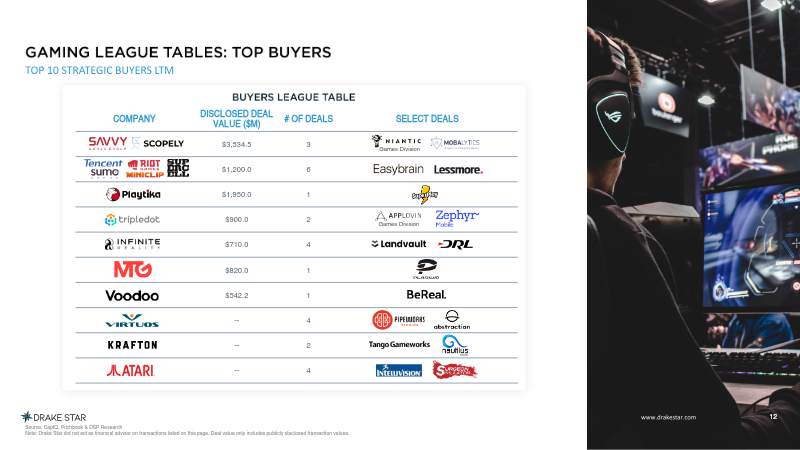
on getting to know the right players within the overall ecosystem. I think some founders are so heads down only focusing on their product which which makes sense but as a as a CEO or founder I think one role is also kind of building up the relationships to potential investors or buyers. Um and um I I mean I get asked all the time for for startups who what investors should we contact for example and in our quarterly reports you might have seen we put together those lead tables larger gaming VCs seedstage gaming VCs strategic investors and crypto investors. First question I always ask is did you look at the league tables? Those are the guys who invested in most companies. So if I were you, I would at least pick the top five. Talk to the top five, whatever. If you're doing a
seedstage deal or a VC deal, have you talked to the office once? And often they say, "Oh, actually no. We don't even know anybody there or or anything." And the same also on the on the M&A side. Who are the guys who are most active? Getting to know them a little bit. Um, that's probably um what I would do. Um, I I try to uh post a lot of kind of news updates on LinkedIn as soon as I find out about it. So, um, that might be one to look at more real-time stuff. Um, but generally be aware of the ecosystem and try to stay as flexible as possible, you know. um if you're raising some money, maybe also considering a sale and the other way around and just keeping your options open and that you said that's in your latest report. So I didn't look at the lead table. I'm not thinking about getting funding, but uh
is it there for deeper analysis? Do we see these names there in the report so our audience we can give it to them in the show notes? Absolutely. They can check it out. Correct. Yeah, we've been putting that in for the last years every quarter and it's like um we always look at the last 12 months like and and also clarify we only add announce deals. Some investors said like, "Oh, we actually did much more deals." And we said from a methodology point of view, we kind of summarize what has been announced. And if some deals have been not announced, we're just don't feel it's appropriate to include them. Um, and some companies might not even want to have them announced until they feel they want to announce it. But it's it's it's definitely we have them. We have four league tables in the last report. Again one is large gaming focused VCs. Uh second table is um the seedstage VCs for games. One is focus on cryptic uh crypto
gaming. And the last one is a strategic. What are the largest strategics that participated in um minority investments um over the last 12 months and um yeah like Craftton has been very active on the strategic Sony any moa very active on a strategic side for for blockchain. Even Square Unix uh was active on the um strategic minority side and on blockchain Spartan has been the the most active blockchain VC followed by by uh big brain holdings and then on the early stage um the game fund uh we reported 10 early stage deals oneup about eight gem capital aid and and a lot of other early stage VCs. So definitely worth getting to know those folks and maybe sharing, giving them some updates and great
timing for it because you say to yourself, okay, my resolution for 2025, you know, follow everything Michael Mezer writes for shares and then hit up everyone on the list. Well, not hit them up, but get to know everyone on the list hopefully at um coming PGC events as well. Yeah, PGC London right around the corner. Who knows who we have there? You know who we have there, Craig. Are we having a good representation of investors there as well? Yeah, always. And uh Michael, I don't know sure if you're already on the list, but you're always welcome at the show. We'll be doing the usual investment panels and sessions. Excellent. Be a pack show. Well, we got a lot of action items. We got a lot of insights as well. I think this has been a great show. And Craig, it was your idea. Perfect timing because this is the way to leave people with actionable insights. action items, get things going, start gearing up now to hit the ground running in Q1. So, thank you both. Thank you so much.
[Music] This show is all about how to do your job better, how to make an amazing game, how to market it, and you have a say. So, if you have a story or know someone we need to shine a light on, then we would love to hear from you. We want to hear from you. We want to reflect the reality of the mobile games market in all its wonderful complexity and stranges. So if you have any suggestions for us, if you have any feedback for us, you can always get in touch. You can email us at podcastpocketgamer.biz. You can find us on Twitter, pgbiz, and you can reach out to us through the pocketgamer.biz website. If you're interested in listening to all of our podcasts, you can find them at pocketgamer.r.biz/mpodcast. and we would love to hear your thoughts on future shows and we've got you covered on all the major platforms. So subscribe to the audio podcast as Brian said, look for us on YouTube. If you want to read it, hey, you can do that too because we have a
companion post for you as well on the pocketgamer.biz website. Tune in again for the next edition of the pocketamer.biz Biz podcast and we look forward to speaking to you in the near future.
Auto-generated captions from YouTube — names and numbers may be misheard.
Key insights
7 takeaways · ~3 min read- 01Gaming M&A activity surged in 2024 with a 70% year-over-year increase in sales, driven by a shift toward profitability-focused deals and strategic consolidation.
- 02Private equity firms have become major players in the gaming sector, evidenced by the year's two largest acquisitions: CVC’s purchase of Checkex and EQT’s acquisition of Keywords.
- 03Standard deal structures for private and venture-backed companies currently consist of a cash payment at closing followed by an earnout based on future performance metrics.
- 04Large gaming companies are increasingly diversifying into non-gaming sectors, such as utility and entertainment apps, to leverage their expertise in user acquisition, retention, and monetization as mobile gaming becomes more competitive.
- 05Early-stage venture capital funding for independent studios remains extremely tight, creating a challenging environment for companies that have not yet launched a major title or require additional capital to scale.
- 06Strategic buyers are prioritizing the integration of smaller mobile studios to achieve scale, improve user acquisition efficiency, and enable cross-promotion across larger combined user bases.
- 07Public company valuations in the gaming sector remained largely flat until Q2 2024, but increased interest from strategic buyers and private equity is expected to drive a steady rise in deal volume throughout 2025.
Ask AI about this video
Cite this video
Citation
Generating citation…















Comments