1 free read left. Create a free account for unlimited reading + AI research.
Create free accountReport Xsolla
1 free read left. Create a free account for unlimited reading + AI research.
Create free accountReportXsolla
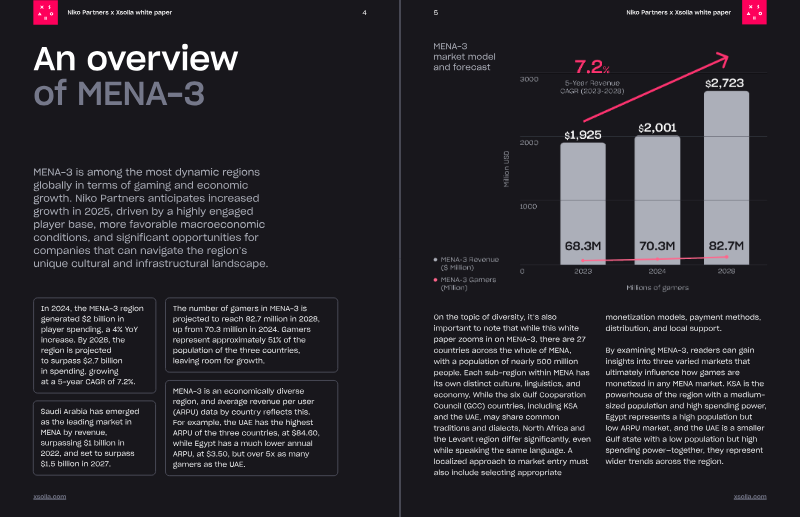
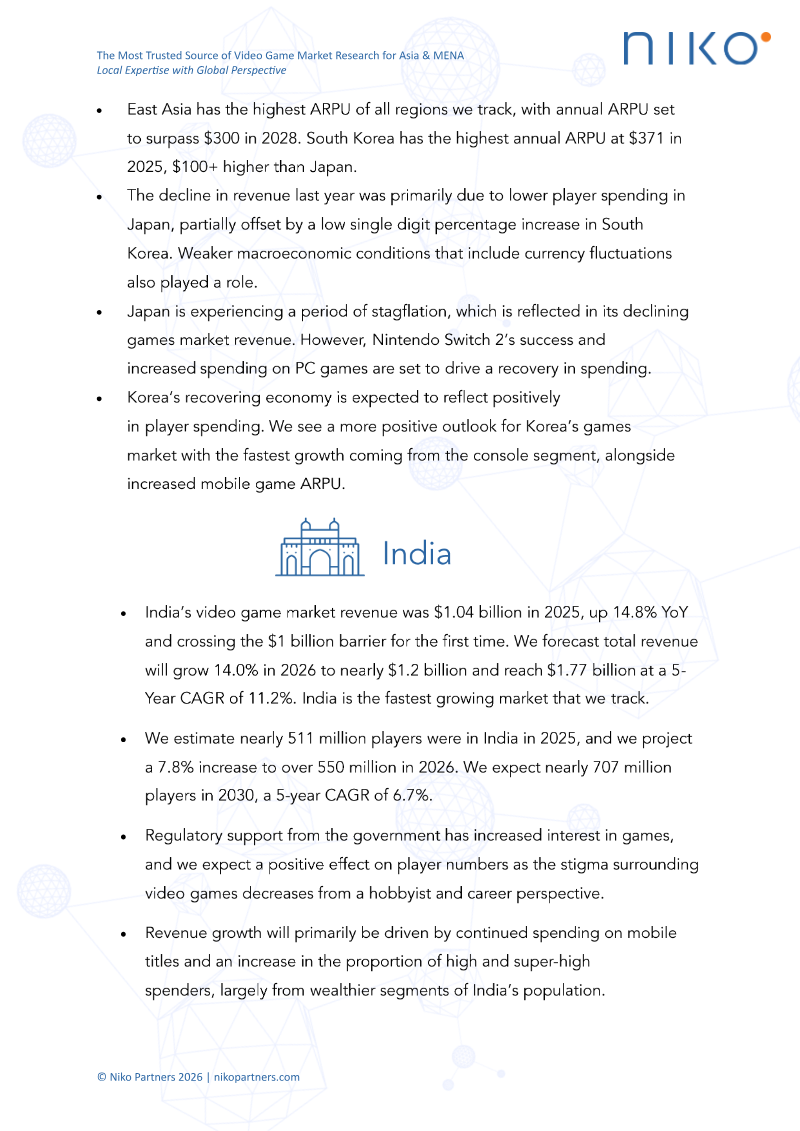
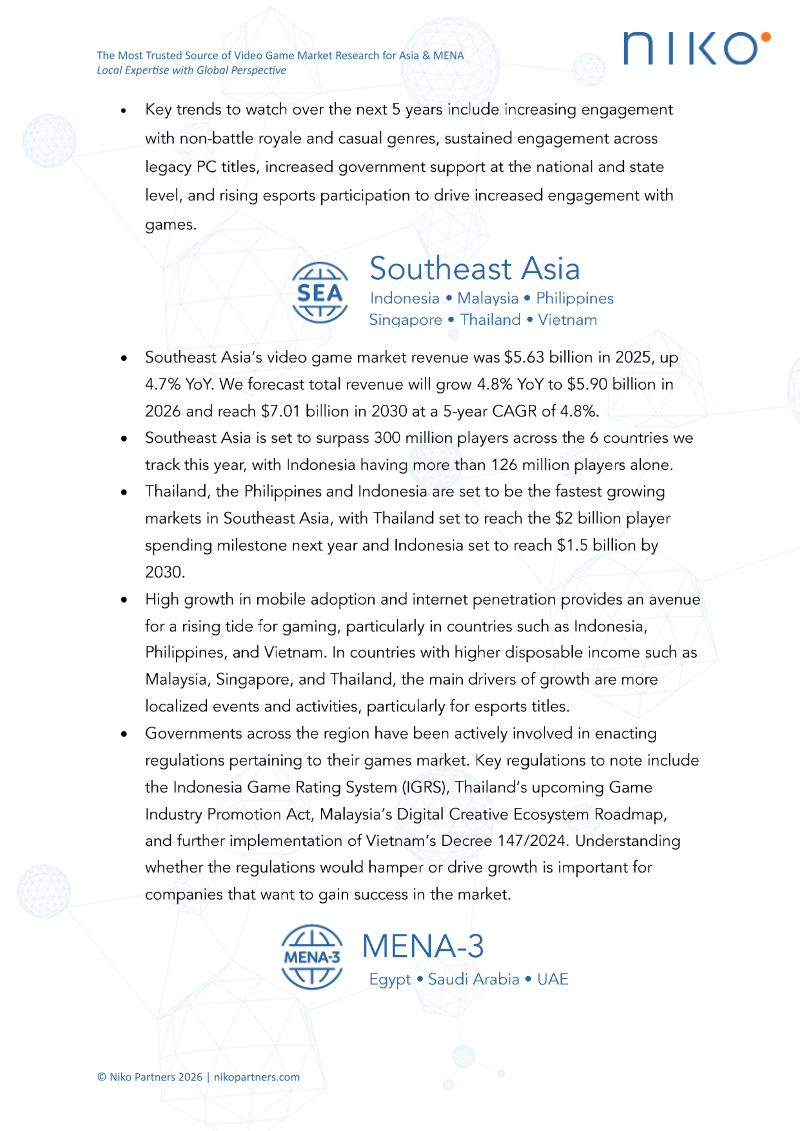
The region comprises Saudi Arabia, the UAE, and Egypt. Spending is projected to exceed $2.7 billion by 2028.
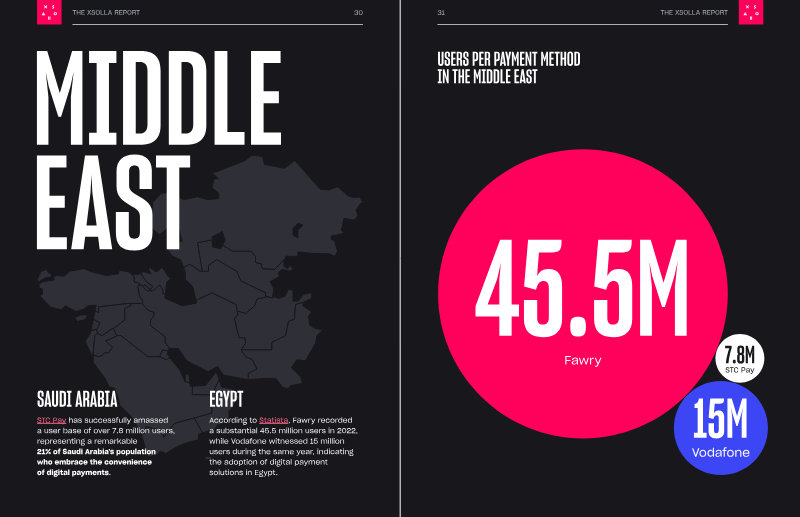
The video game industry in the MENA-3 region—comprising Saudi Arabia (KSA), the United Arab Emirates (UAE), and Egypt—is experiencing rapid expansion driven by a young, tech-savvy population and significant government investment. In 2024, player spending in these markets reached $2 billion, a 4% year-over-year increase, and is projected to exceed $2.7 billion by 2028. While the region is home to 70.3 million gamers, it remains economically diverse: the UAE boasts the highest annual average revenue per user (ARPU) at $84.60, whereas Egypt represents a high-volume market with over five times the player base of the UAE but a much lower ARPU of $3.50.
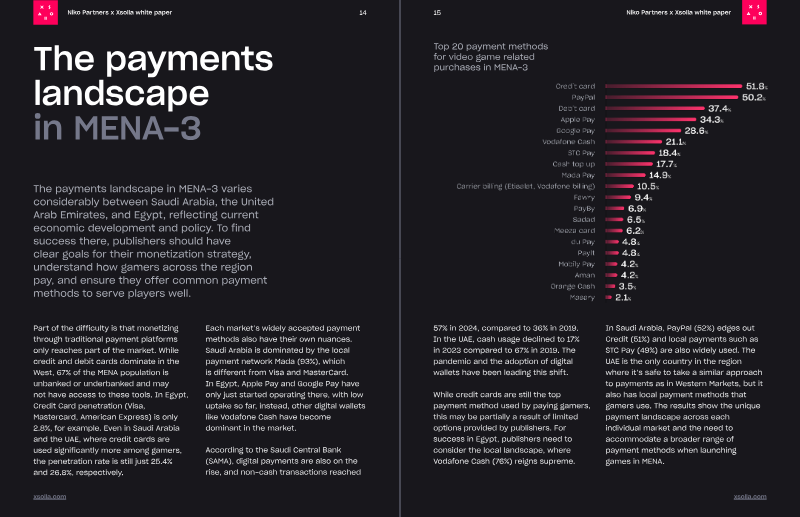
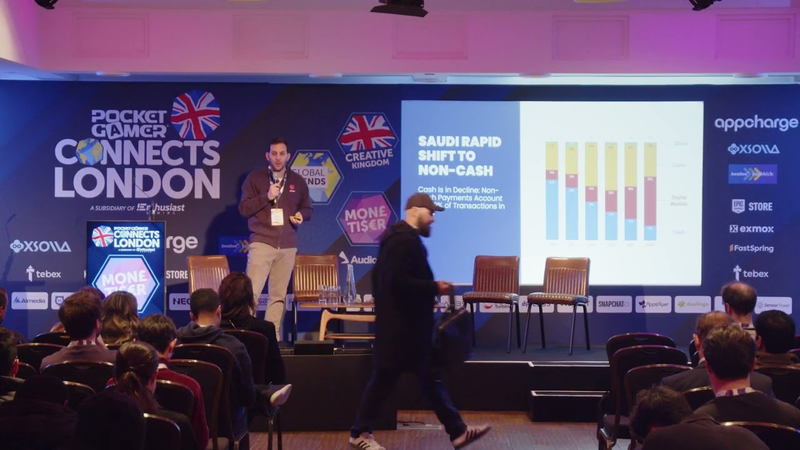
The monetization landscape is defined by a shift toward multi-platform engagement and a high percentage of unbanked or underbanked consumers. Approximately 67% of the MENA population lacks access to traditional credit or debit cards, creating a significant barrier for standard app store transactions. In Egypt, credit card penetration is as low as 2.8%, leading to the dominance of local digital wallets like Vodafone Cash. Conversely, KSA and the UAE feature high internet penetration and 5G coverage, with players increasingly favoring hybrid free-to-play models, premium titles, and subscription services.
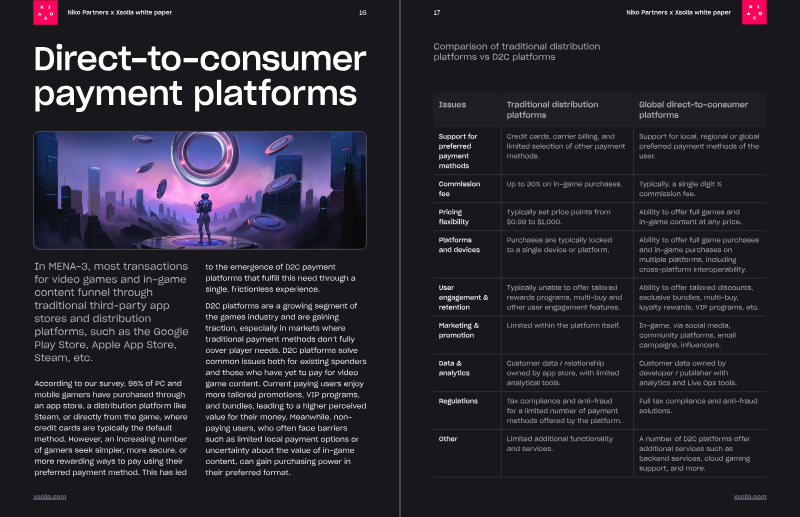
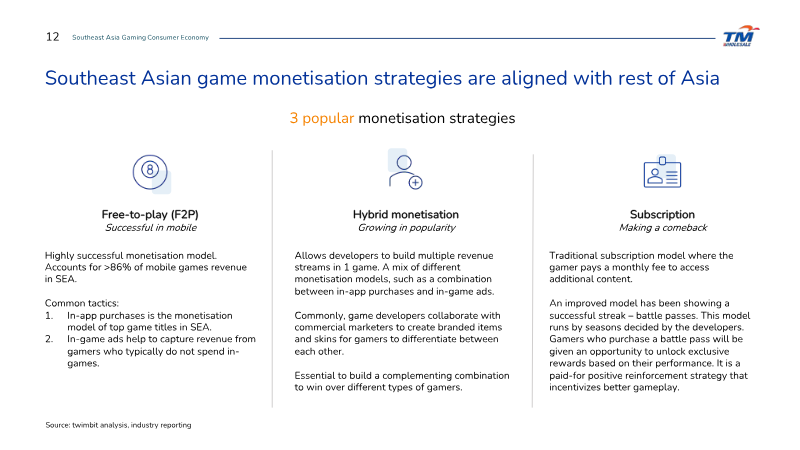
Direct-to-consumer (D2C) payment platforms and web shops are identified as critical tools for navigating these market complexities. By bypassing the traditional 30% commission fees of major app stores, developers can offer localized pricing, regional payment methods, and enhanced loyalty rewards. Findings indicate that 53% of paying mobile and PC gamers in the region have already made purchases through official game websites. Successful market entry requires a tailored approach that includes high-quality Arabic localization, culturalization of content, and the integration of local payment networks such as Mada in Saudi Arabia and Fawry in Egypt.
The analysis is based on a survey of 1,200 gamers, expert interviews, and proprietary market data. It concludes that the MENA-3 region offers a strategic bridge between Eastern and Western markets, providing a gateway to nearly 400 million Arabic speakers worldwide for companies that adopt flexible, region-specific monetization strategies.

GamesBeat · 2026
Xsolla · 2025
Xsolla · 2025
Xsolla · 2025
Xsolla · 2024
Xsolla · 2024
Xsolla · 2024

Xsolla · 2024
Xsolla · 2024

Xsolla · 2024
Xsolla · 2023
GamesBeat
Deconstructor of Fun · 2026