Marketing reports and market data
Documents

5 Solo Game Dev Mistakes You MUST Avoid (My Experience!)
The primary objective of this analysis is to outline critical strategies for solo game developers by reflecting on the development and launch of the indie title Pinstripe.
- Solo developers must prioritize rigorous, objective playtesting throughout production to identify design flaws and ensure reward systems remain fair and engaging.
- Securing a publisher is essential for solo projects to gain access to professional PR, media coverage, and industry expertise that are difficult to cultivate independently.
- Developers should leverage existing assets rather than creating every element from scratch to prevent burnout and significantly accelerate development workflows.
Social Media Deep Dive: 'Among Us' TikTok Strategy
A successful TikTok strategy for game developers hinges on balancing high-effort, personality-driven content with data-backed experimentation to foster long-term community loyalty.
- Prioritize sustainable community engagement and a consistent brand voice over chasing fleeting viral moments to foster long-term player loyalty.
- Maximize total views by keeping videos under 15 seconds and ensuring a strong hook within the first three seconds to trigger immediate curiosity.
- Use TikTok as a primary discovery tool for younger demographics by blending gameplay updates with culturally relevant memes and niche-interest sub-genres.
How This Game Dev Sold 3,000,000 Copies of His Game
The modern game development landscape rewards developers who prioritize distinctiveness and innovation over rigid adherence to market trends.
- Success in a saturated market requires a defining hook—a unique, high-impact mechanic—to differentiate a title, similar to the bullet time innovation in Max Payne or the design of Duke Nukem 3D.
- Commercial viability depends on rigorous marketing strategies, specifically prioritizing the accumulation of wishlists and the release of demos to secure funding and audience reach.
- Professional advancement is driven by a strong portfolio and proactive digital engagement rather than formal academic credentials.

Making Indie Games with Public Domain Content
Indie game developers can significantly enhance their projects by integrating public domain content, which provides a cost-effective strategy for establishing distinct visual and audio identities.
- Works published in 1926 or earlier are in the public domain, allowing developers to legally build games based on classic characters and stories like The Wizard of Oz, Don Quixote, and Night of the Living Dead.
- Trademark law remains distinct from copyright; even if a character is in the public domain, companies like Edgar Rice Burroughs Inc. may still hold trademarks on the brand, preventing the use of specific names or titles in your game.
- Sourcing public domain assets is time-intensive, with some developers spending up to two weeks searching for appropriate music or art for a three-month development cycle.

Guest Host Trio Debates Marvel Snap
Marvel Snap represents a significant evolution in the mobile collectible card game genre, successfully translating high-fidelity design principles into a mobile-first experience.
- Marvel Snap achieved 12 million downloads within two months of its global launch, establishing it as a significant evolution in the mobile collectible card game genre.
- The game’s core engagement relies on three-to-four-minute sessions and a 'snap' betting mechanic that introduces poker-style risk-reward dynamics.
- Monetization is currently constrained by artificial spending caps on credits and gold, resulting in a low average daily monetization cap of $3.66 per user.

Building the Web3 Marketing Stack - The Metacast by Naavik
Web3 marketing currently faces a significant infrastructure deficit, as the lack of mature, integrated tools prevents developers from accurately tracking user acquisition or calculating return on ad spend.
- Web3 marketing lacks integrated infrastructure, preventing accurate tracking of user acquisition and return on ad spend due to the inability to bridge off-chain mobile data with on-chain wallet activity.
- The industry is shifting away from ineffective paid acquisition toward free-to-play onboarding models that introduce digital asset ownership only after initial user engagement is established.
- Since 2022, approximately 80 growth-tech companies have emerged to address the infrastructure deficit by developing quest-based systems and affinity-based targeting tools.
How does SKAdNetwork 4.0 work? Q&A with Tenjin’s product manager
SKAdNetwork 4.0 represents a significant evolution in Apple’s privacy-centric mobile attribution framework, introducing several structural changes designed to provide advertisers with more granular data while maintaining user anonymity.
- SKAdNetwork 4.0 introduces three distinct postback windows at two, seven, and 35 days post-install to enable measurement of long-term user engagement.
- The framework utilizes a hierarchical crowd anonymity system with four tiers that determine the level of data granularity provided based on install volume.
- Advertisers now receive both fine-grained and coarse-grained conversion values, with the latter providing low, medium, or high signals for campaigns with lower install volumes.

300,000 SUBSCRIBER SPECIAL (And How You Can Do It Too)
The primary thesis of this discussion is that building a dedicated audience is the most valuable asset for an independent game developer, offering long-term creative freedom and financial stability that far exceeds the volatility of individual game launches.
- Building a dedicated audience provides long-term financial stability and creative freedom, allowing developers to move away from the volatility of relying solely on individual game launches.
- A sustainable career model for independent developers involves diversifying income streams beyond game sales to include digital courses, asset packs, and sponsorships.
- YouTube serves as a critical marketing funnel for developers, even though platform ad revenue alone is typically insufficient as a primary income source.
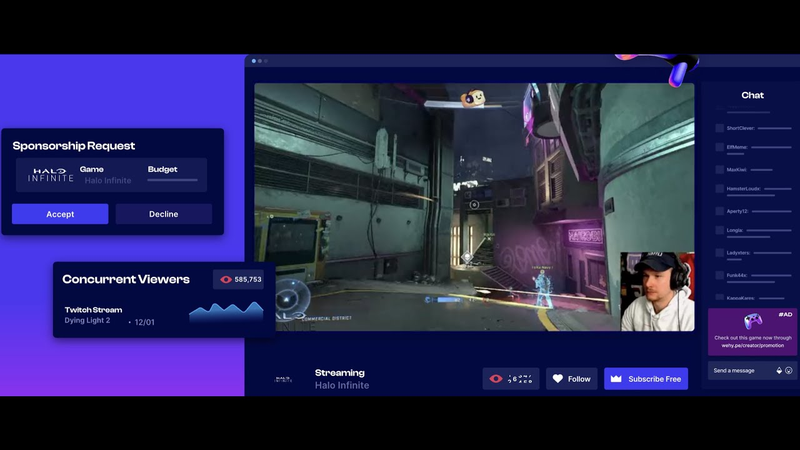
Kress’s Corner #1 Is influencer marketing hype or reality?
Influencer marketing has transitioned from a peripheral awareness tactic into a core pillar of game industry user acquisition.
- Influencer marketing has shifted from a brand awareness tactic to a core performance channel, necessitated by the decline of traditional performance marketing effectiveness following Apple’s IDFA privacy changes.
- Publishers can now treat creator partnerships as measurable performance channels by integrating mobile measurement partners to correlate social share of voice with active player counts, ROAS, and CPI.
- Niche clusters of smaller creators often outperform high-profile influencers in conversion rates and cost-efficiency due to their deeper audience intimacy and engagement.
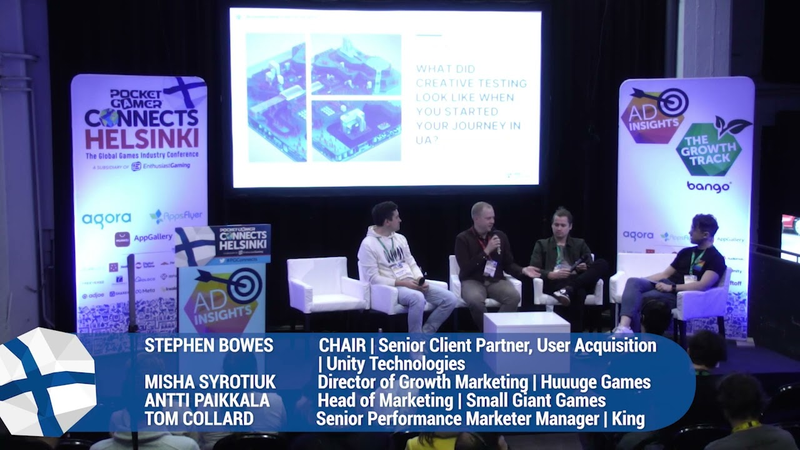
Panel: Ad Creative Testing for UA – A Look Into the Future
The evolution of user acquisition strategy centers on a transition from speculative creative production to a rigorous, data-driven methodology.
- Authentic content, such as genuine gameplay footage, failed-level scenarios, and voiceovers, consistently outperforms traditional tactics like exaggerated claims or human reaction shots.
- Privacy constraints on iOS have shifted the industry standard toward using Android-based campaigns as the primary foundation for cross-platform user acquisition strategies.
- Teams must move away from manual, fragmented tracking by adopting automated A/B testing tools and standardized data reporting across mobile measurement partners and ad networks.
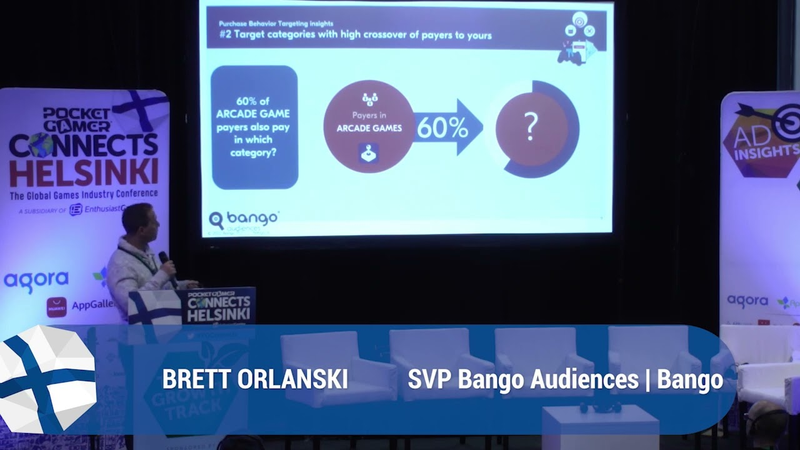
Keynote: Purchase Behaviour Targeting Insights To Scale IAPs in the Age of the App-ocalypse.
The mobile app industry faces significant challenges in user acquisition and monetization due to privacy-centric changes, such as the deprecation of IDFA and increased regulatory scrutiny.
- Purchase behavior targeting serves as a privacy-compliant alternative to IDFA-based tracking by using anonymized transaction data to identify high-value payers without individual user identification.
- Developers can achieve high-precision targeting by moving beyond broad genres to focus on granular sub-niches, such as specific types of casino or blockchain games.
- Cross-category targeting is highly effective, evidenced by a 72% correlation between payers in interactive story games and those in puzzle games.
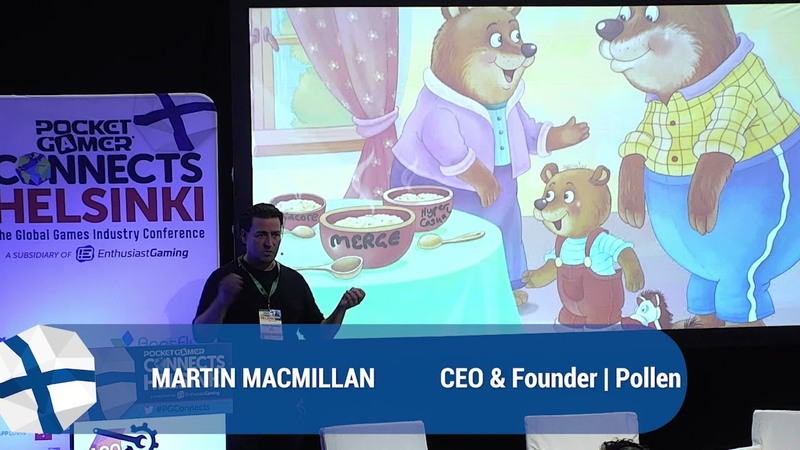
How To Measure & Compare Financial Returns on UA Spend - MARTIN MACMILLAN, Pollen VC
The primary objective of this analysis is to improve the financial literacy of gaming studios by establishing a standardized framework for measuring and comparing the financial returns of user acquisition (UA) investments.
- Studios should adopt a monthly Return on Investment (mROI) framework, calculated by dividing lifetime profit (LTV minus CAC) by acquisition cost and annualizing based on the time required to reach break-even.
- UA strategies vary significantly by genre, with hyper-casual games achieving break-even within 30 days, while mid-core and merge titles may require 270 to 400 days to recover initial investment.
- Relying on third-party publishers for UA funding is negatively correlated with acquisition potential, making self-publishing a vital milestone for long-term business viability.