Market Forecast

101 documents·48 publishers

Documents

Page 1
Report38 pages

The Power of Play: Exploring the Growing Gaming Market

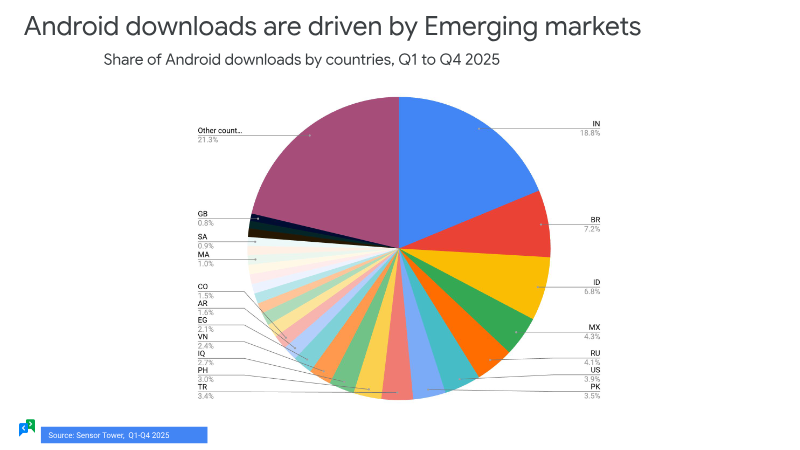
The Indian gaming market is projected to reach ₹8.6 billion by 2027, expanding at a 28 % CAGR from FY20‑23, while the global market is expected to hit $340 billion. A recent 28 % GST on total deposits—up from an 18 % tax on gross gaming revenue—has pressured real‑money gaming (RMG) firms to diversify geographically, slowed revenue growth, and triggered layoffs. These developments have spurred calls for tax reforms that align with international standards. Despite the fiscal headwinds, segments such as esports, indie studios, and mobile casual games continue to grow, with blockchain, AR/VR, and generative AI identified as high‑growth opportunities.

Indian online gaming firms are responding to the GST amendment and broader market dynamics by absorbing or passing on tax costs, consolidating through acquisitions, and diversifying into new genres such as hyper‑casual games and esports. RMG now accounts for approximately 82 % of India’s gaming revenue, yet monetization remains weak relative to download volumes; only 10 % of global gaming funding reaches Indian startups. These strategic shifts aim to improve unit economics and capture higher‑spending segments.

Investment activity underscores the sector’s resilience. Casual mobile games remain the most attractive category, with recent Indian titles raising between $1 M and $8.5 M in seed to Series A rounds, while blockchain‑based mobile titles have attracted a combined $396 M. The next three to four years are expected to be driven by AR/VR integration, generative AI, competitive multiplayer mobile titles, and blockchain‑enabled gameplay. Major venture funds—including Accel, Sequoia, and Lightspeed—are actively backing the full value chain, reflecting strong institutional confidence in the industry’s expansion.

  • The Indian gaming market is projected to reach ₹8.6 billion by 2027, growing at a 28% CAGR, while the global market is expected to hit $340 billion.
  • A shift to a 28% GST on total deposits has pressured real-money gaming (RMG) firms, leading to layoffs, revenue slowdowns, and a strategic push toward geographic and genre diversification.
  • RMG currently dominates the Indian market, accounting for approximately 82% of total gaming revenue, though monetization remains low relative to total download volumes.
  • Blockchain-based mobile titles have secured $396 million in funding, while casual mobile games continue to attract seed to Series A rounds between $1 million and $8.5 million.
  • Institutional confidence remains high, with major venture funds including Accel, Sequoia, and Lightspeed actively investing across the gaming value chain.
+2
Basic Roots ConsultingDec 2025
Page 1
Report26 pages

Predictions for the Digital Economy in 2026

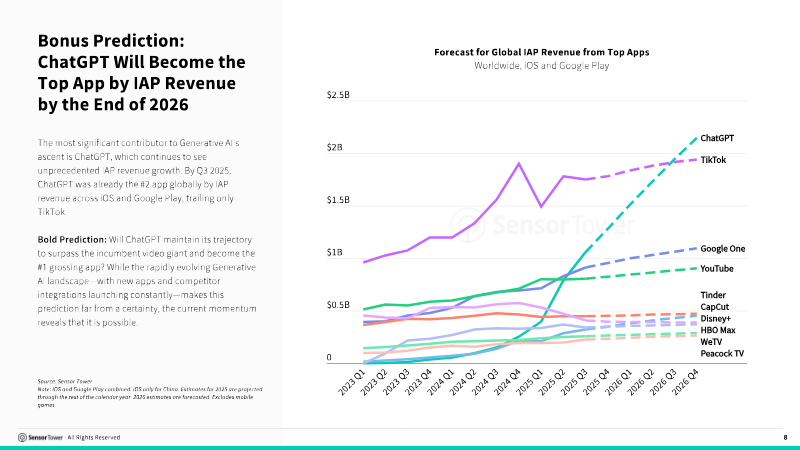
The analysis projects a rapid expansion of the digital economy through 2026, driven primarily by generative AI applications and vertical video formats. Generative‑AI apps are expected to generate more than $10 billion in in‑app purchase revenue by 2026, with downloads projected to reach 4 billion and user engagement exceeding 43 billion hours. The genre will climb into the top five mobile categories across downloads, revenue, and time spent, surpassing established sectors such as shopping and movies. Short‑drama vertical video is forecast to overtake traditional OTT streaming in global downloads, narrowing the revenue gap and capturing 40 % of time spent by 2026.

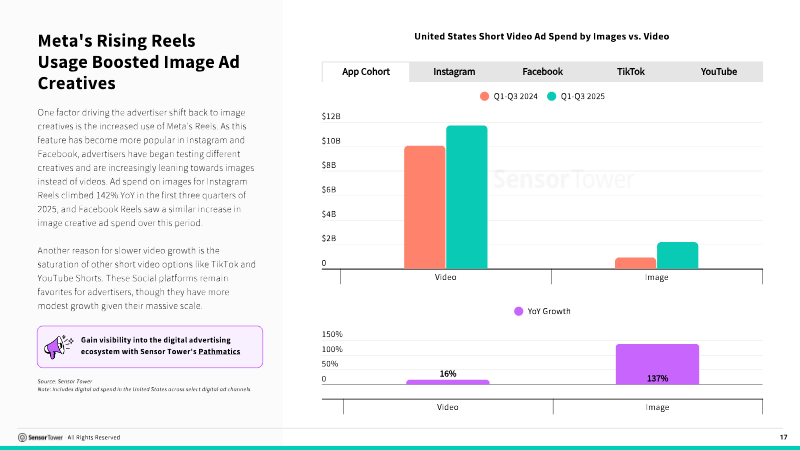
Digital advertising spending is shifting back toward image‑based creatives, with a 35 % year‑over‑year increase in image ad spend and a projected acceleration of this trend by 2026, especially within social channels where Reels and similar formats dominate. Meanwhile, generative AI traffic to the top 1,000 U.S. websites is projected to rise by more than 130 % YoY, reaching a point where half of these sites receive higher traffic from AI than paid sources by the end of 2026.

Mobile game acquisition costs remain high, and the market is trending toward smaller, ad‑native titles that can monetize efficiently. Steam releases are accelerating, with 2025 already breaking records for new titles, indicating a shift toward faster, lower‑budget development cycles. Overall, the report underscores a digital landscape increasingly shaped by AI‑driven content and streamlined monetization models across mobile, web, and gaming sectors.

  • Generative AI applications are projected to reach $10 billion in in-app purchase revenue, 4 billion downloads, and 43 billion hours of user engagement by 2026, becoming a top-five mobile category.
  • Short-drama vertical video is forecast to surpass traditional OTT streaming in global downloads and capture 40% of total user time spent by 2026.
  • By the end of 2026, half of the top 1,000 U.S. websites are expected to receive more traffic from generative AI than from paid sources, with AI-related traffic rising over 130% year-over-year.
  • Digital advertising is shifting back toward image-based creatives, evidenced by a 35% year-over-year increase in image ad spend that is expected to accelerate through 2026.
  • The gaming market is trending toward smaller, ad-native mobile titles to combat high acquisition costs, while Steam is seeing record-breaking release volumes driven by faster, lower-budget development cycles.
+3
Sensor TowerDec 2025
Page 1
Report26 pages

Video Gaming Report 2026: How Platforms Are Colliding and Why This Will Spark the Next Era of Growth

The global video game industry is currently transitioning from a post-pandemic period of stagnation toward a new era of growth defined by the convergence of hardware-agnostic ecosystems and decentralized distribution. The primary thesis posits that the industry is evolving into a collection of independent, platform-agnostic environments where traditional barriers—such as closed app store models—are being dismantled in favor of direct-to-consumer web stores and alternative distribution channels. This shift is designed to improve developer margins and provide greater control over monetization strategies, including tiered pricing and subscription models, to better serve a price-sensitive global player base.

Technological and creative innovation serves as the catalyst for this transformation, with Generative AI accelerating development cycles and the expansion of user-generated content (UGC) fostering deeper intergenerational engagement. Cloud gaming is projected to become a cornerstone of this evolution, with revenues expected to reach $18.3 billion by 2030. These advancements, while promising, necessitate a strategic pivot toward robust content curation and the resolution of complex intellectual property challenges. As games increasingly function as community-driven platforms, stakeholders must prioritize engagement over legacy hardware dependencies to remain competitive.

A significant opportunity for expansion lies in the correction of a persistent monetization imbalance. Although gaming commands 12.5% of total media consumption time, it currently captures only 3% of global advertising spend. By integrating sophisticated advertising models alongside AI-driven development and UGC, the industry is positioned to capture this latent value. Ultimately, the future of the sector depends on the successful navigation of market saturation through strategic windowing and the adoption of flexible, multiplatform ecosystems that prioritize community-led discovery and long-term player retention.

  • The industry is shifting toward platform-agnostic ecosystems and direct-to-consumer distribution to bypass traditional app store fees and improve developer margins.
  • Gaming currently accounts for 12.5% of global media consumption time but captures only 3% of total advertising spend, representing a significant opportunity for revenue growth.
  • Cloud gaming is projected to reach $18.3 billion in revenue by 2030, serving as a critical infrastructure component for the industry's transition.
  • Generative AI and user-generated content are being leveraged to accelerate development cycles and drive deeper intergenerational player engagement.
  • Future competitiveness depends on moving away from legacy hardware dependencies toward community-driven platforms that prioritize long-term retention.
+1
Boston Consulting GroupDec 2025
Page 1
Report67 pages

2025 Global Games Market Report

The global games market is entering a period of moderate maturation, with total revenue projected to reach $188.8 billion in 2025, a 3.4% increase over the previous year. The industry now serves 3.6 billion players, reflecting a 4.4% year-over-year expansion. While mobile gaming maintains its dominance, accounting for $103.0 billion or 55% of total revenue, console gaming is poised for the strongest growth at 5.5%, reaching $45.9 billion. PC gaming remains a stable pillar with $39.9 billion in revenue. Despite the growth in player counts, average spend per payer is experiencing a slight decline, signaling a strategic pivot toward maximizing engagement and retention within saturated markets rather than relying solely on aggressive monetization.

Strategic success in this environment increasingly depends on long-tail engagement and the effective management of post-launch content. Data indicates that releasing single-player titles during the second quarter yields 34% higher engagement compared to the saturated holiday season. Furthermore, simultaneous multi-platform launches significantly outperform staggered releases, and titles exiting Early Access after a six-month window demonstrate superior acquisition results. Developers are also increasingly leveraging remakes and remasters to mitigate rising development costs, while user-generated content platforms like Roblox continue to expand as foundational ecosystems for daily active users.

Geographically, the market continues to diversify, with Latin America emerging as a notable growth region projected to reach $8.3 billion, driven primarily by mobile adoption. The industry’s analytical framework, which focuses on consumer spending on software and services, highlights that player attrition typically stabilizes after 12 weeks. Consequently, long-term commercial viability is now inextricably linked to aligning content updates and discounting strategies with this post-launch retention curve, ensuring that community support remains as critical as initial sales performance.

  • The global games market is projected to reach $188.8 billion in 2025, a 3.4% year-over-year increase, driven by a player base that has expanded to 3.6 billion people.
  • Mobile gaming remains the industry leader with $103.0 billion in revenue (55% of the total), while console gaming is expected to see the highest growth rate at 5.5%, reaching $45.9 billion.
  • Average spend per player is declining, forcing a strategic shift toward long-tail engagement and retention rather than aggressive monetization in saturated markets.
  • Releasing single-player titles in the second quarter yields 34% higher engagement than holiday-season launches, and simultaneous multi-platform releases consistently outperform staggered strategies.
  • Developers are increasingly utilizing remakes and remasters to offset rising production costs, while platforms like Roblox are becoming essential ecosystems for maintaining daily active users.
+4
NewzooSept 2025
Page 1
Report28 pages

The Xsolla Report: State of Play Q2 2025

Mobile gaming has become the dominant engine of the global video‑game market, now accounting for more than half of total industry revenue and projected to exceed $126 billion in 2025, with an overall forecast of $150 billion for the segment. The surge is driven by unprecedented user engagement—4.2 trillion hours of app usage in 2024—and a rapid shift toward direct‑to‑consumer (D2C) commerce following the April 2025 court order in Epic Games v. Apple, which obliges iOS platforms to permit external web‑shops and allows developers to retain up to 95 % of transaction value. Early adopters report revenue recoveries measured in millions and a 60 % increase in user engagement for high‑volume titles.

Regulatory reforms across the EU, United States, Japan, South Korea and China are dismantling traditional app‑store monopolies, mandating alternative storefronts, transparent odds disclosure and the elimination of hidden fees. Despite tighter oversight, the mobile ecosystem remains robust, with the United States generating roughly $52 billion in in‑app‑purchase sales, while emerging markets in Latin America, Southeast Asia and Saudi Arabia expand the geographic footprint. Hybrid monetisation—combining in‑app purchases, advertising and subscriptions—is employed by 72 % of developers and now represents about three‑quarters of mobile revenue; live‑ops‑driven hybrid‑casual titles are delivering a 30 % year‑over

  • Mobile gaming is the industry's primary revenue driver, projected to reach $126 billion in 2025 with a total segment forecast of $150 billion.
  • Following the April 2025 Epic Games v. Apple court order, developers can now utilize direct-to-consumer web-shops to retain up to 95% of transaction value, with early adopters seeing millions in revenue recovery.
  • Hybrid monetization models—combining in-app purchases, advertising, and subscriptions—are used by 72% of developers and account for approximately 75% of total mobile revenue.
  • Global mobile user engagement reached 4.2 trillion hours in 2024, while the United States market alone generated $52 billion in in-app purchase sales.
  • Regulatory reforms in major markets including the EU, US, Japan, South Korea, and China are mandating alternative storefronts and increased transparency to dismantle traditional app-store monopolies.
+2
XsollaJun 2025
Page 1
Report2 pages

Press Start on Growth: Unlocking the Full Potential of the UK Video Games Industry

The analysis argues that the United Kingdom’s video‑games sector is a high‑growth pillar of the creative economy, already delivering roughly £6 billion in gross value added (GVA) and supporting more than 73 000 jobs, and that strategic policy action could lift its contribution to about £7.6 billion in 2024 and generate an additional £5.7 billion GVA and up to 5.4 million jobs over the next five years. The assessment covers the full UK market from 2022 through 2024, spanning software, hardware, live events, esports, ancillary merchandise and related media, and benchmarks performance against Western‑European averages.

Key findings show a continued erosion of physical boxed software, which fell 34 % year‑on‑year and now accounts for only 4 % of total spend, while mobile games grew 8 %—still below the 13 % regional average. Full‑game digital purchases slipped due to a thin slate of blockbuster releases, yet overall game volume remained stable. Live‑event spending contracted 15 % after pandemic‑related cancellations, whereas esports surged 44 % YoY, driven by a rise in UK‑based tournaments. Subscription revenue rose modestly as price hikes offset a near‑saturation of console subscriber bases. Hardware sales weakened for PS5 disc and Xbox consoles and for the Nintendo Switch, while the PS5 digital edition posted record software sales at a lower price point. Game‑culture engagement declined 13 % across PC and console categories, and related toy and merchandise sales fell 8.5 %.

The conclusions stress that without targeted reforms—particularly in financing, skills development, and talent support—the sector risks losing its global leadership. Conversely, coordinated policy could unlock further growth, broaden international reach, and reinforce the UK’s position as a leading hub for video‑games innovation and cultural influence. Data are drawn from industry sources such as Omdia, Ukie, NielsenIQ/GfK Entertainment, BFI, Comscore and the Official Charts Company, reflecting a comprehensive market‑valuation approach across multiple

  • The UK video games industry currently contributes £6 billion in gross value added (GVA) and supports over 73,000 jobs, with the potential to add £5.7 billion in GVA and 5.4 million jobs over the next five years through strategic policy intervention.
  • Physical boxed software sales have collapsed, falling 34% year-on-year to represent only 4% of total market spend.
  • Esports experienced a significant surge of 44% year-on-year, driven by an increase in UK-based tournaments, contrasting with a 15% contraction in live-event spending.
  • Mobile gaming in the UK grew by 8%, though this remains below the 13% regional Western-European average.
  • Hardware sales for major consoles, including the PS5 disc edition, Xbox, and Nintendo Switch, weakened, while the PS5 digital edition achieved record software sales at a lower price point.
+1
UkieMay 2025
Page 1
Report5 pages

Newzoo’s Games Market Reports & Forecasts Q1 2025 Update

This analysis examines the Nintendo Switch market landscape from January 2021 to December 2024, focusing on the performance of third-party ports across the United States, United Kingdom, Germany, France, Spain, and Italy. Utilizing data from approximately 1,500 titles, the study highlights that while Nintendo-published exclusives dominate the platform, third-party ports represent a significant and growing revenue stream. By 2024, ports accounted for over a third of the console's revenue, a trend accelerating as the industry anticipates the transition to the next generation of hardware.

The findings reveal a distinct demographic and motivational profile for Switch-only owners. This audience is younger than the broader console market—with 23% aged 10-15—and features a higher concentration of female players at 55%. Their primary gaming motivations include immersive storytelling, world-building, and completionism. Consequently, genres such as Role-Playing, Simulation, and Platformers consistently outperform others. Role-Playing titles are particularly successful, with over one-third of ported RPGs generating more than $1 million in revenue.

The data distinguishes between simultaneous and staggered releases, noting that staggered ports often achieve higher average revenue per title due to major hits like Hogwarts Legacy, while simultaneous releases capture a higher percentage of total cross-platform revenue share. Fighting games also emerge as high performers when tied to strong intellectual properties. Ultimately, the analysis concludes that while the Switch offers substantial long-tail revenue opportunities, success depends on navigating technical hardware limitations and aligning game design with the specific preferences of the handheld audience.

  • Third-party ports have grown to account for over one-third of total Nintendo Switch revenue as of 2024.
  • The Switch audience is distinct from the broader console market, with 23% of users aged 10–15 and 55% identifying as female.
  • Role-Playing, Simulation, and Platformer genres consistently outperform others, with over one-third of ported RPGs generating more than $1 million in revenue.
  • Staggered releases often achieve higher average revenue per title, exemplified by high-performing ports like Hogwarts Legacy, while simultaneous releases capture a larger share of total cross-platform revenue.
  • Fighting games demonstrate strong commercial performance on the platform when paired with established intellectual properties.
+1
NewzooMar 2025
Page 1
Report21 pages

Australian Video Games Industry Policy Platform: February 2025

The Australian video games industry represents a vital economic sector, generating $339.1 million in revenue and supporting 2,465 full-time positions during the 2024 fiscal year. With 93 percent of revenue derived from international markets and over half of all studios anticipating continued income growth, the sector is positioned to evolve into a global powerhouse. The primary objective is to scale the industry to a $1 billion valuation by 2030, a goal that necessitates a strategic shift toward long-term policy frameworks, increased federal investment, and enhanced export support to facilitate international publisher partnerships and local intellectual property development.

To achieve this growth, the industry requires a modernized regulatory environment that replaces fragmented, reactive policies with evidence-based standards. Current classification and online safety laws often impose disproportionate burdens on developers, hindering innovation. By streamlining these frameworks and reducing administrative red tape, the government can provide the certainty required for studios to scale operations. Furthermore, the industry advocates for a more integrated approach to public policy, specifically by leveraging "serious games" to address societal challenges and fostering closer alignment between government initiatives and the practical needs of game developers.

Sustaining this trajectory also depends on addressing critical structural challenges, particularly regarding talent acquisition and capital access. The industry faces persistent talent shortages that demand improved migration pathways and a renewed focus on STEAM education to build a robust local workforce. By combining these educational and immigration reforms with targeted research and development incentives, Australia can foster a competitive ecosystem that attracts international investment while empowering domestic studios. Ultimately, the transition to a billion-dollar industry relies on a collaborative partnership between the public and private sectors to prioritize innovation, intellectual property protection, and sustainable economic development.

  • The Australian video games industry aims to reach a $1 billion valuation by 2030, building on its 2024 fiscal year performance of $339.1 million in revenue.
  • The sector currently supports 2,465 full-time positions, with 93 percent of its revenue generated from international markets.
  • Over 50 percent of Australian game studios anticipate continued income growth, signaling strong potential for expansion into a global powerhouse.
  • Industry growth is currently hindered by fragmented regulatory frameworks, specifically classification and online safety laws that impose disproportionate administrative burdens on developers.
  • To sustain development, the industry requires improved migration pathways and enhanced STEAM education initiatives to address persistent talent shortages.
+1
Interactive Games & Entertainment AssociationFeb 2025
Page 1
Report60 pages

The Game Development Renaissance

The global game development industry is undergoing a fundamental transition toward a more sustainable and efficient operational model, moving away from volatile hiring cycles in favor of long-term stability. With the market projected to reach $190 billion by 2025, industry leaders express significant optimism, as 77% of developers anticipate continued growth and a marked reduction in workforce instability. This evolution is characterized by a strategic shift toward leaner production cycles where studios prioritize creative intellectual property over the maintenance of internal technical infrastructure.

Central to this transformation is the widespread adoption of externalized technology and third-party backend services. While only 6% of developers intend to rely on internal builds in 2025, nearly half plan to integrate specialized third-party tools to manage complex requirements such as cross-platform synchronization and unified player inventories. By outsourcing non-core technical burdens, studios can accelerate time-to-market and mitigate the financial risks associated with building bespoke systems. This shift enables a deeper focus on LiveOps and "forever game" models, which are increasingly viewed as the primary drivers of player lifetime value and long-term revenue.

Furthermore, the industry is diversifying its financial and distributional strategies to bypass traditional gatekeepers. Developers are increasingly leveraging alternative funding sources, such as crowdfunding, and utilizing direct-to-consumer webshops to avoid high app store fees. As studios embrace sophisticated metagames and personalized engagement strategies, the integration of cross-platform capabilities and web-based distribution is becoming a strategic necessity. This new paradigm emphasizes technical agility and creative innovation, positioning the industry for a period of disciplined, technology-driven expansion.

  • The global game development market is projected to reach $190 billion by 2025, with 77% of developers anticipating continued industry growth and reduced workforce instability.
  • Studios are shifting toward leaner production models by outsourcing non-core technical infrastructure, with only 6% of developers planning to rely on internal builds by 2025.
  • Nearly 50% of developers plan to integrate specialized third-party tools to manage complex requirements like cross-platform synchronization and unified player inventories.
  • The industry is prioritizing 'forever game' models and LiveOps as the primary drivers for increasing player lifetime value and long-term revenue.
  • Developers are increasingly bypassing traditional gatekeepers by utilizing alternative funding sources like crowdfunding and direct-to-consumer webshops to avoid high app store fees.
+1
MetaplayJan 2025
Page 1
Report3 pages

2025 Half-Year Market Model Update: Asia & MENA

The 2025 Half-Year Market Model Update provides a comprehensive assessment of the video game industry across Asia and the Middle East and North Africa (MENA) region. By synthesizing macroeconomic data, platform-specific performance metrics, and regulatory developments, the analysis offers updated revenue forecasts through 2029 for key markets, including China, East Asia, India, Southeast Asia, and the MENA-3 region. The primary objective is to adjust long-term growth expectations based on recent industry performance, government policy shifts, and evolving consumer behavior.

Regional performance varies significantly, with India emerging as a high-growth market, projected to reach $1.1 billion in 2025 with a robust 12.9% five-year compound annual growth rate (CAGR). China remains the dominant market, with 2025 revenue expected to hit $51.2 billion, supported by a 24% year-over-year increase in game approvals. Conversely, East Asia and Southeast Asia show more moderate growth trajectories, with five-year CAGRs of 1.7% and 3.5%, respectively. The MENA-3 region is forecasted to reach $2.2 billion in 2025, though long-term projections have been tempered by economic headwinds in Egypt and slower mobile growth in Saudi Arabia and the UAE.

Methodologically, these insights are derived from proprietary market models that integrate platform-specific data for PC, mobile, and console segments. The analysis highlights the critical role of government intervention, such as the PROG act in India and regulatory subsidies in China, in shaping market expansion. By updating previous forecasts to reflect current fiscal realities and hardware cycles, such as the Switch 2 launch in Japan, the findings offer a refined outlook for stakeholders navigating the complex regulatory and economic landscapes of these diverse geographic segments.

  • China remains the dominant regional market with projected 2025 revenue of $51.2 billion, bolstered by a 24% year-over-year increase in game approvals.
  • India is positioned as a high-growth market expected to reach $1.1 billion in 2025 with a 12.9% five-year compound annual growth rate (CAGR).
  • The MENA-3 region is forecasted to reach $2.2 billion in 2025, though long-term growth is tempered by economic headwinds in Egypt and slowing mobile performance in Saudi Arabia and the UAE.
  • East Asia and Southeast Asia exhibit moderate growth trajectories, with five-year CAGRs of 1.7% and 3.5%, respectively.
  • Market expansion across these regions is increasingly driven by government policy, including the PROG act in India and regulatory subsidies in China.
+5
Niko PartnersJan 2025
Page 1
Report26 pages

Video Gaming Report 2025: How Platforms Are Colliding and Why This Will Spark the Next Era of Growth

The global video game industry is currently emerging from a three-year period of stagnation, transitioning toward a future defined by platform convergence and hardware-agnostic ecosystems. The traditional era of console-centric competition is being replaced by a multiplatform landscape where success is increasingly dictated by community engagement, user-generated content, and discoverability. This structural shift is underpinned by the integration of generative AI, the expansion of cloud gaming, and the diversification of distribution channels, which collectively aim to move the industry beyond the limitations of legacy hardware.

Cloud gaming is projected to reach $18.3 billion in revenue by 2030, serving as a primary catalyst for this growth. However, this transition introduces significant challenges, most notably the risk of market saturation caused by an influx of low-quality, AI-generated content. To maintain profitability and relevance, developers are pivoting toward direct-to-consumer monetization strategies, including tiered pricing models, windowing, and the integration of in-game advertising. These tactics are designed to capture value from a increasingly price-conscious global player base while navigating a shifting regulatory environment.

The dominance of incumbent app stores is simultaneously being challenged by the rise of developer-owned webstores and alternative distribution platforms. While these new channels offer the potential for improved margins and deeper player relationships, their long-term viability depends on the industry’s ability to address consumer concerns regarding security and platform convenience. Ultimately, the next era of growth will be defined by the ability of stakeholders to balance technological innovation with the necessity of fostering sustainable creator economies, ensuring that discoverability remains the central pillar of the modern gaming experience.

  • Cloud gaming is projected to reach $18.3 billion in revenue by 2030, acting as a primary driver for industry growth as the market moves toward hardware-agnostic ecosystems.
  • The industry is shifting from console-centric competition to a multiplatform model where success depends on user-generated content, community engagement, and discoverability.
  • Developers are adopting direct-to-consumer monetization strategies—including tiered pricing, windowing, and in-game advertising—to address a price-conscious global player base.
  • The rise of developer-owned webstores and alternative distribution platforms is challenging the dominance of incumbent app stores to improve margins and deepen player relationships.
  • Market saturation caused by an influx of low-quality, AI-generated content poses a significant risk to profitability and requires a focus on sustainable creator economies.
+3
Boston Consulting GroupJan 2025
Page 1
Report15 pages

Interactive Entertainment: Global Market Sizing & Forecast 2025

The global interactive entertainment market is poised for a recovery in 2025, with total consumer spending projected to reach $250.2 billion, representing a 4.6% year-over-year growth. This rebound follows a period of cyclical transition, characterized by a significant contraction in console hardware sales and a strategic shift toward efficiency and transmedia integration among major industry players. The analysis, which synthesizes company financials and industry data, highlights a market moving toward next-generation experiences while navigating economic uncertainty.

Software publishing remains the primary revenue driver, expected to total $196 billion in 2025. Mobile gaming continues to lead as the largest segment, with $115.7 billion in projected 2025 revenue, despite ongoing challenges related to market saturation and rising user acquisition costs. Conversely, the hardware sector is experiencing a sharp 31% decline in console revenue for 2024, signaling the end of the current console cycle. However, this is partially offset by resilient growth in gaming PC components and a consistent demand for gaming accessories, which are forecasted to grow by 5% in 2025.

Emerging technologies, including virtual reality, blockchain gaming, and web-based platforms, show potential for growth but remain secondary to established software markets. Meanwhile, the esports and live-streaming sectors face persistent profitability challenges, with esports revenue trending downward. In response to these pressures, major entertainment conglomerates are pivoting toward transmedia strategies and in-game advertising, leveraging established intellectual property to engage audiences across digital worlds. Industry leadership remains optimistic, focusing on operational efficiency and high-profile content releases to sustain long-term growth through 2025 and beyond.

  • The global interactive entertainment market is projected to reach $250.2 billion in 2025, marking a 4.6% year-over-year recovery.
  • Software publishing remains the dominant revenue driver at $196 billion, with mobile gaming leading the sector at $115.7 billion despite rising user acquisition costs.
  • The console hardware sector is in a significant downturn, evidenced by a 31% decline in revenue during 2024 as the current cycle concludes.
  • Gaming PC components and accessories are providing a buffer against hardware losses, with a forecasted growth rate of 5% in 2025.
  • Major industry players are shifting toward transmedia strategies and in-game advertising to leverage existing intellectual property amid economic uncertainty.
+3
AldoraJan 2025

Publishers

Related Topics