Live Ops reports and market data
Documents

TWIG #382: Merge Mansion Falls, Xbox Fires the Wrong People, and the Math That Killed Gaming VC
The gaming industry is undergoing a fundamental structural transition, moving away from the high-growth, venture-backed models of the past decade toward a landscape defined by operational efficiency, asset-focused management, and lean production cycles.
- The gaming industry is shifting from high-growth, venture-backed models to a focus on operational efficiency, fiscal discipline, and long-term cash flow optimization.
- Venture capital investment in gaming has plummeted due to compressed valuation multiples and a shrinking pool of potential acquirers, signaling the end of the mobile free-to-play era's explosive growth.
- Studios are increasingly adopting a 'band model' that utilizes small core teams supplemented by freelancers, outsourcing, and AI to mitigate the rising costs of traditional development.
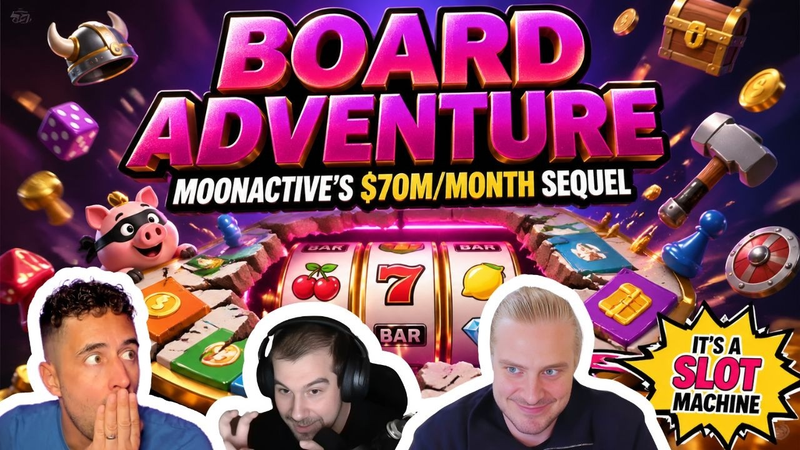
🎲 Will Coin Master Board Adventure eat Monopoly Go? (Our year-end predictions)
The mobile gaming landscape is currently defined by a high-stakes battle between established titans and aggressive new entrants within the social casino and board game genres.
- MoonActive’s Coin Master Board Adventure is directly challenging Monopoly Go, currently recording 2.2 million monthly downloads compared to Monopoly Go’s 1.8 million.
- The mobile gaming sector is shifting toward hybrid experiences that integrate merge and idle systems with traditional social casino mechanics to drive engagement.
- Monopoly Go faces significant market pressure due to rising user acquisition costs and diminishing returns, despite maintaining a massive creative library of over 15,000 assets.
The Evolution of Forever Games | Design Club
Lifestyle games, often categorized as forever games, function as a player’s primary hobby by providing effectively unlimited, repeatable content that transcends the finite nature of traditional narrative-driven titles.
- Long-term viability for 'forever games' requires prioritizing technical debt, such as engine modernization and server architecture upgrades, over purely cosmetic content updates.
- To prevent player burnout and accommodate aging demographics, developers must transition from rigid daily requirements to flexible weekly progression systems.
- Successful live-service titles mitigate onboarding barriers for new players by implementing level-syncing and accelerated progression paths that allow them to integrate with veteran communities.

TWIG #381: Xbox Loses the Plot, Ubisoft on Life Support & Western Gaming's Darkest Take
The gaming industry is currently navigating a period of profound structural instability, characterized by a shift in strategic priorities and a widening performance gap between Western and Chinese developers.
- Western developers are losing significant market share to Chinese competitors, who benefit from lower labor costs, larger talent pools, and a higher capacity for rapid organizational restructuring.
- Xbox has shifted its primary performance metric to Daily Active Users, a strategy criticized for prioritizing vanity metrics over the development of high-quality exclusive content.
- Ubisoft is facing severe instability due to leadership turnover and aging franchises, leading to speculation that a Tencent acquisition may be necessary for the company's survival.
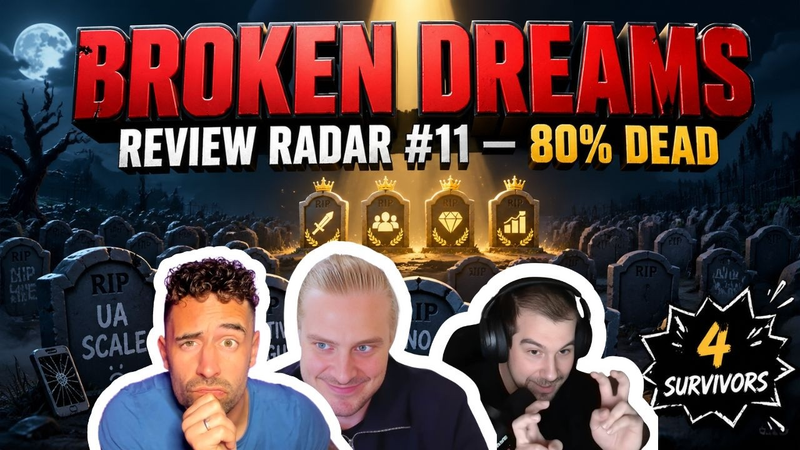
💀 Review Radar #11: 80% of the games we covered are already dead!
The mobile gaming landscape is currently defined by extreme volatility, with approximately 80% of new titles failing to maintain long-term momentum following their initial release.
- Approximately 80% of new mobile game titles fail to maintain long-term momentum, experiencing sharp declines in downloads and revenue shortly after their initial release.
- The industry is shifting away from brute-force user acquisition strategies, which often mask poor design stability and fail to sustain a consistent player base.
- Niche-focused titles with innovative mechanics, such as Sunday City, are demonstrating superior resilience, with the game currently generating $100,000 in daily revenue.
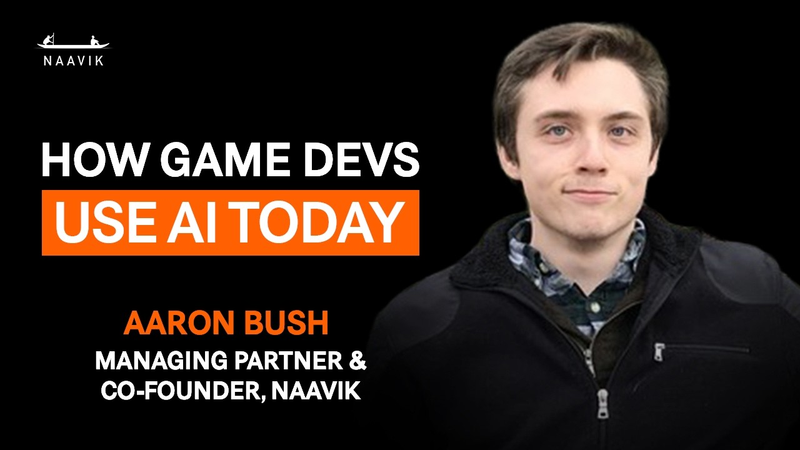
How Game Devs Use AI Today
Artificial intelligence is currently transforming the global game development landscape by prioritizing operational efficiency, cost reduction, and workflow optimization.
- Game studios are increasingly using AI to optimize Live Ops, such as the case where a studio reduced the team required to maintain 'Sunrise Village' from approximately 25 people to two by implementing AI-assisted content production.
- Large publishers like Nexon and Embark are leveraging AI to reduce internal 'blindness' by integrating company-specific data into models, aiming to improve decision-making and development efficiency.
- AI is currently being deployed across the entire game development pipeline, starting with pre-production ideation at companies like Capcom and extending to rapid prototyping that allows teams to test new game modes in hours rather than weeks.

Skillz, Beamable and The LiveOps Shift
The integration of Skillz and Beamable represents a strategic shift toward providing developers with a comprehensive business operating system designed to democratize access to high-end infrastructure.
- Skillz has acquired Beamable to provide developers with a comprehensive 'business operating system' that handles backend infrastructure, allowing studios to focus resources on gameplay rather than technical debt.
- The new Skillz Pro SDK enables developers to maintain 100% control over their game's front-end user experience while integrating advanced live-service layers, virtual economies, and flexible monetization models.
- Beamable’s platform supports over 100 publishers and thousands of developers, maintaining a 99.99% service level agreement (SLA) to ensure the reliability and scalability required for competitive mobile games.


Ad Monetization Without Killing Retention
Hybrid monetization can increase revenue without eroding player retention by treating advertisements as an integral part of the game’s design system.
- Integrate advertisements as core gameplay design elements rather than external overlays to increase revenue without negatively impacting player retention.
- Deploy rewarded video ads during high-stakes moments—such as revives, boosters, or time-limited rewards—to leverage scarcity and urgency for higher conversion rates.
- Implement strategic gating for ad triggers based on level progression, total playtime, or specific cooldown periods to minimize player frustration.
When Scale Stops Working: The New Rules Of Mobile Growth
The mobile gaming industry is undergoing a fundamental transition from a volume-based user acquisition model to a monetization-first strategy centered on long-term retention and deep player engagement.
- The mobile games market has shifted from a volume-based acquisition model to a 'monetization-first' era, where revenue growth depends on deepening engagement with existing players rather than incremental installs.
- Games are now services rather than one-time products, requiring studios to maintain continuous live operations to ensure long-term commercial viability.
- Roblox is significantly impacting industry growth, with research from Matt Ball indicating that the broader games industry's growth is stagnant when Roblox's performance is excluded.

Solomon Started a GDC Event: From 0 to 400 Attendees!
The Product LiveOps & Growth Symposium has evolved from an intimate dinner into a significant 400-person gathering at the Game Developers Conference, driven by a strategic focus on addressing a critical content gap in product and live-ops leadership.
- The Product LiveOps & Growth Symposium scaled from a small dinner to a 400-person, two-day GDC event by identifying a 10% content gap in existing GDC programming regarding product management and live operations.
- Curated community events are becoming a critical competitive moat in the gaming industry, as AI-generated content increases noise and decreases the value of generic information.
- Sponsorships from major infrastructure providers like AWS were secured by aligning the event with their mandate to move beyond technical infrastructure and engage directly with line-of-business decision-makers.

Rewarded Grows Up: Why Monetisation Now Shapes The Model
The rewarded advertising model has undergone a fundamental transformation, evolving from a basic user acquisition tool into a sophisticated, core monetization strategy.
- Rewarded advertising is shifting from a simple user acquisition traffic channel to a core monetization strategy focused on increasing lifetime value and deep-funnel engagement.
- Mistplay’s testing of a hybrid model—combining time-based rewards with specific in-game tasks—resulted in a 30% increase in playtime and a 20% lift in D30 ROAS.
- The upcoming 'Playtime Events' feature aligns reward mechanics with specific game progression milestones, moving away from generic, time-only incentive structures that often fail in complex genres like RPGs and strategy games.

BITKRAFT Summit 2025 Day 3 - EVE: The Longest Game with Hilmar Petursson (CCP)
The discussion centers on the evolution of EVE Online and the broader landscape of game development, emphasizing the importance of intuition and player-driven agency over rigid, methodical planning.
- CCP Games' 22-year success with EVE Online stems from prioritizing player-driven agency over developer intervention, even when a specific decision to allow in-game fraud resulted in the immediate loss of 500 players.
- The industry's legacy playbooks for distribution and engagement are obsolete due to market saturation and shifting content consumption habits driven by platforms like TikTok.
- Developers should adopt a 'relearn from basics' strategy, utilizing unorthodox value propositions like permissionless server-side modding to capture attention in a crowded market.