Transcript
With Pro SDK, we've opened up a number of different ways that they can developers can monetize. Not only is it pg.biz podcast with us again hosting, but we're doing it in person. We're here at GDC. Man, it's great to see you, by the way. Great to see you. The first time we've done it in person podcast.
Absolutely. It's the 20-year anniversary, right?
Of course. Yeah, yeah, exactly. So, this is this is it. And I think it's more focused. It's more focused on business, which is what we're going to get to. You know, the business of games. A lot of people were not just talking about like new stuff. They were talking to me about and I was sitting in in the clubhouse and they're like perfect stranger, you know, I have to think more about monetization. You know, I was like, yeah, exactly. You never had conversations like that before. So, that actually brings us to where we are because we are looking at the news, you know, I said it myself. It's been before years. It's been acquisition, scale, and now it's increasingly retention and
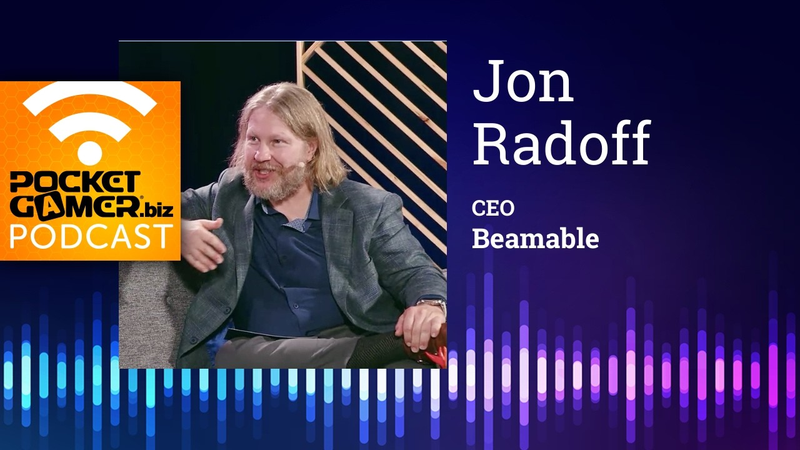
looking at what makes that possible. So, we've got some news to discuss and we've got some great guests to discuss it with because Skills has announced shortly before this show the acquisition of Beamable that brings infrastructure, back-end, and Skills competition platform all together. And what better way to do it, Craig, cuz we have Robert from Skills, head of new content at Skills, and we've got John Maddoff who is yes, he is the CEO from Beamable, but you know, he's the man who invented Live Ops. Um really interesting moment in the news, but you know, what does it tell us about what we're really trying to solve here? I mean, Robert, you know, it's a moving target. Um what is it solving as far as the pain points of publishers and and devs? Yeah, I think we have a couple things that are kind of exciting. So, Pro SDK coming to market really opens up opportunities for us Skills to grow the platform. So, historically Skills has been best of breed with regards to identity and fairness and payment
processing but it came at a cost because we limited front end experience and there was only one revenue source which is wage wager based tournaments. So now with Pro SDK we have opened up a number of different ways that they can developers can monetize and then partner with Beamable means we get to market quicker with scale and excellent solution and the live ops are fantastic. Yeah, I mean we've got a platform that we built over the last 6 years at Beamable even before that if you want to go back to the game studio is running with some of the technology was originally invented but since that time we've had over 100 publishers on the platform thousands and thousands of game developers. It's really a bulletproof platform that we hit 99.99% SLAs. When you are a developer and you're making a decision to go with a key part of your service infrastructure you need to know that it's going to work. You need to know that it's going to scale. You also need to know that it fits into your development process in a very elegant way and our focus has
always been meeting developers where they are letting them work with their tools like Unity and Unreal and web development kits and now working with skills we're going to start bringing a lot of other pieces to the table because our real special specialization from a monetization standpoint was always deep in app purchase economies virtual economies currencies things like more or less than what's powered the majority of high monetizing games in the free to play world. Now with skills it opens up an additional means of monetizing one that frankly I'm finding a lot of developers are not that well acquainted with even though it's very profitable you could you could deploy it behind games that have relatively well relatively simple games not to say that the game loop itself is simple. The game loop has to be really, really well done. If you can do that, you can distill it down to the core of really fun gameplay over and over and
over again in a competitive context, then cash gaming works really well there. So, that's an additional one. And then I'm also finding that a lot of people don't even realize that Skillz also owns a pretty significant and fast-growing retargeting ad network, which is used by a lot of game developers. So, really for the first time we are now a company that brings together back-end services infrastructure, the things that you need to actually operate an online game, alongside of a wide range of monetization systems, as well as even the user acquisition funnel. And by putting all those things together, you really start to think of it as like a business operating system for a game studio, where you can build on it, it's easy to build on, you launch, you can scale, and you can actually know what's going on. I like that. Operating system, like almost like a personal operating system in a way because you can make this game, you know, what it needs to be. And you can build the monetization in. Um it's interesting though that publishers,
devs don't understand this monetization. Although it plays in what you would expect in player behavior, you know, we are competitive by nature. So, it would be a no-brainer. The big publishers do understand it. If you go to a Scopely, they've they've spent literally at this point billions of dollars because of the many billions that have flowed flowed through the user acquisition funnel in a company like that that then gets invested into live ops. But guess what? It has taken them many hundreds of people to build out those systems. And you did it at Zynga. They did with big Again, these are This is the past. So, one of the big inflection points we're seeing across the industry, and it's not even limited to games, is smaller and smaller teams are able to do far more things. And the large teams, it just means that they are that much more parallelized. So, a larger team is going to be able to do a hundred times as much as they used to.
The small team is able to compete with that large publisher now. Why? Because back-end infrastructure across the board has gotten far more componentized and easier to compose into your game. That's kind of the world Beamable plays within. At the same time, we've got the forces of artificial intelligence and agentic engineering making it so that you can prototype and get to market much faster with your ideas. We're getting to that direct from imagination era where you get your ideas out of the brain of the developer onto the screen and you actually try it. But then, importantly, it's not just on the screen in alpha test mode, you can put it in front of an audience and potentially scale it up if it works.
going to talk about that in a moment cuz you have Puzzle Blocks, which shows proof of concept.
yes. Yeah. I just wanted to follow up on that. Is that actually a big challenge for big companies now? I know you said bigger teams means they can do more, but then surely there's diminishing returns when it comes to making a game that's that's fun.
It does allow you to filter through a lot of ideas and get to the thing that works best amongst a group of ideas. So, if you're a big publisher and you come up with a thousand ideas, for example, and coming up with a thousand ideas is you that would have sounded crazy a few years ago, but a big publisher could actually test a thousand ideas now, or more. And you've got an objective function, which you qualify those attempts against, which is how much revenue or how much profit does it make. There's only a handful of a few KPIs that are going to matter. And as long as you understand and can actually track that objective function of success, you can apply it against a pretty high number of opportunities you're pursuing. So, I don't think you're going to ship a thousand things. You're probably going to ship a very small handful of them because in addition to the game being fun, you have to know that deploying capital against the user acquisition for those games is worthwhile. So, you're only going to deploy capital against the biggest
winners in even a very large portfolio. But, at the same time, those smaller developers can also compete there, and that's where I think it gets exciting. You can go from that idea and a concept which maybe could never get green-lit in any other publisher, but you're now a developer you can are willing to take the risk on it. You don't have to hire up a whole team and throw a bunch of capital into it. The idea can actually get implemented really, really fast today because you've got the combination of agent technologies making it easier for you to compose the game, and then behind the scenes all of the infrastructure is ready and there to support it. Infrastructure like Beamable to help you get multiplayer systems. That's the kind of stuff that's a little bit harder to build into these newer AI workflows because getting a good multiplayer system out of the gate that can also scale is not really what these systems do yet. They may do it someday, but to make sure
that it's bulletproof that you can build upon, and also that it works with all your other tools and works in an elegant way that's easy to build around, that's what we've learned to do really well at Beamable. That's what a few other players in different parts of infrastructure. I often look at companies like Fly.io and Cloudflare. Like, I think infrastructure companies that build stuff that works are standing to benefit a huge amount in this new agentic AI era because it's what the agents are going to select for you the best things in terms of how reliable they are, how easy they are to integrate. Yeah. And if you're one of those solutions, which is what we intend to be, um what we have built in fact over the last few years here, that's what enables it for developers to to just start using it and discover Beamable through Beamable's platform. Yeah, one of the things he touched on too is the economies of scale, which I think you're kind of pointing towards.
Yeah. So, if you go back 30 years when I was working at the EA, the economy of scale that EA had from a distribution and marketing standpoint was tremendous. They controlled distribution, they had a lot of different developments, but every development segment within EA was siloed. So, there wasn't technology sharing. So, fast forward 10 years later when I'm working at Zynga, Zynga did a lot of feature sharing across products. So, if they had a seasonal feature that worked well on FarmVille, you'd see that pop up on Poker, you'd see it pop up on Words With Friends, you'd see it pop up on Cafe World. So, I think what we want to be is kind of that universal technology that is sharing some of these things that we're learning across multiple products. So, for smaller teams that don't have a big hub where they can get economies of scale from infrastructure, John can bring that with Beamable. And I think the feature roadmap that we've seen in the past has been aggressive, it's going to speed up tremendously with the introduction of a genetic development. And I think that's one of the things that Skillz is really excited about with our partnership. I I just
wanted to quickly also follow up. Is is the stuff you're talking about with AI agents and we can speed these things up. Is that stuff that developers are doing now, or is that stuff that you think is going to be possible in a couple of years with your tools?
They're doing it now, but John's a much better person to talk about that. So, a year ago we had this concept called vibe coding. Yeah. And it was very powerful in the sense that you have an idea, you could build software around it. The code could more or less be thrown away, didn't have to go through a whole software development process and think it through. You just You just get it running. And and uh I think everyone started to see the opportunity around it there. But Vibe coding mostly, you know, was useful for helping you build either parts of a program or making toys or just like experimenting. Towards the end of last year, some new models came along in artificial intelligence. And they benefited from roughly a year of using a new technology
that that's um called DPO. It's uh direct policy optimization. What does that mean? So, in the past, to get uh language models to learn what the right responses are, you actually had to have a lot of humans in the loop. It's something they called reinforcement learning with human feedback. You'd eventually sort of train the early versions of the model to what you wanted. Problem is that doesn't scale. It doesn't really But there's certain things that have objective functions that come right out of it. And one of those is you write a computer program that must produce a certain kind of output, you can test whether the output actually happened. So, all last year, some of the big labs like Anthropic were doing this for the whole year. And what we ended up with was essentially the closest thing to magic that we have in today's world, which is you can tell an AI, I want this kind of program, and it's no longer a little toys and components, it's full-blown
software. So, as of the last few months, agentic systems are now capable of building entire pieces of software. And of course, games is part of that. Um games are one of the harder things still to do because games have less code examples available. There's a whole proliferation of different tech from Unreal to Unity to web-based SDKs. So, it's going to be a harder problem to solve at a big scale level, but it's there and it really works and it helps you build systems out. Every software engineer that I know that does any serious work coding, they've been using these things and they're blown away by it. So, what we want to do is really redefine who is the developer and who can be involved in things like live ops. For example, in the past, if you wanted certain kinds of reports or analysis done, you're going off to your data engineering department. You now need new kinds of dashboards to respond
to the way your game works today. So, we want to collapse that timeline. So, the first timeline we focused on at Beamable was really collapsing the developer timeline. And a lot of our developers tell us that we've saved them 8, 9, 12 months off of their development schedule because they could just go right to building the game instead of building all this infrastructure, which always looks like it's going to be, you know, easy if you just think of it as one or two little things initially, but it's always death by a thousand cuts because there's so much you have to build and then you scale and then suddenly you're spending more of your effort on the back end than actually building the game that your customer cares about. So, we spent a lot of effort collapsing that timeline, but you still have enormous complexity around live services, which is where you're going to make all your money as a as a live services game. So, that's where you've got this very brittle and slow cycle
between the developers who have to react and the live ops personnel who are looking at the dashboards, looking at product sales, looking at currency sales, looking at what events drove the most engagement, all those different things that get people coming back and and spending within the game. Now, we're going to be able to collapse that a a more so that now it's the live ops person. We got to combine two both of those things together, shorten the development time frame by speeding up the the velocity, and also speed up the velocity learning from the game and using that evidence and data to make further improvements, whether it's just the next item you're going to sell or maybe a new feature to the game. And if we can speed that up, then we're helping all game developers just run more effective businesses. Yeah. Yeah. I was looking at the acquisition, didn't look at the proof of concept, which is Puzzle Blocks, right? And which you just released today. I mean, I saw you on stage showing it off a bit. Um
tell us about it, Robert. I mean, cuz it does represent more than just a game. No, it's really exciting for me uh having been in the mobile development space for a couple of decades now. Um things have changed significantly. 20 years ago, when you launched a game, you could launch it around a core mechanic, solitaire, bingo, mahjong, very simple gameplay, and that was it. Nowadays, people really rely on meta meta mechanics, so the developers rely on meta mechanics, not only for monetization, but also for retention and engagement. Right.
And so, when you look at a game like Monopoly Go by Scopely, which is very polished and well done, they are wrapping that core game loop with meta after meta after meta, and that meta will come and go. We'll cycle it based on seasonality. We'll cycle it on content. We'll cycle it based on partnerships, and we want to unlock that. So, historically, Skillz had a very hard case around the core gameplay that they provided wager-based tournaments to, which was great. It made development easy. They offered identity. They offered loyalty. They offered payment processing, and they built a lot
of trust with their audience, but it was limiting for the developers. It lowered their development cost, but they didn't have the opportunity to experiment with virtual economies and alternative revenue streams. So, now, with Pro SDK, we want to unlock that. And going into that project, I had kind of assumed that I would work with skills to develop that functionality as part of their back-end system. And then there was an opportunity to acquire Beamable, which I worked with a number of years. Not only are they trusted developers, but they have a fantastic platform. Mhm. And actually incorporating that into the Puzzle Blocks project took less than 3 days. I mean, less than a week of development to switch how we had implemented our catalog, and our content management, and our progression into a very, very feature-rich system, which is fantastic for us, which also allows us to develop those features and deploy them to our partners. We're going to publish this case study. Yeah.
The three-day live services.
going to say, yeah, 3 days. It was pretty amazing. I was fortunate in the developers working on Puzzle Blocks had
worked on Beamable with me on other projects. Okay. So, they had a knowledge of the system, but even then, Yeah. being able to do that migration in just a few days and provide more functionality. One of the things that we really wanted to implement at launch for Puzzle Blocks uh was the ability to to express emotes before and after a match. Yeah. And unfortunately, the data system we had access to didn't allow us to share content between players. We could store the data, we could do the collection, we couldn't share between players. Mhm. Beamable gave us that out of the box. And so, that was another one of the great features we were we were able to add on the project within days. I mean, the timeline's impressive, but what does it also like represent? So, when I'm thinking about our audience, and then you're saying, yeah, this is more than a game. It It represents something. What does it represent for them? Well, the big thing is one of the things that's very important to me when I'm bringing product to market or technology to market is that I have a use case. So, in this particular case, we're developing technology, but technology in a vacuum is dangerous. Yeah. Unless you properly integrate it that into a product, you really can't
tell if it works. So, by taking our new Pro SDK and building that simultaneously into the Puzzle Blocks product, it gives us an opportunity to test the Pro SDK, and it allows us to put that functionality very quickly in front of players so we can find out what's working and what's not working from a live ops standpoint.
Okay, I like that. Iteration, innovation in one. Absolutely. I think it shows not only the game the proofs of concept, but also there's a feeling about a road map that's going to allow them to equally streamline, but there's also, you know, AIs in your road map, everything is there. So, it's like just like you said, you know, you're define you're redefining who can make a game, right? Yes. Craig, you can make one. I I still don't know about that. Even with I'll say one of the other things we're redefining is where skills integration actually applies to the business. So, in a lot of cases, the skills integration would occur at the beginning of the game's life cycle. Uh-huh.
Now, we can integrate skills at the beginning, in the middle, or even at the end of life cycle. So, if somebody's got a mature game and they're looking for an
additional revenue stream, now skills becomes an alternative to classic in-app purchase, which may not be working as well in the market as that. Which-based tournaments is another way to So, you can add tournaments later. Absolutely. See, that's important because some people didn't think about it or they're like, "Yeah, I've got my IAP, but not making a lot on it." Yeah. Where do you actually how do you actually see Skills now? Cuz I have known it for the longest time as sort of competitive skill-based monetization. Absolutely. And then now you've added a well, years ago you added Archplay, I think I said it properly. Razer Cortex Yeah, yeah. Razer, yeah. And now Beamable. Like, are you are you kind of stretching yourself like thin now in different
I One of the things that's exciting is that my perspective on Skills has always been from a developer. I've met with Skills over the years multiple times, and I always felt at least for the things that I wanted to do, the front-end system was a little bit restrictive. I couldn't create virtual economies, I couldn't control the meta, I couldn't control the flow of the
player into the game. One of the things we did when we were studying player behavior at Zynga is we started hyper-focusing on making sure we could get people from launch to the app in the game play as quickly as possible. And Skillz is taking 30 to 40 seconds to do that on the classic core SDK because of the context shift between Unity and React. But now with the pro SDK, we've out essentially taken the SDK was just still on the app, but we've exposed it through an API. So we have a REST API so that the Unity app can start hitting loyalty systems and player data and inventory and collections without having to launch React launch any of the React UI. We're getting players from launch of app in the game in less than 15 seconds, which is an amazing for us. So now what we've done is we've opened up the opportunity for Skillz to live on top of products that actually delve into all the different meta mechanics that players really enjoy in games like collectible card games or battlers or some of the other areas. So we're also increasing the genres that we can participate in. So instead of just being classic I was
going to say no bingo and no more bingo.
battlers, and we've got a pop war that will be coming this year as well. Hang on. Is this all to enhance the skill-based monetization story, or is this straying away from that? Well, it's it's both, right? Cuz we want to open up as many revenue streams as possible. The key to successful gaming, like I talked about this in the GDC talk today, is for players to rapidly iterate on their product. No game is going to be successful by launching it and only getting the loyal. Like as game developers, we give it our best shot to create something that's going to be compelling. The second you launch a game, especially in today's market, you have a responsibility to listen to the players and find out what they want. Find out what they love. Find out what they don't like and remove that from the game. So with live operations and live games, the fact that a lot of these games are played on mobile devices that are connected to the internet 24/7, that wasn't something that we had 20 years ago in the development space. We need to use that to listen to the players and make those games it
You're talking about the what I I can do now and how you can ask it to, I guess, create tools etc., right? Vibe coding. So, does as a tech company, does that worry you? You're building AI into your stack, I guess, but are you worried that anyone else, maybe me, probably not, but maybe me could be like, "Okay, give me a week and I'll build some of the tools that you
What's going to happen? I mean, it's great for Skills cuz Skills is kind of a distribution platform. The more content we get, the better off we are. Mhm. We are developing products not because we want to compete with our partners, but because we want to go through the pain of proving out this technology works. So, one of the other advantages to products is the case, we're not just giving the development community the SDK, we're giving them all of the portrait UI, all of the telemetry pre-connected, menu state machine, event system, and then we even have a landscape version of that UI that will also provide as part of that tool kit. So, we're really trying to go deep and try to figure out every single thing that could potentially break or create pain for the developers and solve those
problems before we ask them to use that tool in our platform. What you're actually describing though is what we're actually hoping to unleash. Like, we want all of our developers to come to the platform and then build their own tools around it. I'm 100% convinced that's going to happen all over the place. The core services offered by the our platform that are not going to be as affected by just vibe coding into existence your tool are the things that benefit from a lot of trust that you need to have in something.
Yeah. Systems that have proven scale or things that have access to data resources that are not available to you to just download off the internet. Between now and then, you will be building a lot of your own custom tools. I think there are huge parts of the SaaS businesses that are going to go away. I mean, I mean myself, I like
a few weeks ago I wanted to I saw the renewal for like 250 bucks in Squarespace and I was like, why do I want to pay Squarespace 250 bucks for like website management? I'll just build one build what I need. And so I vibe-coded that into existence in a few hours. Yeah. So like a lot of people are doing the exact same thing. But still those core components of trust, data, scale, that is not going be as easily replicated. So for example, Skillz has a huge background in creating the most trusted skill-based gaming platform in a market where other people have been full of bots, cheating is relentless. Like Skillz has this real dedication to fair play. So it's a platform that people can can trust. You're not going to vibe-code trust into a platform that your players are going to actually trust to give it their money um for cash tournaments and stuff. Yeah. So that's a good example. Others would be like Beamable in the fact that we
have such high uptime and consistency in our service infrastructure. You're going to want to know that you can trust that. So that when you launch your game and the best thing happens, which is suddenly have millions of players coming into that game, you know that it's going to scale up to support that scale. So these are the things that we're going to be increasingly focused on and instead of trying to think that we're a tools vendor or just trying to make tools, we're really going to show people how our system is open, has all kinds of APIs built into it. There's new technologies, one's called MCP, stands for model context protocol. It's essentially the way you let agents work with your technology. We're going to open that completely up and you you want to completely automate and control Beamable and many other things that come from the traditions at Skillz through APIs, through agents. Absolutely, and we would love to see you build out more tools. In fact, we're going to you know, hopefully over the coming
year, we're going to publish lots of examples of tools that are built around that core system. And then if people want to just take it and run with it and fork it and have Cloud Code make the next version of it, fantastic. Then mission accomplished because they're still building around like those core infrastructure services and at the same time we've made it easy for them to then extend it and build their own things that they need for operating. Yeah. Okay. One question I I wanted to ask as well is is there a crossover, maybe this is the point where there isn't, but has there been a crossover with like your customer bases and like who are the companies that are using skills for like the skill-based platform? Are they big publishers or are they small media? Well, I think I think this speaks to a little bit of what the original SDK did well. The original SDK wrapped user interface and identity and wagering and tournaments and events around basic gameplay. So, a lot of the developers were inherently small. So, somebody would come up with a small mechanic,
they didn't want to build all the UI, didn't want to build the tournament system, didn't want to do payment integration. We solved that for them for free. Like, there was no charge for using our development software. Now with Beamable, I think we've opened up the opportunity for much larger players to join our space and also the the fact that previously monetization was limited to the wager-based tournaments and now monetization can occur in the form of decoration. It can be part of in-app purchases associated with economy or virtual economies. So, I think there's much bigger opportunities now for other modalities of game development to participate in skill-based wagering. Cash gaming is is a really viable way to monetize a whole class of products or a feature of a a that we've got. Like, seriously, the biggest guys out there. So, A lot of the IP-based products don't want to live in someone else's UX when they're presenting ecosystem to the players. So, the fact that Pro SDK allows 100% of the user experience of the front end of the game
to really live around whatever kind of IP you want to create or integrate into the product really makes it a lot more attractive. A number of developers have come up to me in the last 48 hours saying, "We've been waiting for Skillz to do this." The big publishers are coming now to like, what's changed in in the market? Are they looking for different ways to grow because it's a mature market? Well, we all know that user acquisition costs are just through the roof. And margins have been compressed. The only silver lining there is now web shops are emerging. There's new ways you can open up in-app purchases outside of the App Store dominance. So, I I think there's a general trend towards developers looking for where there is their higher margin monetization options available to them. One is cash gaming, one is using a web shop. I don't think the App Store is going away by any means. Like, people are going to keep monetizing through the App Store as well. But, when you're a
game developer, margin really matters because there's so many things that you have to spend money on to operate your game. Um one of the things we had seen early on at Beamable was that people were spending on average about 20% of their top line back into just live services infrastructure. Which, by the way, not even as bad as you like, Roblox, I think last year was 40% of their top line went out to to live services cost. So, believe me, if if Roblox has a hard time getting that cost down, and they've got more R&D than anybody going into this, then it's really hard as a smaller developer to try to get get it down. So, you know, that's one aspect of margin. the other is user acquisition costs, the other is what you pay the app stores. So, those are kind of the big three of operating ongoing costs before you even get to your head count and the people that are going to actually do the creative work of bringing a game forward. So, anything you can do to drop that cost out and
open up more capital that can be reinvested into real gameplay that a player cares about, that's a huge advantage to the developer and everybody is looking for margin improvement right now. Yeah. And responsiveness is another big piece of that, too, is if you see a change in the market that you have to react to through integration and new technology, Beamable has pre-integrated a number of the different technologies, whether it's multiplayer or payment integration, makes it so much easier for the developer to be responsive to their audience when they see new opportunities. So, you're seeing publishers saying, "Okay, I'm going to keep doing my, I don't know, IAP or whatever it is, but I'm going to, you know, try this out." Do you see like that level of diversification of um "Can I do both? Is it advisable to do both? Or do I have to say no, when I'm on when I make this decision for this monetization model, I have to go all in?" I'd love to see people commit, but we have absolutely had conversations the last 48 hours now that we've announced Pro SDK where developers we have not
spoken to in the last 12 months are coming to us and say, "We really see this as a viable alternative now and we'd love to try this out." So, we will be doing everything we can to make those trials successful. Speaking of that, one thing I'd like to understand is the wider picture. As Craig was saying, you know, take a step back and look at the market. And in the landscape, I mean, what skills is becoming? It's becoming like a platform play. You're happy to have everyone on the platform. Yeah. Um First, I'd like to understand the role and the vision for having also a retargeting network as part of the picture, because then I'm seeing a flywheel, not just a platform. I'm seeing a growth engine actually at many levels. And where that leaves you in the competitive landscape because there are some companies have like a piece of this, a piece of that, might have two pieces of what you have. So, where are you now? Well, it it kind of completes the circle bringing Beamable in for a couple different reasons. One is one of Skillz expertise over the last decade really has been around user acquisition,
creating a community, getting people into that community, and then keeping them. Arkey as a user acquisition model or Razer now is key. Yeah.
been a couple days since we've had the DNA. Uh Razer has figured out ways to use the agentic tooling and AI to optimize the retargeting campaigns. And so, they're adding a level of intelligence to user acquisition both on the content creation side and also on the placement side.
Okay. And then we pull Beamable in who strengthens not only what we're doing from a platform standpoint, developer support standpoint, a live ops standpoint, and then the agentic development that John is dreaming up right now is really going to play into creating a full circle of development, live operations, service, and platform. Mhm. So, do you replace anything in the stack, or do you just integrate it in the stack?
You'd be surprised. It is really a nice plug-in between the two. In fact, for the time being, the Skillz SDK and the Beamable SDK won't even be integrated. They'll operate separately. But if you look at development platforms like
Unreal and Unity, they're already built to have multiple SDKs integrated. The ultimate dream would be to have one Unity package, and inside that Unity package, you check off the Skillz bubble, you check off the Beamable bubble, bubble, and you check off an Arkey bubble, bubble, and you have access to all three of those are Razer mobile. Get there.
Let's talk about your road map cuz I think that's interesting. We don't know a lot about it, but we do want to know what we can about it and what to look forward to. What will our audience get to get excited about?
I think the thing that we're excited about obviously Puzzle Blocks is out right now and so we're getting proof of concept data back from our user community and adding that back into the final polish that we're putting into that that product. So, Pro SDK will be out this summer along with three other titles. So, Puzzle Blocks will actually share space with three other experiments that we're doing in that space and we hope to see some amazing numbers from those titles. Um, we've actually opened up the catalog to new genres of products. So, historically, Battle Arena was not something that we participated in. We
now have Battle Arena product and then we're going to be taking our Rumble Arena game and adding the Pro SDK to that and then offering a much better user experience on that product. Uh, and then from a Beam Pulse standpoint, um, I am very excited about the new work that we're doing on the Live Ops dashboard. So, we have the Royal Wingman uh, Dash technology that we're developing right now. That will be coming out for the summer and then Charles has got some great ideas around the agent features. Yeah, I would describe it as we're bringing intelligence across the platform. So, there's two big phases that you go and you keep revisiting both as you iterate any game. There's the development phase where you've got to accelerate the velocity of development and then there's a live operations phase where you are learning from what your customers are doing and using that information, using that evidence to then make product improvements which cycle back either into development or content packaging and offers and things within
the live and we are really interested in incorporating intelligence across that whole continuum. So, we talk about things like agentic AI and stuff. We'll just get rid of the buzzwords. What it really means is you go into a live services dashboard, you can ask it questions about what is going on, it understands the context, it understands all the data about how your players are playing, what they're spending money on, what their user journey is through the UX of the game, essentially understands everything that about that player because we already have that data inside Beamable. It also understands best practices. It understands what you do to move the needle on any of the KPIs within your game so that you have not just sort of a summary report, but you have actionable intelligence that you can bring back into your game. Where intelligence applies to the development process is really making sure that Beamable is a platform with all of these APIs and services we talked about earlier, many of which require a high level of trust,
many of which can scale really high, many of which also have access to data and analytics and machine learning algorithms for things like churn prediction, for example. All of that is present there and you want to now be able to utilize those systems as you're building the game. To do that, we just want to open it up to all the state of the art agentic engineering processes, meaning that you can build your game on top of a foundation that's already known. That's really what it comes down to when you build these things around agentic engineering. It's make sure that the agents that are helping you build code are fully aware of what all the capabilities of the underlying platform are and what the best practices are. And we're going to just open that all up so that you can do absolutely anything you could do in Beamable through the Unity dashboard. I think phase one is giving the developer community immediate access to all the
data about the game. So we know that the developers if they put all their telemetry to a product can pump all that data into a cube, but the model today means I have to now go to an analyst who then uses a tool like Tableau and then writes queries in Snowflake to produce the reports I need. We want to get rid of that. We want the developers be able to get immediate access to all the data they're you're storing on your product. In phase two, we want agentic agents paying attention to what's going on in the game 24/7 so you can sleep and then wake up and do some analysis and find out what's breaking or working and then respond to that from a product standpoint. And then in phase three, you're now going to have intelligent agents making recommendations based on best practices in the industry to tell you how to make your game better and improve your business model. Wow, that's competitive intelligence on steroids. That really is. That is something. Don't want to say it but you can like, you know, toss the the data AI or Sensor Tower cuz you'll have it there. We'll see. Tim Holm used to be at AWS and he
was suggesting one potential use of agentic AI in live ops was I'm going to do a really poor job of translating what he said but it was really clever. But it he was basically saying, you know, you have these kind of core beliefs about your game and one of the examples he just used as a random example was like, you can only run three ads or you can only run a certain amount of ads at a time and then you believe that five years later. Uh but that your old, I guess, core user base might have already gone, you've got a new one and things have changed in the market. So he was saying you could just use maybe agentic AI to look at, okay, how are players actually playing your game now and maybe suggest new idea new ideas and challenge your actual thing. I would say That makes sense. One of the favorite things I have in the game industry is reading deconstructs of popular product. So you'll find deconstructs that were written about Brawl Stars when Supercell was developing them. That was originally
based on the UI mechanic that was found in Vainglory so it was portrait, tap to attack, tap to move. Mhm. A lot of people in my group were saying, well, we should be doing virtual joystick on the phone and and the common language within the industry was, well, nobody wants to play landscape games. Everybody wants to do portrait. Just follow what's already been done. Follow the main play model. Supercell didn't believe that. They kept testing their model. They switched from portrait, they switched to landscape, they added virtual joystick, they changed the way the characters behave, they changed the map design, and I absolutely believe that that iteration is required to find the definition of success for every single product out there. And doing it quickly is going to be much better for the product. It's going to save you on development expense and increase the chance that any product or any team is going to be successful in that market. Shrinking those timelines down. Again, one of the best things that happened when I was at Zynga was they would have these round tables with the PMs. And if they found a feature that
worked on FarmVille, they shared why it worked, how they developed it, and and what to expect as a result of implementing that in your game. And you would immediately see FrontierVille and CastleVille and Yoville and Cafe World all adopt the exact same features. So again, going back to that economy of scale, when you're a big publisher and you've got 20 games, you take an idea and if you're smart, you share those ideas across all the franchises. Not all the people that we're working with have 20 games in their pocket. They may have one game they're really passionate about. But by working with some of these tools that are trained off of best practices across multiple products, they can get advantage some of that intelligence much quicker. And it's high bandwidth experimentation as well. So if you look at a lot of studios that even the ones that do live ops pretty well, one of the most controversial things that happens in those two-week sprints is okay, here's the data, here's what the evidence is telling us. Then there's the list of possible solutions to that.
And usually there's sort of one person on the team who wins the battle of like what what which of those experiments, quote unquote experiments, get to be selected.
This was part of the debate yesterday, which was who do you listen to? Yes. Which team do you listen to? Yeah. Everyone has different answers. Well, now you can you can if you increase velocity enough, you can do a lot more experiments. Mhm. So, you get out out of that mode of oh, well, the data's telling you to do the this this and this, but we don't even have time to experiment. We we'll never AB test it. So, you get frustrated teams that are like, just tell me what you want to build. We won't even bother AB testing it because we're not going to we're not going to go through the process of figuring out the B anyway. We only have time for A. Um so, this actually lets you do ABCD up as many letters as you want because you'll really be able to prototype and try far more things concurrently. Assign them an an objective measurement function and figure out which of those
rises to the top of the KPIs you care about. So, I think it's going to radically change the way people are thinking about sprint sprint evolution. And in sprints, might even get collapsed down like I'm thinking in the probably the last year's 2-week sprint model, but it could be that we start going in terms of high volume concurrency, like lots of experiments running all the time. It's every day. It's every hour. Yeah. There's a lot more that we can try. Yeah. Which is what we're supposed to go for, the always-on experimentation. Yeah. Right, but but building an experiment that's the thing that people don't talk about. Making the experiment is hard. It takes
Yeah. a lot of effort. Usually, you're not just like sure, if I just want to compare what it is if I make the price twice as a twice as much as the base price and split it between two audiences, we have tools that do that. If you want to talk about an experiential change, like what happens if I tweak this part of the user flow and this part of the game,
that starts to get a lot harder, and then you get into someone has to code some piece of that. usually it can't just be controlled through configuration switches. So, most teams either just sit in the realm of configuration switches and parameterization of things, and of course you can in fact find a lot of good value just out of that alone. But, games that run for a long time, you do have to start delivering players new ways of experiencing the game around that core mechanic usually, but you take it and you re-package it in new ways, and experimenting with how you do is a slow process because that's the most expensive development that you can do is just building software, building features. So, if we can shrink that down and let you try a lot more things, then you're going to discover the things that keep you in business long-term with a game. Okay. Um, just want to wrap it up with a thought around people out there, publishers, devs, they're saying, "Ah,
but you know, partnership. Partnership is always I'm losing control at some level in a partnership." What do you say to that, and what does your partnership, well, it's an acquisition, but it's a partnership. You guys are together for a reason. What does that give in a sense of control to the dev? So, in other words, what do they get through a partnership overall, but your partnership, what control does that give back? Yeah, I think, you know, I can speak on what I intend to give to Beamable as a benefit to their business. Mhm. Uh, one is the stability of being part of a publicly traded corporation. Uh, obviously, we have a lot of reporting that we're required to do uh, as part of being a public corporation. Uh, also, the capital that we have available to help invest in Beamable and really help grow that service and help being responsive to the market. I think that's very important. Mhm. And I think that will be a big piece of what's going to make Beamable better in the next year. We talked about trust earlier. Mhm. We we
about in the context of AI, but for game developers, the choice of who they're going to invest their trust in as the back end for their game is hugely critical decision because the wrong choice Yeah. you could be out of business. Like if if your platform provider goes out of business, if it doesn't scale, like any of the many reasons things can go wrong. So, you know, I think our developers are really happy to see that we're part of a much larger organization gives the platform really strong sustainability that will be invested in over time with a bigger and bigger growing body of game developers that are joining the platform. So, just helps us bring more trust and reliability to the marketplace because that really comes down to the most important thing that developers have to think about when choosing a platform. I hope this all works out. It is everywhere. It is everywhere, and so are we, actually, Craig. I think we have to
do this more often. We that when we're at shows together, we actually do shows together.
Auto-generated captions from YouTube — names and numbers may be misheard.
Key insights
Distilling the key insights…
Ask AI about this video
Cite this video
Citation
Generating citation…
















Comments