Live Ops reports and market data
Documents
The Past, Present, & Future of Live Service Games
Live service games represent a fundamental shift in the industry, moving away from static, one-time product releases toward an iterative, long-running model that functions more like episodic television.
- The live service market has shifted to a winner-take-all dynamic, where high production costs and barriers to entry make mid-tier profitability increasingly unsustainable.
- Industry growth has stagnated as player acquisition slows and established incumbents dominate, forcing developers to abandon bloated production cycles in favor of leaner, agile models.
- Sustained player retention now depends on superior core gameplay loops and community-driven feedback rather than the sheer volume of content, which is no longer sufficient in a saturated market.
Liveops Lessons from Temple Run & Bejeweled Blitz ft. Eve Chang
The mobile gaming industry requires a strategic shift from aggressive monetization toward player-centric design to ensure long-term success.
- Prioritize player experience over purely data-driven decisions, as demonstrated by a 7% lift in retention for Temple Run after implementing visual cues that reduced player anxiety, despite initial internal skepticism.
- Successful LiveOps requires balancing quantitative data with qualitative player feedback, such as utilizing a dedicated 'Super Fan Club' of 80–100 NDA-bound players to validate features before a full rollout.
- Monetization should be naturally integrated into game design rather than forced; players are more likely to spend repeatedly when they feel they are receiving value rather than being 'squeezed' for revenue.
Innogames’ Strategy To Extending The Lifespan Of Legacy Games
InnoGames sustains the long-term viability of legacy titles like Tribal Wars and Forge of Empires by shifting from traditional channel-based marketing toward a model of deep, game-specific alignment.
- InnoGames structures its User Acquisition (UA) teams by specific game titles rather than by marketing channels, ensuring closer alignment between product development and marketing strategy.
- The studio utilizes a predictive modeling system that forecasts revenue and user metrics with approximately 95% accuracy for a three-month horizon, allowing for agile adjustments to game features and marketing spend.
- Rather than attempting to combat power creep, InnoGames embraces it as a core design strategy to create a 'content race' that provides more opportunities for live-ops events and player rewards.
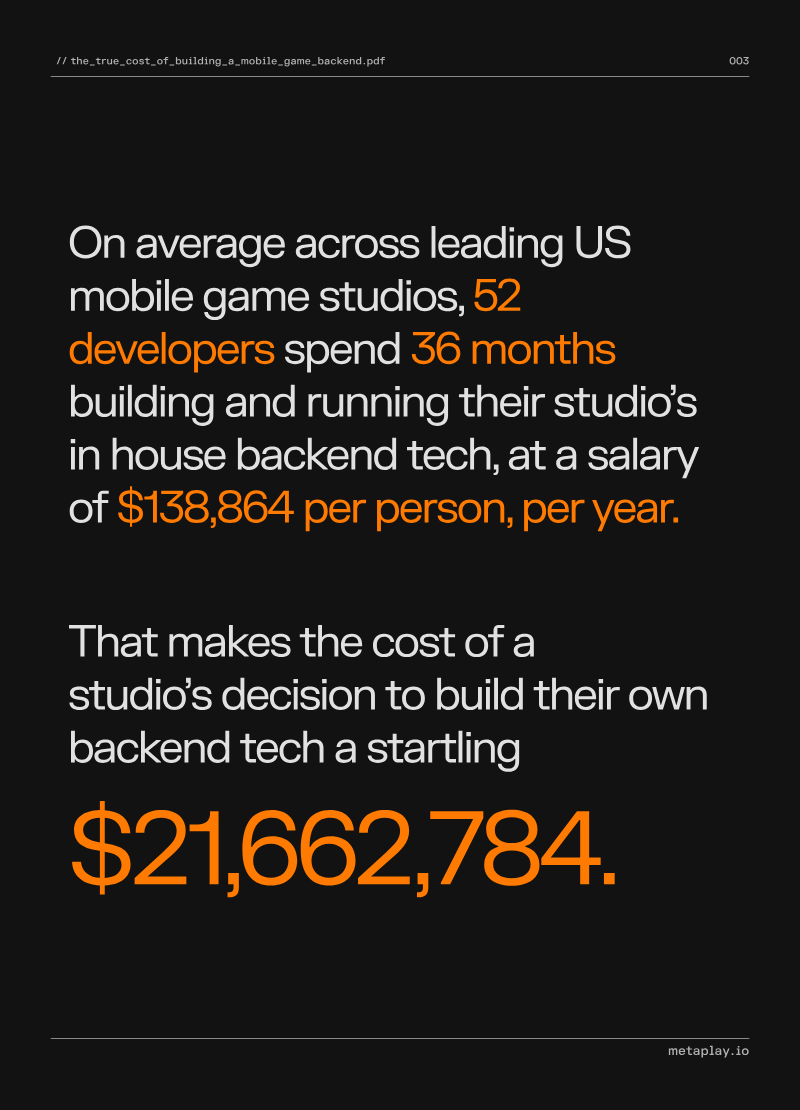
The True Cost of Building a Mobile Game Backend
This analysis examines the financial and operational costs associated with developing in-house backend technology for mobile games.
- Building an in-house mobile game backend costs an average of $21.6 million, requiring 52 developers working over a 36-month period.
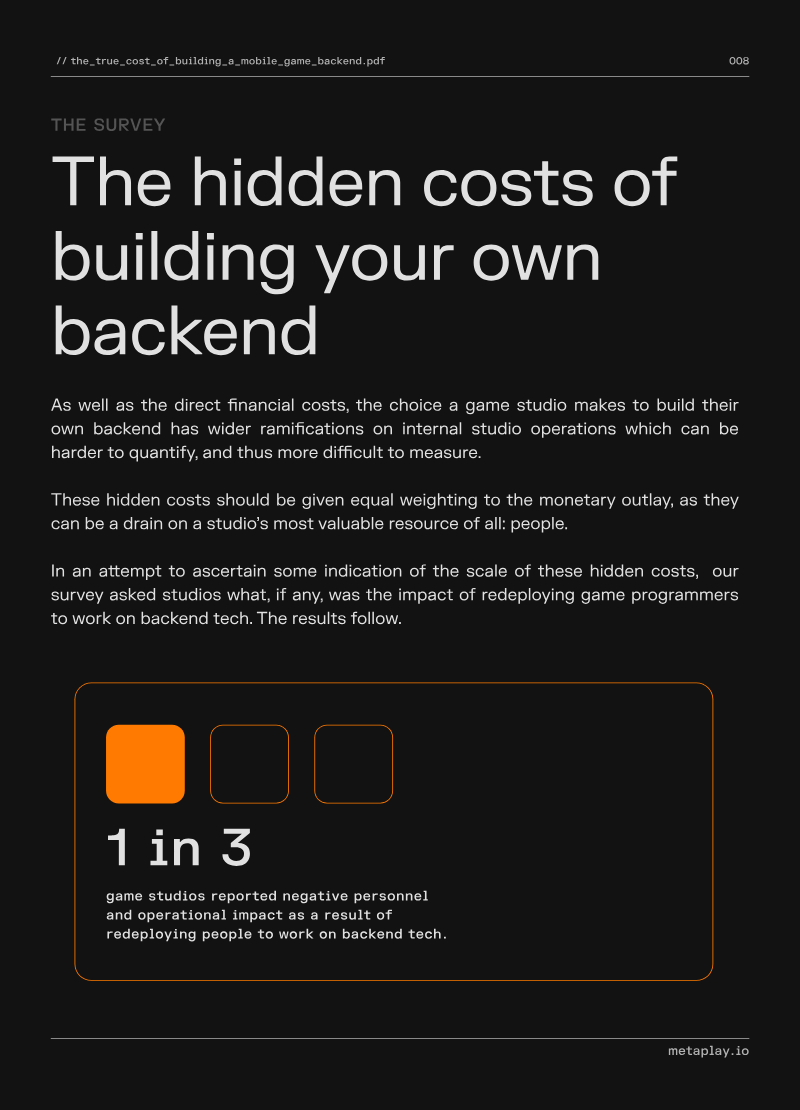
- Diverting gameplay programmers to backend infrastructure tasks slows overall development velocity for 50% of surveyed studios.
- Internal backend development contributes to negative organizational outcomes, including increased employee turnover, higher rates of crunch, and direct revenue loss for 20% of studios.
Multiplayer to Maximize Creativity & Revenue - Mark Val, Photon
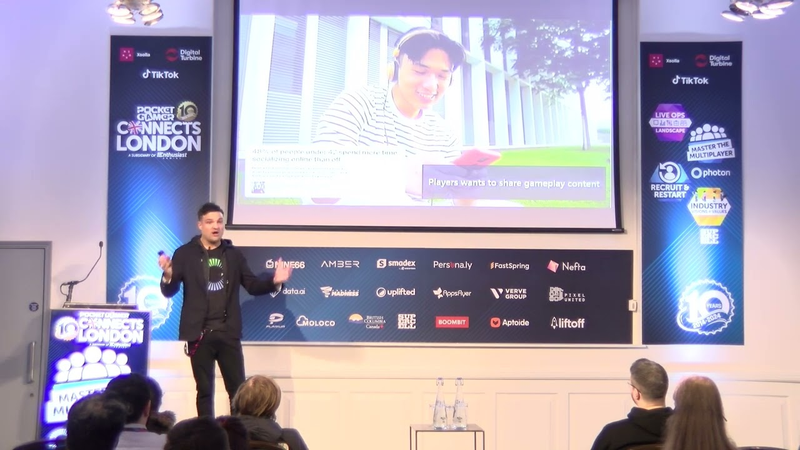
Multiplayer functionality serves as a foundational pillar for success in the contemporary gaming landscape, acting as a primary driver for both player retention and long-term revenue.
- Multiplayer titles dominate the top-performing games across download volume, consumer spend, and monthly active users, as evidenced by the fact that the most popular games on Steam and mobile app stores are predominantly multiplayer-based.
- Successful multiplayer implementation requires deep community integration; developers must treat their player base as a board-level stakeholder to avoid negative feedback and maintain long-term engagement.
- AI tools, such as those integrated into Photon Quantum, provide essential support for multiplayer development by offering out-of-the-box bot systems that balance match difficulty to ensure players experience both wins and losses.
Panel: LiveOps and Support Strategies to Shape the Future of Your Games.
Successful LiveOps strategies depend on the seamless integration of game development, monetization, and player support into a unified operational framework.
- Integrate game development, monetization, and player support into a single operational framework to transform support from a cost center into a driver of product innovation.
- Utilize support channels as a primary source of product intelligence by synthesizing business metrics, player surveys, and community sentiment to inform content updates and live events.
- Deploy AI-driven tools for automated ticketing, sentiment analysis, and machine translation to scale operations, reduce response times, and improve player satisfaction scores.
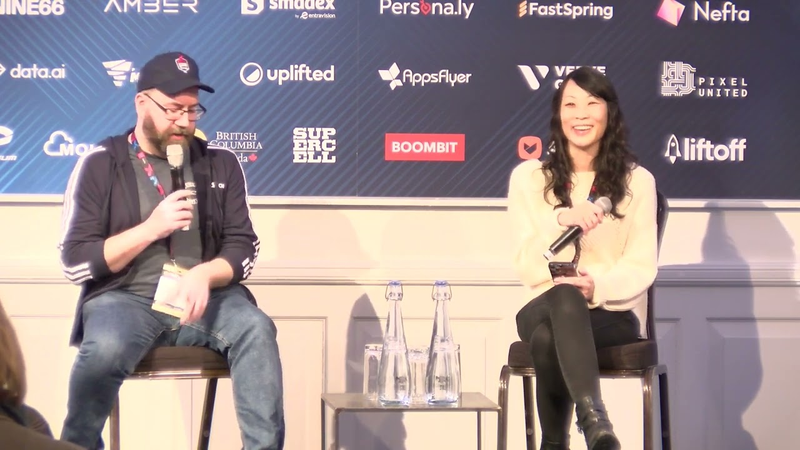
Fireside Chat: Rovio's AI Transformation for Improving Player Experience - Rovio & Keywords Studio.
Rovio Entertainment’s recent transformation of its player support infrastructure highlights the strategic shift from traditional email-based systems to AI-driven, in-app automation.
- Rovio increased its player support deflection rate from 20% to 63% by migrating from an email-based system to the Helpshift in-app conversational support platform.
- The migration involved consolidating support operations across 23 games and five different studios to standardize workflows and reduce reliance on manual human intervention for repetitive 'dumb' queries.
- Rovio integrated its centralized data platform with the support tool, allowing agents to view player profiles instantly and enabling AI-driven automations based on specific player spend tiers and history.

Retaining players and providing support faster | Samantha Pang from Helpshift
The gaming industry is currently navigating a period of contraction characterized by reduced venture capital investment and a shift toward consolidation.
- The gaming industry is shifting from rapid expansion to a focus on player retention and high-quality experiences due to reduced venture capital and market consolidation.
- Helpshift, a Keywords Studios company, minimizes player churn by providing in-app support that prevents users from leaving the game environment to seek assistance.
- AI and machine learning are replacing traditional human-led support models by automating issue categorization and providing targeted, self-service resolutions.
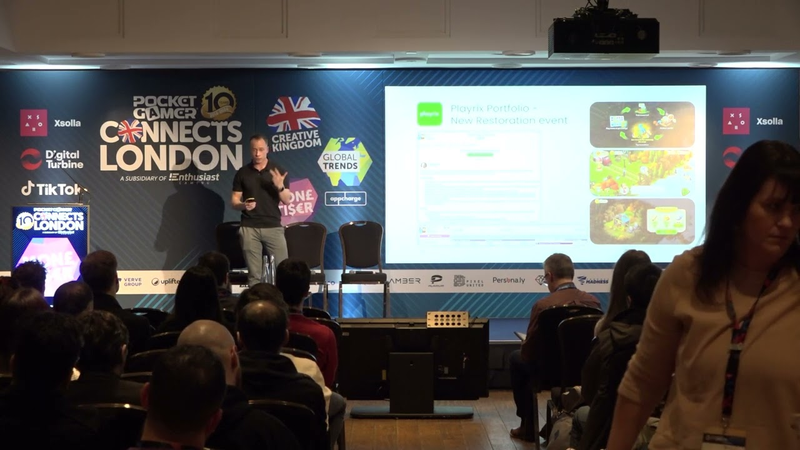
Out of the Box Live Events Insights - Wilhelm Voutilainen, GameRefinery.
Live operations have evolved from simple content updates into the primary driver of player engagement and monetization in the free-to-play mobile gaming market.
- Live operations have shifted from simple content updates to the primary driver of engagement and monetization in free-to-play mobile games, making a robust event framework essential from launch.
- Top-performing titles like Royal Match and Monopoly Go demonstrate that success relies on integrating diverse event types, including task-based competitions, seasonal passes, and limited-time modes.
- Modern event design prioritizes mini-games that extend beyond the core loop—such as merge mechanics, exploration, and digging challenges—to create additional monetization opportunities through energy or currency consumption.

Chrome Valley Customs level balancing talk, from Space Ape's Geoff Gilles
Chrome Valley Customs, a match-three puzzle and car restoration game launched globally in June 2023, serves as the primary case study for a data-driven approach to campaign balancing.
- Space Ape’s Chrome Valley Customs, launched in June 2023, utilizes a data-driven balancing strategy to manage a library of 2,000 levels with a release cadence of 200 new levels per month.
- The development team reduced manual rebalancing time from half-day sessions to a few minutes by implementing a proprietary, automated Google Sheets-based tool that integrates directly with their data warehouse.
- The balancing strategy centers on the 'Target APS' (Attempts Per Success) metric, which acts as a proxy for difficulty to ensure every level aligns with an optimal, pre-defined difficulty curve.
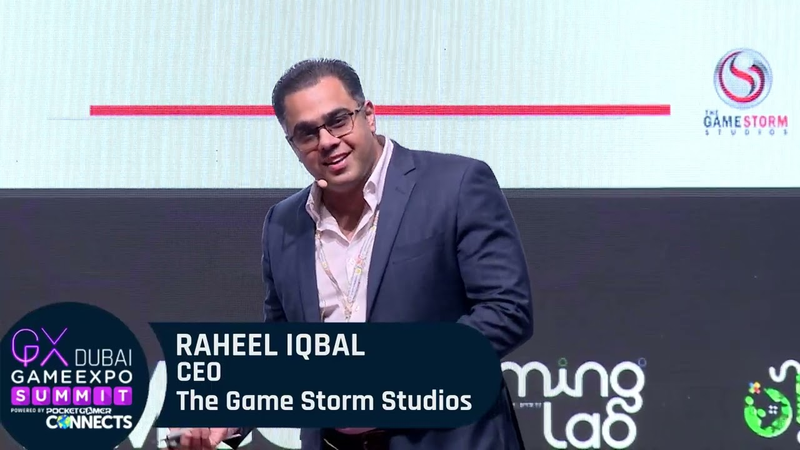
Data & Analytics; Shaping the Future of Gaming and Maximizing ROI - Raheel Iqbal, Game Storm Studios
The global gaming industry is undergoing a significant transformation driven by data-driven decision-making, with the market projected to grow from $220 billion in 2023 to over $300 billion by 2026.
- The global gaming market is projected to grow from $220 billion in 2023 to over $300 billion by 2026, driven primarily by a mobile player base exceeding 3 billion.
- Data-driven user segmentation allows developers to distinguish between spenders and non-spenders, improving acquisition efficiency by 20% to 50%.
- Rigorous analysis of retention metrics (D1, D7, D30) and rewarded video engagement is essential for scaling products to achieve a 1.2x to 1.8x return on investment.
Mobile Gaming Benchmarks for Q1 2024
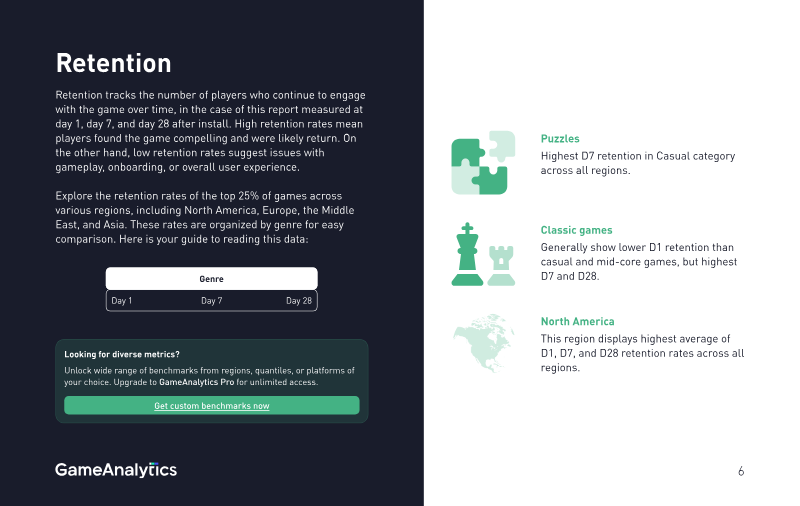
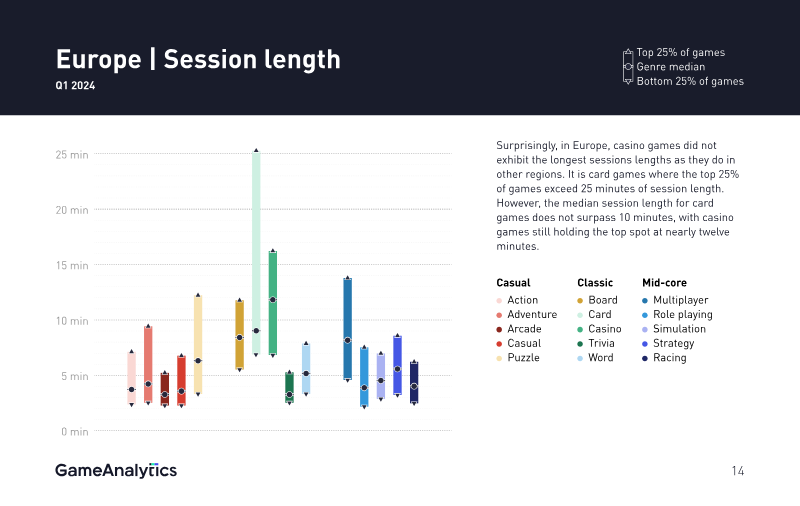
The benchmark study presents a comprehensive snapshot of mobile gaming performance during Q1 2024, focusing on key engagement metrics—retention, session length, and session count—across North America, Europe, the Middle East, and Asia.
- Global median retention rates for Q1 2024 are 22.91% for day-1, 4.20% for day-7, and 0.85% for day-28.
- Classic genre titles, including board, card, casino, trivia, and word games, consistently outperform casual and mid-core titles in retention metrics across all tracked regions.
- The global median session length is 4.45 minutes, though casino and card games significantly exceed this, reaching up to 25 minutes in European markets.