In-Game Advertising reports and market data
Documents

Fireside Chat: Learnings & Best Strategies for Unlocking Revenue Potential via In-Play Ads.
In-play advertising represents a strategic evolution in mobile game monetization, shifting away from intrusive interruptions toward integrated brand placements that preserve user experience.
- In-play advertising serves as an incremental revenue stream that preserves user retention by replacing intrusive, disruptive ad formats with integrated, non-functional environmental assets like billboards.
- Successful implementation requires seamless aesthetic integration using shaders and creative placement logic, such as drones or balloons, to ensure ads feel like natural components of the game world.
- Technical integration is efficient, typically requiring only a few days of development time, though long-term profitability depends on rigorous, iterative A/B testing of placement strategies.
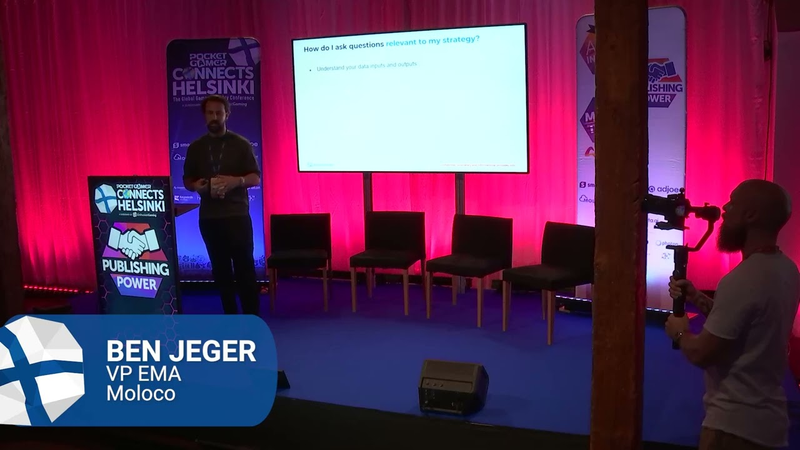
Questions you Should be Asking Your DSP - Ben Jeger, Moloco.
The primary objective of this analysis is to shift the perspective of mobile game and app developers regarding their interactions with Demand-Side Platforms (DSPs).
- Shift the focus of DSP partnerships from manual, granular control—such as managing specific publisher lists—to long-term ROAS and scalable investment strategies.
- Stop attempting to 'outsmart' machine learning algorithms by restricting placements, as modern DSPs optimize for high-value user behavior across all available exchanges.
- Prioritize business-critical KPIs like day-30 ROAS over superficial benchmarks or simple attribution metrics to better measure true growth.
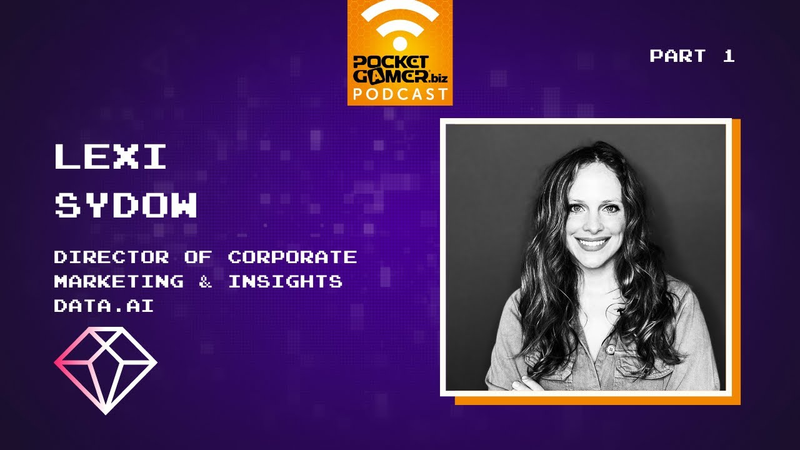
data.ai’s Lexi Sydow Hot Gaming Trends And Ad Formats That Are Losing Steam
The mobile gaming industry is currently in a period of stabilization following a decline in consumer spending caused by economic pressures and reduced disposable income.
- Global mobile gaming consumer spending is projected to reach $108 billion in 2023, with simulation and team-battle RPGs serving as the primary drivers of market share.
- Developers are increasingly adopting cross-platform strategies across mobile, console, PC, and cloud-streamed platforms to offset economic pressures and regulatory headwinds in markets like China.
- Cloud-streamed gaming is gaining significant momentum, with time spent on mobile devices for these services expected to double in 2023, bolstered by infrastructure growth in Southeast Asia and Latin America.

Mobile UA Landscape Impact on Gaming Companies (Pixels & Profits #7) ft. Matej Lancaric
The mobile gaming industry is undergoing a fundamental transformation in user acquisition strategies, moving away from traditional interest-based targeting toward sophisticated, event-based optimization.
- Mobile user acquisition is shifting from interest-based targeting to event-based optimization and modeled conversions due to the deprecation of IDFA and the end of fingerprinting.
- Developers are prioritizing financial discipline by shortening payback periods to between 30 and 90 days to ensure immediate profitability.
- Successful studios are increasingly utilizing web shops to circumvent platform fees and adopting genre-bending mechanics inspired by Asian market trends to improve monetization.

Keynote: Understanding SKAN 4 0 & Its Implications Mark Menery, Verve Group.
SKAN 4.0 represents a significant evolution in Apple’s privacy-centric attribution framework for mobile app install campaigns.
- SKAN 4.0 replaces rigid privacy thresholds with a tiered 'crowd anonymity' system, allowing advertisers to receive varying levels of data granularity based on install and conversion volume.
- The framework extends LTV tracking capabilities by introducing three distinct postback windows that capture user activity from day zero through day 35.
- Advertisers can now utilize 'lock windows' to trigger postbacks earlier, enabling faster data retrieval for campaign optimization.

Best Advertising Networks for Hyper and Hybrid Games in 2023
The transition from hyper-casual to hybrid-casual gaming represents a strategic evolution in the mobile game industry, driven by the need for sustainable growth and diversified revenue streams.
- The mobile gaming industry is shifting from hyper-casual to hybrid-casual models to combat declining eCPMs, evidenced by a 34% increase in in-app purchase (IAP) revenue.
- Hybrid-casual success requires moving beyond short-term CPI metrics to blended ROAS campaigns that account for both ad revenue and long-term IAP value.
- Developers should utilize mediation platforms like AppLovin or Unity to manage the complex data tracking necessary for optimizing long-term user value.
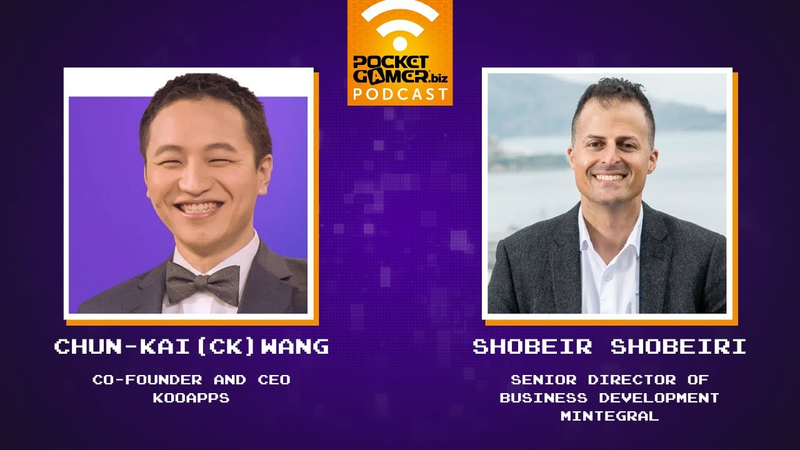
Kooapps’ CK Wang And Mintegral’s Shobeir Shobeiri On Increasing ARPDAU By 40-80% With In-App Bidding
The mobile gaming industry is undergoing a strategic shift toward a unified casual model that blends traditional hyper-casual mechanics with deeper meta-progression and live events.
- Transitioning from manual, waterfall-based ad management to automated in-app bidding has enabled publishers to achieve ARPDAU increases ranging from 20% to 80%.
- The mobile gaming industry is shifting toward a hybrid model that combines hyper-casual mechanics with deeper meta-progression and live events to improve retention.
- Developers are leveraging rigorous A/B testing of interactive formats, such as playable ads, to optimize engagement and revenue performance.
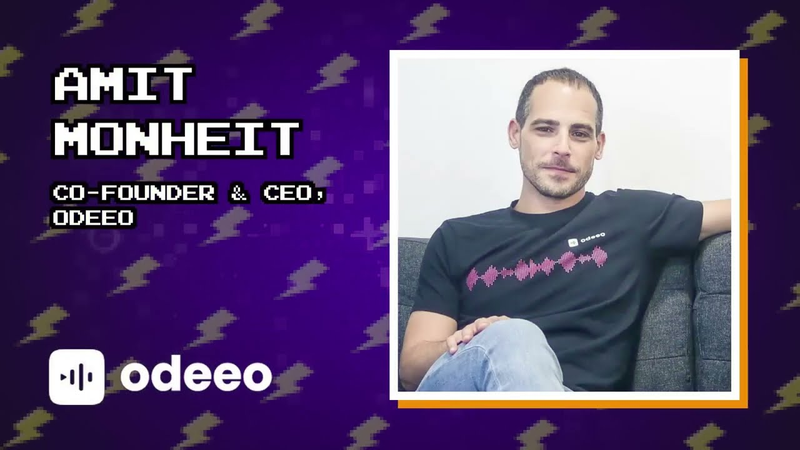
Odeeo's Amit Monheit On Growing Your Game's Daily Revenue And LTV With Audio Ads
In-game audio advertising is emerging as a significant monetization strategy for mobile game developers, offering a non-intrusive alternative to traditional, aggressive ad formats.
- In-game audio advertising provides a 5% to 15% incremental uplift in average revenue per daily active user (ARPDAU) by offering a non-intrusive alternative to traditional ad formats.
- The audio ad model allows players to continue gameplay while listening in the background, contrasting with the frequent interruptions typical of hyper-casual and casual mobile gaming.
- Over 400 live games currently utilize direct SDK integrations for audio advertising, with studios such as Superfine and TapNation using the technology to diversify their monetization stacks.

The days of black box ad networks are gone | Maggie Mesa from Chartboost
The advertising landscape for mobile game developers has shifted toward a model defined by transparency, data-driven iteration, and privacy compliance.
- The mobile advertising industry has shifted away from opaque black-box models toward transparent platforms that provide granular performance data via dashboards and APIs.
- Privacy regulations, specifically Apple’s App Tracking Transparency (ATT) and GDPR, have forced advertising platforms to fundamentally restructure their targeting methodologies.
- Success in user acquisition and monetization now requires a collaborative data-sharing model between developers and their DSP/SSP partners to refine targeting algorithms.

Serving ads that users want | Hajar Noreddine from Adjoe
Adjoe specializes in innovative ad tech solutions, focusing on user acquisition and monetization through time-based rewarded advertising.
- Integrating rewarded ad units can generate over 50% in incremental revenue for mobile developers, reducing reliance on in-app purchases alone.
- Demand-side partners utilizing machine learning-driven targeting through the Playtime platform have achieved a 30% increase in return on ad spend (ROAS).
- User sentiment toward rewarded advertising is highly positive, with 76% of UK users and 56% of US users expressing satisfaction with relevant ads in mobile games.
Understanding SKAN 4.0 & Its Implications - David Philippson, Co-founder & CEO, Dataseat.
The primary objective of this analysis is to demystify Apple’s SKAdNetwork (SKAN) 4.0, an attribution framework designed for the iOS ecosystem.
- Apple is phasing out probabilistic attribution and fingerprinting, necessitating a shift toward internal mastery of SKAN 4.0 rather than reliance on third-party mobile measurement partners.
- SKAN 4.0 expands data collection by introducing three distinct postback windows covering Day 0–2, Day 3–7, and Day 8–35.
- To combat data loss from privacy thresholds, SKAN 4.0 implements a hierarchical 'coarse-grained' conversion value system categorized as low, medium, or high.
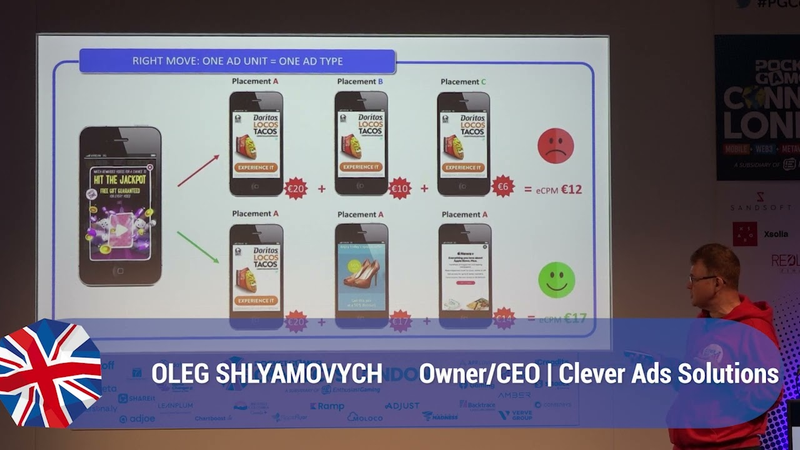
Mobile Ads Monetization: The Tips & Tricks That Make a Difference - Oleg Shlyamovych.
Mobile ad monetization serves as a critical revenue stream for mobile game developers, particularly given that approximately 97 percent of users do not make in-app purchases.
- Utilize professional mediation platforms to foster competition among ad networks, which can increase total ad revenue by up to three times.
- Implement App-ads.txt to ensure inventory transparency, a technical requirement that significantly boosts overall earnings.
- Maintain high user consent rates for personalized ads—reaching up to 92 percent—by carefully designing the opt-out process to be more complex.