In-Game Advertising reports and market data
Documents
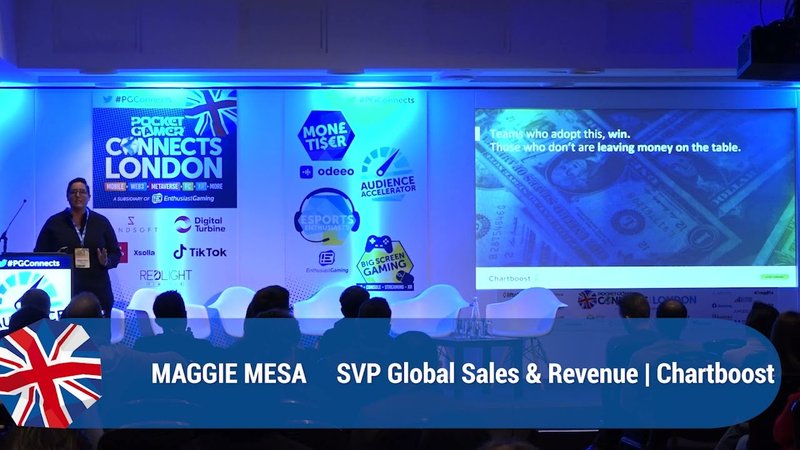
Why Trust & Transparency are Crucial to Your Ad Monetisation Strategy - Maggie Mesa, Chartboost.
The current mobile advertising landscape is characterized by a lack of transparency within mediation platforms, which often function as opaque "black boxes."
- Developers must prioritize neutral mediation platforms that eliminate 'black box' auction mechanics to ensure fair competition among all demand sources.
- Adopting a unified auction model with in-app bidding and open real-time bidding (RTB) signals is essential for maximizing eCPM and ARPU.
- Transparency in the supply path is a critical performance driver, as evidenced by successful migrations of major titles like Empires and Puzzles and Words with Friends to neutral platforms.
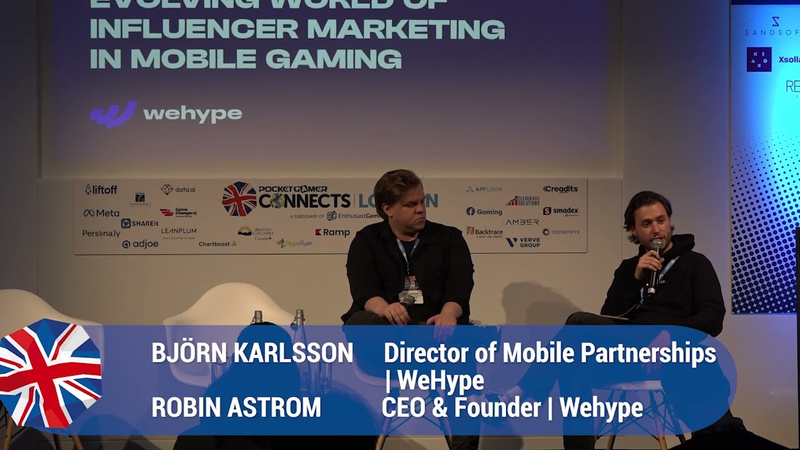
Fireside Chat: Navigating the Evolving World of Influencer Marketing in Mobile Gaming.
Influencer marketing in the mobile gaming industry has evolved from a speculative endeavor into a data-driven strategy essential for community building and user acquisition.
- Prioritize audience alignment and genre-specific relevance over influencer follower counts to ensure higher engagement and conversion rates.
- Integrate creators early in the development lifecycle, such as during alpha or beta testing, to foster long-term brand advocacy and gain actionable community insights.
- Shift from speculative spending to a data-driven model by testing campaigns with micro-influencers and scaling based on verified metrics like chat activity and conversion rates.
Brands Are Now In-Play: Creating a new Revenue Stream in a Seamless Way by Chloe Cave from Adverty.
The integration of in-game advertising, specifically through non-intrusive "in-play" formats, represents a significant evolution in mobile game monetization.
- In-play advertising allows developers to monetize the entire duration of a gaming session without interrupting gameplay, unlike traditional rewarded videos or interstitials.
- Gaming has surpassed the combined reach of film, television, and music, with a global audience of 3.2 billion players.
- In-play advertising is projected to capture 10% of the total in-game advertising market share by the end of 2023.

Ad monetisation gossip corner, Unity expensive bug, APS, Google 3 waterfall placements (#52)
The mobile advertising landscape is currently defined by a shift toward more granular control over mediation stacks and the mitigation of technical volatility.
- Google has removed the three-placement limit for third-party mediation, allowing publishers to expose more inventory to AdMob demand and potentially reducing the necessity of Google Ad Manager resellers.
- A March 13th bug in Unity’s reporting infrastructure inflated revenue data by over tenfold, forcing publishers to disable placements to prevent UA optimization errors and revenue leakage.
- Amazon Publisher Services (APS) is a high-potential demand source for titles with high-purchasing-power audiences, particularly when publishers secure direct Transparent Ad Marketplace (TAM) deals with partners like Xandr, InMobi, and PubMatic.
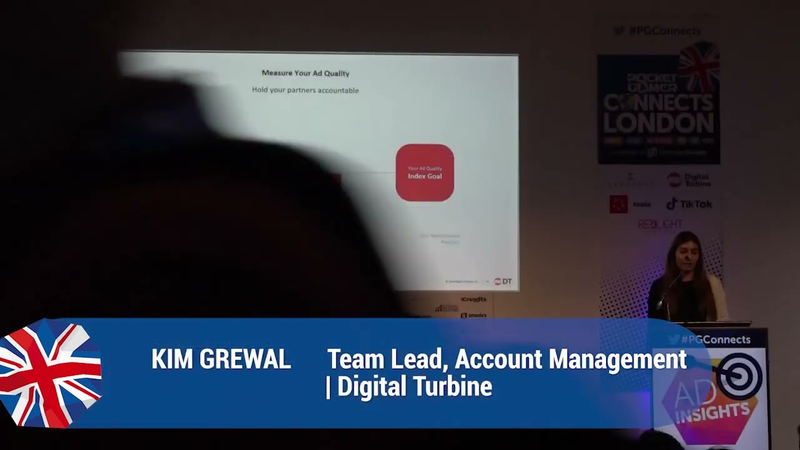
Keynote: WTF Is AQI Ad Quality Index - Kim Grewal, Digital Turbine.
The Ad Quality Index (AQI) serves as a critical metric for mobile game developers to evaluate how advertising experiences influence player retention and long-term revenue.
- The Ad Quality Index (AQI) is calculated by dividing the number of users who exit a game during or immediately after an ad by the total number of users exposed to that ad.
- Developers can isolate financial losses caused by poor ad quality by comparing the ARPDAU of user cohorts before and after exposure to specific ad networks.
- High fill rates and eCPMs often mask hidden revenue losses caused by user attrition, making AQI a necessary metric to balance short-term gains with long-term retention.
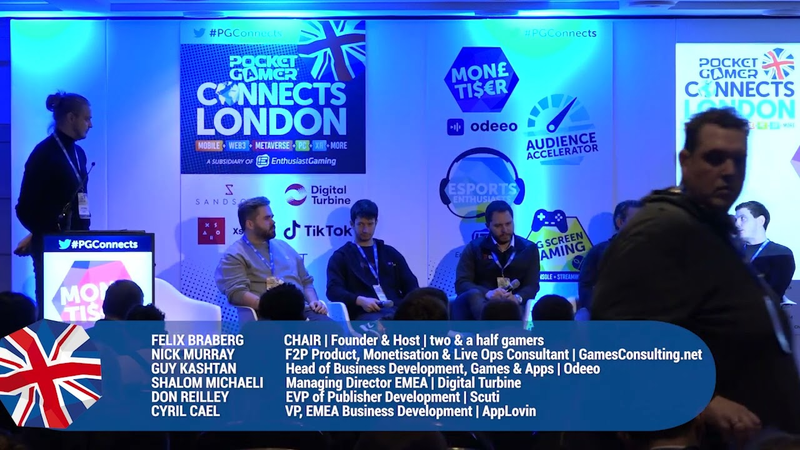
Panel: The Monetisation Menu: Picking the Best Business Model for Your Audience.
Modern game monetization requires a strategic, data-driven transition away from binary revenue models toward diversified, additive ecosystems.
- Developers must move away from binary revenue models toward hybrid ecosystems that combine tiered subscriptions, in-app purchases, and rewarded advertising to maximize player lifetime value.
- Monetization strategies should be localized based on regional economic realities, prioritizing ad-heavy models in emerging markets and direct purchase options in regions with higher spending power.
- Publishers are mitigating the impact of privacy regulations and subscription fatigue by using granular user-level data to dynamically adjust ad exposure and implement bid floors.
Keynote: The Sound of Incremental Revenue: Why Audio ads are What’s Next in Ad Mon,
The integration of in-game audio advertising represents a significant shift in mobile game monetization, offering developers a method to generate incremental revenue without disrupting the user experience.
- In-game audio advertising provides a non-intrusive revenue stream that complements existing ad stacks, directly increasing lifetime value and average revenue per daily active user (ARPDAU).
- Mobile gaming captures high-engagement audiences during the 5:00 PM to 9:00 PM window, a period when traditional audio channels like radio and streaming experience a decline in activity.
- Over 600 global brands across sectors including retail, telecommunications, and consumer goods have already deployed campaigns using in-game audio formats.
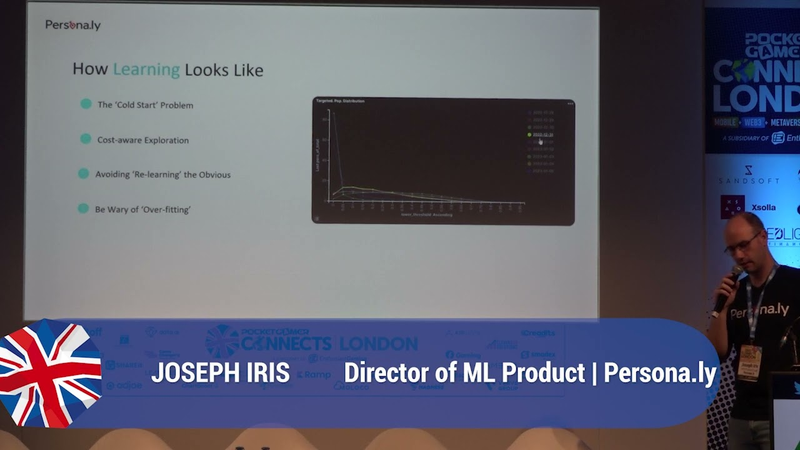
Demystifying Machine Learning for Programmatic UA & Retargeting - Joseph Iris, Persona.ly.
Machine learning in programmatic user acquisition (UA) and retargeting is often misunderstood as a "black box," but it is fundamentally rooted in statistical modeling and data-driven decision-making.
- Machine learning in programmatic UA optimizes bidding and creative selection within a 100 to 300-millisecond window during real-time auctions to maximize ROI.
- Privacy-centric shifts like iOS’s SKAdNetwork require a transition to contextual targeting, utilizing NLP to create app embeddings that identify relationships without granular user-level data.
- Multi-armed and contextual bandits enable real-time creative optimization by dynamically allocating inventory based on specific user attributes.
Christian Facey: The Future of In-Game Audio Ads - Naavik Gaming Podcast
In-game audio advertising represents a transformative shift in mobile monetization, offering a non-intrusive alternative to traditional video formats that frequently disrupt player immersion.
- In-game audio advertising serves as a non-intrusive monetization alternative that preserves player immersion by embedding ads into natural game environments like virtual car radios.
- The model utilizes proprietary verification systems to monitor device audio states, ensuring ads are only delivered when volume levels are sufficient for listener engagement.
- Audio advertising is resilient to privacy regulations like Apple’s App Tracking Transparency because it relies on contextual targeting rather than personal data collection.
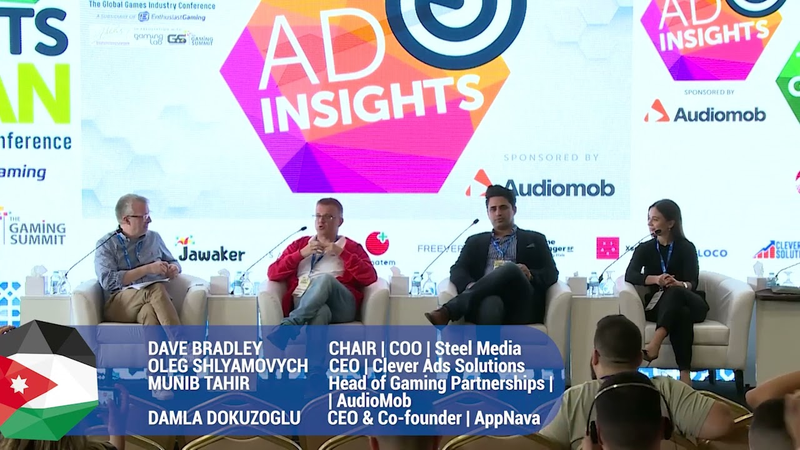
Panel: Ads As Playing Experiences - Selecting the Right Ad Solutions for Your Game
The modern mobile gaming landscape necessitates a sophisticated, hybrid monetization strategy that balances revenue generation with long-term player retention.
- Developers should adopt a hybrid monetization strategy that balances revenue from non-paying users with long-term player retention to mitigate the impact of privacy shifts like Apple’s App Tracking Transparency.
- To maximize effective cost per mille (eCPM), studios must utilize mediation platforms and maintain a rigorous, continuous A/B testing schedule for all ad implementations.
- Ad frequency should be strictly capped, with experts recommending a limit of five to ten rewarded video interactions per player per day to prevent user churn.
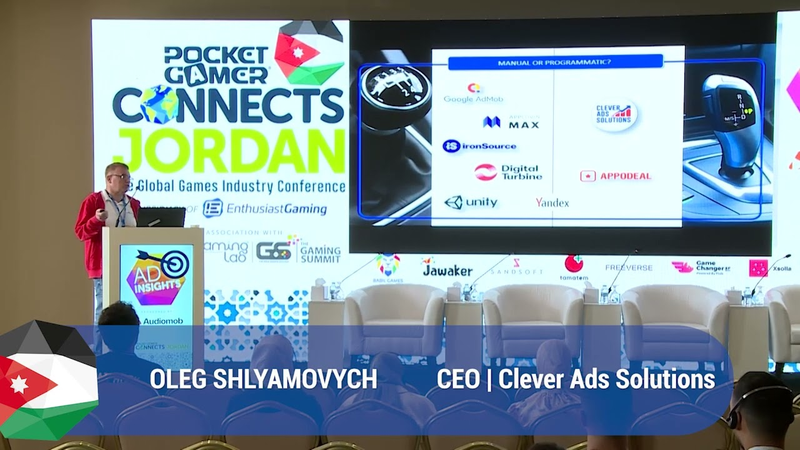
Mobile Ads Monetisation: The Tips & Tricks That Make A Difference - Oleg Shlyamovych
Mobile game monetization requires a strategic shift from focusing solely on game design to managing the business metrics of lifetime value (LTV) and cost per install (CPI).
- Scalability requires maintaining a positive margin where lifetime value (LTV) consistently exceeds the cost per install (CPI).
- Ad monetization is mandatory for capturing revenue from the approximately 95% of players who do not make in-app purchases.
- Programmatic mediation is the most efficient industry standard for developers earning between $100 and $1 million monthly, as it automates manual waterfall management.
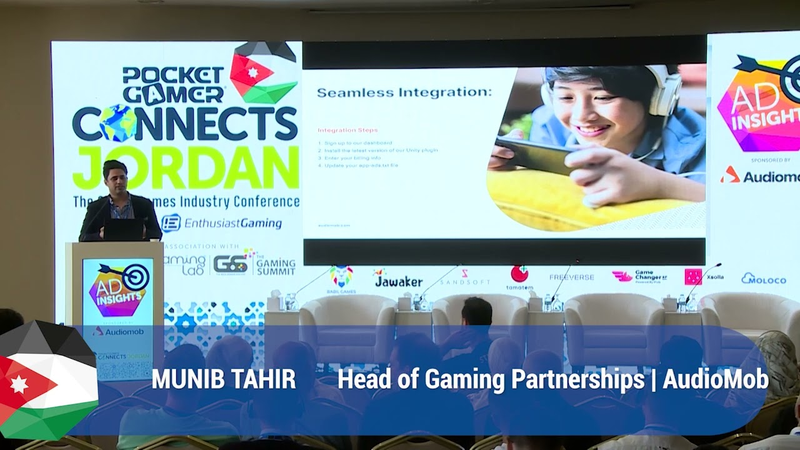
Reinvigorating In-game Monetisation With Audio Ads - Munib Tahir of AudioMob
In-game audio advertising serves as a non-intrusive, user-centric alternative to traditional video interstitial ads, which often negatively impact player retention.
- In-game audio ads provide an incremental revenue stream that avoids the negative impact on player retention often caused by traditional video interstitial ads.
- The AudioMob Unity plugin ensures non-intrusive delivery by only playing ads when device volume is at or above a 30 percent threshold.
- Integration of the audio ad technology into Unity-based games is efficient, requiring a development time of only four to ten hours.