In-Game Advertising reports and market data
Documents
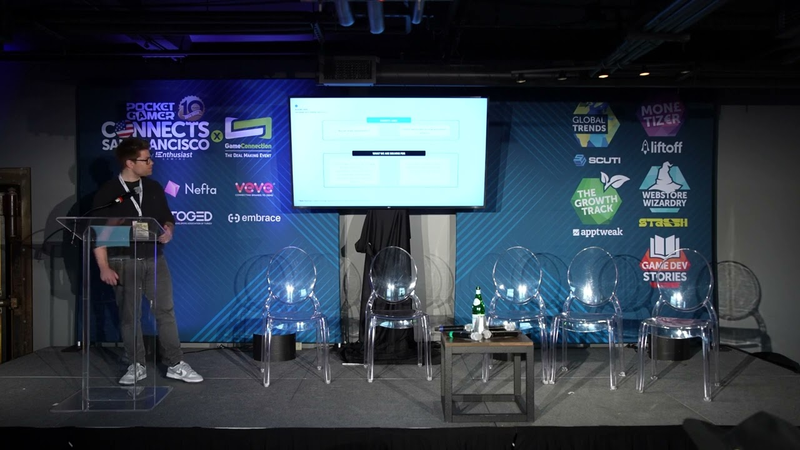
Drive Profitable Business Growth With Meta’s app ads & Audience Network, Toby Wilkins.
Meta’s strategy for driving profitable growth for app developers centers on three pillars: optimizing user acquisition through AI-driven automation, improving attribution accuracy, and evolving monetization capabilities within the Audience Network.
- Meta has removed campaign limits for Advantage Plus app campaigns, allowing for unlimited creation to support high-liquidity, AI-driven performance optimization.
- The Meta Install Referrer for Android, which integrates with all major mobile measurement partners (MMPs), has demonstrated a 20% increase in attributed conversions by capturing edge cases missed by Google Play's standard referrer.
- Meta is transitioning toward privacy-resilient ad serving solutions for iOS and Android (via Google Privacy Sandbox) to move away from the traditional one-to-one user match requirement.
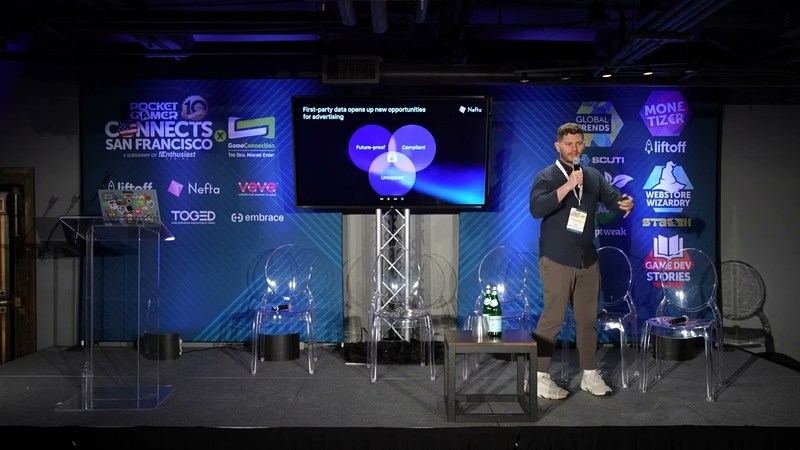
Seizing the First Party Data Opportunity in Mobile Games Advertising, Fernando Pernica, Nefta.
The mobile gaming industry is currently navigating a challenging transition into a privacy-first era, characterized by stringent regulations and the widespread adoption of opt-out mechanisms.
- The mobile gaming industry has seen a 35% decline in in-app purchase revenue following the implementation of recent privacy-first regulations and opt-out mechanisms.
- The loss of traditional identifiers has caused significant drops in advertising revenue and eCPMs, forcing advertisers to struggle with effective user targeting.
- Large industry conglomerates are responding to privacy shifts by creating siloed, opaque data environments that prioritize their internal optimization over publisher transparency.

Turn Your Game into a Money-Making Machine with Fatma Güngör Okutan & Felix Braberg
This discussion provides a strategic overview of mobile game monetization in 2024, emphasizing the transition from rapid, hack-driven growth to sustainable, product-focused revenue models.
- Long-term mobile game profitability in 2024 requires a hybrid monetization model that balances in-app purchases (IAP) with sophisticated, data-driven ad strategies.
- Publishers must shift focus from simple eCPM optimization to maximizing total ad revenue and Average Revenue Per Daily Active User (ARPDAU).
- To protect retention and IAP conversion, developers should implement user segmentation tactics such as delaying ad exposure for new players and tailoring ad loads based on geolocation or acquisition source.

How to get the most value for each ad impression | Geeshan Willink from Nefta
The mobile gaming industry currently faces significant revenue challenges stemming from privacy-centric regulatory shifts, specifically Apple’s App Tracking Transparency (ATT) framework, which has led to revenue declines of 18% to 50% for many developers.
- Apple’s App Tracking Transparency (ATT) framework has caused revenue declines ranging from 18% to 50% across the mobile gaming industry.
- Developers are pivoting from identity-based tracking to first-party in-game behavioral data, such as progression metrics and inventory management, to predict user value.
- In-app mediation solutions are replacing opaque 'black box' ad network models, allowing publishers to stack multiple networks and gain granular insight into which segments generate the highest revenue.
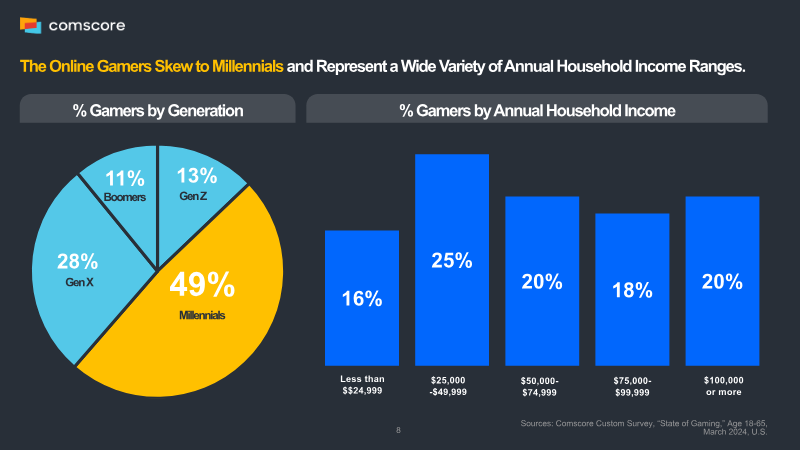


Level Up – Harnessing the Power of Gaming Audiences
The gaming industry has evolved into a mainstream entertainment pillar, commanding significant consumer time and offering a robust landscape for brand engagement.
- Gaming is a mainstream U.S. medium, with 62% of adults aged 18–65 playing games multiple times per week.
- Cross-platform engagement is high, as 77% of gamers use more than one device and 40% play across PC, console, and mobile platforms.
- Two-thirds of gamers view in-game advertisements as having a neutral or positive impact on their experience, with 34% noting that product placement enhances realism.

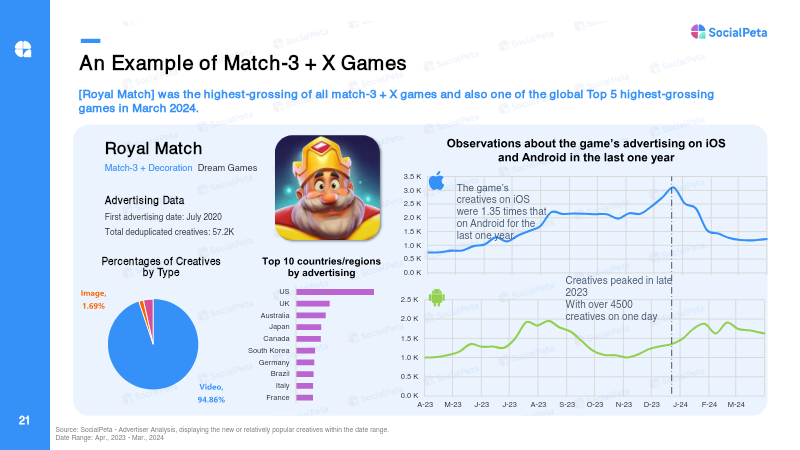

Marketing Insights into Global Casual & Puzzle Games for Q1 2024
The global mobile gaming landscape in the first quarter of 2024 is characterized by a significant expansion in the advertiser base, which grew nearly 29% year-over-year to approximately 51,300 monthly active participants.
- The global mobile gaming advertiser base grew 29% year-over-year in Q1 2024 to 51,300 participants, while the volume of unique creatives per advertiser dropped by 18% as firms shifted toward quality over quantity.
- Casual and puzzle games dominate the market, accounting for 50% of all active advertisers, with casual games alone responsible for nearly 40% of total ad creatives.
- Success in saturated markets like the US and Europe requires high-quality short-form video content and rapid creative iteration to mitigate player fatigue.
Unpacking New Consent Rules on Mobile from Google: CMP, TCF
As of February 2024, mobile publishers operating within the European Economic Area and the United Kingdom must integrate a Transparency and Consent Framework 2.2 compliant Consent Management Platform to maintain ad revenue through Google.
- As of February 2024, mobile publishers in the EEA and UK must use a TCF 2.2-compliant Consent Management Platform (CMP) to continue generating ad revenue through Google.
- Simple binary consent mechanisms are no longer sufficient, as the new mandate requires certified platforms capable of generating granular consent strings.
- Mobile developers must choose between Google’s free native consent tool and paid third-party solutions, which offer advanced features like A/B testing and customization to improve opt-in rates.

TWIG Jr. (TWIG #271) Real takes on Lego Fortnite and Roblox from Mickey (8) and Rocky (10) Lowenfels
This discussion features two young gamers, Mickey (8) and Rocky (10) Lowenfels, providing a consumer-focused perspective on current trends in the gaming industry, specifically regarding Lego Fortnite and Roblox.
- Lego Fortnite is perceived by the 8–10 age demographic as a derivative, less-engaging alternative to Minecraft that lacks the distinct identity of the core Fortnite experience.
- Roblox serves as a primary social utility for children aged 7–12, who prioritize playing with real-life friends over interacting with random users.
- Young gamers prefer billboard-style, non-intrusive advertising in free-to-play environments over the forced, frequent video advertisements common in mobile gaming.
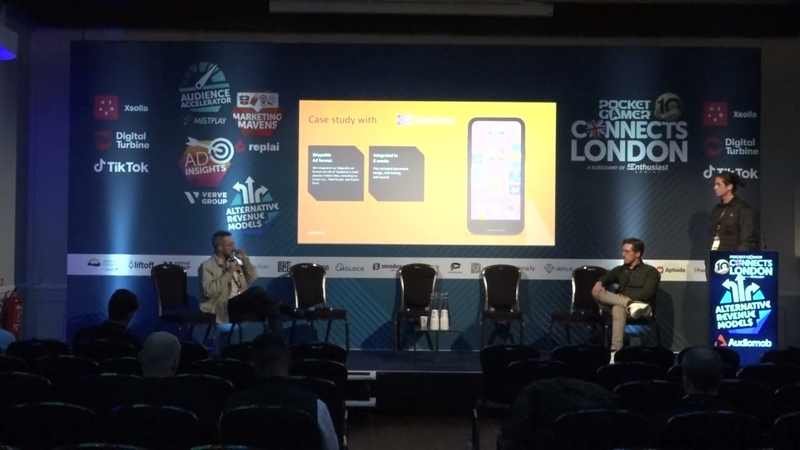
Has Incremental Revenue Ever Sounded This Good - Yiğit Güneri, AudioMob.
The discussion focuses on the integration of non-intrusive audio advertising as a complementary revenue stream for mobile game publishers.
- Audio ads provide an incremental revenue stream for mobile publishers by utilizing non-intrusive audio clips paired with companion banners, avoiding the disruption of gameplay or cannibalization of existing ad inventory.
- AudioMob’s technology optimizes performance through volume detection, ensuring ads only serve when device volume is sufficient for engagement, with CPMs tiered by volume thresholds.
- In tier-one markets, audio ads generate between $5 and $10 per mille, while tier-two markets yield between $1 and $4 per mille.
Kicking off 2024 for iOS Device IDs, Privacy Manifests & SKAN - David Philippson, Dataseat.
The evolution of iOS advertising is defined by a consistent, long-term shift toward user privacy and the systematic elimination of device-level tracking.
- Apple is mandating privacy manifests and 'required reasons' APIs by spring 2024, which explicitly prohibit fingerprinting regardless of user consent status.
- App developers are now legally and operationally responsible for auditing all third-party SDKs to ensure compliance with Apple's data collection and tracking disclosure requirements.
- Common app functionalities, such as checking disk space for updates, now trigger mandatory privacy manifest disclosures regarding data collection and tracking domains.

Why you should diversify your demand | Eado Hofstetter from Digital Turbine
The mobile gaming industry faces significant economic headwinds characterized by reduced venture capital investment and a decline in consumer in-app purchases.
- Developers must diversify revenue beyond performance-based ad rotations by integrating external capital from brand advertisers, such as consumer goods companies and fintech firms.
- To build economic resilience, publishers should adopt a multi-channel strategy incorporating offer walls, device preloads, and brand-performance hybrid ad formats.
- The industry is shifting from traditional waterfall monetization to in-app bidding, a transition that is essential for maintaining competitive performance throughout 2024.

AI Driven Game Monetization in a Post ATT World - Don Reilley, Scuti
The gaming industry faces significant challenges in the post-ATT (App Tracking Transparency) and IDFA (Identifier for Advertisers) landscape, characterized by rising user acquisition costs, declining lifetime values, and player frustration with intrusive advertising.
- The gaming industry is pivoting to 'g-commerce' to offset rising user acquisition costs and declining lifetime values caused by post-ATT and IDFA privacy restrictions.
- The g-commerce model integrates an e-commerce marketplace into game lobbies, providing developers with three revenue streams: retail sales commissions, ad revenue, and in-game currency conversion fees.
- Data indicates that 91% of players are willing to purchase physical goods if they are rewarded for doing so, and 30% of daily active users currently convert these rewards into in-game currency.