Global reports and market data
Documents
Cinematography for Art Directors
In this 2015 presentation, Naughty Dog’s Robh Ruppel explores the intersection of cinematography and game art, arguing that game developers must move beyond mere technical replication of reality to embrace deliberate, artistic visual storytelling.
- Art directors must treat the game screen as a curated canvas for intentional design rather than a passive recording of 3D space to achieve high-level visual storytelling.
- Game developers should map lighting and color palettes directly to the emotional beats of the script to ensure visual cohesion.
- Cinematographic techniques such as high-contrast lighting, silhouettes, and framing devices are essential tools for isolating characters and guiding player focus.
Galak-Z: Forever: Building Space-Dungeons Organically
The development of procedural dungeon generation for the 2D space shooter Galak-Z highlights a strategic shift from manual level design to a hybrid approach that balances algorithmic generation with hand-crafted content.
- The development team replaced manual level design with a hybrid system using Hilbert curves to map dungeon layouts, effectively preventing backtracking and incoherent intersections.
- The generation process utilizes a low-resolution grid to sample the Hilbert curve, establishing a primary path while designating specific dead ends for treasure and mission objectives.
- A custom room template editor allows designers to paint geometry and enemy paths, which are then populated using cellular automata to create organic, cave-like structures.

The Play of Stillness: Designing Experiential Play Spaces
Game design often suffers from an over-reliance on constant interactivity, mistakenly treating mechanical input as the primary source of player engagement.
- Designers should prioritize experiential spaces that foster mental activity and interpretation over constant mechanical input or feedback loops.
- Deep emotional resonance is achieved by balancing predictability with uncertainty, which compels players to construct their own internal models of the game world.
- Minimalist design approaches, as demonstrated in titles like 30 Flights of Loving and P.T., use sparse information to force players to project personal meaning onto the environment.
The Last Game I Make Before I Die: The Crashlands Postmortem
The development of the crafting RPG Crashlands emerged from a profound personal crisis, serving as a creative anchor for lead developer Samuel Coster following a stage 4B Non-Hodgkin's Lymphoma diagnosis.
- To ensure long-term studio sustainability, developers must prioritize building infrastructure like email lists and marketing tools rather than focusing solely on individual game development cycles.
- Differentiating a game from existing genre competitors requires moving beyond incremental improvements to create a unique value proposition, such as integrating a strong narrative into a crafting RPG to distinguish it from titles like Terraria or Don't Starve.
- Building direct relationships with platform holders at Steam, iTunes, and Google Play through consistent updates and press coverage is essential for securing critical launch-day featuring.
The Stress of Game Development - Tips for Survival - Extra Credits
The process of game development is inherently stressful, requiring developers to navigate significant mental and professional challenges throughout the product lifecycle.
- Game development must be treated as a sustainable, iterative marathon rather than a series of high-stakes gambles to avoid project burnout.
- Market saturation on platforms like Steam and mobile marketplaces is extreme, with hundreds of new titles released daily, making commercial failure the statistical norm.
- Developers should prioritize realistic scoping and rapid iteration over perfectionism to avoid the common industry pitfalls of over-promising and exhaustion.
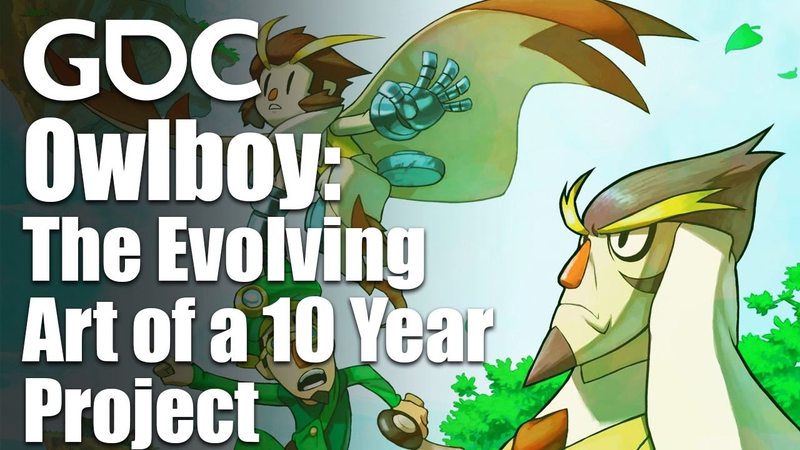
Owlboy: The Evolving Art of a 10 Year Project
The decade-long development of the indie title Owlboy serves as a case study in the tension between creative perfectionism and the practical requirements of project completion.
- Owlboy was in development for 10 years, spanning an entire console generation and outliving the XNA programming language originally used for its creation.
- To maintain visual relevance, the developers implemented custom algorithms to smooth pixel art movement, moving beyond the traditional constraint of locking animations strictly to pixel grids.
- The game's narrative tone shifted significantly toward a story of friendship and personal struggle after the developers experienced major life events, including the death of a close friend.
Get Journalists to Cover Your Game: Lessons from Online Dating, Praying and No Man's Sky
The modern gaming landscape is defined by extreme saturation, with over 4,000 titles launching annually on Steam alone.
- With over 4,000 titles launching annually on Steam, the extreme market saturation necessitates a shift from broad outreach to highly targeted, high-impact communication.
- Developers must treat pitches like dating profiles, ensuring the core value proposition is conveyed within ten seconds using concise messaging.
- High-quality GIFs demonstrating immediate, watchable fun are essential assets for capturing journalist attention in a crowded media landscape.
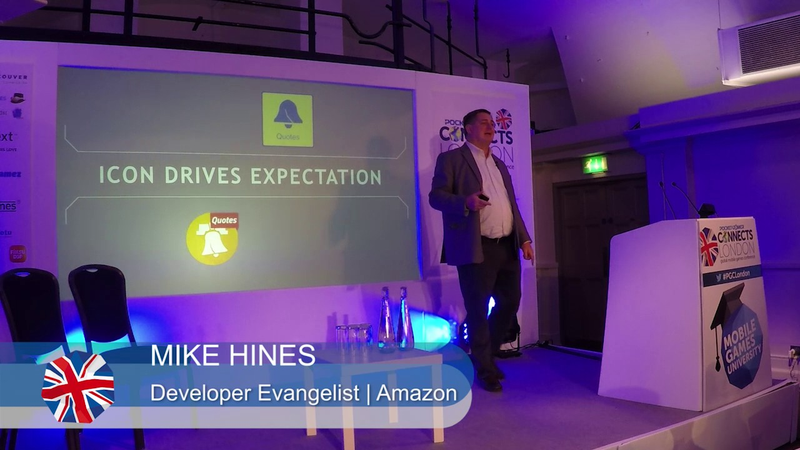
Building Appstore pages and promo videos that don't suck
Optimizing app store product pages is a critical strategy for developers, as over half of all app downloads originate from organic discovery.
- Optimizing screenshots to prioritize actual gameplay over menus or login screens can increase conversion rates by 35%.
- Promotional videos that feature clear gameplay and descriptive text provide a 19% to 35% lift in conversions, with further optimization yielding an additional 22% increase.
- Upgrading amateurish icons to professional designs results in a measurable conversion rate improvement of 8% to 17%.
The 2017 Game Developers Choice Awards
The 2017 Game Developers Choice Awards served as a comprehensive celebration of the industry’s evolution, balancing commercial blockbusters with innovative independent titles.
- Overwatch was named Game of the Year at the 2017 Game Developers Choice Awards, reflecting its significant cultural impact during that period.
- The 2017 awards ceremony formally recognized the industry's expansion into new platforms by establishing a dedicated virtual reality category, with Job Simulator winning the inaugural award.
- Pokémon Go was highlighted for its role in driving mobile innovation, underscoring the industry's shift toward diverse and accessible gameplay experiences.

Politics in Games - All Media is Political - Extra Credits
The core thesis posits that politics are an inseparable component of all media, including video games, because creative works are inherently products of the human experience, cultural context, and the specific time periods in which they are produced.
- All creative media, including video games, are inherently political because they are products of the human experience and the specific cultural and temporal contexts of their creators.
- Design choices in games—such as the selection of enemy archetypes or the mechanics of strategy games—often inadvertently reflect and reinforce contemporary societal ideologies and political realities.
- Media consumption has measurable real-world impacts, as evidenced by studies showing that narratives can alter public perceptions on sensitive topics like the efficacy of torture or forensic evidence.
The growth techniques that all game developers should know about
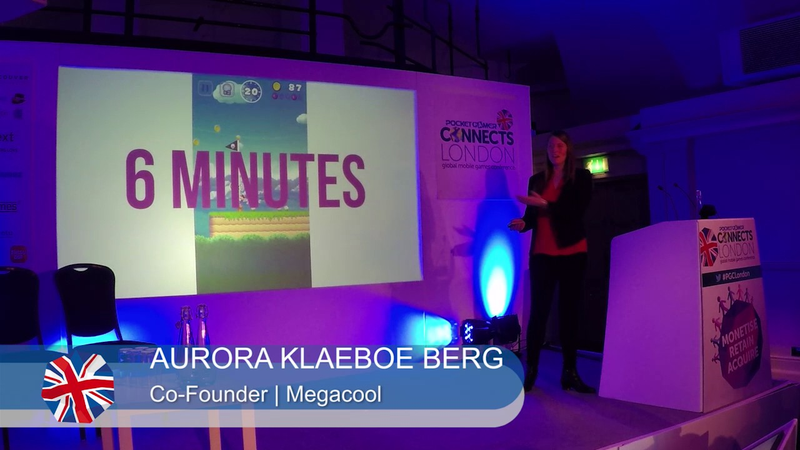
Game developers often struggle to achieve a positive return on investment when the cost of user acquisition exceeds the lifetime value of a player.
- Prioritize organic growth through word-of-mouth and viral loops to mitigate the risk of user acquisition costs exceeding player lifetime value.
- Optimize onboarding by using A/B testing to evaluate tutorial necessity and applying the 'grandma test' to identify and remove interface friction points.
- Time push notification prompts to moments of high player value, such as immediately after receiving a reward, rather than requesting permission during initial setup.

Serious Games Are a Serious Tool for Team Research
Serious games serve as sophisticated, high-fidelity instruments for analyzing complex team dynamics, offering a reliable alternative to traditional behavioral research methods.
- Serious games provide a robust, valid, and reliable platform for team research by enabling continuous monitoring, automated stimuli presentation, and precise response measurement.
- Modern game engines, such as Unity, have significantly reduced the technical barrier to entry by allowing researchers to create parallel scenarios and manipulate game objects via drag-and-drop interfaces without extensive custom programming.
- Game engines now facilitate automated performance assessment by providing direct access to quantifiable data, such as entity locations and event-based status changes, replacing the need for labor-intensive post-processing of key logs.