1 free read left. Create a free account for unlimited reading + AI research.
Create free account
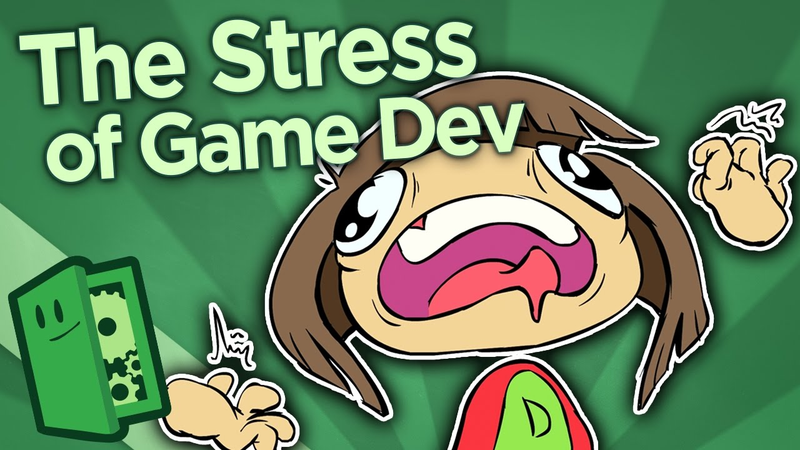
The Stress of Game Development - Tips for Survival - Extra Credits
Key insights
6 takeaways- 01Developers should prioritize realistic scoping and rapid iteration over perfectionism to avoid the common industry pitfalls of over-promising and exhaustion.
- 02Long-term career viability depends on balancing professional passion with personal well-being, celebrating small victories, and actively seeking peer support.
- 03Game development must be treated as a sustainable, iterative marathon rather than a series of high-stakes gambles to avoid project burnout.
- 04Market saturation on platforms like Steam and mobile marketplaces is extreme, with hundreds of new titles released daily, making commercial failure the statistical norm.
- 05Resilience is required to navigate both the silence of a market flop and the toxicity of negative player feedback that often follows a game's release.
- 06Success can lead to dangerous overconfidence if developers attribute achievements solely to personal talent while ignoring the collaborative and iterative processes that enabled them.
Ask AI about this video
Transcript
Before we start, big thanks to Joe here for stepping in as our guest artist this week. There is just so much to love about making games. Dreaming interactive worlds into existence is just an exciting thing. Of course, making games is also very challenging, requiring all manner of technical and creative skills. But, there's also another kind of difficulty you face making games, one not discussed nearly so often, the mental stresses of game development. Every phase of development brings its own mental strains. So, today I would like to offer some tips for minimizing those stresses. Stress points number one, coming up with an idea. When starting a new game, there's a lot of pressure to make the right decision about what to make. At a professional studio, this decision will determine the next several years of people's lives. At a small studio, you may be literally betting the future of the company on this next game being a hit. My advice here is to not let yourself get bogged down searching for the perfect idea.
Instead, just pick a pretty good idea and charge at it, building prototypes and iterating as fast as you can. Experienced designers know that success often comes not from picking the absolute best idea at the outset, but from making the most of the idea you do pick. By testing and iterating on your chosen concept as early as possible, you reduce the risk of pursuing a flawed idea while keeping costs low. Once you've got a proof of concept prototype that's been well received, then it becomes much easier to move production forward with confidence. Stress point number two, getting in over your head. It's tempting to let plans spiral when you're excited and invested in your own game success. At some point, nearly all designers have publicly over-promised and then fallen short on delivering on time or at all. They have all got war stories and lessons salvaged from the wreckage. Failing to ship may sound like something that happens late in development, but we most often set ourselves up for these failures early on
by promising something before realizing it's beyond our means. Just keep in mind, players tend to prefer a well-polished simple experience over an ambitious idea that's badly executed. And you would be surprised how challenging it is to polish even a simple experience to a commercial level. Stress point number three, project fatigue. If your only prior game design experience is game jams, adjusting to longer-term projects can be really tough. It sometimes feels overwhelming or like everything's at a standstill. You start questioning the entire project. You struggle with burnout. You think about quitting. You may feel jealous or inadequate when comparing your work to what other people are doing. These internal struggles are part of what keeps turnover so high in this industry. When these times come, remember that other game makers are going through this, too, and you can and should turn to your peers for support. Remember that big things happen one step at a time. So, celebrate the small victories every step of the way, and remember to take care of yourself. Eat
healthy, take walks, sleep right, get fresh air, and spend some time with non-co-workers. Passion is important, but so is sustainability. You are no good to your team or your players if you burn out. Think big picture, not just about the game that you're making now, but about all the games you would like to make someday in the future. This is a marathon, so don't try to sprint the whole way. Okay, so let's say that you have survived production, good for you, and you finally shipped the game. Congratulations, breathe a sigh of relief, celebrate, and then brace yourself for one of several things that might happen next. Stress point number four, your game flops. Let's say you launch your game and silence. Crickets. Sadly, this is the most common outcome when releasing a game. As great as it is that so many barriers to entry in the market have fallen, those barriers were partly in place to block games from going to market if they were unlikely to sell. It is now much easier to get your game into a marketplace, but that is
equally true for the competition. And there is more competition now than ever before. Nearly 20 games get approval on Steam Greenlight every day. On mobile, over 500 new games are released daily. Steam Spy recently shared that 38% of all games on Steam came out last year. With so, so many new games flooding the place, fewer titles can be featured, and it's rare to even stay atop the new release list for long. And this no longer applies only to first-time amateur projects, either. Professionally developed games get lost in the crowd, too. Dead in the water on release. The only thing you can do here is try everything possible long before the game's release to make sure that people know about it and are expecting it, so that people will dig to find it once it's out. Like I said, flops are the norm now, and it is just devastating to morale. If it happens to you, just pick up the pieces, keep your head up, and try to make and market your next game even better. Stress point number five. Your game
succeeds. A more successful game release can lead to a tidal wave of player feedback, and some of it is going to be brutal. Strangers just do not care what you went through to make it, and plenty of them will happily mock your work and say things to upset you. Sometimes we can learn useful stuff from this feedback. Sometimes it's simply people taking their own frustrations out on your game, or just being toxic jerks. And the harsh words always stick with you longer than the nice ones. Sadly, you have to develop a thick skin in this business, because the more popular your game gets, the more negative responses you're going to receive. Stress point number six. Your game really succeeds. Sometimes a game can do so well, either financially or just in terms of awards or exposure, that it leaves you just freaking out over how you are going to follow it. With great success comes increased expectations for what you do next. Gone is the freedom of taking big risks in the safety of obscurity. It's also very easy to trip over our egos in
the wake of success, to trick ourselves into believing that our game did so well because of our talent and our good judgment. You start overlooking all the other factors that got you here. Your humility or your caution, your process, your receptiveness to feedback, and the will to improve yourself. As much of a hindrance as self-doubt can be, it can also be a help, a form of internal quality control, reminding us that we can do better. In the wake of great success, it's really easy to start giving your hunches too much credit. Just try not to lose sight of the actions, thoughts, and other people that got you there. Oh, and one last thing, don't count on every single game being a back-to-back hit. Even accomplished designers don't expect that every time. Some people do achieve it, but it is incredibly rare. Most devs budget the money from one successful release to cover their next several attempts. Many devs dive back into game jams or blow profile personal side projects just to loosen up between the major efforts. All of this to say, making games is awesome.
Most everybody we know who does it agrees that it is worth it, but it is also really hard, and sometimes it's hard in ways that are really difficult to see until you're deep in the process. But, if we didn't enjoy a good challenge, I guess we wouldn't like games so much, right? See you next week.
Summary
The process of game development is inherently stressful, requiring developers to navigate significant mental and professional challenges throughout the product lifecycle. The primary thesis is that sustainability in the industry depends on recognizing these recurring stress points—ranging from initial conceptualization to the aftermath of a release—and adopting strategies to manage them effectively. Rather than seeking perfection, developers are encouraged to prioritize rapid iteration and realistic scoping to avoid the common pitfalls of over-promising and project burnout.
Key findings highlight that the modern gaming market is increasingly saturated, with hundreds of new titles released daily on platforms like Steam and mobile marketplaces. This high volume of competition makes commercial failure the statistical norm rather than the exception. Consequently, developers must cultivate resilience against both the silence of a market flop and the toxicity of negative player feedback that often accompanies success. Furthermore, the pressure to replicate success can lead to dangerous overconfidence, where developers may mistakenly attribute their achievements solely to personal talent while ignoring the collaborative and iterative processes that originally facilitated their success.
The analysis emphasizes that game development is a marathon rather than a sprint. Maintaining long-term health requires celebrating small victories, seeking peer support, and balancing professional passion with personal well-being. By viewing development as a sustainable, iterative practice rather than a series of high-stakes gambles, creators can better navigate the industry's volatility. Ultimately, the ability to maintain humility, accept constructive criticism, and manage expectations is essential for those looking to build a lasting career in the creative and technical field of game design.





















Comments