1 free read left. Create a free account for unlimited reading + AI research.
Create free account
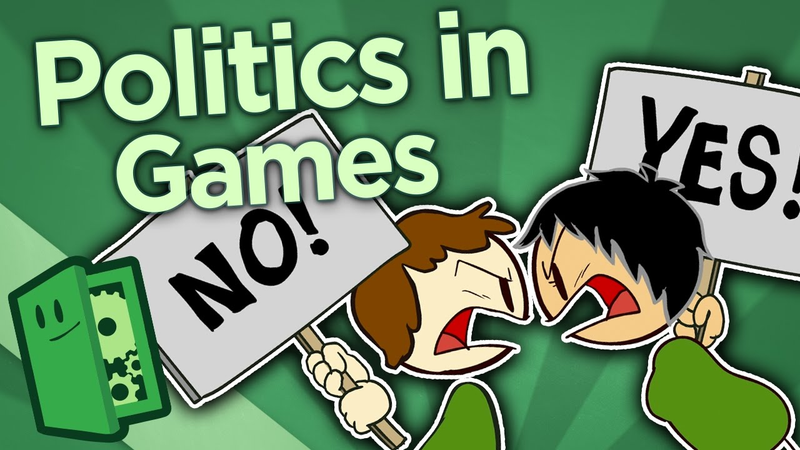
Politics in Games - All Media is Political - Extra Credits
Key insights
6 takeaways- 01The integration of political themes is a sign of the medium's maturity, allowing games to function as powerful vehicles for exploring complex ethical and social questions.
- 02Games like 'Papers, Please' and 'This War of Mine' demonstrate that explicit political mechanics can be used to engage players in critical discourse regarding societal structures.
- 03All creative media, including video games, are inherently political because they are products of the human experience and the specific cultural and temporal contexts of their creators.
- 04Rather than attempting to sanitize games of political content, the industry should embrace its role in the global cultural conversation to foster more sophisticated and thought-provoking contributions.
- 05Media consumption has measurable real-world impacts, as evidenced by studies showing that narratives can alter public perceptions on sensitive topics like the efficacy of torture or forensic evidence.
- 06Design choices in games—such as the selection of enemy archetypes or the mechanics of strategy games—often inadvertently reflect and reinforce contemporary societal ideologies and political realities.
Ask AI about this video
Transcript
As the political divides in our world have become increasingly pronounced, more and more frequently on message boards, forums, and Steam reviews, I've seen the demand that creators, writers, and reviewers keep politics out of games. That is not possible. All media is political. Heinlein wrote libertarian science fiction, and H.G. Wells wrote socialist. The X-Men is about the civil rights movement. Red Skull started out as a commentary on war profiteers. And, of course, Captain America was created to argue that America join the fight against fascism at a time when most Americans were against doing so. Star Trek is a post-scarcity liberal democratic utopia. And, successfully or not, it ardently tried to show a world where race and gender no longer determined what you could be. On the other side, the recent incarnation of Battlestar Galactica is an allegory for the post-9/11 questions of liberty versus security in a democracy that
considers itself continuously at war with some invisible, but omnipresent threat. See, you can't just extract politics from media. Media is created by people. People are products of their culture and times. And, so, intentionally or unintentionally, they are going to express their views through the outlets they have. Our perspectives and understanding of the world inevitably shape our creative work. This is part of what makes the work human, what makes it alive. And, besides, even if we could somehow extract politics from our entertainment, we would lose so much. Many of the best creative works out there, the ones that leave us with something to think about, that inspires us to ponder our world, and still sticks with us years later, they deal in political ideas. They present ethical questions, or portray an idea of how society should or shouldn't be. From Dune to Ender's Game to The Witcher to literally countless other treasured stories. If we say get politics out of
my art, we lose all of those works. Now, we can talk about how on the nose a work should be with its politics. That's totally worth debating because it's a delicate balance. We can even talk about the methodology for approaching these things. We ourselves talked ages ago about how games are unique in their ability to allow the audience to explore ideas rather than simply having a writer or a designer express their ideas at you. We talked about how careful we have to be about letting players make real choices rather than accidentally indoctrinating them with choices that aren't really choices at all. But, we shouldn't simply get politics out of games, whatever that means. We can handle politics. This medium is a big kid now. We can handle a bit of heavy lifting. In fact, we need to. Not that we could get politics out of our games anyway because all media is political. Even when it's unintentional, media shapes culture. Culture shapes society, and political views are a product of society. When our go-to cannon fodder
targets in shooters moved from being Nazis to being people who look Middle Eastern, that almost certainly wasn't an intentional political statement on the part of those games' designers, but those games did reflect a shift in culture and a shift in politics. And moreover, they reinforced those shifts. The intelligence community studied how watching shows like 24 made Americans more likely to believe in the efficacy of torture regardless of all evidence to the contrary. Many police departments claim that shows like CSI have made it a lot harder to do their job because jurors now expect a level of proof that simply is not possible in the realities they work under. These attitudes, shaped by media, went on to affect our political realm and changed policy and law. They nudged the Overton window just a little bit. And games like Papers, Please and This War of Mine draw directly from our world and our politics for their very mechanics. While games like Cards Against Humanity not only leverage our political understanding for
their humor, but get directly involved with politics, launching whole expansions to support a political candidate. Even as we play, we pick up political philosophies and internalize ways of viewing the world. In almost any strategy game, the correct way to win is almost always to improve technology and increase resource production. This is almost hardwired into you if you play enough strategy games. Now, that mindset actually represents a very modern social and political perspective, and yet we frequently apply it to time periods like ancient Rome or the 100 Years War, where it wasn't really true, where political stability was a much greater factor in determining which civilizations triumphed in a conflict than technology or even resource production. You see what I mean when I say that we literally can't get politics out of our games? We can't remove the political because games are created by human beings who, even when they don't realize it, are influenced by the political space they live in. Now, that doesn't mean that we have to agree with the creators. In
fact, in any democracy, we should be happy to disagree. We should welcome things that spark discussion. And it doesn't mean that we have to be less passionate about it. Now, we should be civil with each other, but it's okay for media to matter and for what media is saying to matter. It's okay if it makes you angry or upset. It's okay to think that the politics expressed in a piece of media are great and support them, or to think that they are heinous and to fight against those politics. It's even okay for corporations to say that they won't support a piece of media because it represents something they do not wish to endorse. We absolutely are mature enough as a medium to handle that. We are mature enough as a medium to explore these topics because without politics in games, you don't get Missile Command with with commentary on nuclear proliferation. You don't get Final Fantasy VII with its environmentalist bent. You don't get the Call of Duty series military patriotism, or even Just Cause's take on covert regime change. Without politics in our games, we would lose so much. But more than that, we
can't get politics out of our games anyway, because all media is political. See you next week.
Summary
The core thesis posits that politics are an inseparable component of all media, including video games, because creative works are inherently products of the human experience, cultural context, and the specific time periods in which they are produced. Rather than attempting to sanitize games of political themes, the industry should embrace its maturity and recognize that games serve as powerful vehicles for exploring complex ethical, social, and political ideas. Because creators are influenced by their environment, even unintentional design choices—such as the selection of enemy archetypes or the underlying logic of strategy game mechanics—reflect and reinforce broader societal shifts and political realities.
Historical and contemporary examples illustrate this phenomenon across various media. Science fiction staples like Star Trek and Battlestar Galactica utilize allegory to examine civil rights, post-scarcity economics, and the tension between liberty and security. In gaming, titles such as Papers, Please and This War of Mine explicitly integrate political mechanics, while strategy games often inadvertently promote modern ideologies regarding resource production and technological advancement that may not accurately reflect the historical periods they depict. Furthermore, media consumption has measurable real-world consequences, as evidenced by studies showing how television narratives can influence public perception of torture efficacy or alter juror expectations regarding forensic evidence.
Ultimately, the presence of politics in games is not a flaw to be corrected but a sign of the medium’s evolution. Engaging with these themes encourages critical discourse, allowing players to challenge, support, or debate the perspectives presented by creators. By acknowledging that all media shapes culture and policy, the gaming industry can move toward a more sophisticated understanding of its role in society, fostering a landscape where games are recognized as significant, thought-provoking contributions to the global cultural conversation.























Comments