Game Studies reports and market data
Documents

Design and Preliminary Validation of the Player Experience Inventory
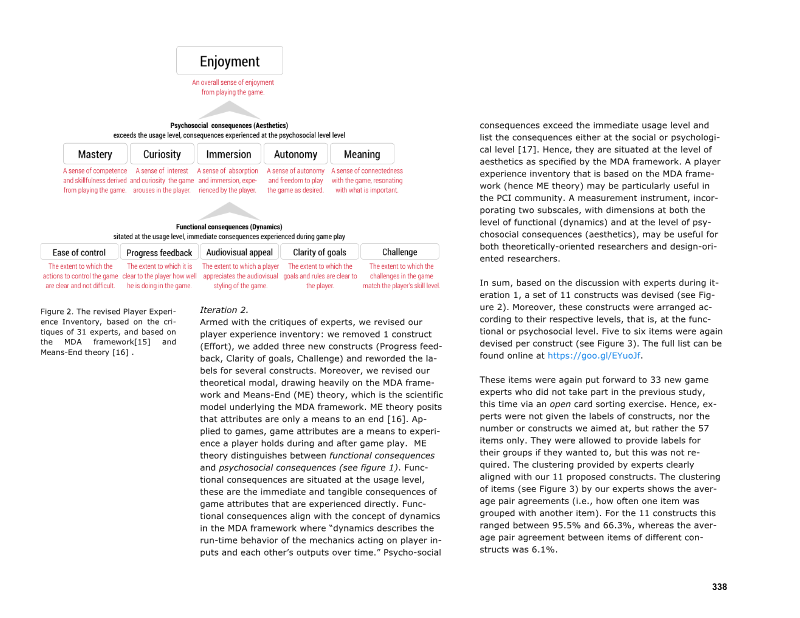
The Player Experience Inventory (PXI) is a proposed standardized, freely available survey instrument designed to measure player experience across both academic and industry contexts.

Can Videogame Players Inform Better Scientific Visualization?
This research explores how principles of videogame design can enhance the usability and interface of complex scientific visualization tools, specifically focusing on the bioinformatics platform Aquaria.
- Videogame design principles can significantly improve the usability of complex scientific platforms like the bioinformatics tool Aquaria by bridging the gap between specialized software and intuitive interfaces.
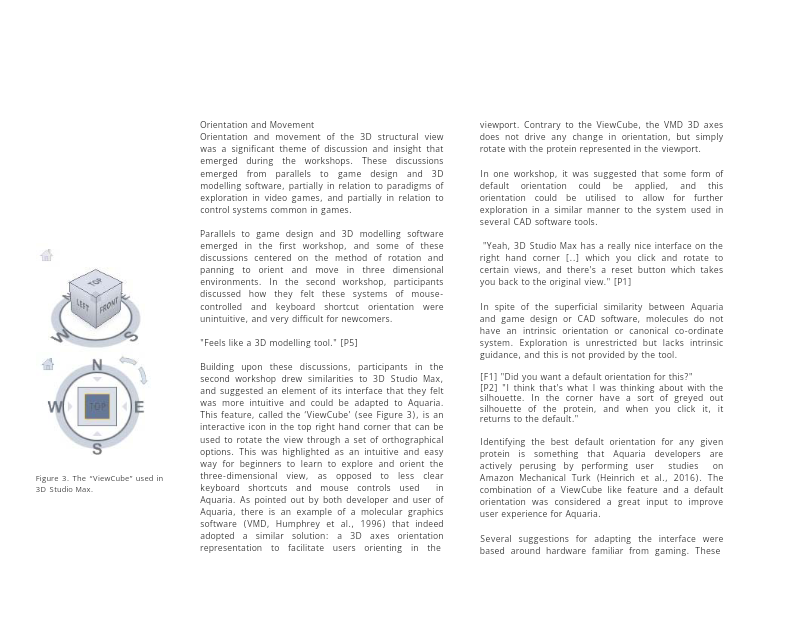
- Implementing 3D navigation tools, specifically a ViewCube-style controller, is recommended to help users better orient themselves within complex protein structure data.
- Integrating social and collaborative features, such as shared viewing sessions and note-leaving systems, can foster greater community engagement among molecular biology researchers.


Designing for Emotional Complexity in Games: The Interplay of Positive and Negative Affect
This document explores the design and evaluation of emotional complexity in digital games, specifically challenging the industry’s traditional, narrow focus on purely positive affect and "fun."

Squeezy Green Balls: Promoting Environmental Awareness through Playful Interactions
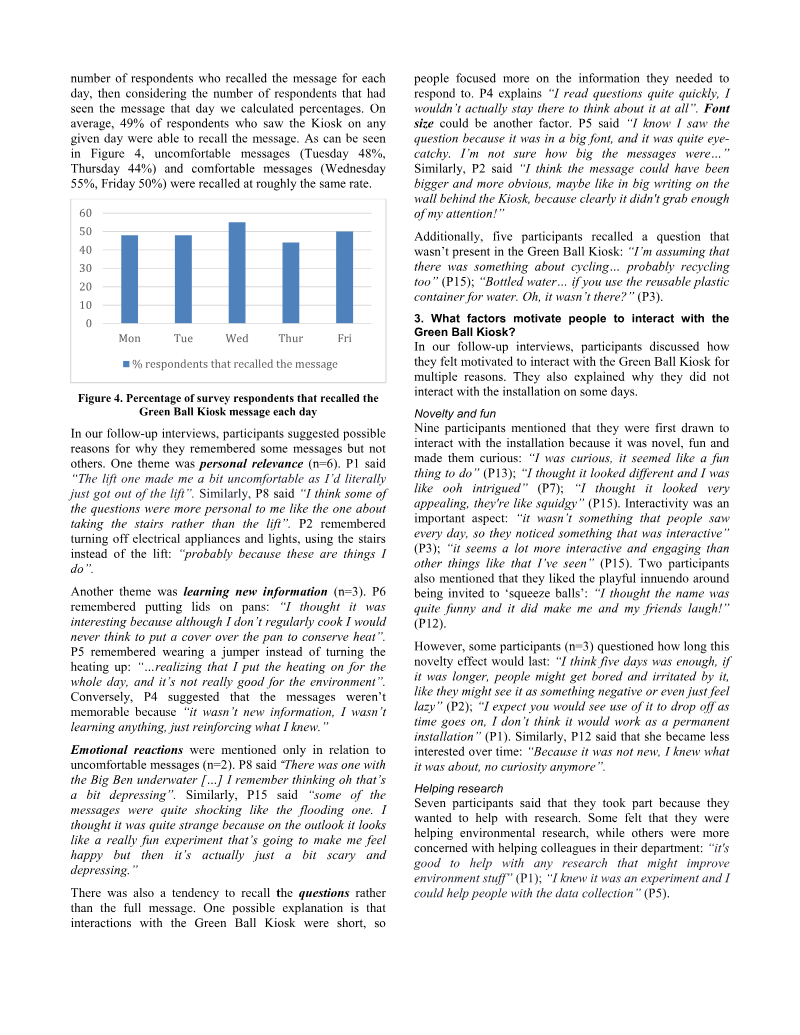
Playful, physical computing installations serve as effective tools for overcoming public apathy toward climate change by transforming abstract environmental messaging into tangible, interactive experiences.
Crowd-Pleaser: Player Perspectives of Multiplayer Dynamic Difficulty Adjustment in Video Games
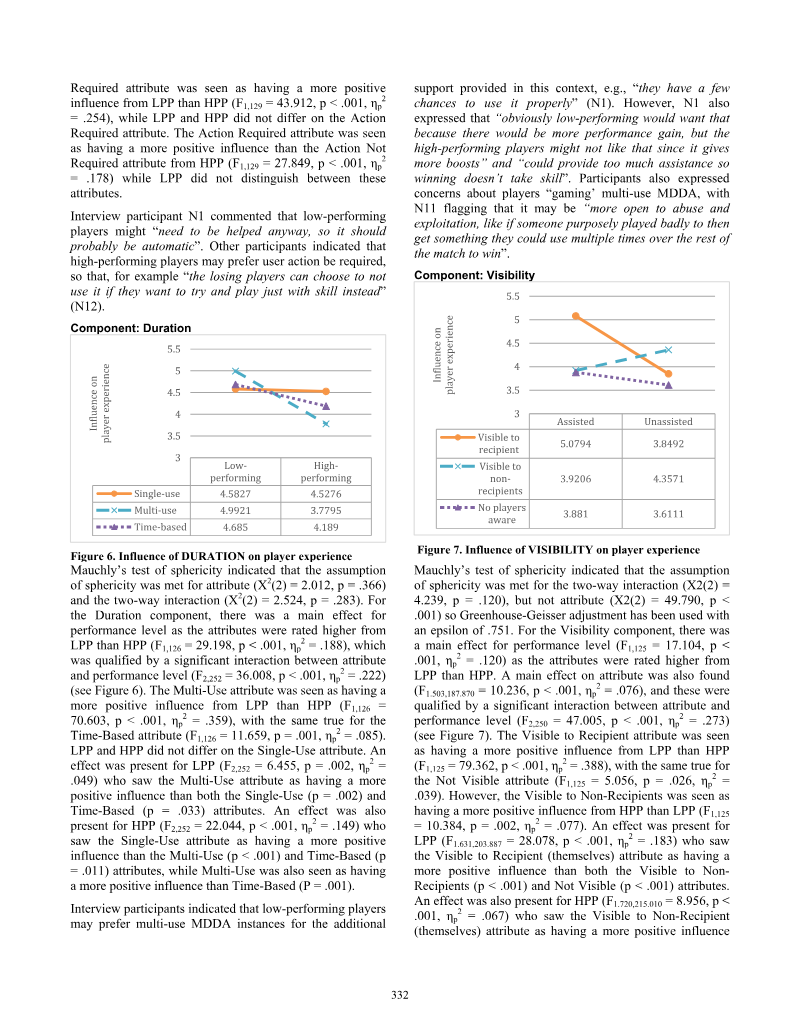
Multiplayer Dynamic Difficulty Adjustment (MDDA) serves as a critical mechanism for balancing competitive gaming environments by modulating performance variables between participants of disparate skill levels.

Comparing Voluntary and Mandatory Gameplay
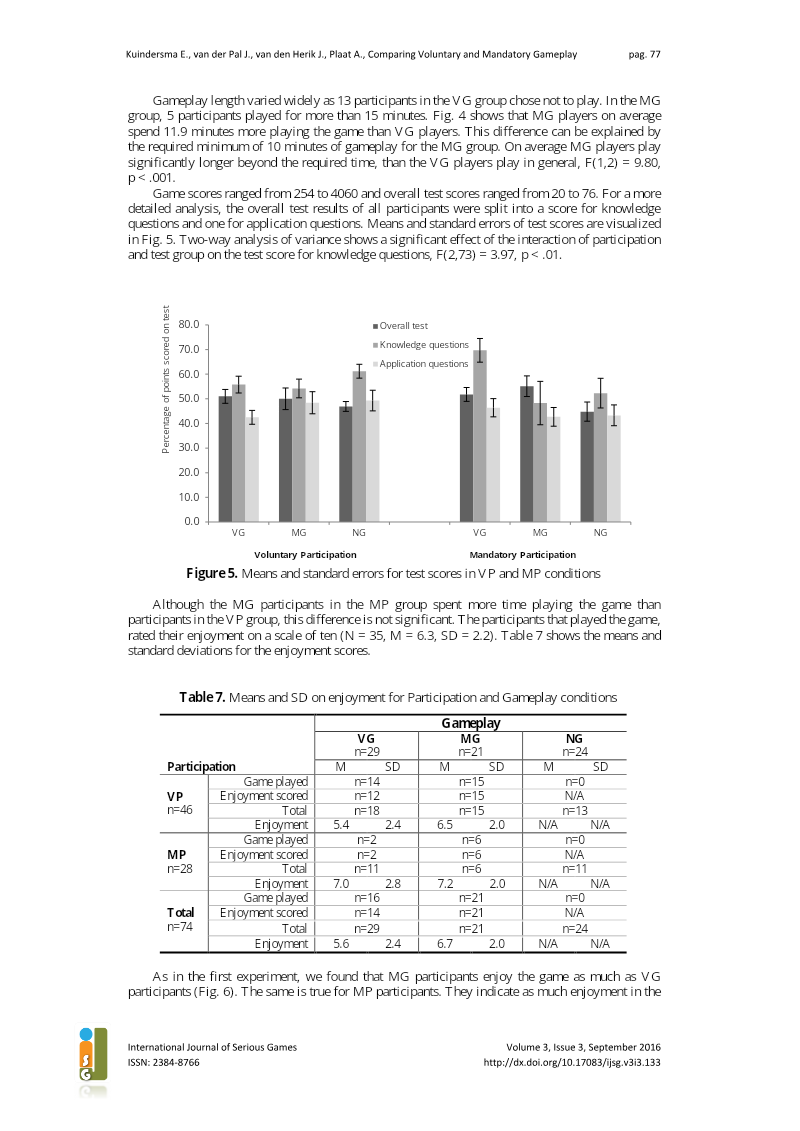
The integration of serious games into professional and academic curricula often rests on the assumption that voluntary participation is a prerequisite for engagement and learning success.
- Mandatory gameplay requirements do not negatively impact user enjoyment or instructional effectiveness compared to voluntary participation models.
- Requiring participation in serious games consistently increases the total duration of user interaction with the system.
- While voluntary participants may report higher initial motivation, this does not result in statistically significant differences in final test performance.

Exploring the Prosociality Domains of Trust and Cooperation, through Single and Cooperative Digital Gameplay in Path of Trust
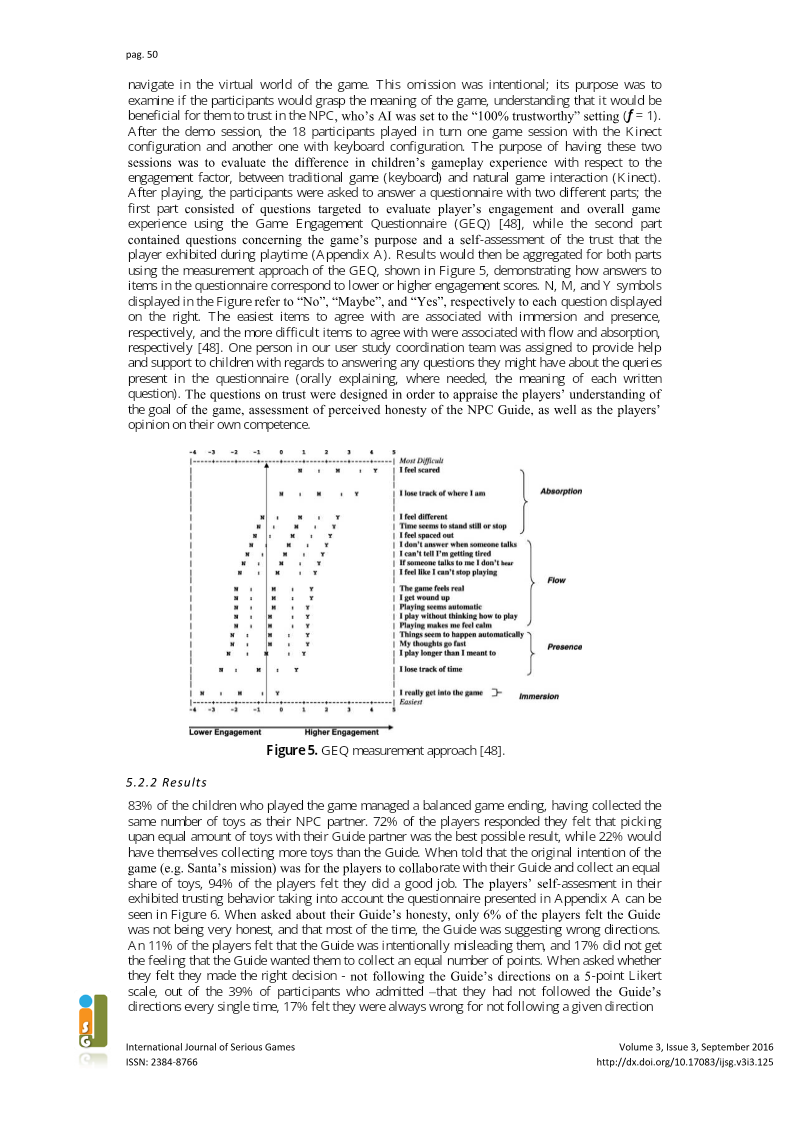
Path of Trust functions as an innovative educational intervention designed to cultivate prosocial skills, specifically trust and cooperation, among children aged 7 to 10.
- Eighty-eight percent of children aged 7 to 10 demonstrated intended trusting behaviors after playing Path of Trust, confirming the game's effectiveness in teaching cooperation.
- The game utilizes asymmetric roles, Fog of War mechanics, and mandatory role-switching to force a balance between individual incentives and collective success.
- Participants consistently viewed game outcomes as shared achievements rather than individual wins, successfully shifting the focus from competitive gain to mutual reliability.
Default Characters and the Embodied Nature of Play: Race, Gender, and Gamer Identity
The gaming industry frequently relies on a default protagonist archetype—typically white, male, and heterosexual—which reinforces exclusionary power structures and limits the inclusivity of player identity.
- The gaming industry frequently relies on a 'default' character model that is white, cisgender, and male, which alienates diverse players by treating race and gender as mere cosmetic palette swaps rather than lived experiences.
- Games like Mass Effect 3 and Fallout 4 utilize robust character creation systems that remain functionally 'gender-blind,' failing to acknowledge how social or cultural contexts should realistically impact a character's interactions with the game world.
- The controversy surrounding Grand Theft Auto V (2013) highlighted how players perceived systemic bias in the game's AI, with many reporting that the African-American protagonist, Franklin, faced harsher police scrutiny than white counterparts, a claim Rockstar Games denied.


Female Fighters: Perceptions of Femininity in the Super Smash Bros. Community
The Super Smash Bros. community, as represented by discourse on the SmashBoards forum, maintains a unique cultural environment where technical gameplay proficiency often supersedes traditional gender-based social dynamics.
- Analysis of 284 SmashBoards forum posts reveals that technical gameplay utility often takes precedence over gendered perceptions, resulting in an ambiguous approach to femininity within the community.
- Hypermasculine performances, defined by the sexualization of female characters, occurred in approximately 13.73% of the analyzed posts.
- Aesthetic-focused commentary regarding female characters appeared in 30.04% of the analyzed posts, indicating that a significant portion of the community places importance on appearance as a component of a character's value.
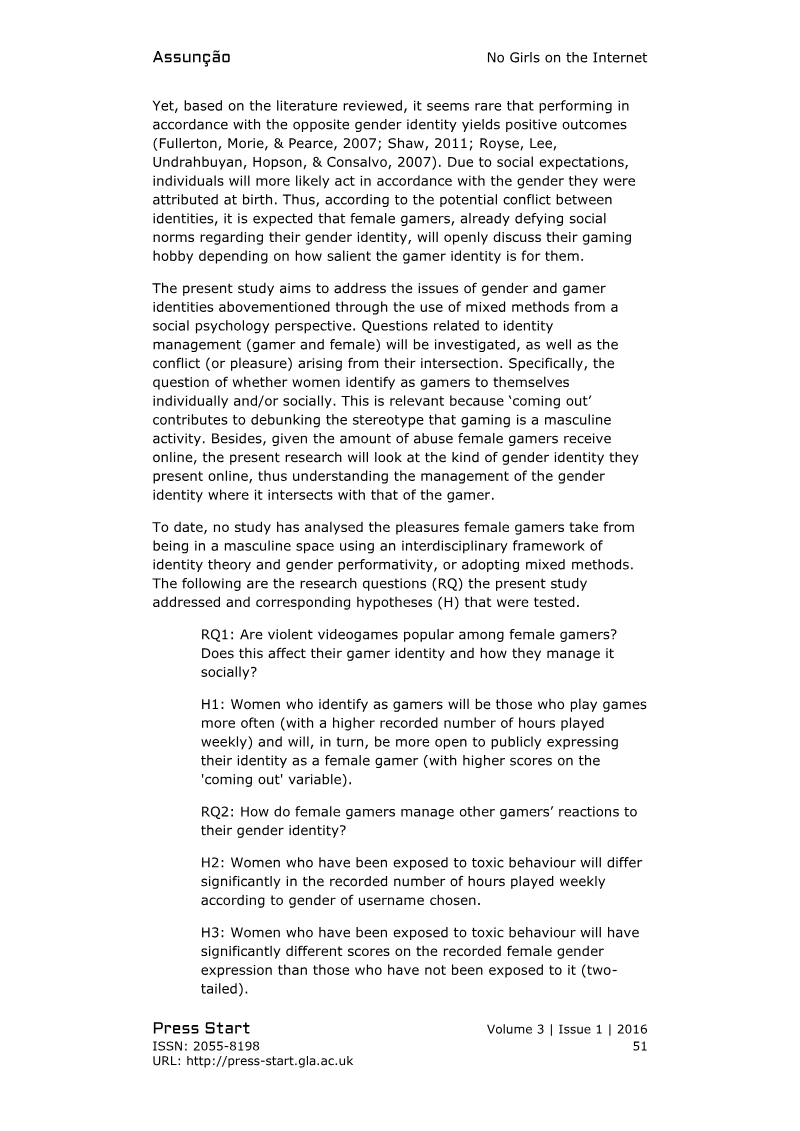
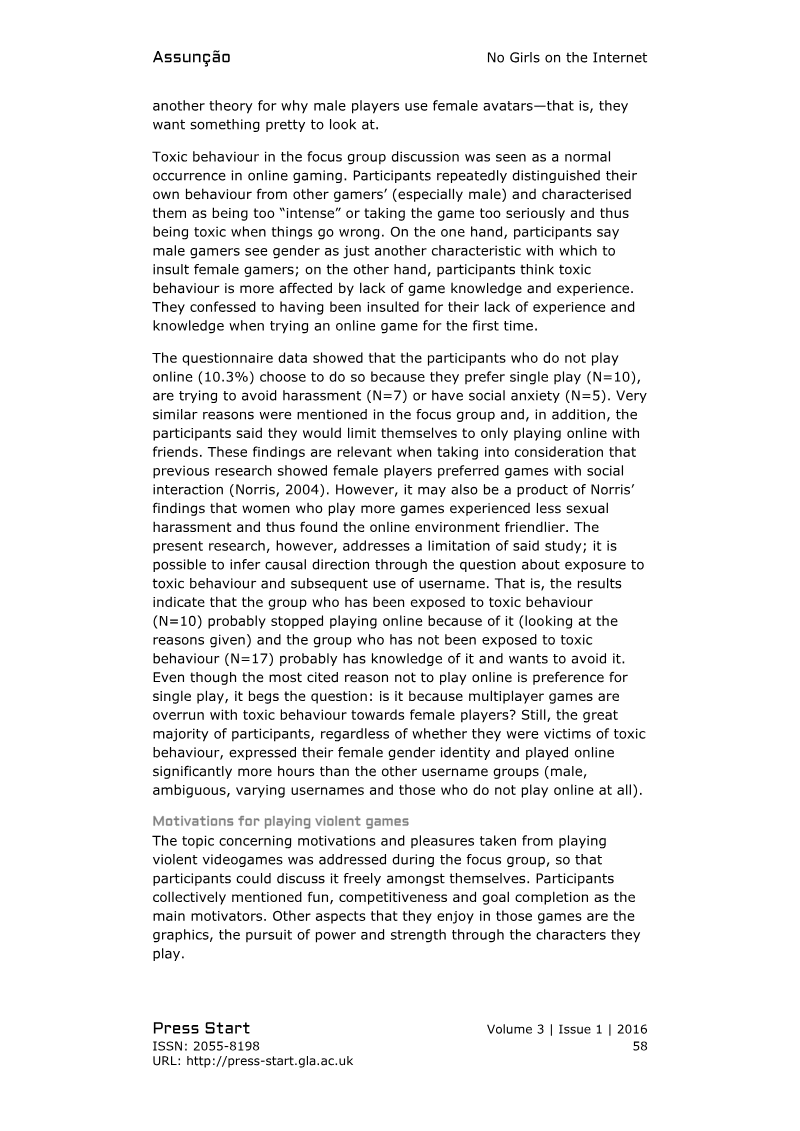
"No Girls on the Internet": The Experience of Female Gamers in the Masculine Space of Violent Gaming
Female gamers navigating masculine-coded, violent gaming environments frequently encounter systemic toxicity and harassment, which necessitates the strategic management of their gender identity.
- Female gamers who play more frequently are significantly more likely to publicly identify as gamers, with a positive correlation between weekly hours played and the willingness to disclose this identity to others.
- Toxic behavior is a pervasive issue in online gaming, with 62.2% of the 291 surveyed women reporting exposure to such conduct.
- Despite the prevalence of toxicity, there is no significant statistical difference in the level of female gender expression between those who have experienced harassment and those who have not.

Discussing Identities through Game-Making: A Case Study
Game-making in educational environments functions as a critical platform for students to negotiate and perform complex identities, moving beyond traditional academic boundaries.
- Gamer identity is not a static, defining trait but a fluid, temporary performance that individuals use to navigate social and cultural positions.
- Game-making serves as a form of literacy that allows individuals to express themselves and negotiate identities, rather than being limited to teaching specific curricular content like math or programming.
- Participants in the 'Playing Beowulf' project used game-making to perform 'proto-professional' and 'gamer' identities, utilizing their gaming capital—such as references to 'Fallout' and the 'Wilhelm Scream'—to establish their status as industry insiders.
Girls, Guys and Games: How News Media Perpetuate Stereotypes of Male and Female Gamers
Mainstream news media coverage between 2009 and 2015 consistently perpetuated outdated gender stereotypes, framing video games as an inherently male-dominated space despite the industry’s increasingly diverse demographic reality.
- News media coverage of gaming remains heavily skewed toward male perspectives, with male gamers interviewed or discussed 15.4 times more frequently than female gamers regarding topics unrelated to sexism.
- Journalistic framing of gaming frequently relies on three gendered tropes: the 'not real' female gamer, women as both victims and oppressors, and the toxic male gamer.
- Coverage of female gamers outside of sexism-focused stories consistently frames them as 'casual' players, often associating them with simplified, 'silly' titles like Candy Crush or Peggle.