1 free read left. Create a free account for unlimited reading + AI research.
Create free accountWhitepaper International Journal of Serious Games
1 free read left. Create a free account for unlimited reading + AI research.
Create free accountWhitepaperInternational Journal of Serious Games
This innovative intervention aims to cultivate trust and cooperation among children aged 7 to 10. It integrates complex social concepts into an endless runner game.
Dual purpose. Path of Trust functions as both an educational intervention for prosocial skills and a diagnostic instrument for identifying students at risk of social exclusion.
Path of Trust functions as an innovative educational intervention designed to cultivate prosocial skills, specifically trust and cooperation, among children aged 7 to 10. By integrating these complex social concepts into the mechanics of an endless runner game, the project successfully bridges the divide between traditional edutainment and the high engagement levels characteristic of commercial digital entertainment. The core thesis posits that interactive, asymmetric gameplay—where players must rely on one another to navigate shared obstacles—serves as a potent environment for modeling and reinforcing positive social behaviors.
The game employs sophisticated design elements, such as asymmetric roles, Fog of War mechanics, and mandatory role-switching, to force a balance between individual incentives and collective success. Empirical evaluations involving primary school students reveal that 88 percent of participants demonstrated intended trusting behaviors, effectively internalizing the necessity of collaboration. Even when individual scores varied, children consistently perceived the game outcome as a shared achievement, indicating that the mechanics successfully shifted the focus from competitive gain to mutual reliability.
Beyond its role as a pedagogical tool, the game demonstrates significant potential as a diagnostic instrument for educators to identify students at risk of social exclusion. The high levels of engagement, or Flow state, achieved by participants suggest that digital environments can effectively simulate real-world social dilemmas in a controlled, low-stakes setting. Future iterations aim to refine these interactions through adaptive feedback mechanisms, further strengthening the link between digital cooperation and the development of critical social reasoning in young learners.
International Journal of Serious Games · 2023
International Journal of Serious Games · 2022
International Journal of Serious Games · 2020
International Journal of Serious Games · 2020
International Journal of Serious Games · 2020
International Journal of Serious Games · 2020
International Journal of Serious Games · 2020
International Journal of Serious Games · 2020
International Journal of Serious Games · 2020



International Journal of Serious Games · 2020
International Journal of Serious Games · 2020
Air Force Institute of Technology · 2020
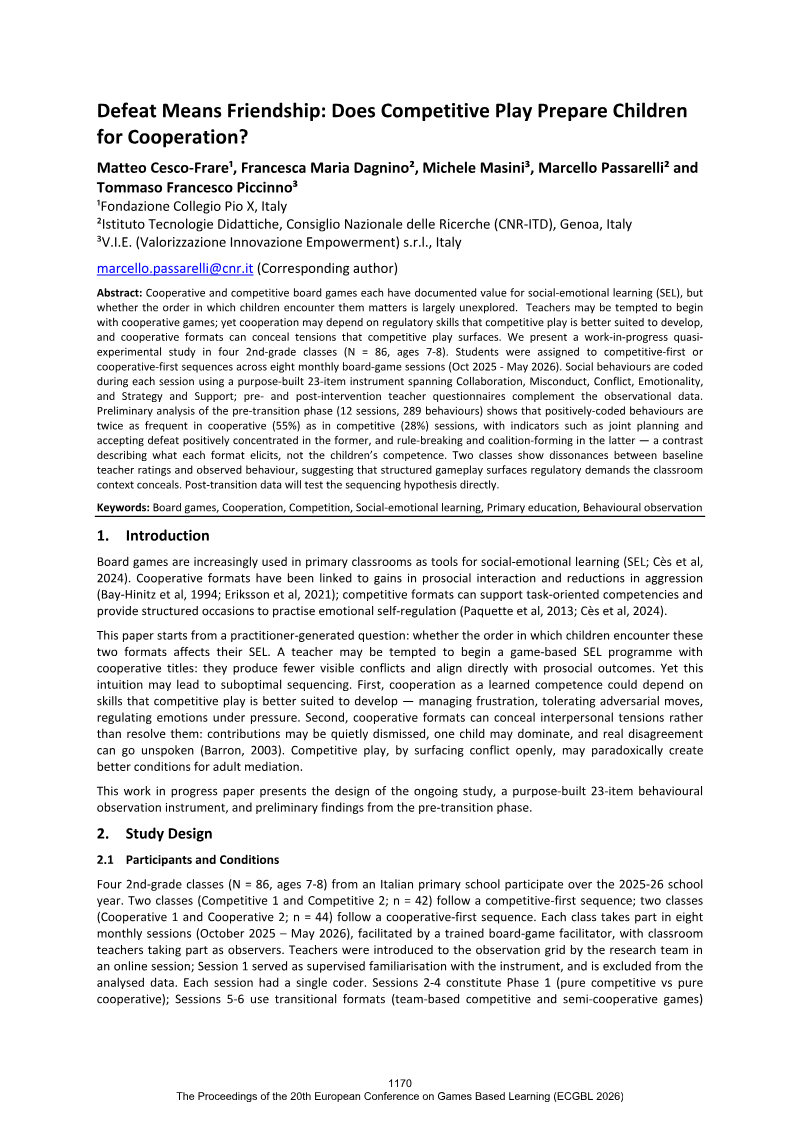
European Conference on Games Based Learning (ECGBL) · 2026



European Conference on Games Based Learning (ECGBL) · 2026
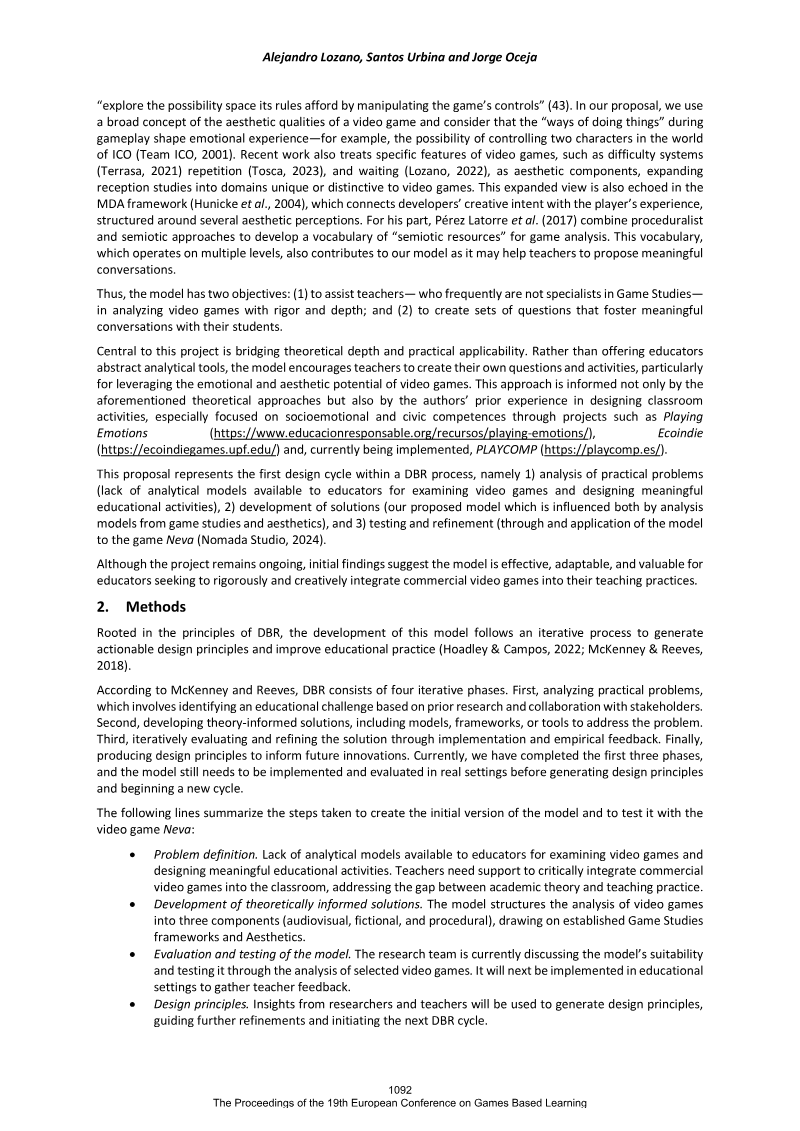
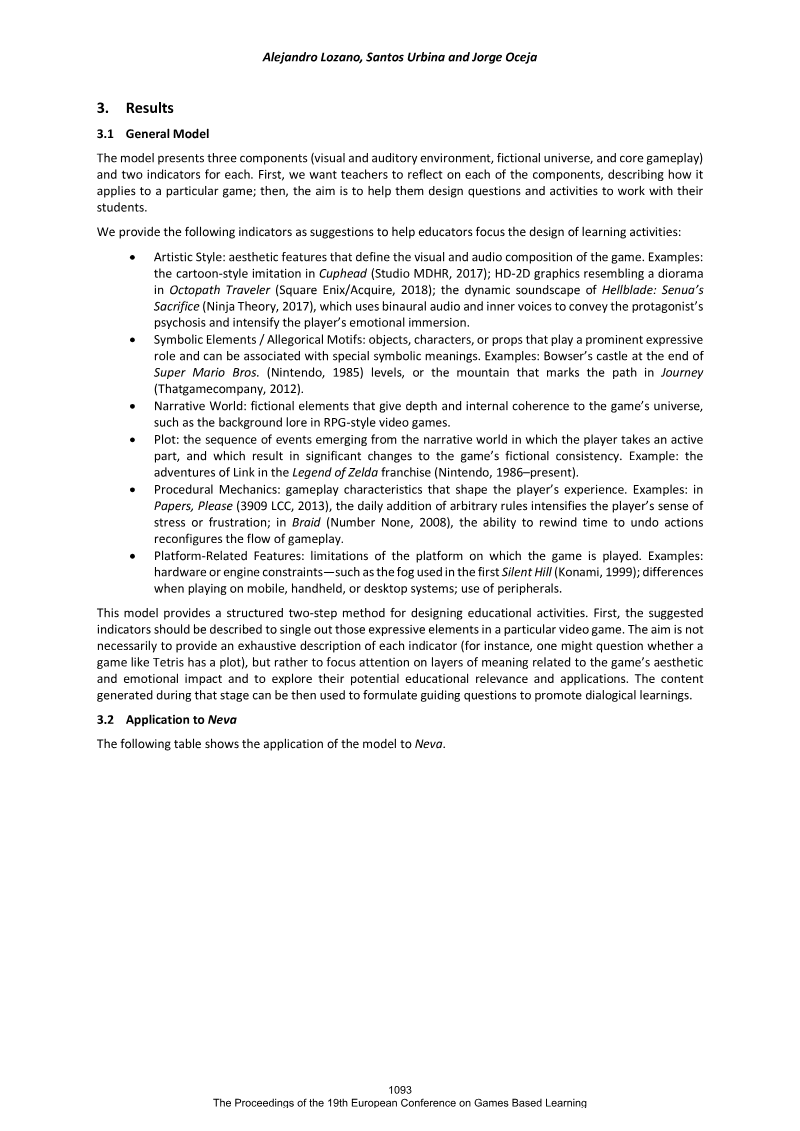
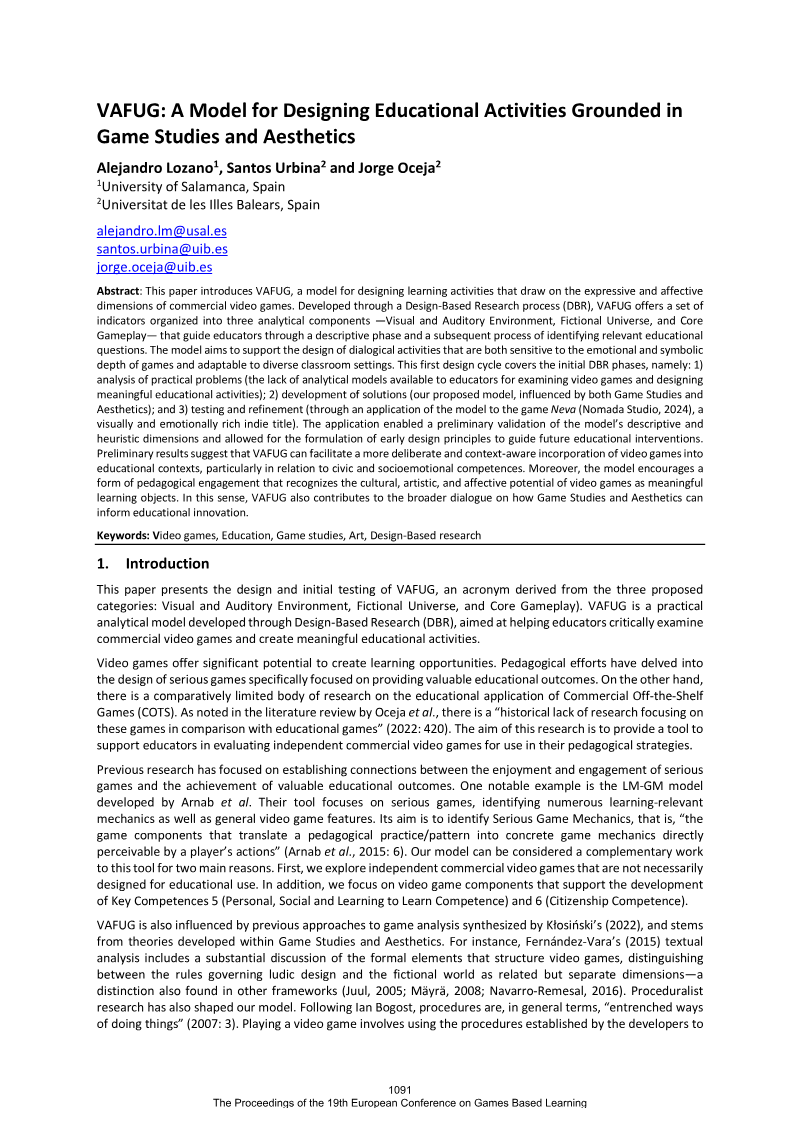
European Conference on Games Based Learning (ECGBL) · 2025