Game Studies reports and market data
Documents
Bridging Game Studies and Feminist Theories
Feminist theory serves as a critical lens for deconstructing the systemic gender stereotypes embedded within the global video game industry.
- Contemporary game design frequently relies on reductive archetypes—such as the damsel in distress and the hyper-sexualized avatar—that reinforce patriarchal structures and dehumanize female characters.
- The industry’s reliance on serial models of femininity prioritizes unrealistic beauty standards, which alienates female players and restricts the potential for nuanced storytelling.
- Game mechanics often normalize the subordination of women by confining female agency to domestic tasks or framing women as threats to be neutralized for the male gaze.

Well Played: European Videogames of the 1980s
The 1980s European video game industry was defined by a unique intersection of socioeconomic constraints, localized hobbyist cultures, and a reliance on home computers rather than consoles.
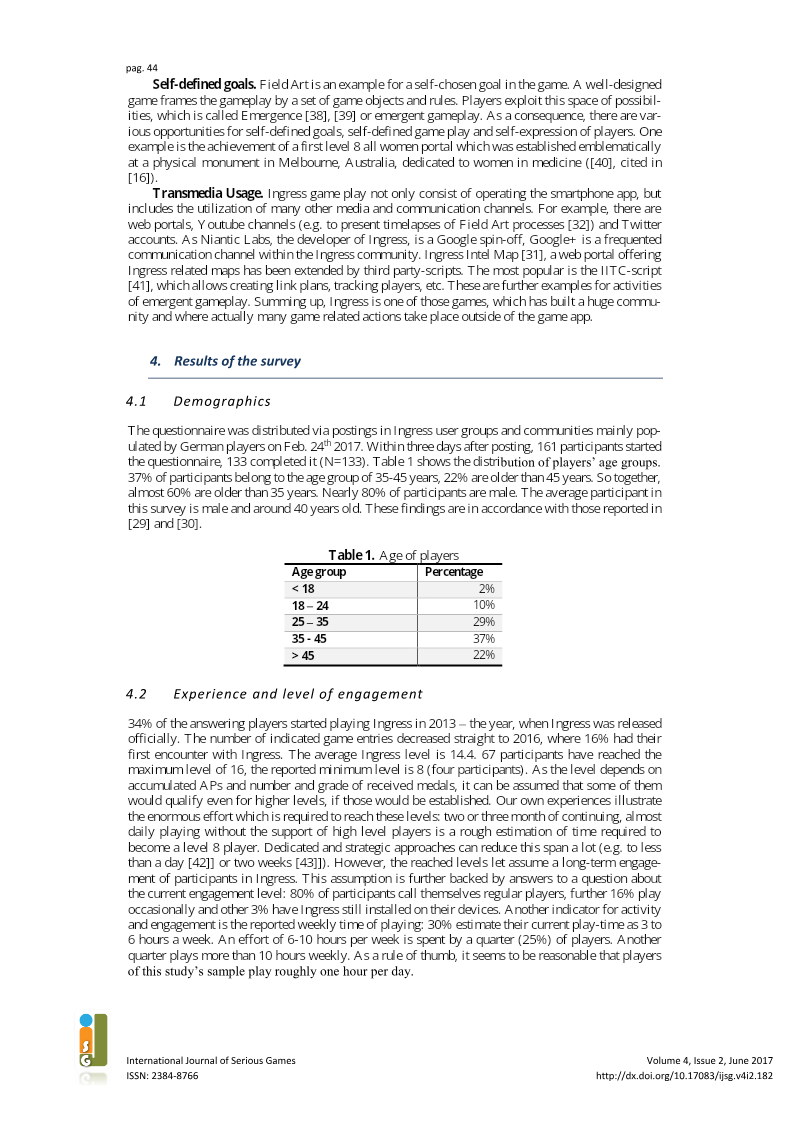
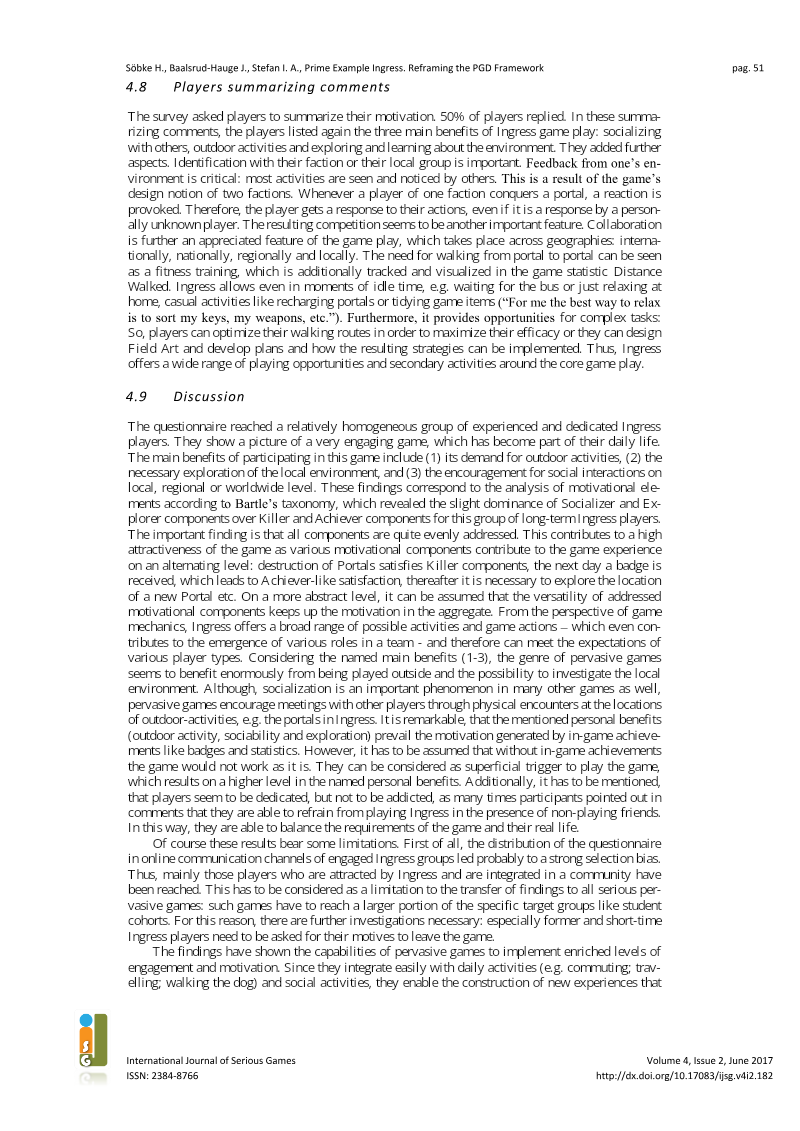
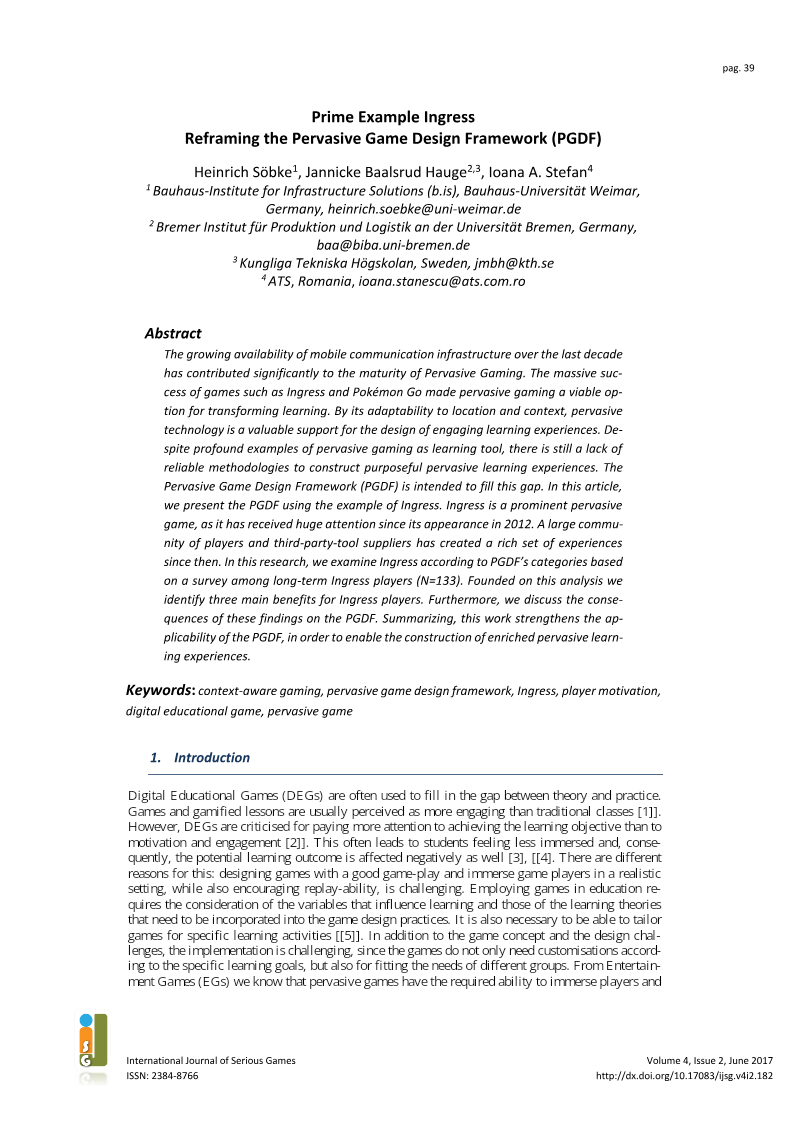
Prime Example Ingress: Reframing the Pervasive Game Design Framework (PGDF)
The Pervasive Game Design Framework (PGDF) serves as a critical mechanism for enhancing the efficacy of immersive educational games by leveraging design principles derived from real-world, location-based gaming.
- The Pervasive Game Design Framework (PGDF) was developed to provide a methodology for creating immersive educational games and gamified learning paths, using Ingress as a primary case study.
- A survey of 133 long-term Ingress players revealed that the primary motivation for ending a game session is the requirement of real-life activities (mean score 4.0), followed by the completion of in-game goals (mean score 3.7).
- Ingress players are highly motivated by social interaction, community identification, and the opportunity to meet diverse people, with socializing and new acquaintances ranking among the top cited benefits.
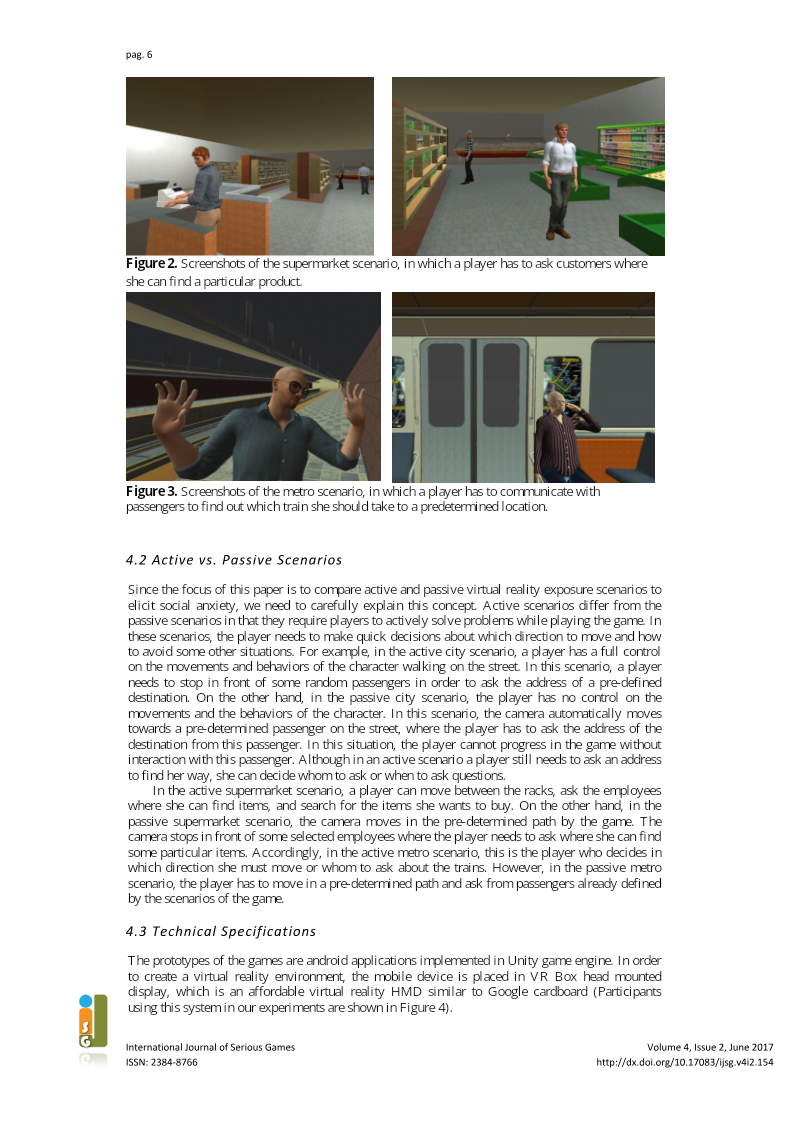

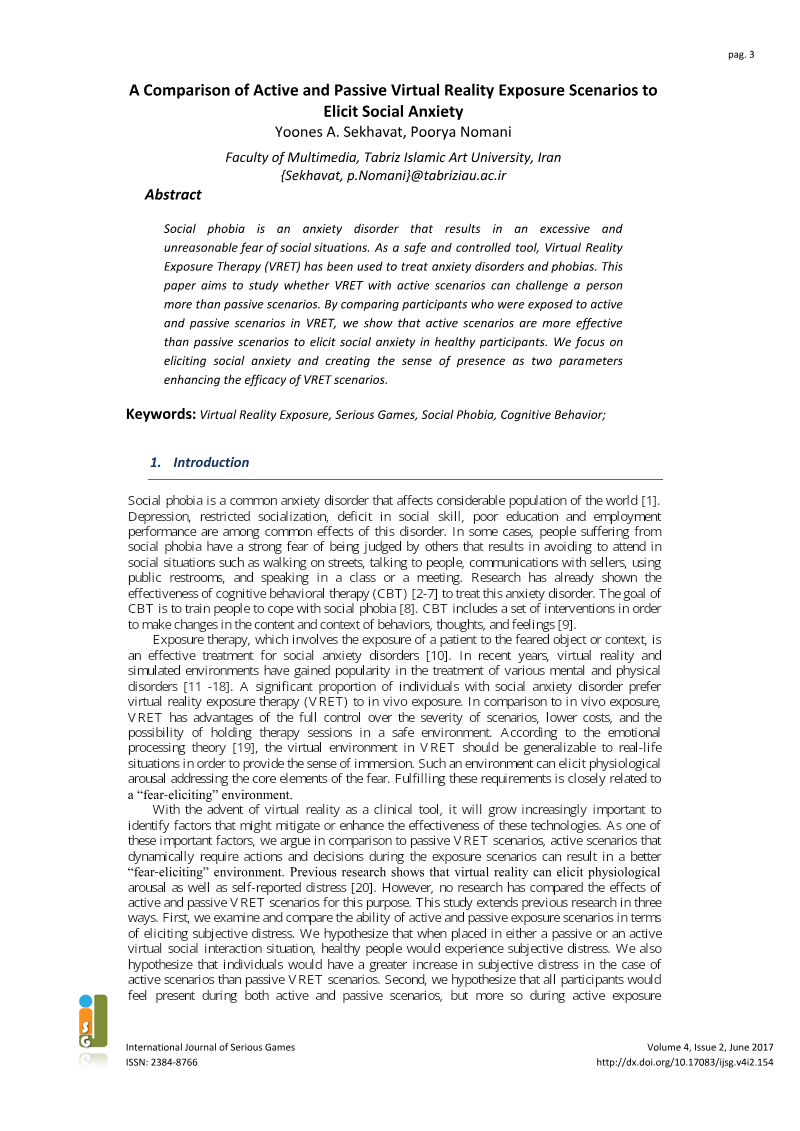
A Comparison of Active and Passive Virtual Reality Exposure Scenarios to Elicit Social Anxiety
Virtual Reality Exposure Therapy (VRET) serves as a critical tool for treating social phobia, yet the degree of user agency required to maximize therapeutic outcomes remains a subject of investigation.
- Active virtual reality exposure scenarios are significantly more effective at eliciting social anxiety than passive scenarios, with active participants reporting a mean Subjective Units of Distress (SUD) score of 59.52 compared to 49.61 for passive participants (F=13.86).
- Active scenarios generate a higher sense of presence, with participants rating active experiences at a mean of 4.33 on a 5-point scale versus 3.75 for passive scenarios.
- There is a strong positive correlation between the sense of presence and the level of anxiety elicited, with correlation coefficients (r) of 0.952 for active scenarios and 0.897 for passive scenarios.

Papers, Please as Critical Making: A Review
Papers, Please serves as a primary case study for the concept of critical making within the digital humanities.
- Lucas Pope’s 2013 game Papers, Please serves as a primary example of 'critical making' within the digital humanities, using game design to force players to confront the bureaucratic and moral realities of a totalitarian state.
- The game functions as an 'anti-fun' intervention that prioritizes political and social reflection over traditional entertainment, requiring players to balance the survival of their in-game family against the ethical implications of enforcing oppressive border policies.
- By simulating the repetitive, high-pressure environment of an immigration checkpoint, the game creates an affective experience that highlights the tension between state-mandated security measures and individual human rights.
Pokémon is Evolving!: An investigation into the development of the Pokémon community
The Pokémon franchise sustains its enduring market dominance by balancing a consistent core gameplay loop with strategic multi-media integration.
- Pokémon’s market dominance relies on a symbiotic relationship between developer-led initiatives and a self-sustaining fan community that creates its own engagement platforms.
- The franchise successfully bridges traditional gaming and experimental titles by leveraging a broad multi-media ecosystem, with the anime acting as a critical driver for overcoming skepticism toward new gameplay directions.
- Pokémon GO serves as a definitive case study for evolving the brand’s core identity to capture new audiences while maintaining the loyalty of the established player base.

Playing Producer: An alternative perspective on video games as film
This analysis proposes a new framework for understanding the relationship between video games and cinema by shifting the focus from narrative and formal characteristics to the role of the player as a producer.
- The player-as-producer framework resolves the narrative paradox by shifting focus from fixed storytelling to the player's role in creative processes like casting, cinematography, and script management.
- Players exercise agency within a predetermined narrative by utilizing game mechanics for non-narrative tasks such as character customization, relationship management, and tactical combat choreography.
- The 2009 role-playing game Dragon Age: Origins serves as a primary case study demonstrating how players act as directors by manipulating camera perspectives and stylistic elements.
Experience, 60 Frames Per Second: Virtual Embodiment and the Player/Avatar Relationship
Video games represent a sophisticated intersection of narrative, mechanics, and psychology that transcends the traditional view of avatars as mere functional tools or vehicles.
- Avatars function as autonomous characters with distinct histories and personalities, transforming gameplay from simple tool operation into a dynamic, theatrical performance.
- Modern game design increasingly utilizes elements like idle animations and deep narrative backstories to cultivate a shared identity between the player and the digital character.
- Titles such as Assassin’s Creed and Fez serve as primary examples of games that explicitly integrate embodied experiences into their core mechanics to deepen player immersion.
Adolescents as Game Designers: Developing New Literacies
Engaging adolescents in structured game design programs serves as a powerful pedagogical tool for fostering critical digital literacy.
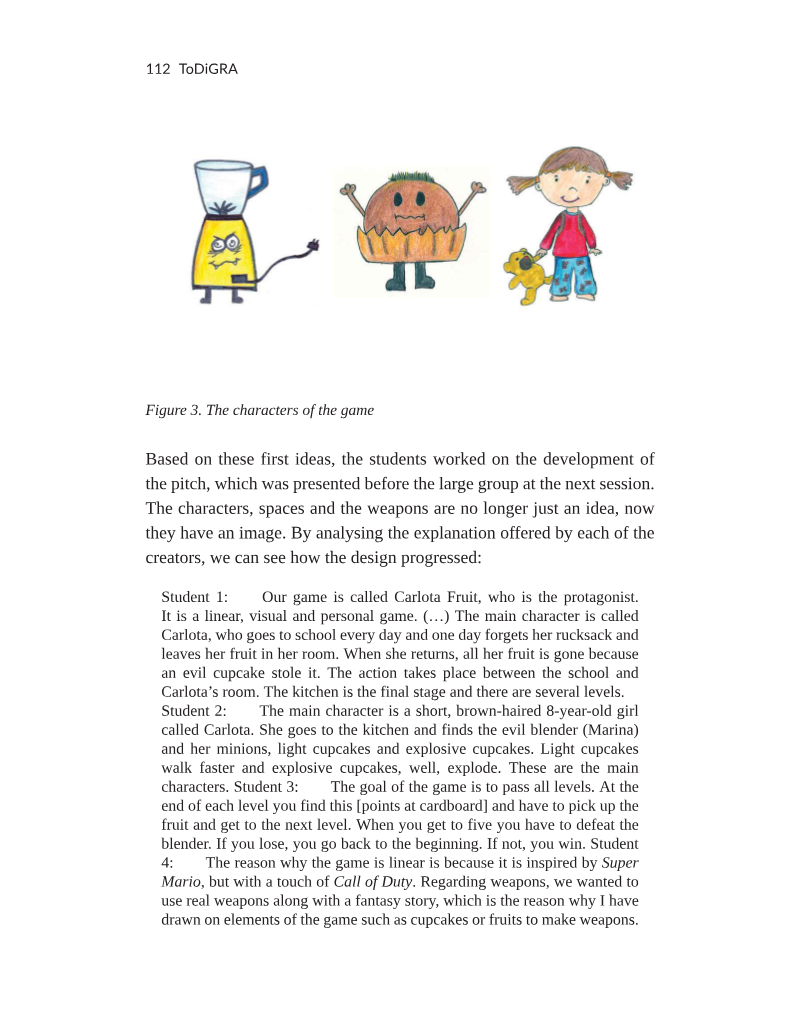
- Structured game design programs transform adolescents from passive consumers into active producers, fostering critical digital literacy by revealing games as complex, systemic objects.
- Collaborative, role-based learning environments—where students adopt professional titles like director, programmer, or artist—effectively bridge the gap between technical skill acquisition and social design dynamics.
- The research, conducted via ethnographic and action-based methodologies with a cohort of twenty adolescents, demonstrates that a full development lifecycle approach—from conceptualization to technical implementation—is essential for mastery.
Scarcity and Survival Horror: Trade as an Instrument of Terror in Pathologic
Survival horror games frequently employ resource scarcity to cultivate vulnerability, yet most titles ultimately provide players with reliable economic systems that facilitate predictable progression.
- Survival horror games, such as the 2005 title Pathologic by Ice-Pick Lodge, subvert the standard gaming loop of work, reward, and reinvestment by introducing extreme scarcity and unpredictable economic systems.
- Unlike conventional games where in-game economies provide reliable progress and agency, Pathologic uses an unstable, fluctuating market to force players into agonizing trade-offs between short-term survival and long-term goals.
- In Pathologic, time is treated as a critical, scarce resource; players have only twelve in-game days to complete objectives, creating a high-pressure environment where failure to manage time results in the loss of narrative and gameplay content.
Finding a Way: Techniques to Avoid Schema Tension in Narrative Design
The perceived incompatibility between narrative and game design stems from the reliance on rigid, imported structural models rather than an inherent conflict between the two disciplines.
- Narrative and game design siloing is caused by 'schema tension'—conflicting mental models taught to creators—rather than any inherent incompatibility between story and gameplay.
- The 'sequence approach' used in screenwriting, which focuses on audience experience through objective-driven sequences, provides a shared language that bridges the gap between narrative writers and game designers.
- Game design often relies on first and second-order design (focusing on objects and symbols), whereas integrating narrative effectively requires third-order design, which prioritizes the player's activity and experience.
Ways of Being: Pervasive Game Design Ethos in Urban Codemakers
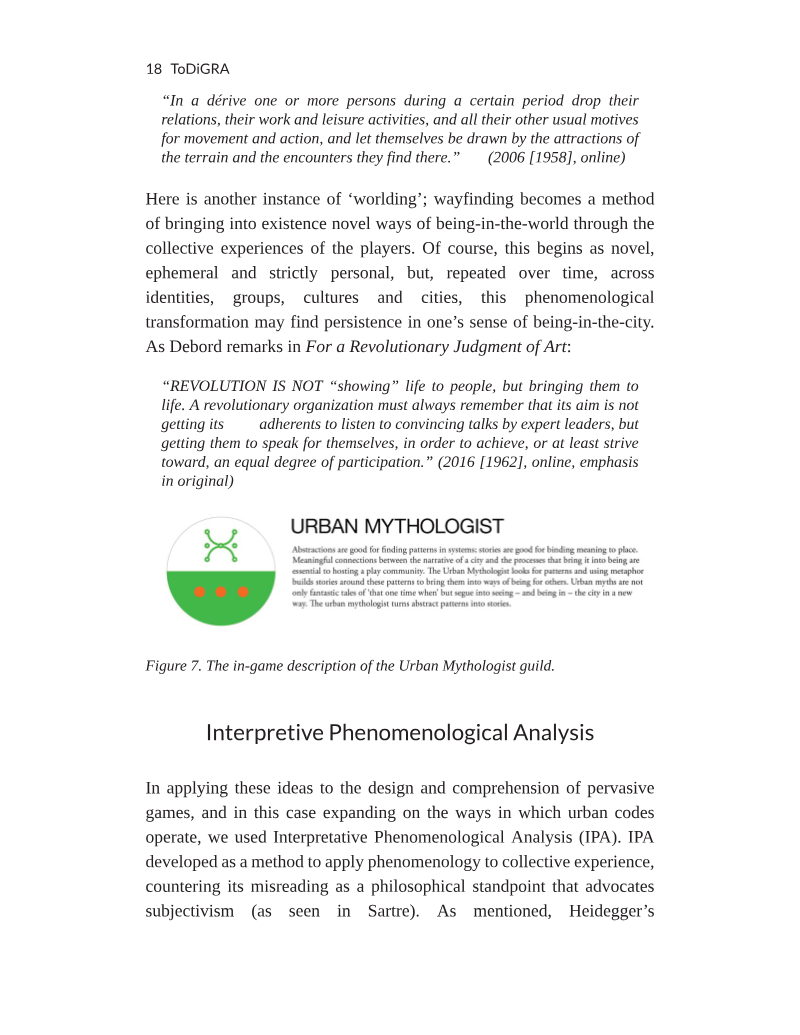
Urban Codemakers functions as a pervasive game designed to disrupt the rigid, instrumental nature of modern urban environments by fostering new phenomenological ways of being.
- Urban Codemakers is a pervasive game designed to disrupt the instrumental nature of urban environments by blending digital elements with physical navigation.
- The project utilizes a ludic and autotelic design philosophy to encourage participants to view the city as a malleable, dynamic space rather than a static backdrop.
- By applying psychogeography and Interpretative Phenomenological Analysis, the game shifts player engagement from analytical observation to embodied, non-instrumental interaction.