1 free read left. Create a free account for unlimited reading + AI research.
Create free accountWhitepaper Press Start
1 free read left. Create a free account for unlimited reading + AI research.
Create free accountWhitepaperPress Start
Individuals use this performance to navigate social and cultural positions.
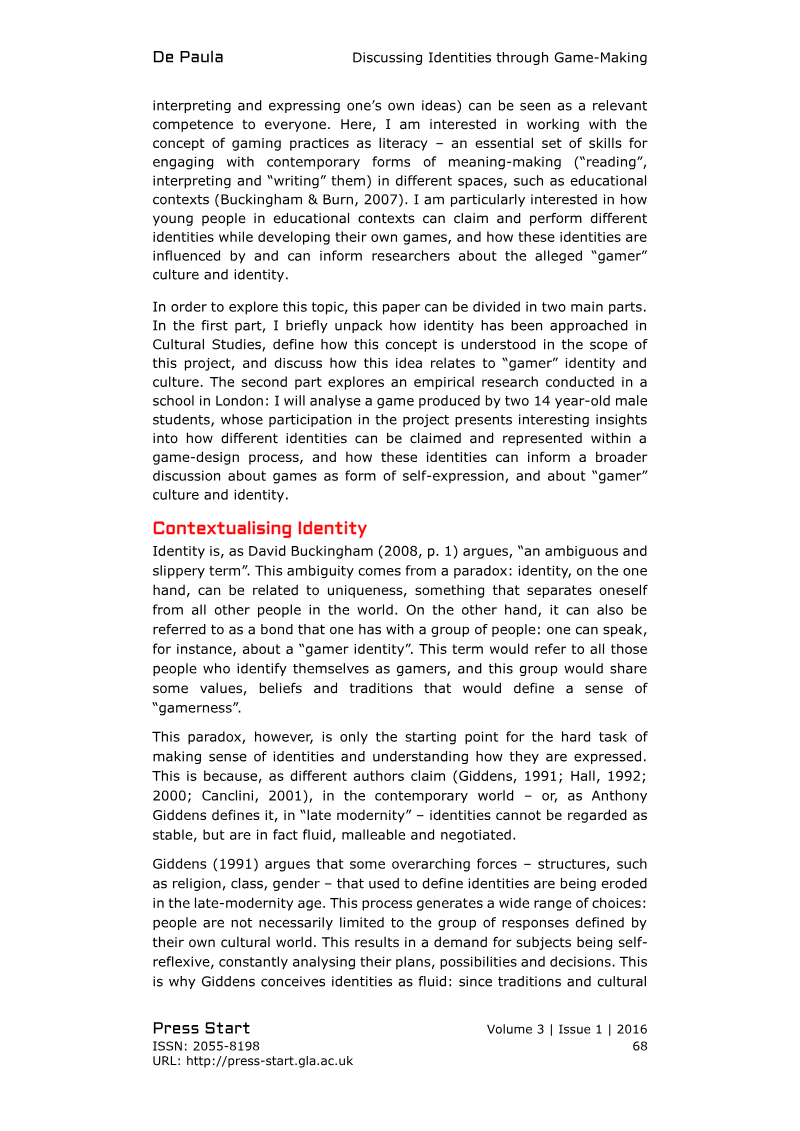
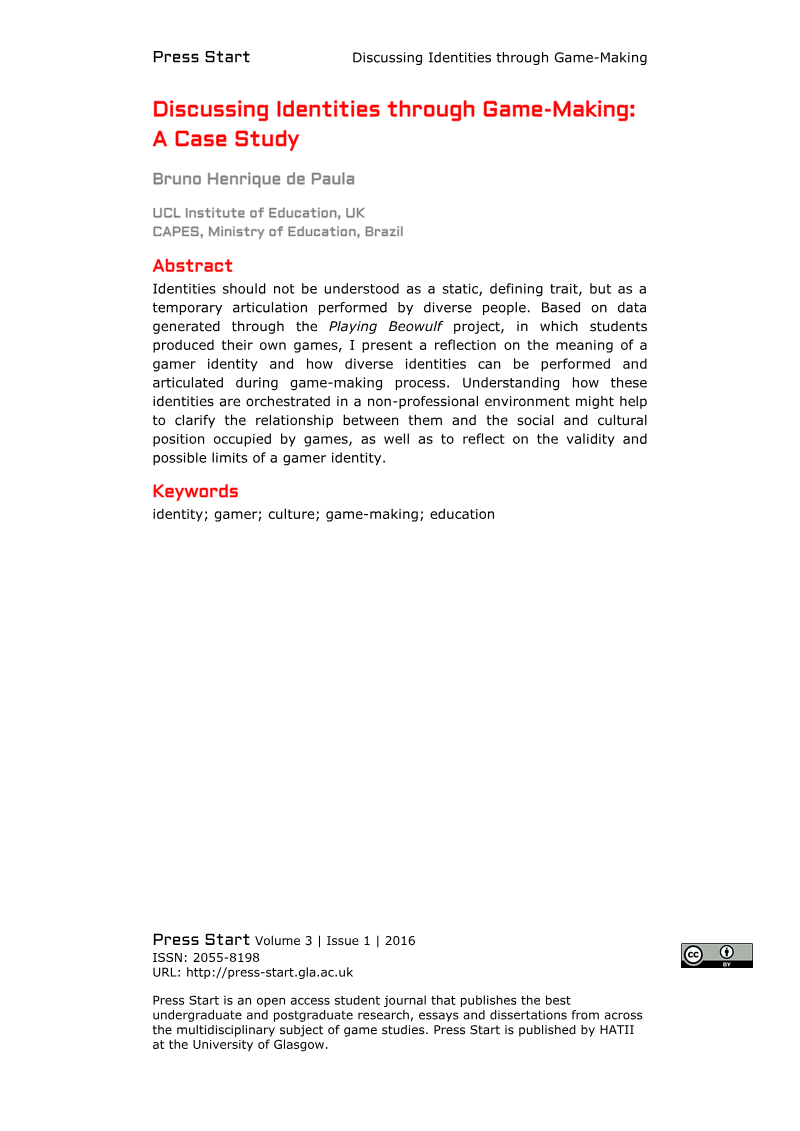
Game-making in educational environments functions as a critical platform for students to negotiate and perform complex identities, moving beyond traditional academic boundaries. Rather than viewing the gamer identity as a static demographic trait, this research frames it as a fluid, socially constructed position deeply rooted in cultural consumption. By engaging in the design process, students articulate their personal perspectives, effectively challenging or reinforcing the norms of dominant gaming culture through their creative outputs.
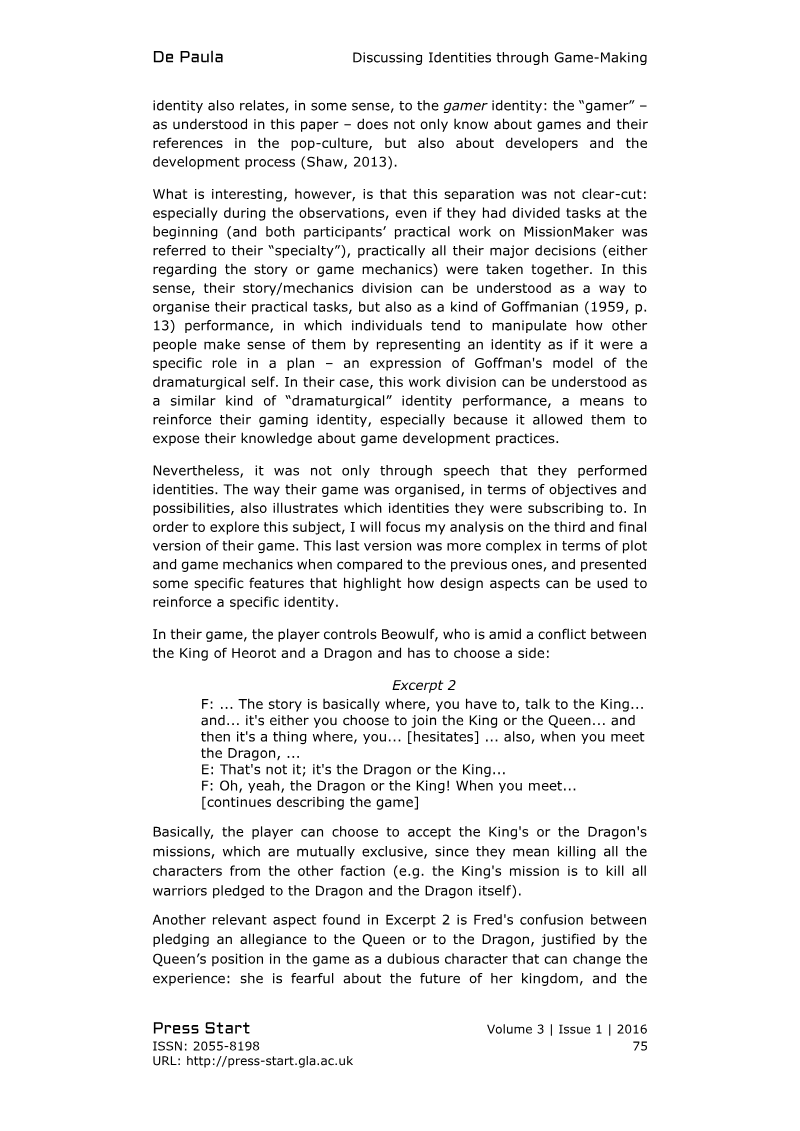
The development of a Beowulf-themed game serves as a primary case study for how young creators adopt proto-professional roles to establish cultural legitimacy. Participants frequently emulate industry dynamics, leveraging their existing gaming repertoires to navigate the complexities of game design. This process functions as a form of digital literacy, enabling students to treat games as cultural artifacts while simultaneously expressing diverse facets of their own identities. In one instance, students deliberately crafted a challenging, hermetical experience to align with their personal preferences, illustrating that development is a powerful medium for self-representation.
While these workshops successfully foster identity expression, the findings suggest a need for a more nuanced approach to audience awareness. Future pedagogical efforts should encourage students to balance personal creative expression with the practical requirements of player engagement. Ultimately, the integration of game design into educational settings provides a unique lens through which to examine how gender, race, and sexuality shape the broader gaming landscape. By analyzing these creative practices, it becomes clear that game-making is not merely a technical skill but a sophisticated mode of communication that allows individuals to define their place within the digital world.
Press Start · 2026
Press Start · 2026
Press Start · 2026
Press Start · 2026
Press Start · 2026
Press Start · 2026
Press Start · 2026
Press Start · 2026
Press Start · 2025
Press Start · 2025
Press Start · 2025
Press Start · 2024
DiGRA · 2026
G|A|M|E – The Italian Journal of Game Studies · 2026
University for the Creative Arts · 2025