Game Studies reports and market data
Documents
Streaming Video Games: Copyright Infringement or Protected Speech?
The rapid expansion of video game streaming as a dominant economic and cultural force has created a significant legal friction point within the European Union.
- Under EU copyright law, video game streams likely constitute an infringement of the developer's exclusive right to communicate their work to the public.
- Game developers are increasingly asserting copyright control to demand revenue shares or restrict the context in which their games are broadcast, as seen with Nintendo's content restrictions and Riot Games' shutdown of the 'spectatefaker' stream.
- The author argues that freedom of expression should be leveraged to protect streamers from developer overreach, particularly for 'variety streamers' whose content relies on original commentary and interaction rather than just gameplay.
Non-Serious Serious Games
Commercial entertainment games, often categorized as non-serious, function as powerful vehicles for personal development and skill acquisition when played within highly structured online communities.
- Organized online gaming communities, or 'clans,' function as environments that provide significant real-world benefits, including improved social well-being, leadership development, and enhanced confidence.
- Participation in structured clan activities acts as a form of exposure therapy for public speaking, as members regularly perform briefings and debriefings for groups of 30 to 60 people in a low-stress, virtual environment.
- A survey of 82 members of the '29th' gaming clan revealed that non-native English speakers use the clan's task-oriented, immersive environment to practice and improve their language fluency.
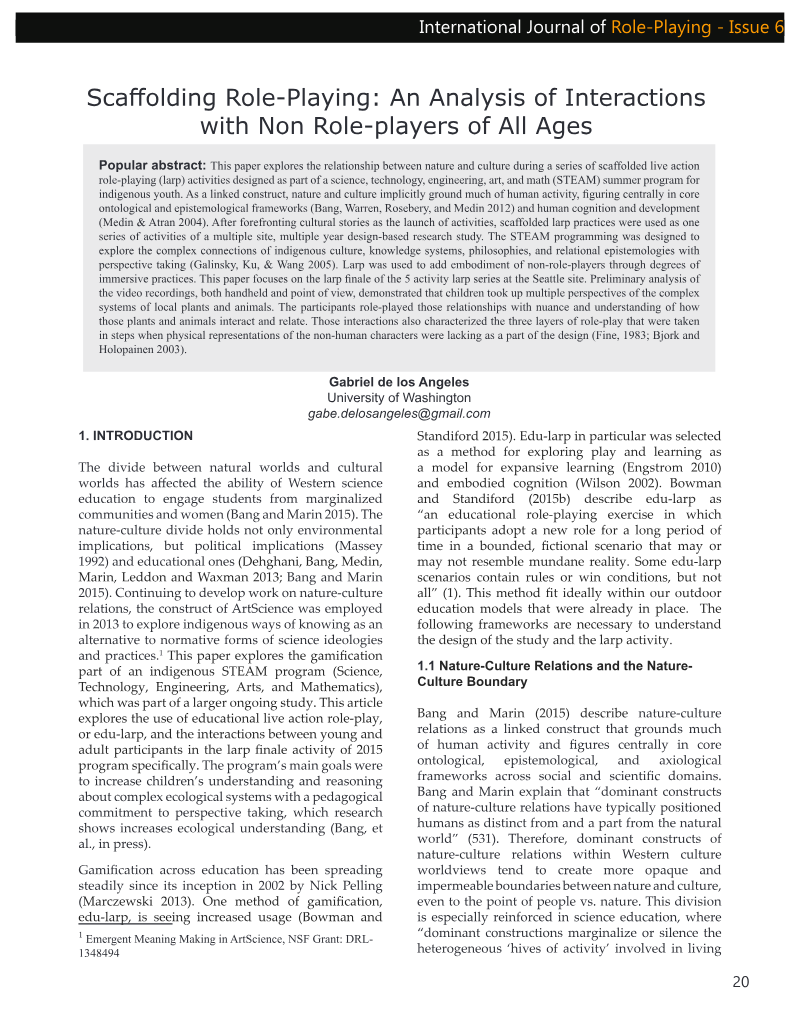
Scaffolding Role-Playing: An Analysis of Interactions with Non Role-players of All Ages
This paper examines a series of scaffolded live action role-playing (larp) activities, specifically a form of educational larp called edu-larp, used within a STEAM summer program for indigenous youth in Seattle.
- The study is a design-based research project on scaffolded edu-larp (educational live action role-play) within a STEAM summer program for indigenous youth in Seattle, aiming to deepen respectful, reciprocal relationships with lands, waters, and communities by taking up the perspectives of plants, animals, and other more-than-human actors.
- Its core argument is that dominant Western divisions between nature and culture weaken both environmental and educational engagement, and that role-play can help dissolve those boundaries.
- Analysis of video from a five-activity larp series (finale analyzed in depth) with 31 youth aged 4 to 16, plus staff and family members from the local urban native community, found that children took up multiple perspectives on local plant and animal systems and role-played their relationships with nuance.
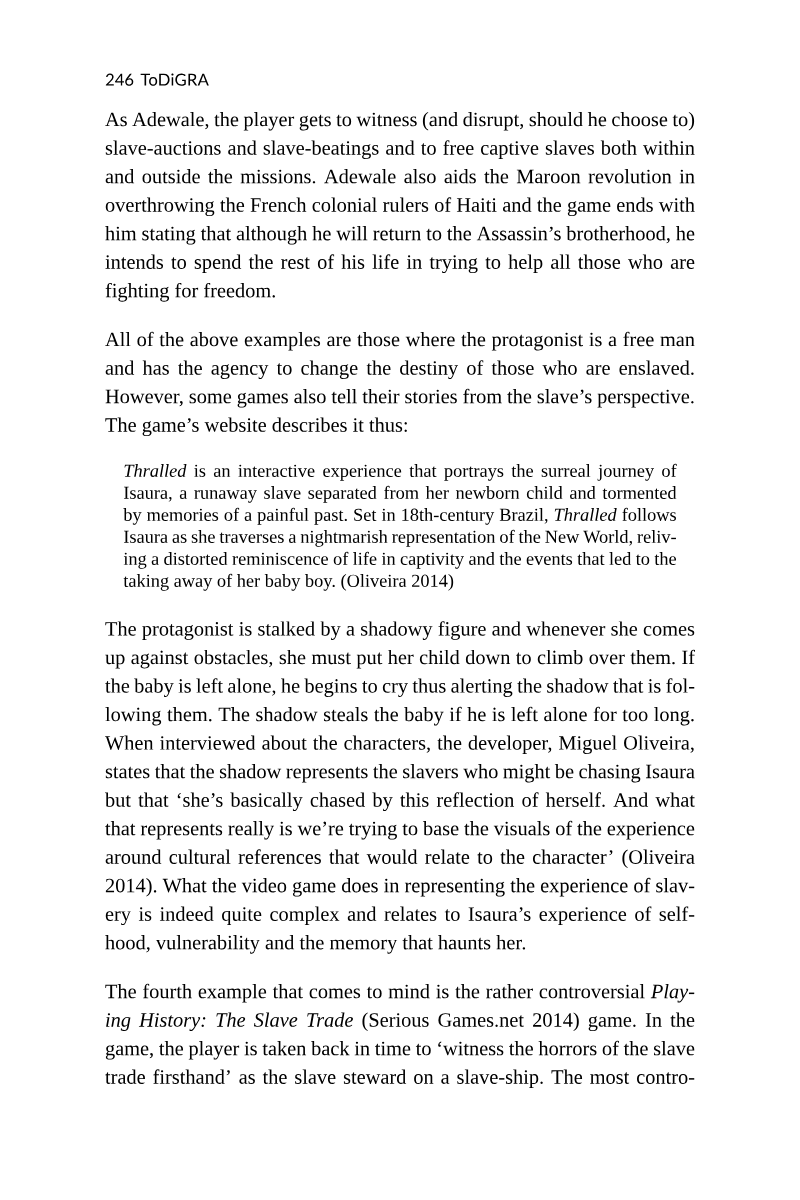
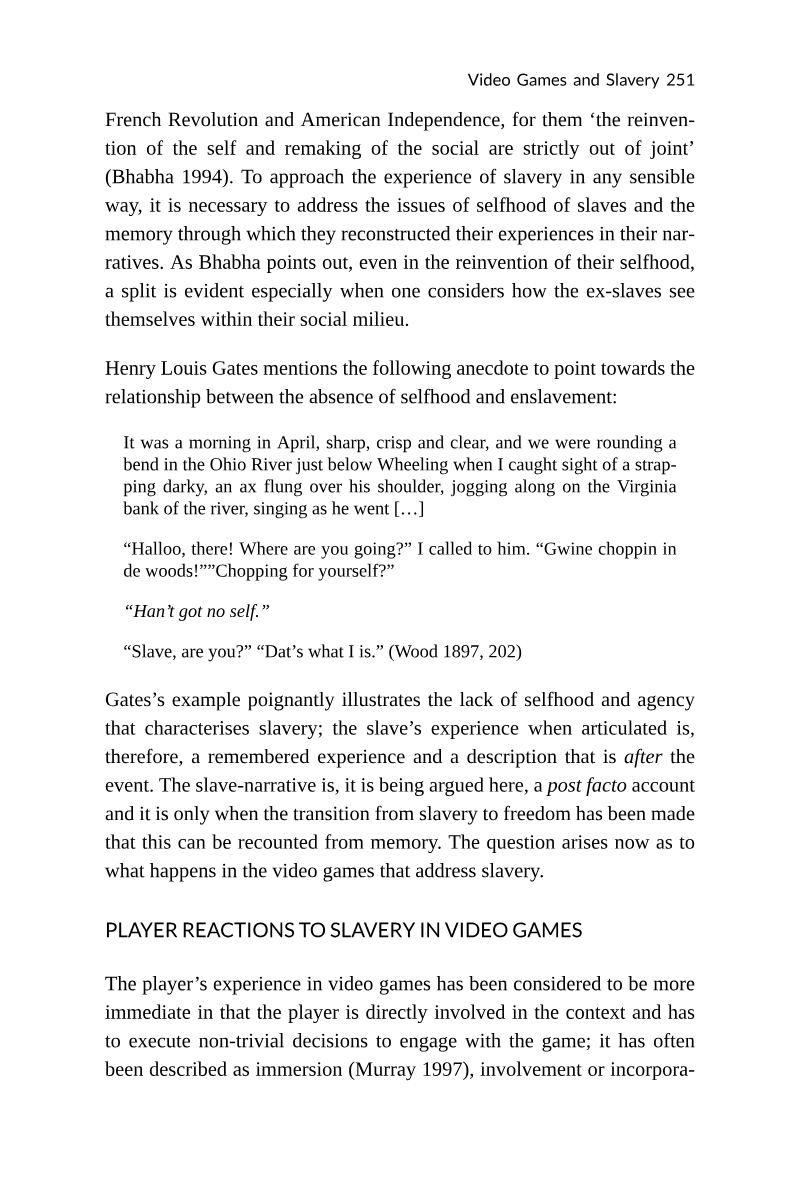
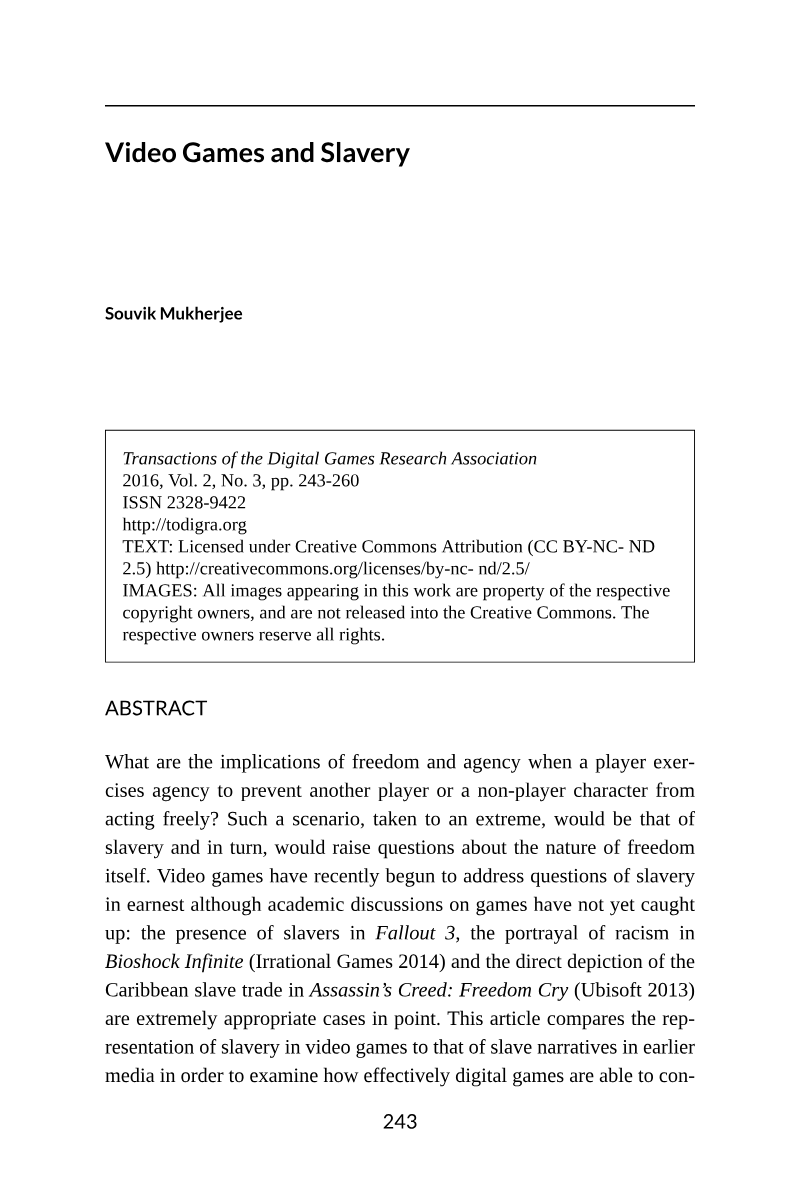
Video Games and Slavery
This analysis examines how digital games represent the traumatic history of slavery and what these portrayals reveal about the nature of player agency and freedom.
Sound Similarity as a Tool for Understanding Player Experience: Applying Similarity Matrix to Gameplay Performance Segmentation
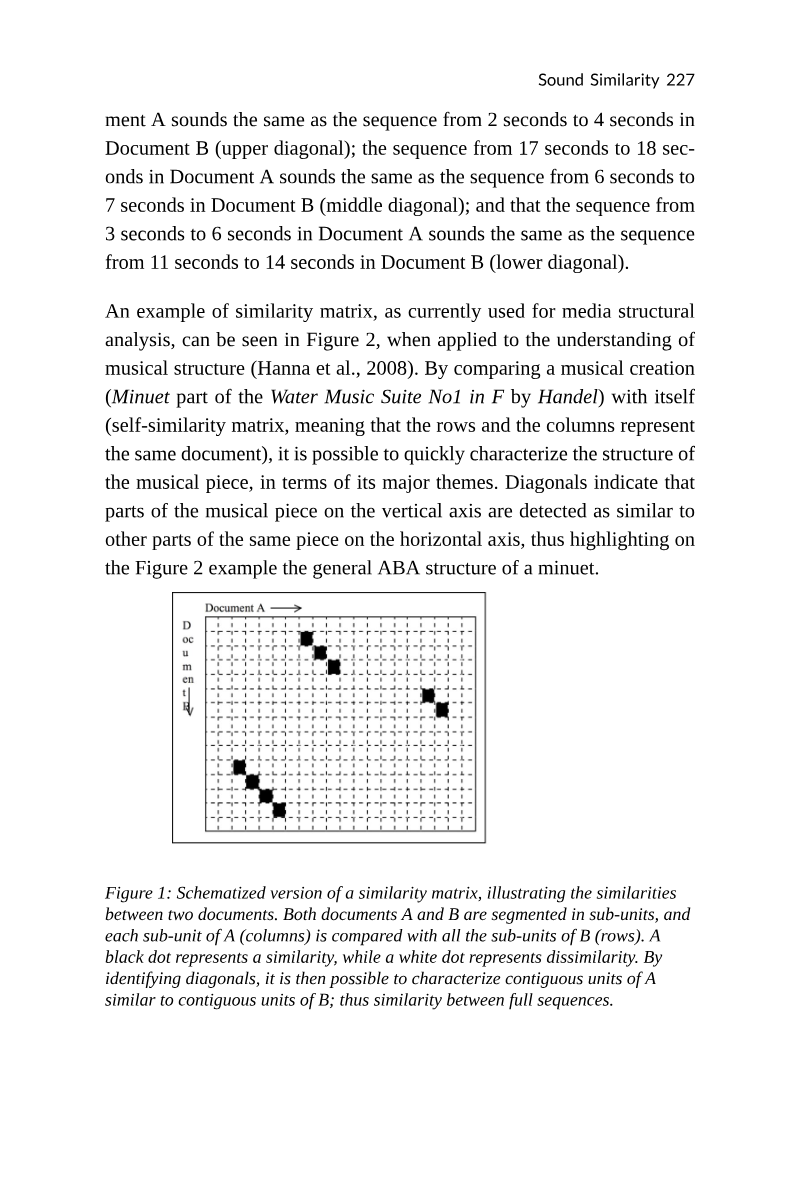
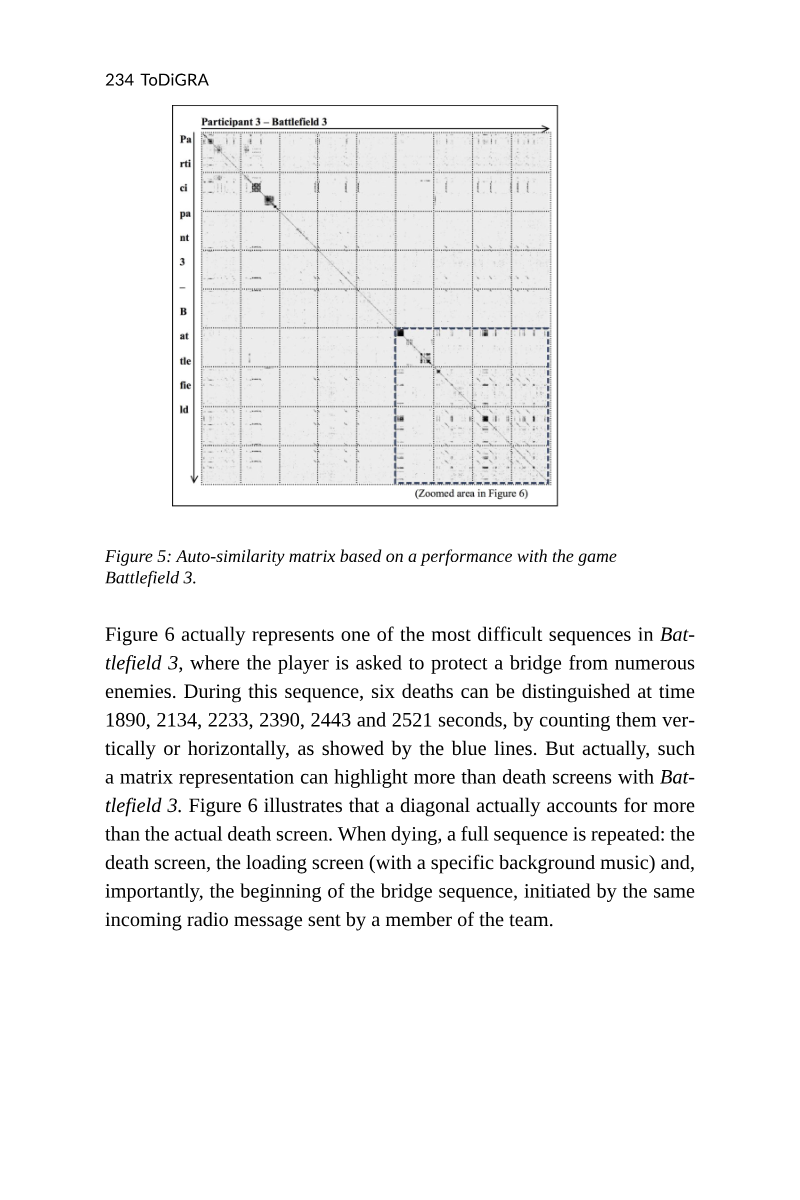
Similarity matrices offer a robust, non-invasive framework for analyzing player experience by converting gameplay audio streams into chroma representations.
Postdigital Interfaces and the Aesthetics of Recruitment
Contemporary gaming has evolved beyond the confines of static digital devices, necessitating a transition toward a postdigital analytical framework.
Worldfulness, Role-enrichment & Moving Rituals: Design Ideas for CRPGs
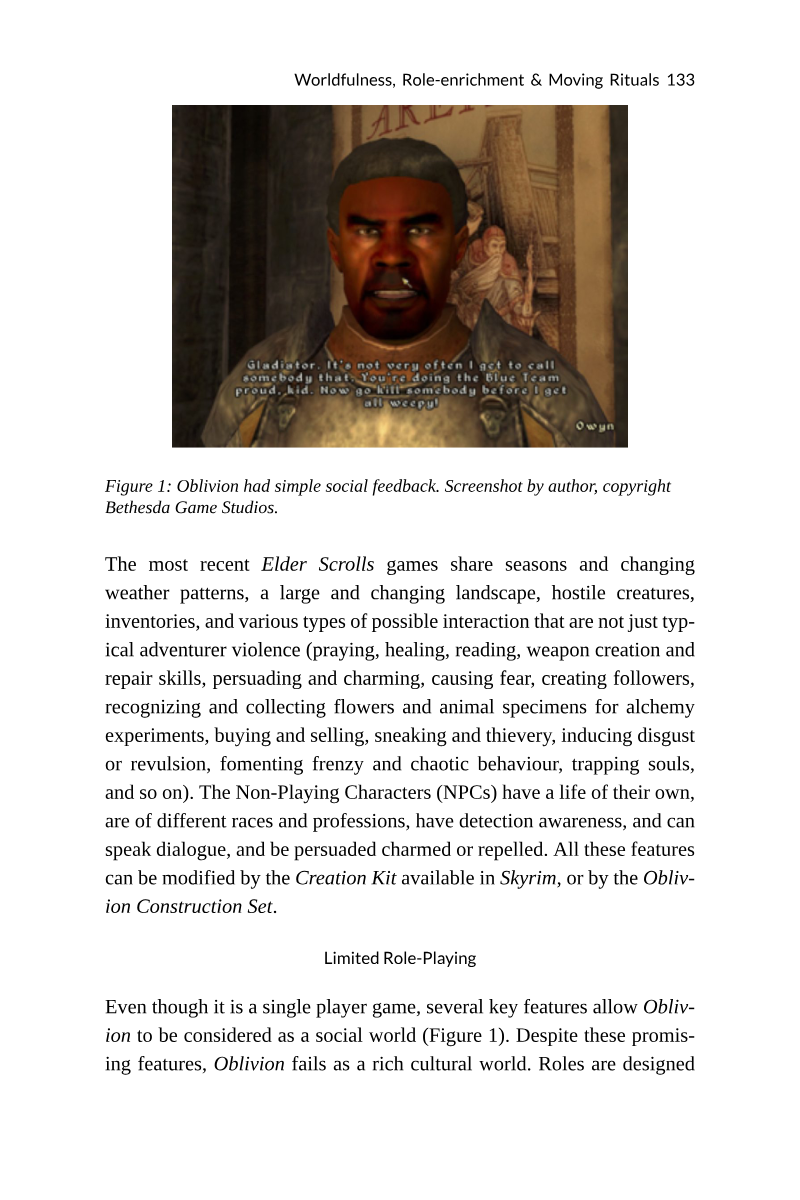
Computer role-playing games frequently prioritize mechanical entertainment over the authentic cultural and social depth required to create truly resonant virtual environments.
- CRPG design should shift from prioritizing mechanical combat and progression systems toward creating 'worldfulness,' where digital spaces function as historically grounded, culturally deep environments.
- Social roles in games must evolve from static attribute parameters into dynamic, lived experiences that reflect the complexity of human society.
- The integration of meaningful rituals—simulating physiological requirements, spatial demarcation, and performative rigor—is essential for fostering deeper player identity and value transmission.
Are You Out of Your Mind? Focalization in Digital Games
Digital games function as sophisticated engines for subjective experience, utilizing the narratological framework of focalization to align player perception with the mental states and worldviews of in-game avatars.
Visual Abstraction for Games on Large Public Displays
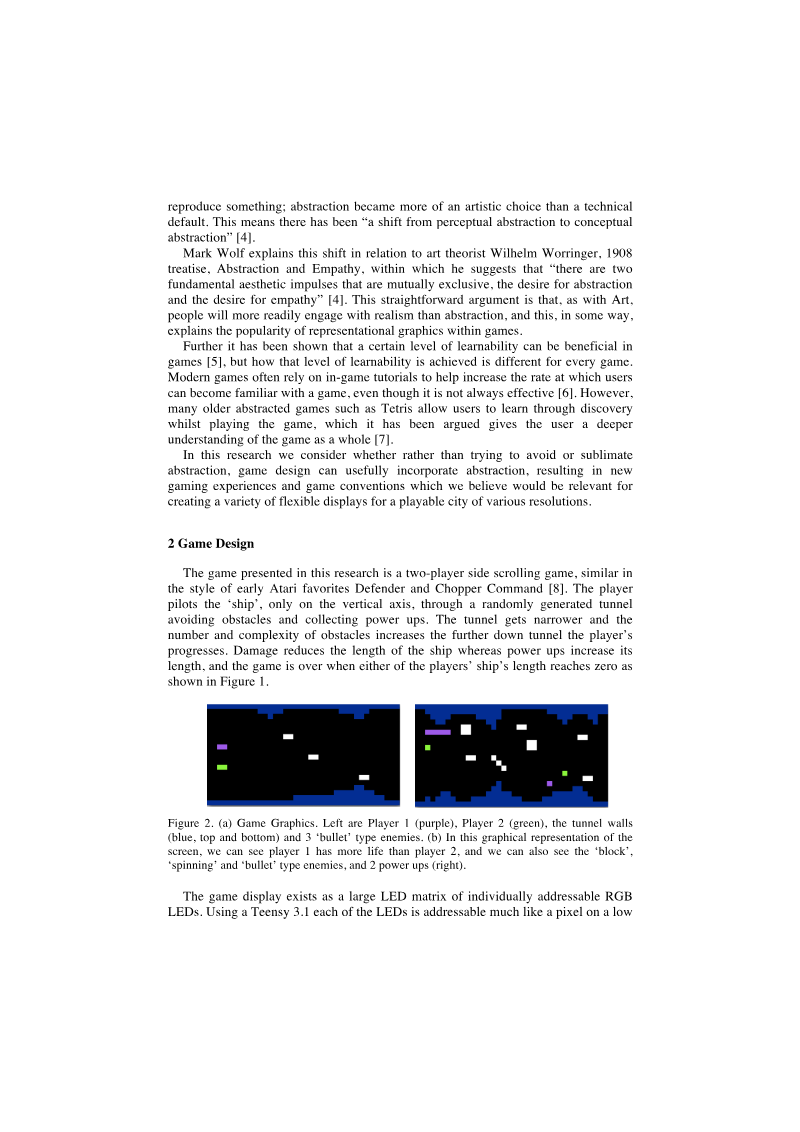
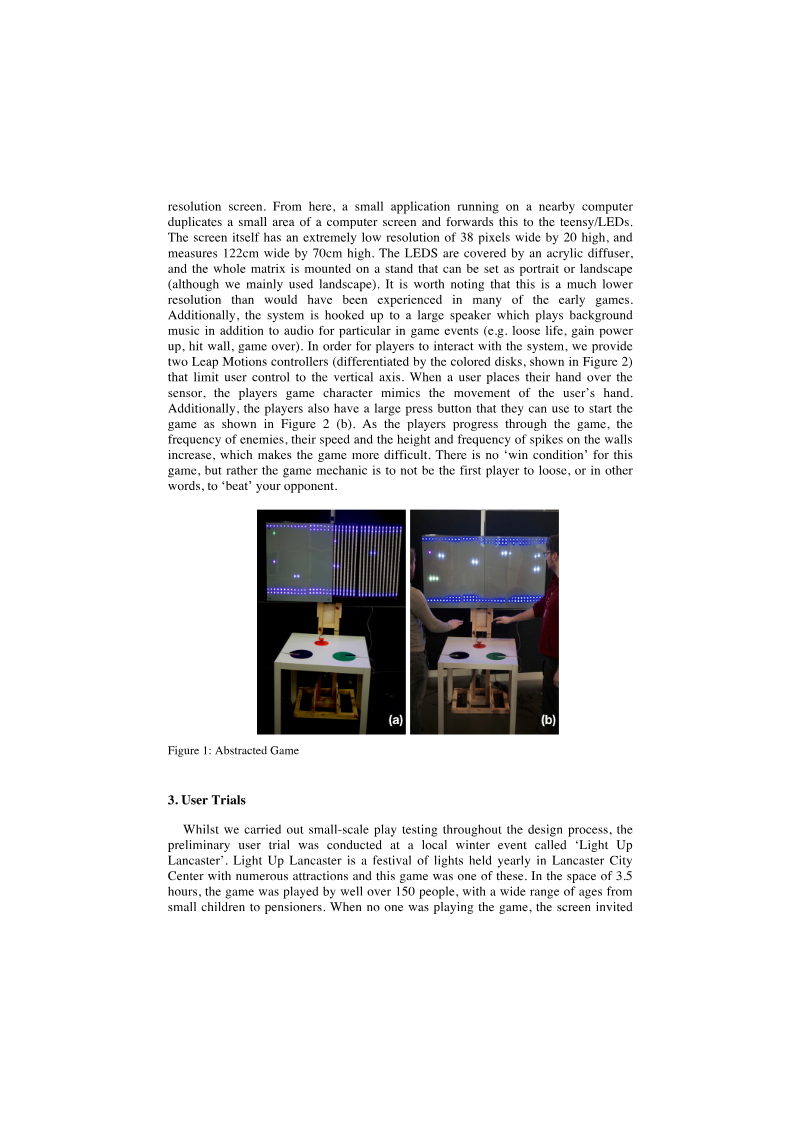
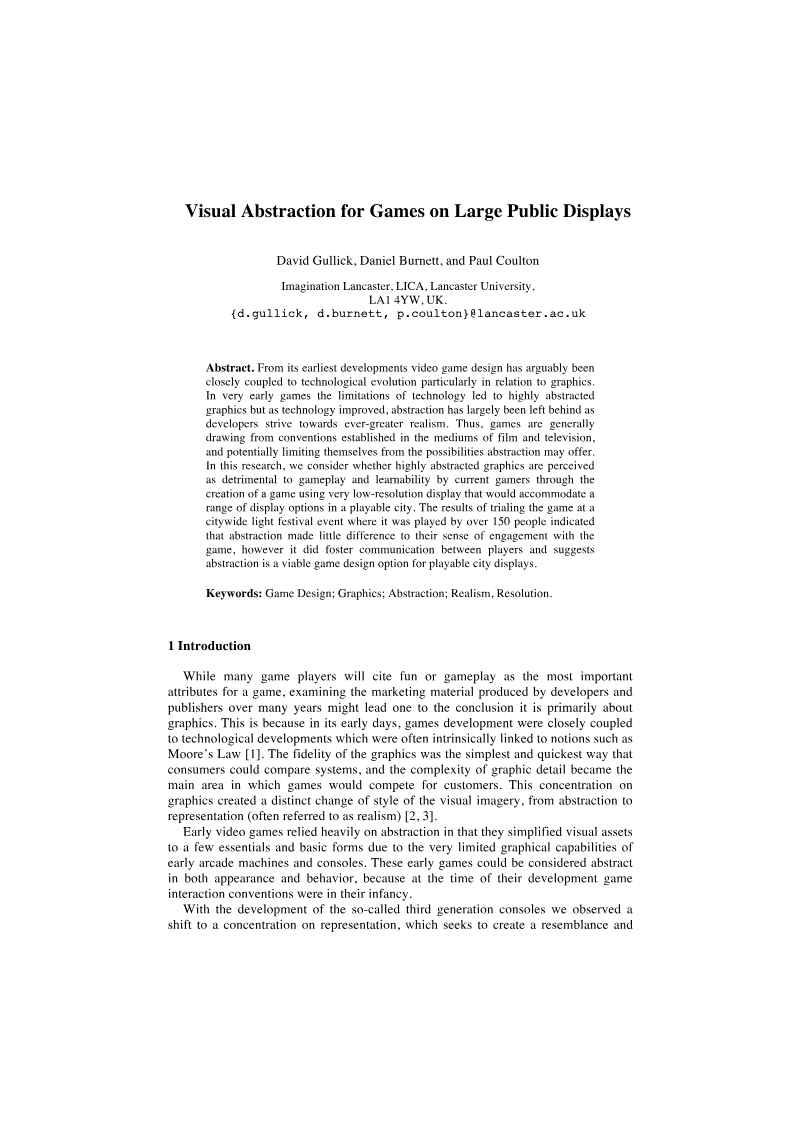
This research explores the viability of visual abstraction as a deliberate design choice for modern video games, challenging the industry’s long-standing trend toward increasing graphical realism.
- Extreme visual abstraction is a viable design strategy for public-facing interactive displays, proving that high graphical fidelity is not a prerequisite for player engagement.
- A field test involving over 150 participants demonstrated that users can successfully navigate and engage with a game using only a 38-by-20 pixel LED matrix.
- The absence of traditional text-based tutorials in abstract designs encourages discovery-based learning and fosters social collaboration among players and spectators.
Play with Me! Gender-Typed Social Play Behavior Analysis in Interactive Tag Games
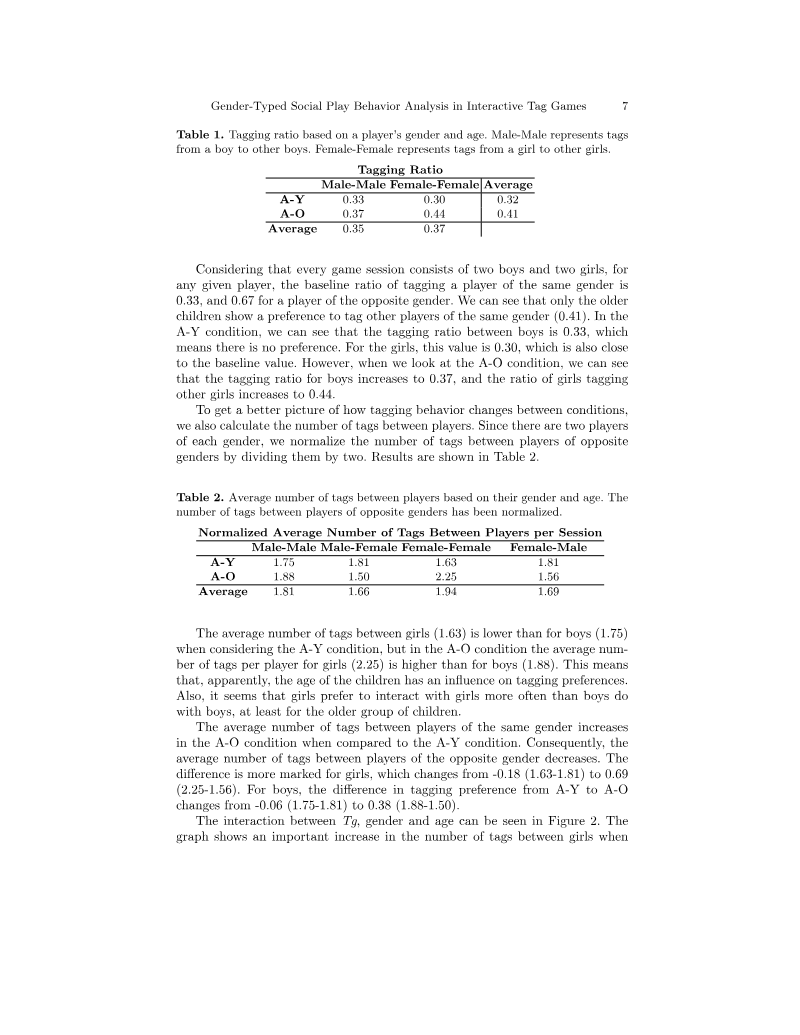
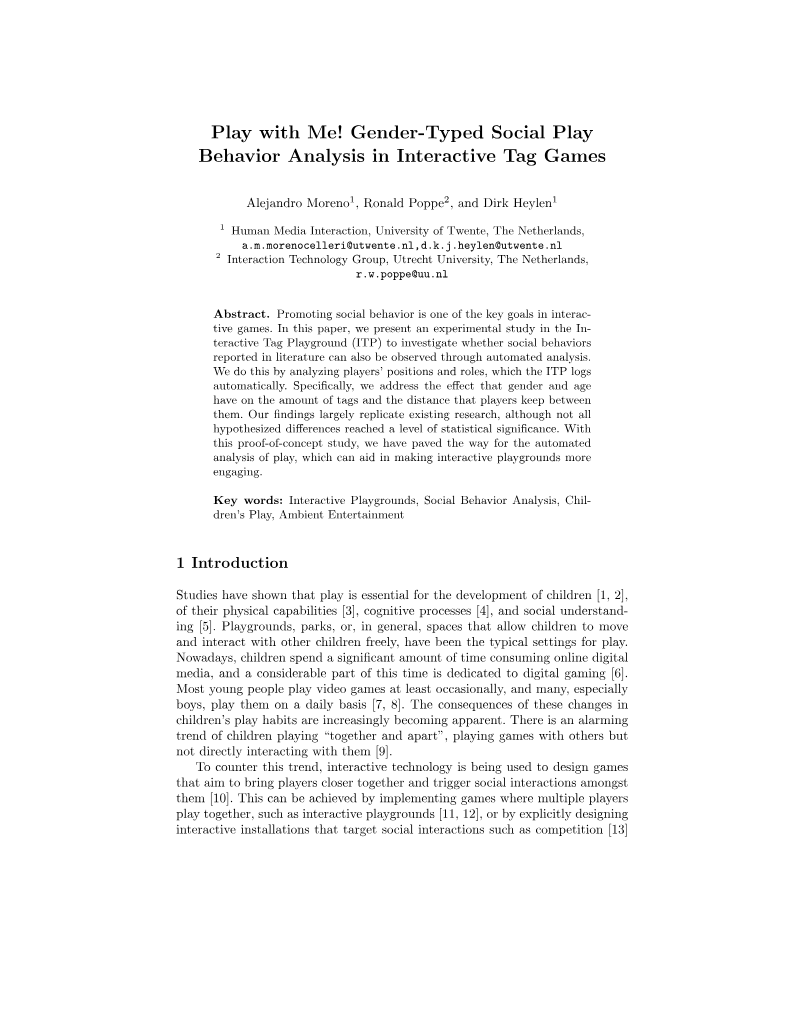
Automated tracking technology within interactive playgrounds offers a robust method for quantifying gender-typed social play behaviors, such as interpersonal proximity and tagging frequency.
Learning Mechanics and Game Mechanics Under the Perspective of Self-Determination Theory
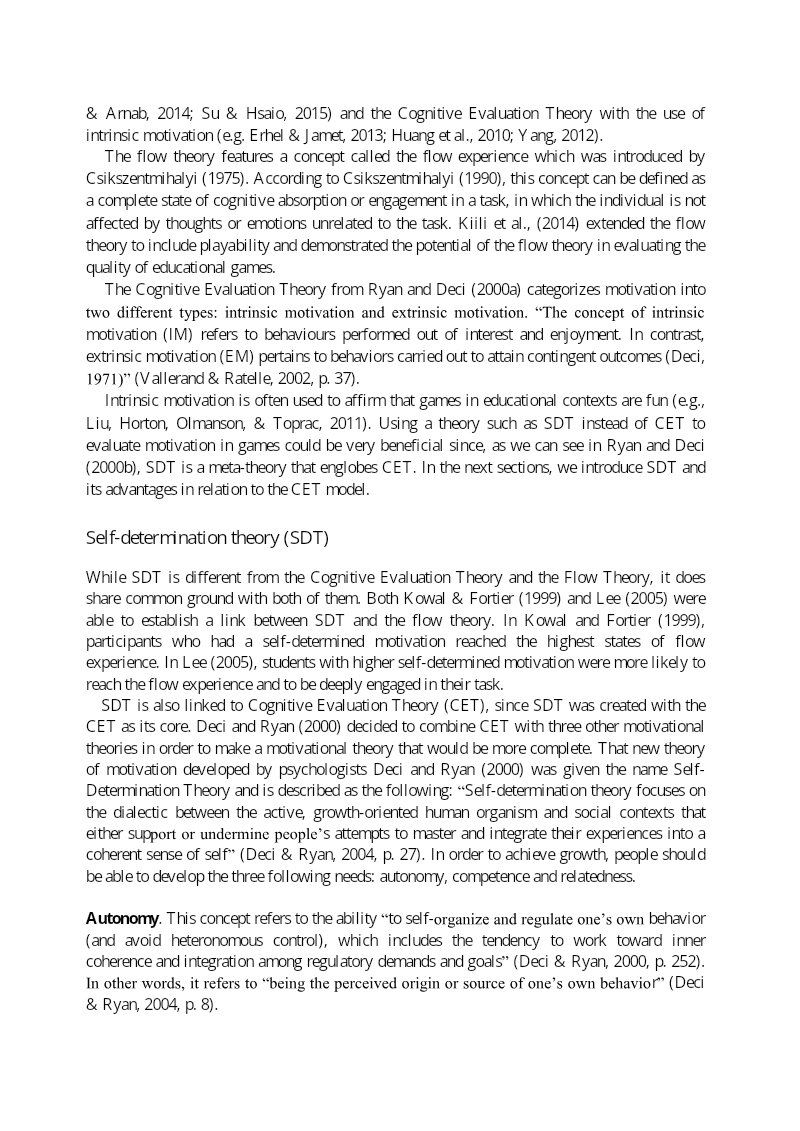
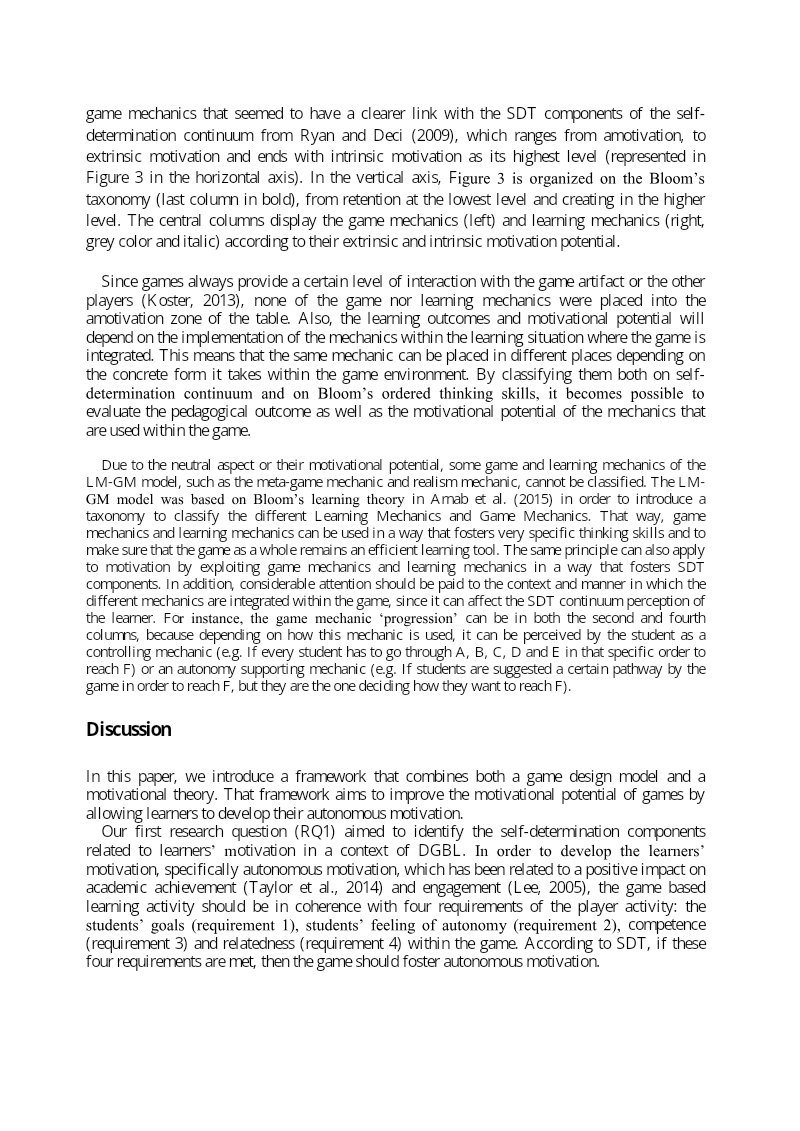
Proulx, J. N., Romero, M., & Arnab, S. (2016). Learning Mechanics and Game Mechanics Under the Perspective of Self-Determination Theory to Foster Motivation in Digital Game Based Learning.
Nostalgia Videogames as Playable Game Criticism
Robin Sloan's 2016 paper argues that contemporary nostalgia videogames can be understood as "playable game criticism," or "games-on-games," in which designers use the mechanics, aesthetics, and conventions of earlier titles to comment on those works and on players' memories of them.
- Robin Sloan's 2016 paper argues that contemporary nostalgia videogames can be read as "playable game criticism" ("games-on-games"), using the mechanics, aesthetics, and conventions of earlier titles to comment on those works and on players' memories of them.
- The paper's central thesis is that nostalgia games should not be dismissed as mere sentimentality, since they can function as critical explorations of gaming history.
- Sloan draws on literary and film theories of pastiche and parody, Garda's continuum between restorative and reflective nostalgia, and Mäyrä's core-and-shell model to propose criteria for distinguishing these modes.