Game Studies reports and market data
Documents
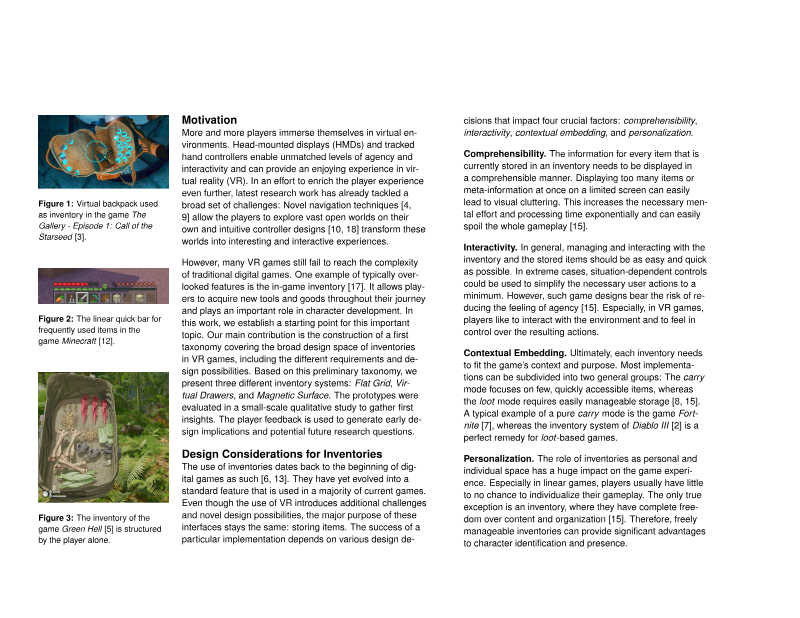

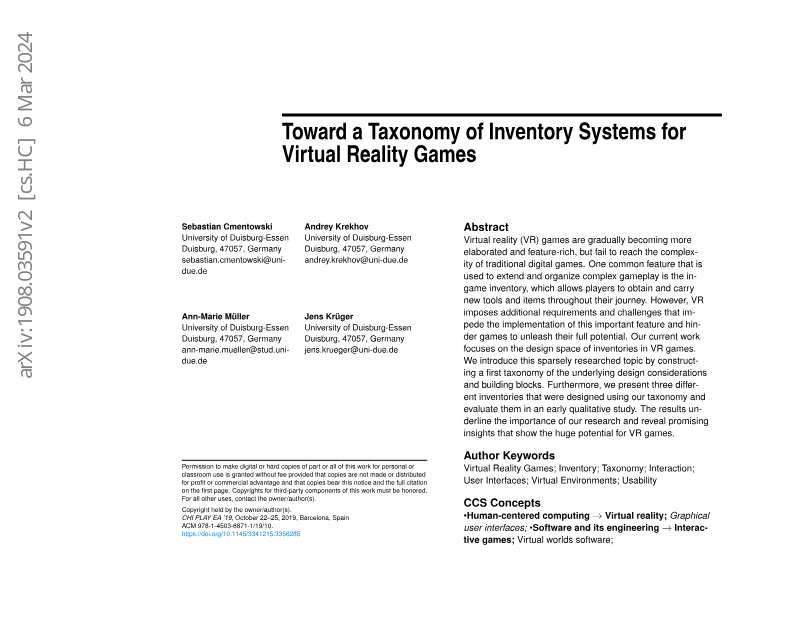
Toward a Taxonomy of Inventory Systems for Virtual Reality Games
This research establishes a foundational taxonomy for inventory systems in virtual reality (VR) games, addressing the gap between the increasing complexity of VR environments and the limitations of current interface design.

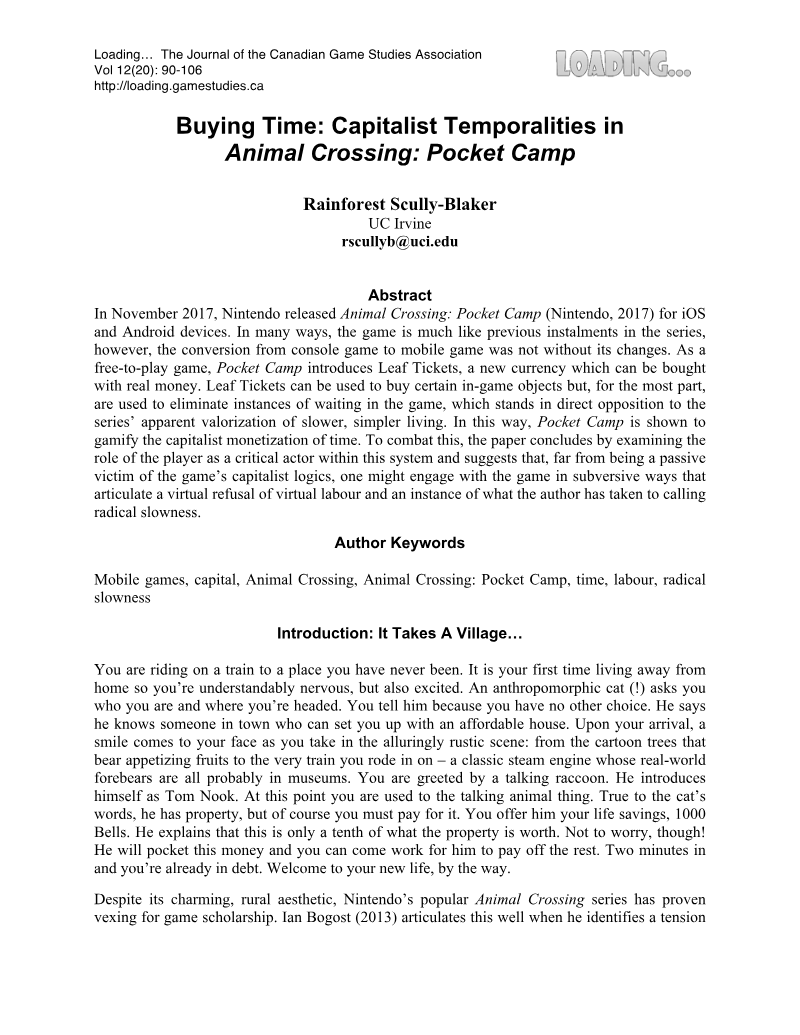
Buying Time: Capitalist Temporalities in Animal Crossing: Pocket Camp
Animal Crossing: Pocket Camp represents a significant departure from the traditional, leisurely ethos of the Animal Crossing franchise, shifting toward a gamified model that commodifies time and labor.
- Animal Crossing: Pocket Camp shifts the franchise's traditional leisurely ethos toward a free-to-play model that commodifies player time and labor.
- The game utilizes artificial wait times and resource scarcity to force players into rigid four-hour cycles, effectively turning recreational play into virtual labor.
- Monetization strategies, specifically the use of Leaf Tickets, are designed to incentivize microtransactions by weaponizing real-time constraints and maintenance tasks.

Playing the Past and Alternative Futures: Counterfactual History in Fallout 4
Fallout 4 functions as a sophisticated postmodern historical text that utilizes counterfactual storytelling to challenge traditional, linear interpretations of the Cold War and the mythos of American progress.
- Fallout 4 utilizes counterfactual history to challenge the concept of a linear, progressive trajectory of human events by presenting a world where the Cold War fear of Mutually Assured Destruction became reality.
- Unlike historical strategy games that use rigid rule systems like tech trees, Fallout 4 employs a free-form, ludic approach that allows players to experience historical content through the absence of cohesive, traditional historical structures.
- The game’s aesthetic, characterized by mid-century 'techno-utopian' design juxtaposed against a post-apocalyptic wasteland, serves as a critical mirror to reveal the contingency and failure of pre-war ideologies.


“The Father of Survival Horror”: Shinji Mikami, Procedural Rhetoric, and the Collective/Cultural Memory of the Atomic Bombs
Shinji Mikami serves as a pivotal auteur whose directorial work functions as a sophisticated vehicle for preserving Japan’s collective memory of the atomic bombings of Hiroshima and Nagasaki.
- Shinji Mikami’s directorial works, including Resident Evil, Dino Crisis, and The Evil Within, function as modern contributions to the Japanese literary tradition of atomic bomb and hibakusha (survivor) memory.
- Mikami’s games utilize procedural rhetoric to consistently explore three core themes central to atomic bomb literature: physical and emotional trauma, large-scale urban destruction, and deep-seated distrust of power structures.
- The author argues that Mikami’s upbringing in Yamaguchi Prefecture—a region that hosted many Hiroshima survivors and maintains annual commemorations—likely informed his thematic focus on the aftermath of catastrophic events.
Effects of Mobile Platform on Female Engagement in MOBA Games
Mobile platforms serve as a critical catalyst for increasing female participation in the Multiplayer Online Battle Arena (MOBA) genre.
- In July 2017, the mobile MOBA game King of Glory (KoG) reached over 54 million daily active players and 163 million monthly active players, with females accounting for 54.1% of the player base.
- The mobile platform's inherent portability and convenience facilitate 'mobile socialization,' allowing players to engage in gaming as a social activity while physically together, which serves as a primary entry point for female players.
- Unlike PC-based MOBAs that often rely on text or voice chat, KoG's mobile environment encourages face-to-face social play, reducing the reliance on in-game communication with strangers.

The Detrimental Effects of Punishment and Reward on Cooperation in the Industrial Waste Illegal Dumping Game
The Industrial Waste Illegal Dumping Game serves as a critical simulation to evaluate how regulatory interventions influence cooperative behavior within complex, interdependent industrial networks.
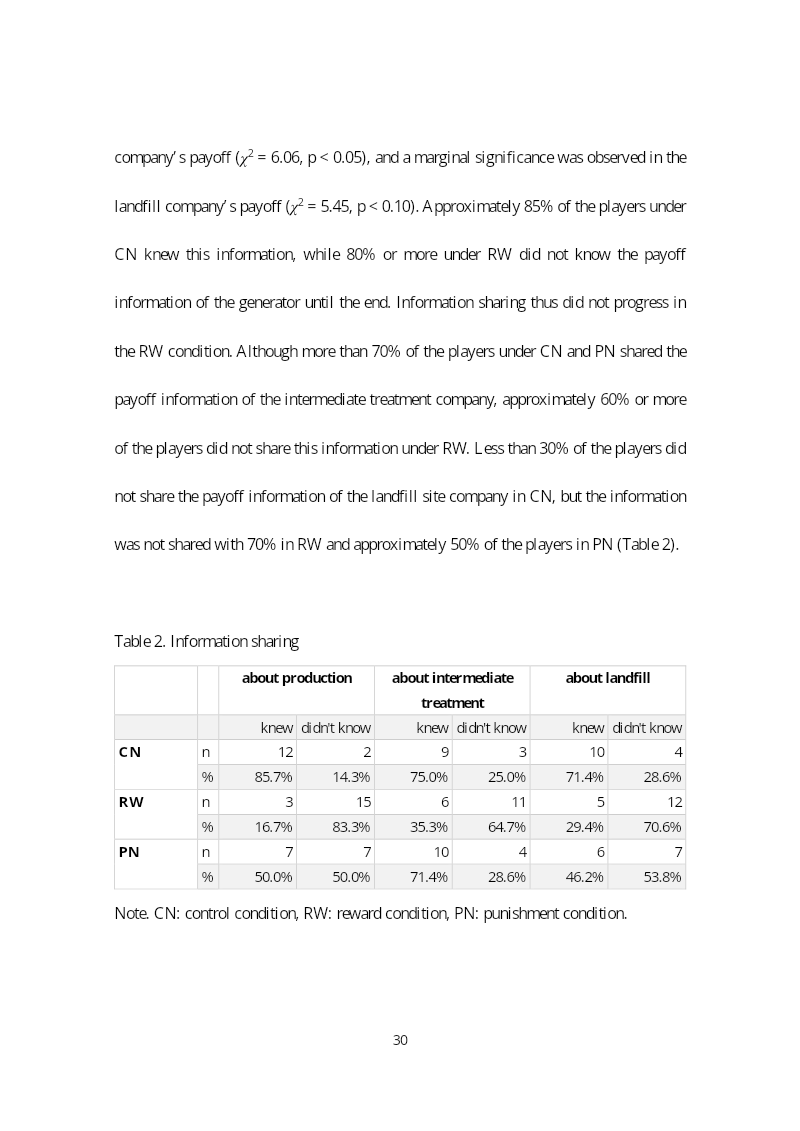
- External reward and punishment systems in the Industrial Waste Illegal Dumping Game frequently trigger non-cooperative behaviors that destabilize the waste management ecosystem.
- Reward-based incentives often increase illegal dumping by prioritizing individual profit acquisition over legal compliance among waste generators, treaters, and landfill operators.
- Mutual punishment mechanisms are ineffective due to the difficulty of surveillance and the delayed nature of consequences within complex industrial networks.

Persuasion Game: Cross-Cultural Comparison
The Persuasion Game functions as a highly effective pedagogical tool for fostering environmental consciousness and encouraging energy-saving behaviors among university students.
- The Persuasion Game effectively mitigates pluralistic ignorance by normalizing sustainability discourse, allowing students to align personal environmental values with social interactions.
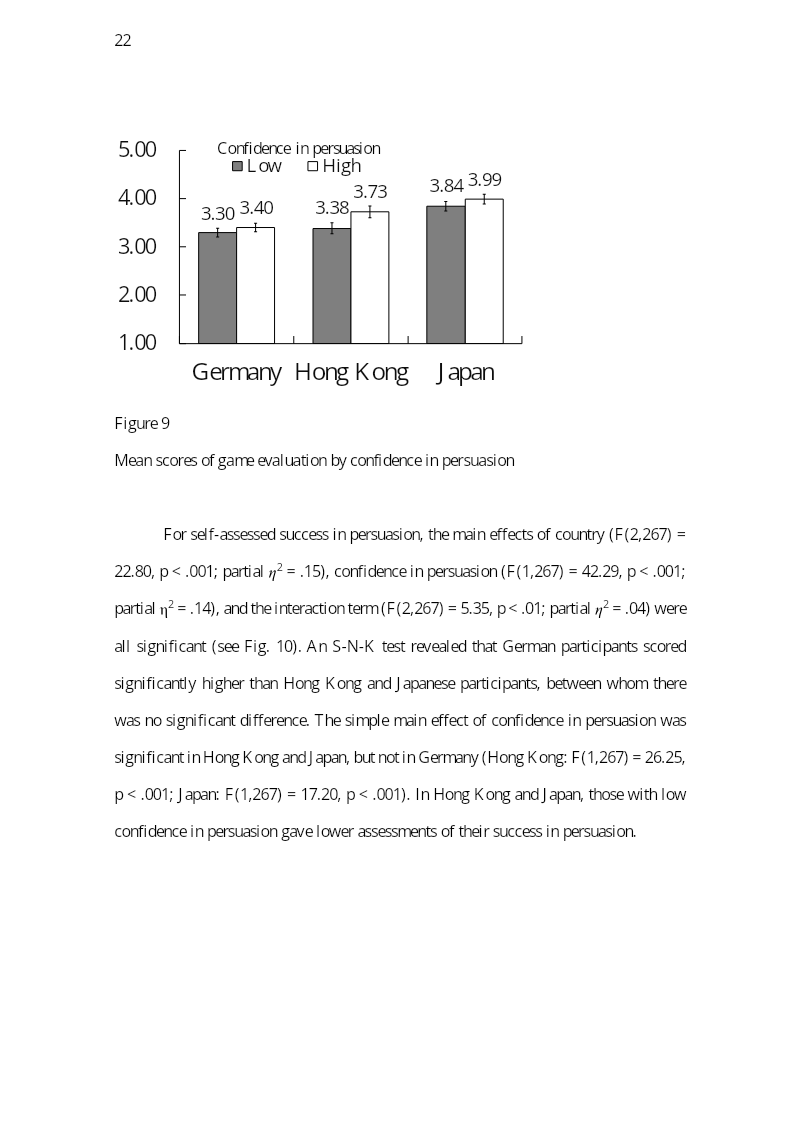
- Cross-cultural studies in Germany, Hong Kong, and Japan demonstrate that the game consistently increases both behavioral intentions and the perceived seriousness of environmental issues.
- Japanese participants, who initially reported the lowest confidence and frequency in environmental communication, experienced the most significant shifts in subjective norms after playing.



Well Played: A Special Issue on The Sporting Mindset
The sporting mindset serves as a unifying framework for understanding how individuals engage with both traditional athletics and digital gaming.

Well Played: Intergenerational Play
Intergenerational play functions as a critical site for communication, emotional development, and relationship-building, moving beyond the mere consumption of rules to prioritize shared experience.

The Role of Disposition to Critical Thinking in Digital Game-Based Learning
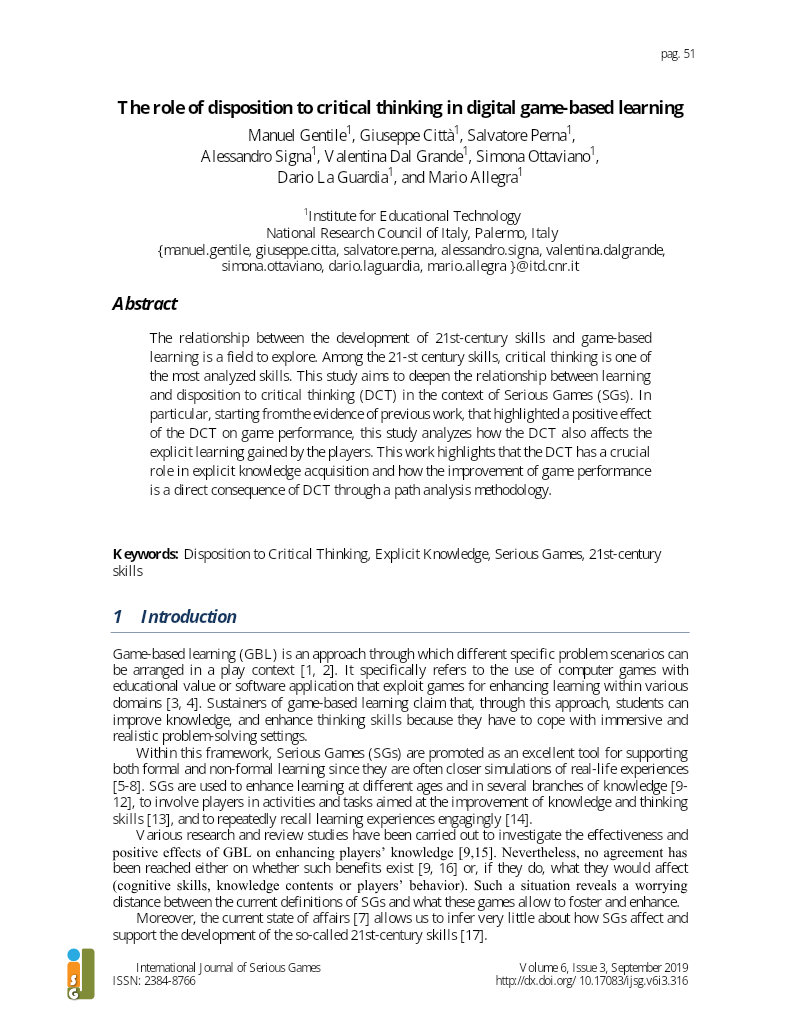
Disposition to critical thinking serves as a primary driver for effective knowledge acquisition within digital game-based learning environments.
- A player's internal disposition toward critical thinking is a primary driver of performance in digital game-based learning environments.
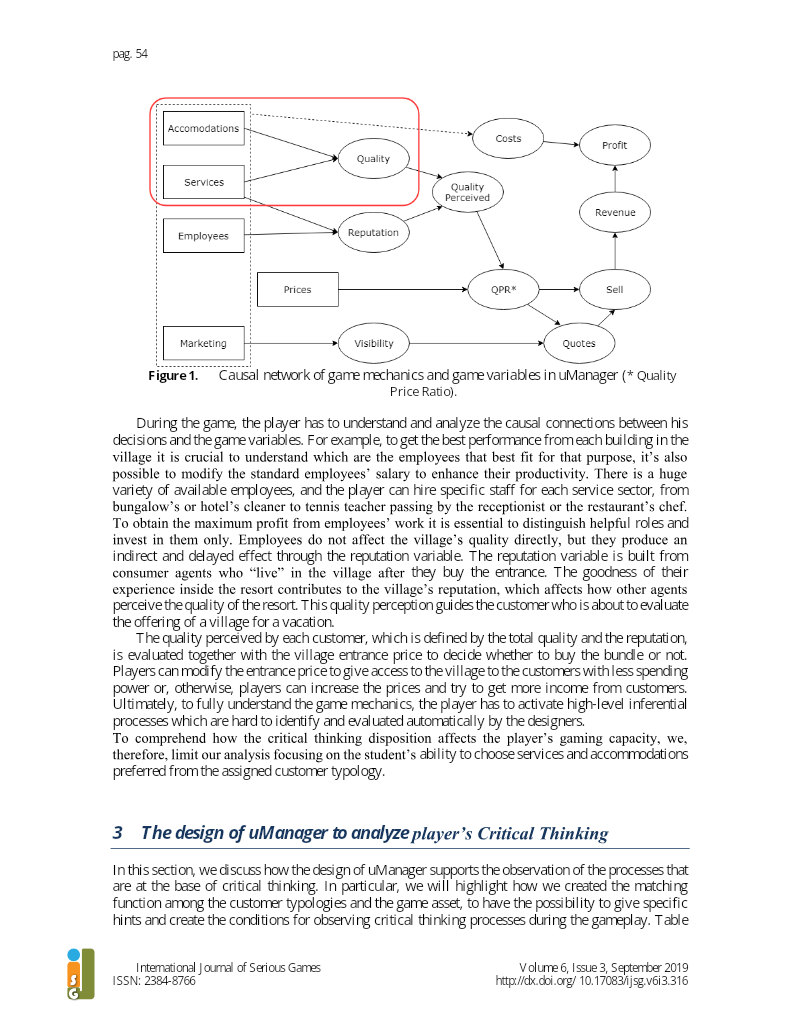
- Individuals with a higher inclination for critical analysis exhibit superior performance in the serious game uManager by engaging in more frequent and strategic information-seeking behaviors.
- Spaced learning frameworks are essential for aligning game mechanics with cognitive processes like working memory and sustained attention to ensure long-term knowledge retention.

Teaching Language and Literacy With Games: What? How? Why?
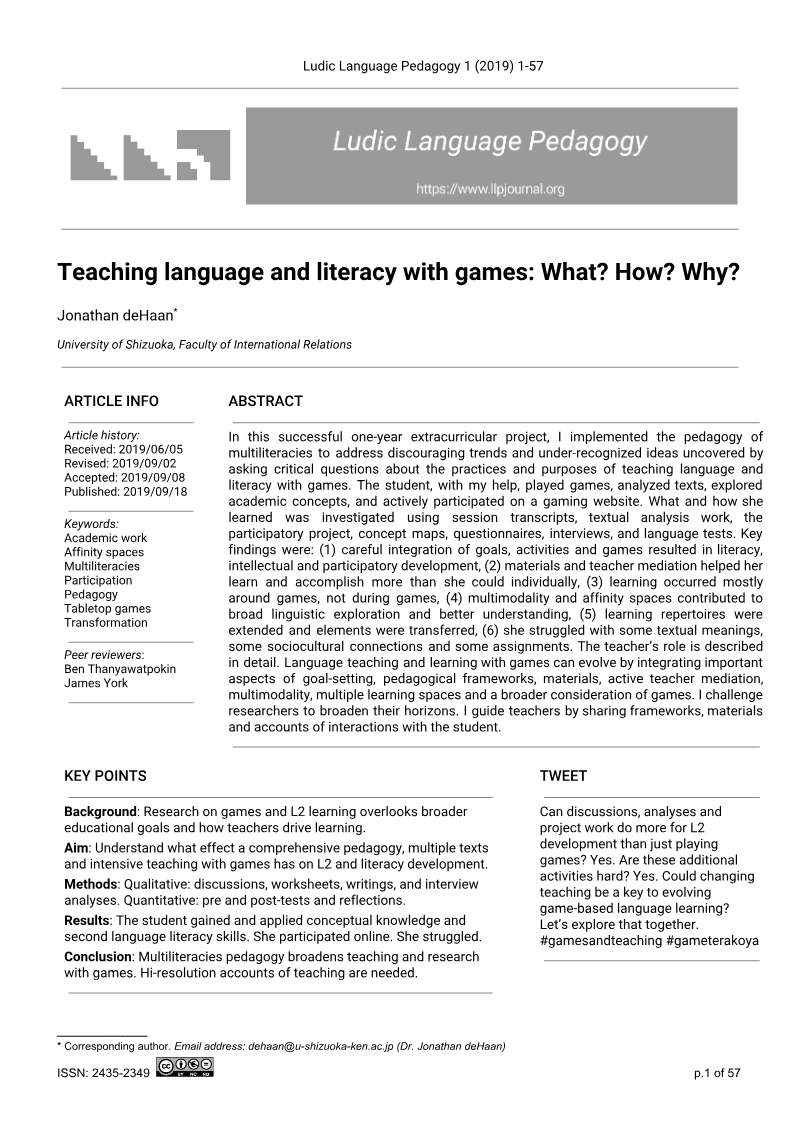
The integration of multiliteracies pedagogy into game-based instruction transforms games from simple entertainment into powerful catalysts for language and literacy development.
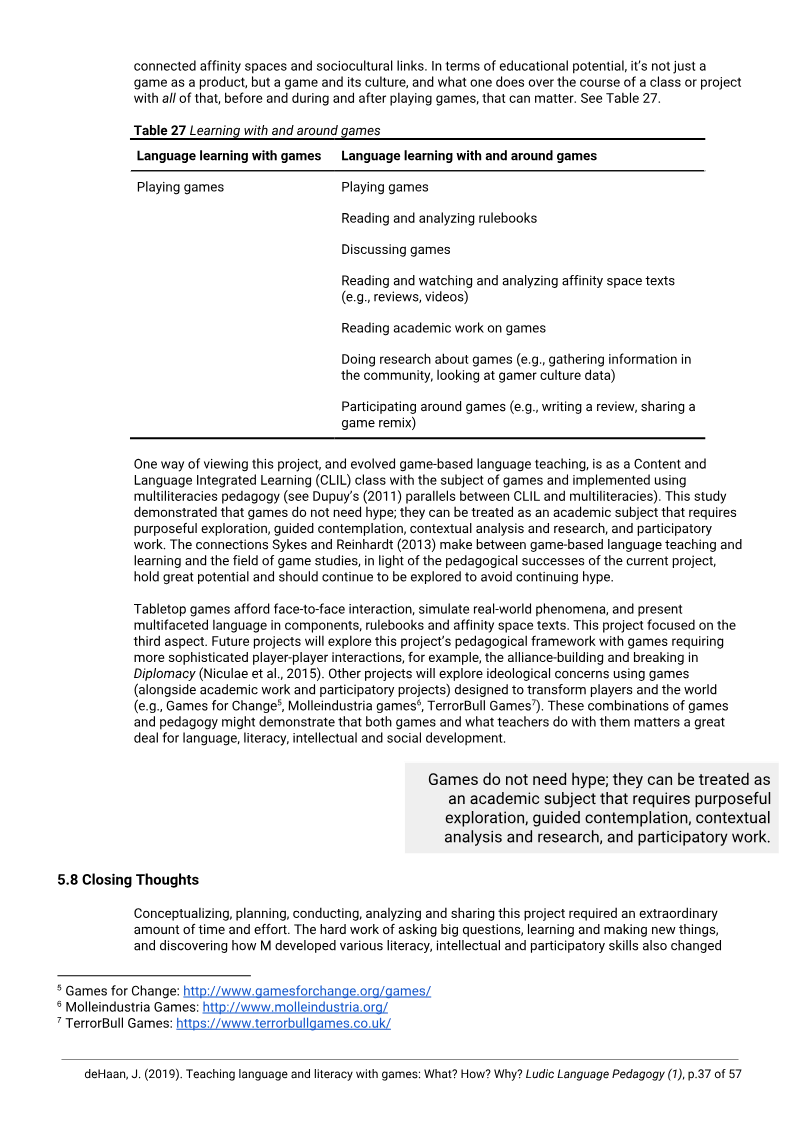
- Educational value in games is not inherent to the software but is generated through structured, teacher-mediated activities such as pre-game research, rulebook analysis, and post-game critical reflection.
- A scaffolded pedagogical approach, as evidenced by the Game Terakoya project, leads to measurable academic improvements including higher standardized English proficiency scores.
- Effective game-based learning follows a four-stage process: experiencing, conceptualizing, analyzing, and applying.
Exploring Video Games That Invoke Curiosity
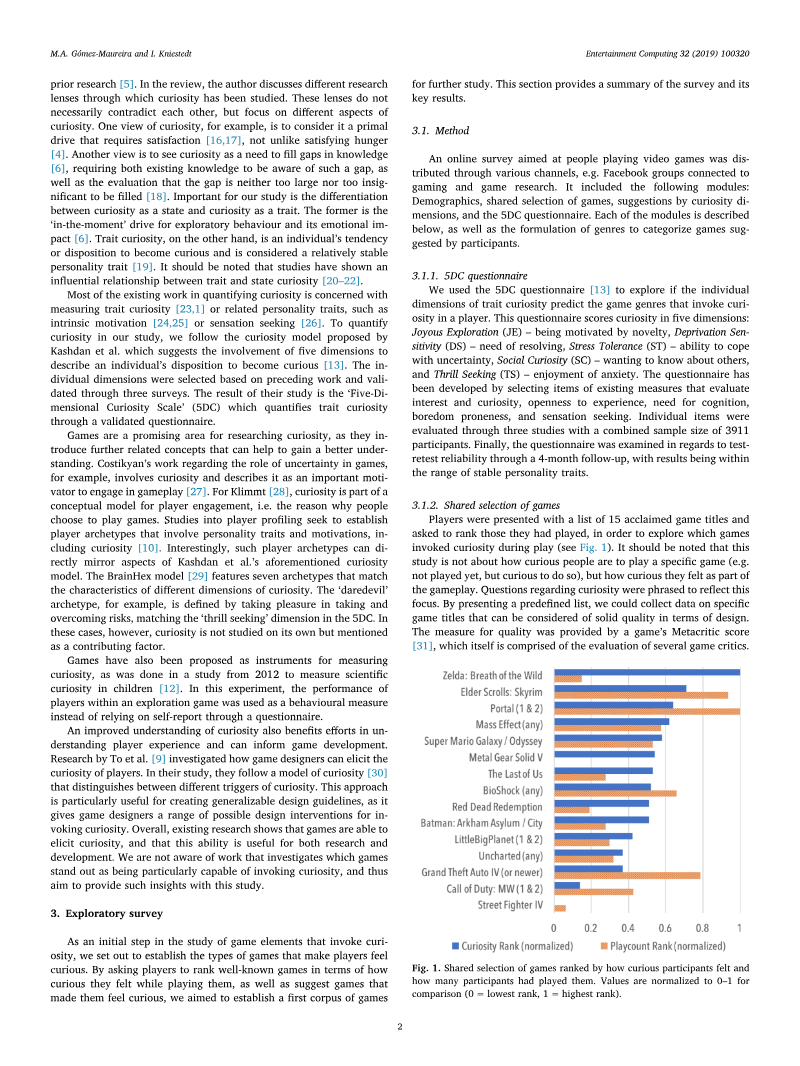
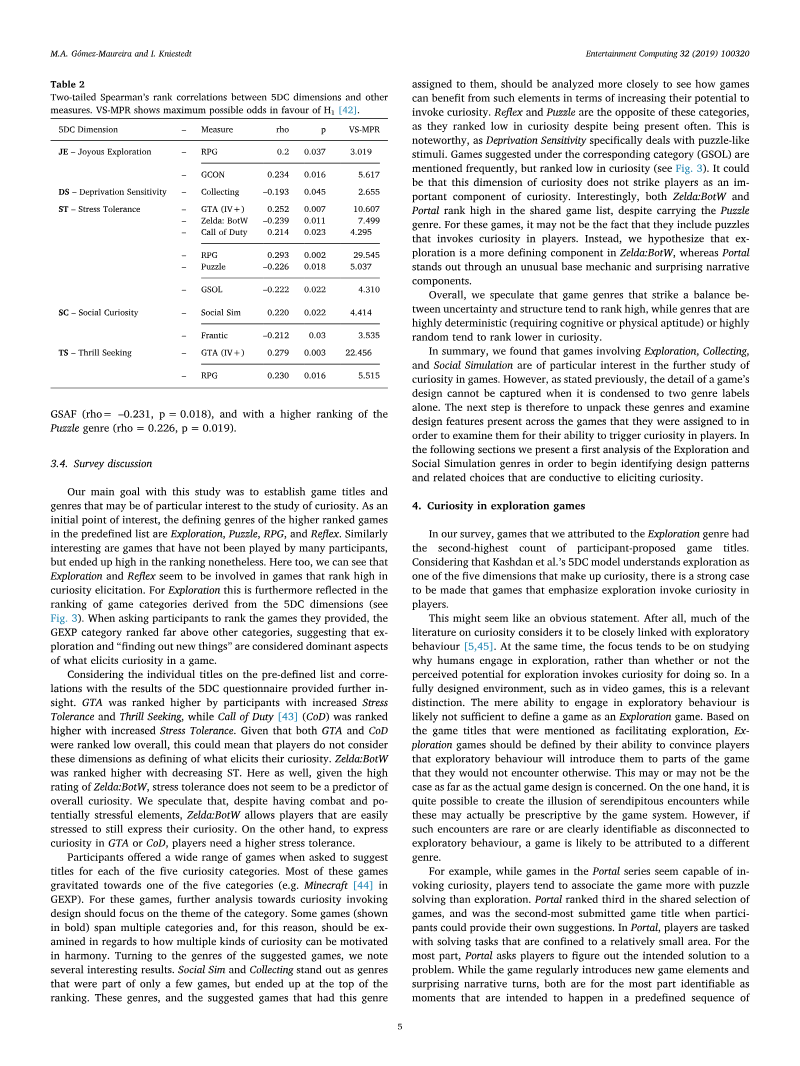
Video games effectively invoke player curiosity by balancing structured gameplay with controlled uncertainty, rather than relying on specific mechanics like combat or puzzle-solving.