More from Institute for Educational Technology
View all
More on Serious Games
View all
Report
Teaching with Games: Formative Gaming in Religion, Philosophy and Ethics
gamevironments · 2023
Whitepaper
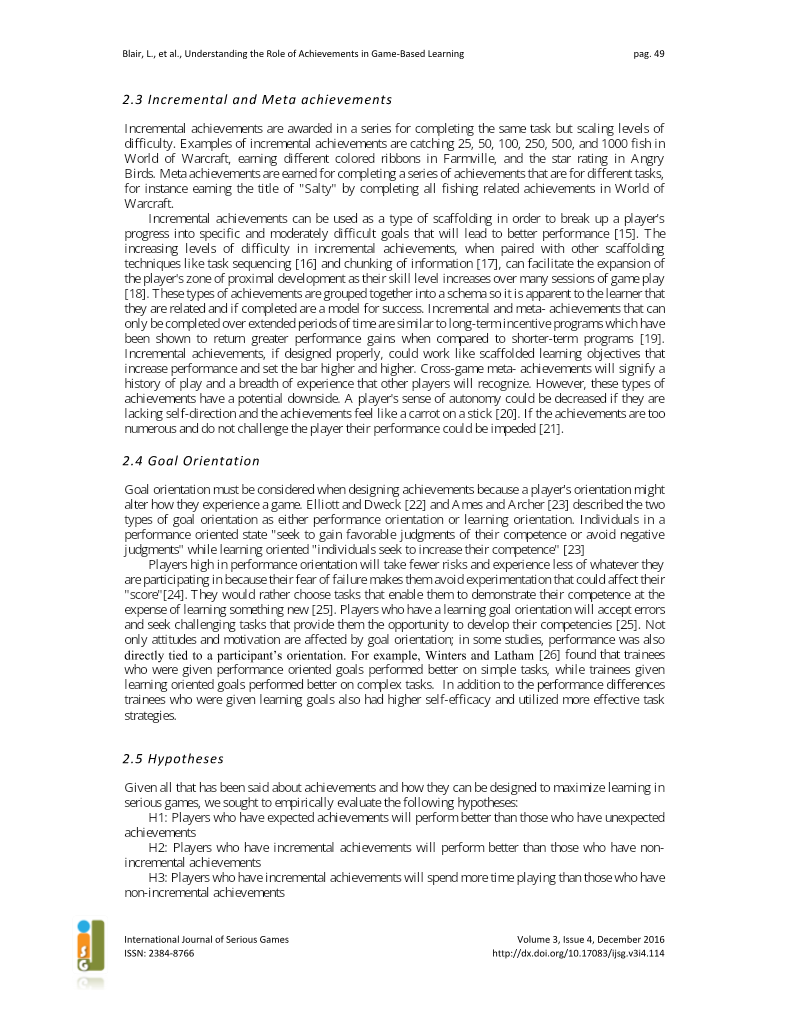
Researching Game-Based Learning: A Brief Synthesis Project
University of British Columbia · 2023
Whitepaper
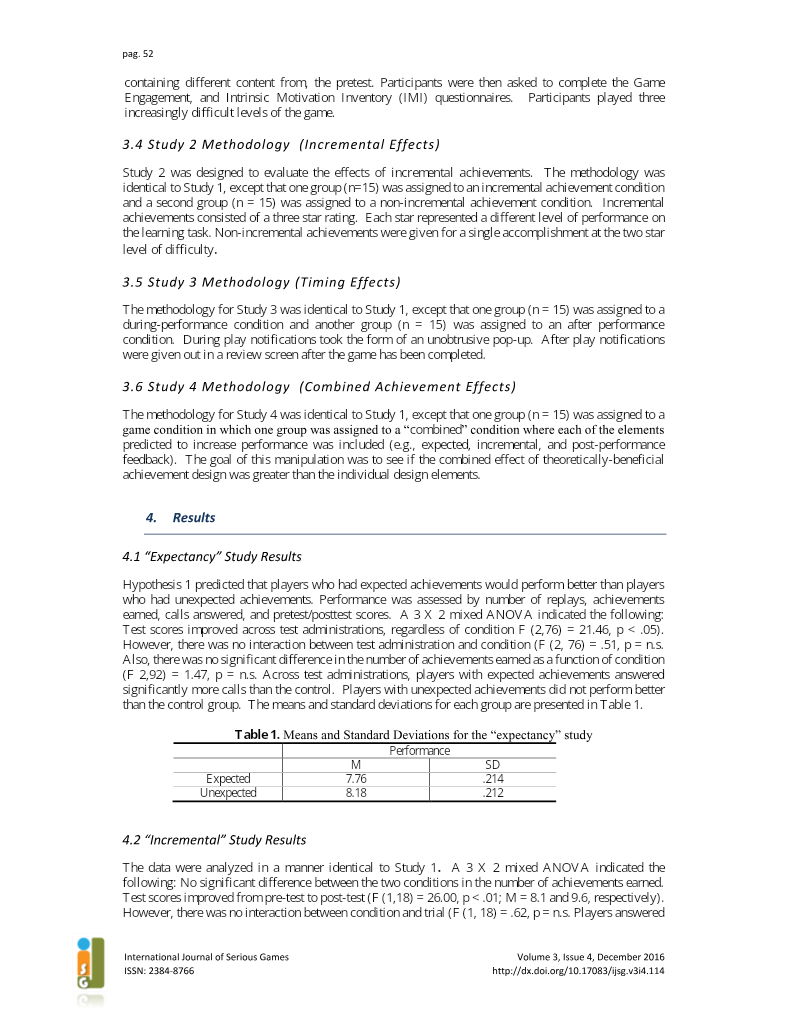
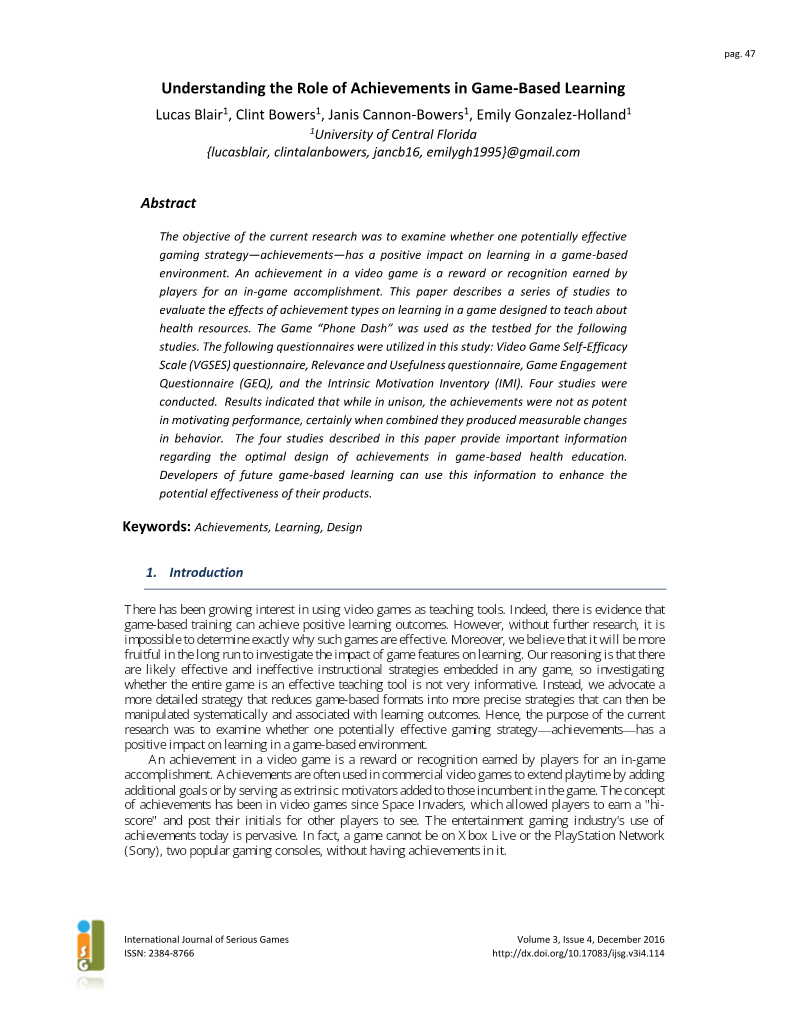
Understanding the Role of Achievements in Game-Based Learning
University of Central Florida · 2016
Whitepaper
BioGraphr: Science Games on a Biotic Computer
DiGRA · 2016
Whitepaper
Towards Normative Validity in the Evaluation of Game-Based Learning
DiGRA · 2016
Whitepaper
Mathematics Learning Opportunities When Playing a Tower Defense Game
International Journal of Serious Games · 2015
Whitepaper
Teaching Pre-Service Teachers to Integrate Serious Games in the Primary Education Curriculum
International Journal of Serious Games · 2015
Whitepaper
Measuring Effectiveness in Digital Game-Based Learning: A Methodological Review
International Journal of Serious Games · 2014
Whitepaper
The Integration of the Computer-Mediated Ludic Experience in Multisensory Environments
DiGRA · 2009
Report
Games for Learning: Are Schools Ready for What's To Come?
DiGRA · 2005
Report
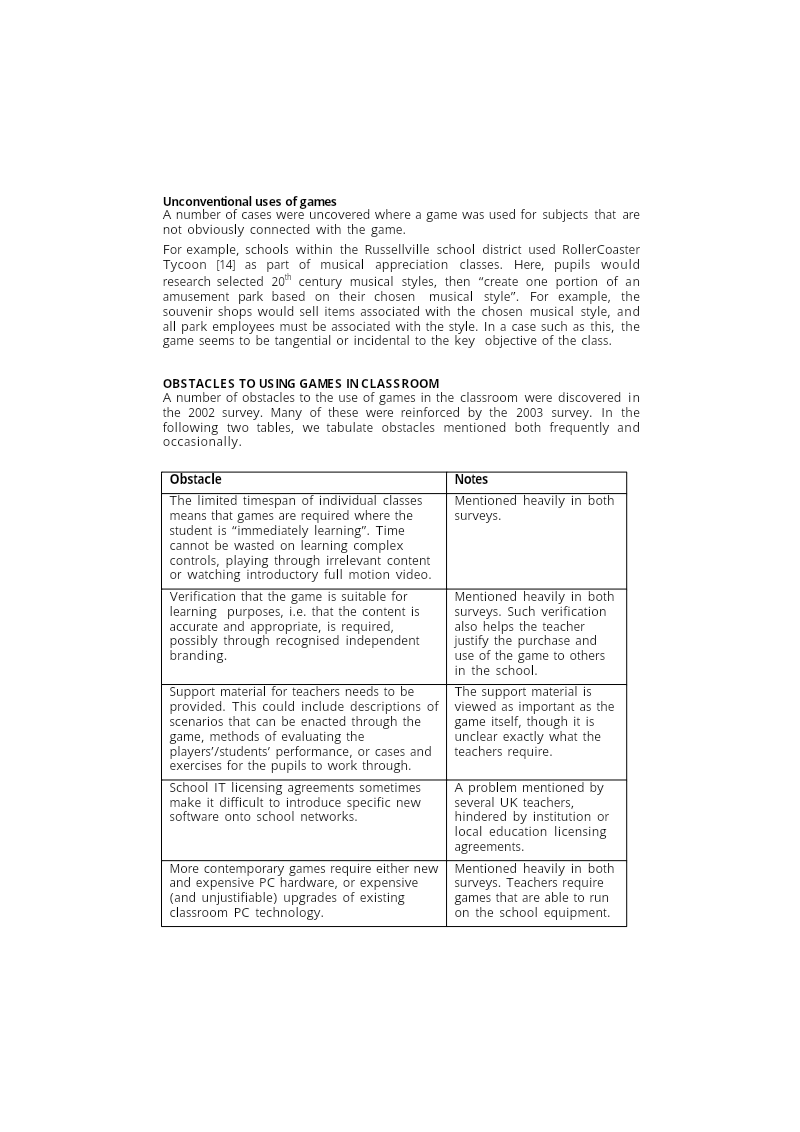
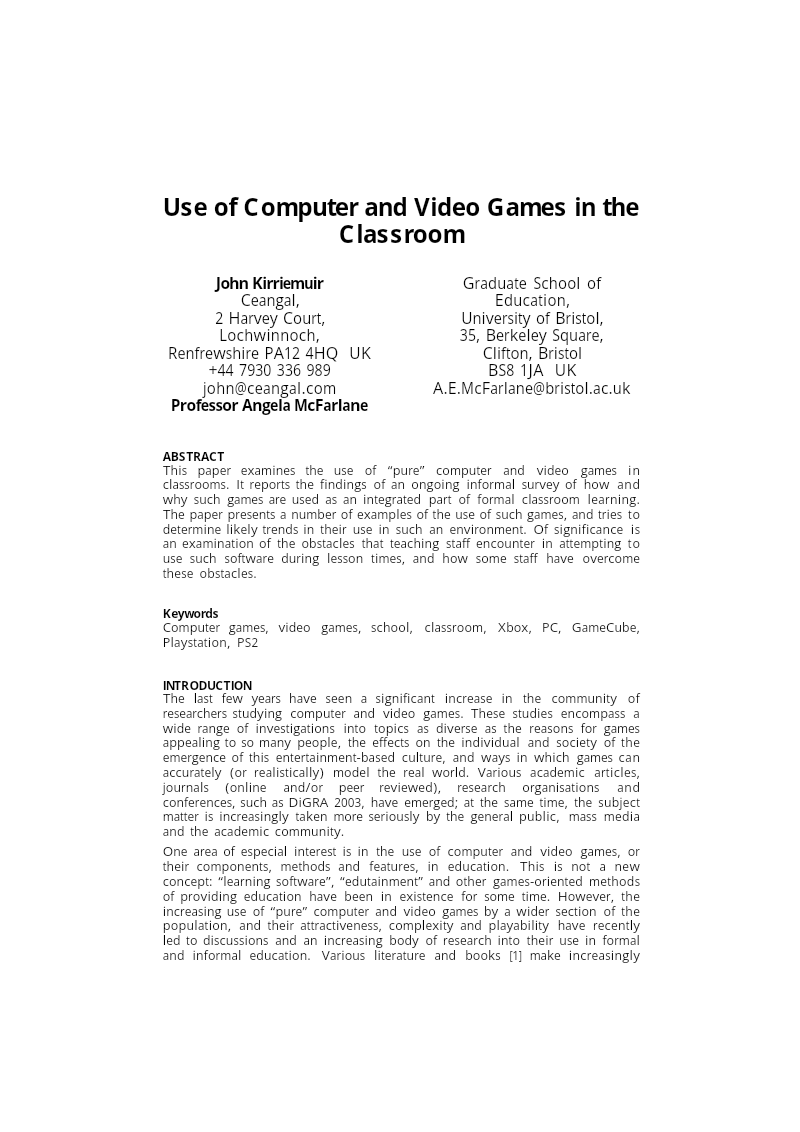
Use of Computer and Video Games in the Classroom
DiGRA · 2003
Whitepaper
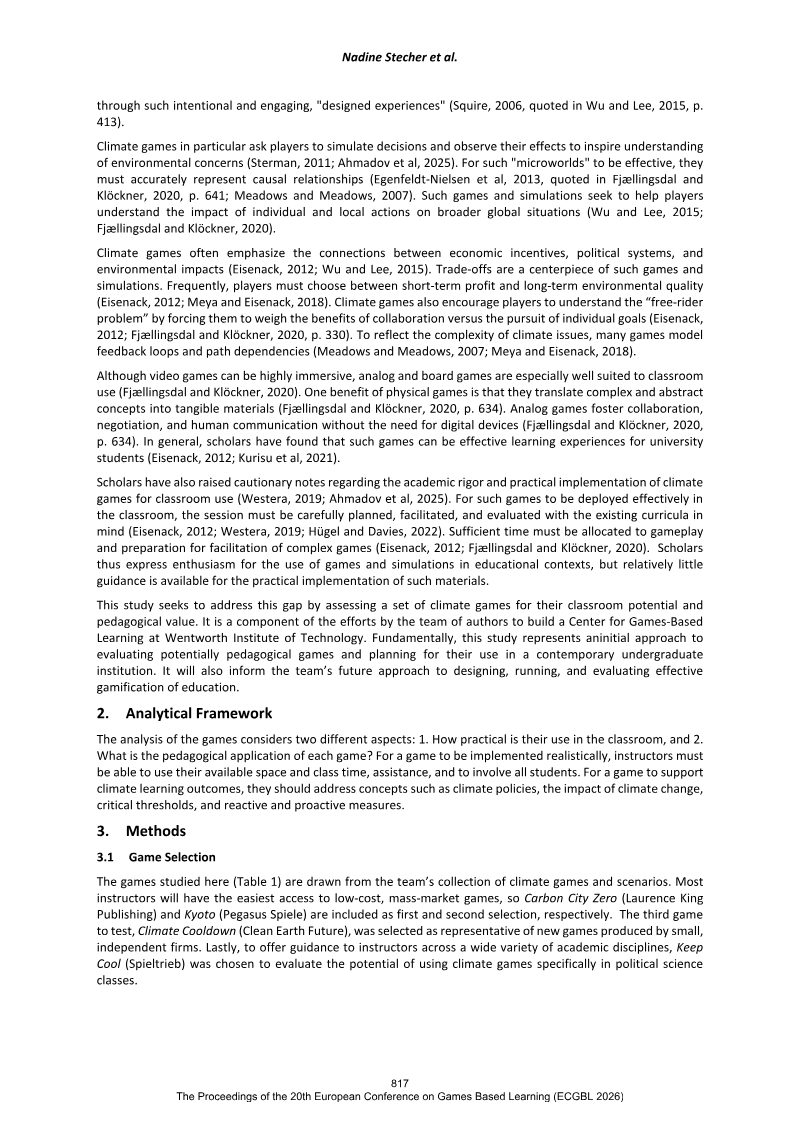
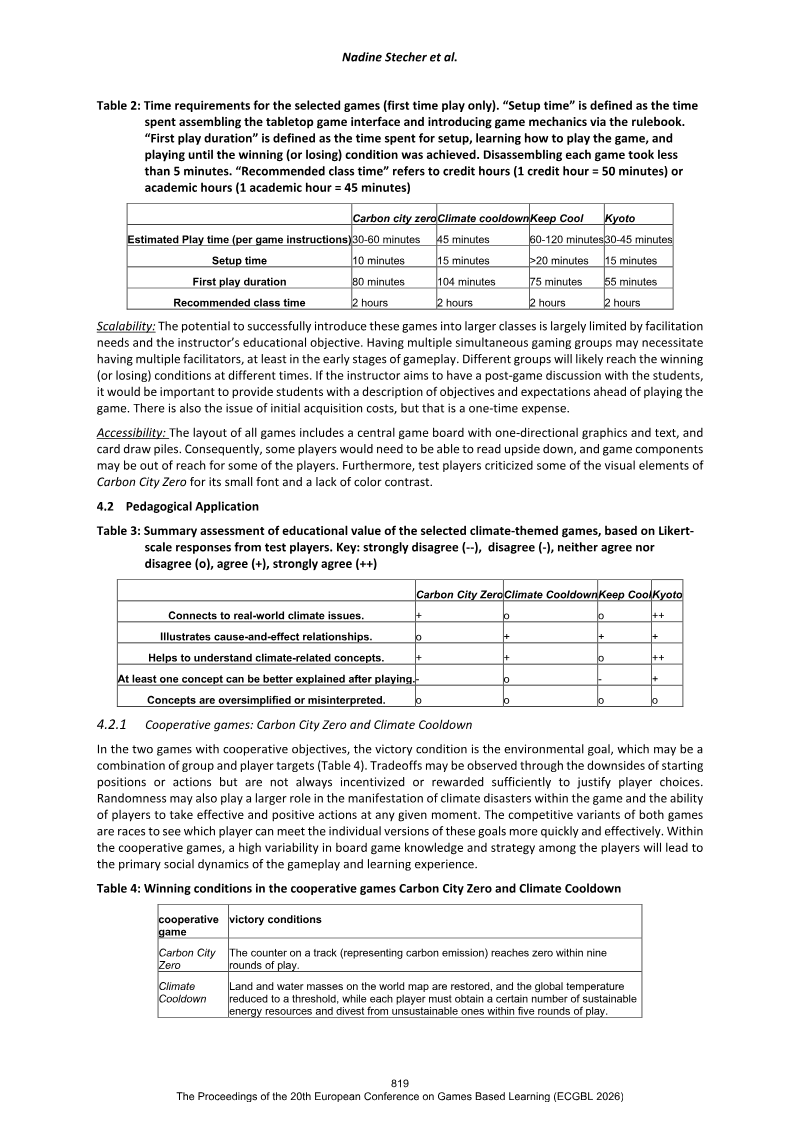
Playing the Climate Future: Evaluating Climate-adaptation Games for Higher Education
European Conference on Games Based Learning (ECGBL) · 2026