1 free read left. Create a free account for unlimited reading + AI research.
Create free accountWhitepaper Loading... The Journal of the Canadian Game Studies Association
1 free read left. Create a free account for unlimited reading + AI research.
Create free accountWhitepaperLoading... The Journal of the Canadian Game Studies Association
The game adopts a free-to-play model, which commodifies player time and labor.
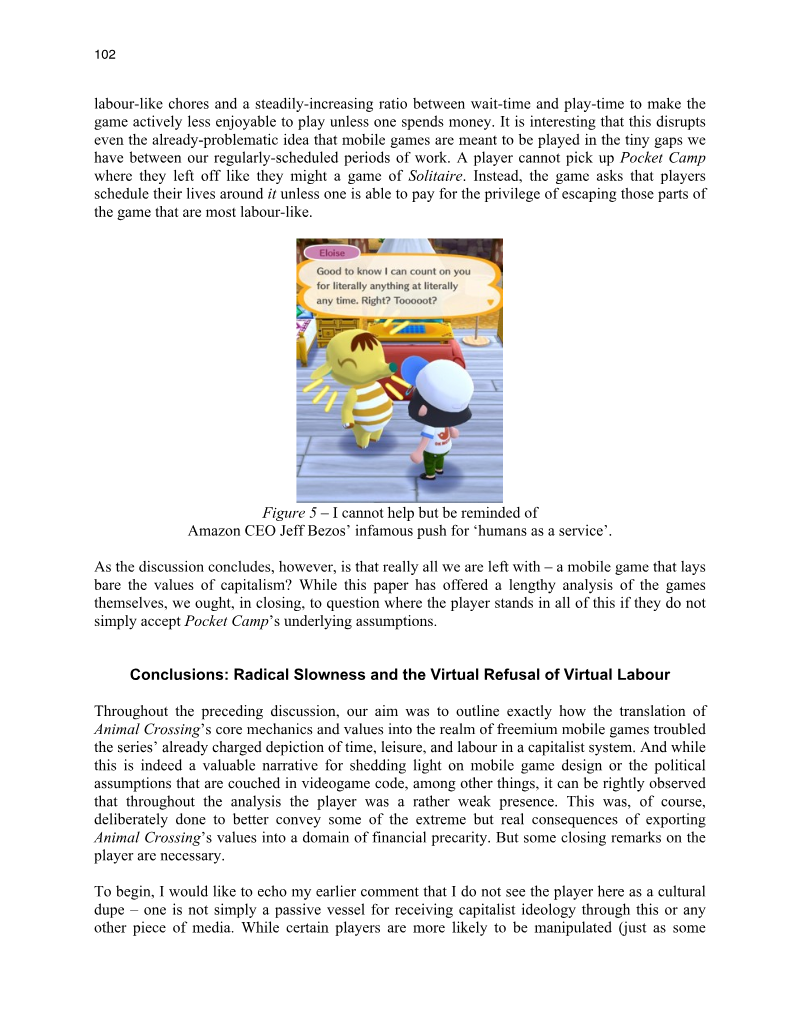
Animal Crossing: Pocket Camp represents a significant departure from the traditional, leisurely ethos of the Animal Crossing franchise, shifting toward a gamified model that commodifies time and labor. By integrating free-to-play mechanics such as Leaf Tickets, the game replaces the series' naturalist, self-contained experience with a system that mirrors the operational logics of modern capitalism. This transition weaponizes maintenance and real-time constraints, forcing players into rigid four-hour cycles that transform recreational engagement into a form of virtual labor, or playbour.
The core of this mobile experience relies on forced slowness, where artificial wait times and resource scarcity are strategically deployed to incentivize microtransactions. By creating a cycle of dependency, the game effectively monetizes the player's schedule, turning leisure into a commodity. This structure reflects broader critiques of the culture industry, where the simulation of friendship and social interaction is repurposed to facilitate constant engagement and financial expenditure. The game’s design prioritizes efficiency and speed, directly contrasting with the series' historical emphasis on open-ended, slow-paced exploration.
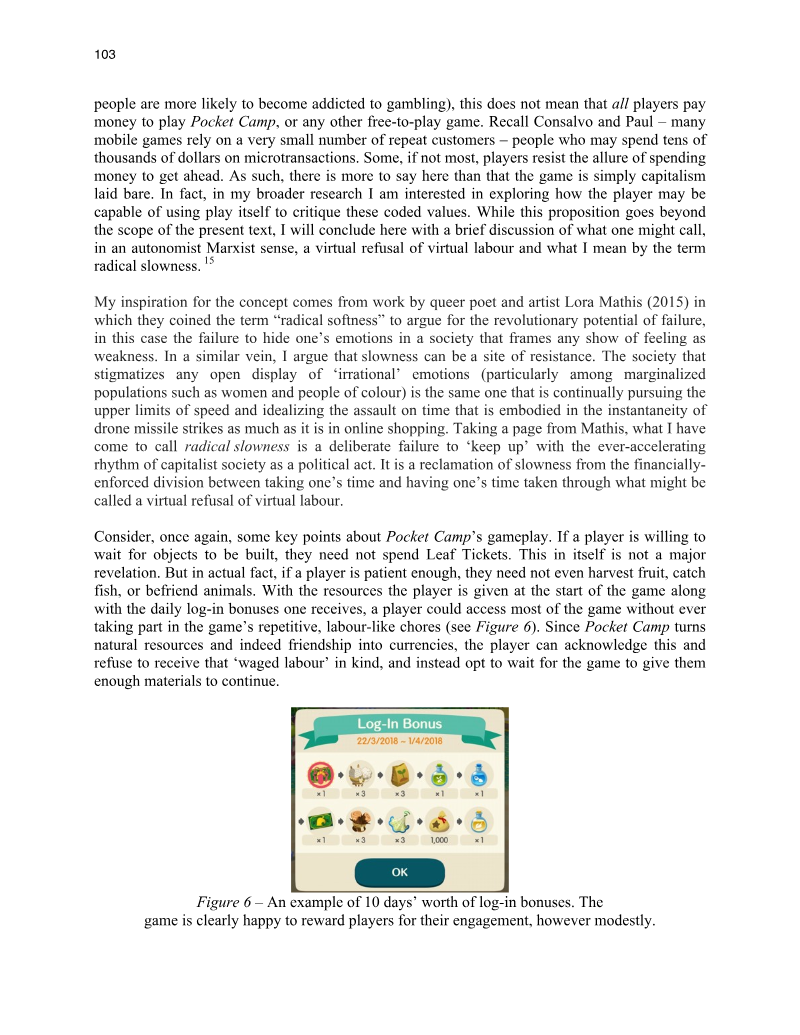
Despite these pressures, players possess the agency to engage in radical slowness as a subversive act of resistance. By deliberately refusing to purchase speed-ups or succumb to the game’s demand for constant, repetitive logins, users can reject the commodification of their time. This refusal serves as a critique of the game’s capitalist temporalities, reclaiming the experience from the logic of extraction. Ultimately, the game functions as a site of tension between the industry's drive for monetization and the player's potential for non-productive, autonomous play.
Each row is a game or company this document names, each column a document, oldest first. A mark means that document names it. Select a row to see those documents.
Loading... The Journal of the Canadian Game Studies Association · 2026
Loading... The Journal of the Canadian Game Studies Association · 2026
Loading... The Journal of the Canadian Game Studies Association · 2025
Loading... The Journal of the Canadian Game Studies Association · 2025
Loading... The Journal of the Canadian Game Studies Association · 2025
Loading... The Journal of the Canadian Game Studies Association · 2025
Loading... The Journal of the Canadian Game Studies Association · 2024
Loading... The Journal of the Canadian Game Studies Association · 2024
Loading... The Journal of the Canadian Game Studies Association · 2024
Loading... The Journal of the Canadian Game Studies Association · 2024
Loading... The Journal of the Canadian Game Studies Association · 2022
Loading... The Journal of the Canadian Game Studies Association · 2022
Loading... The Journal of the Canadian Game Studies Association · 2021
Spiel|Formen · 2021
Press Start · 2018