Game Studies reports and market data
Documents
Personalization in Game Design for Healthcare: A Literature Review on its Definitions and Effects
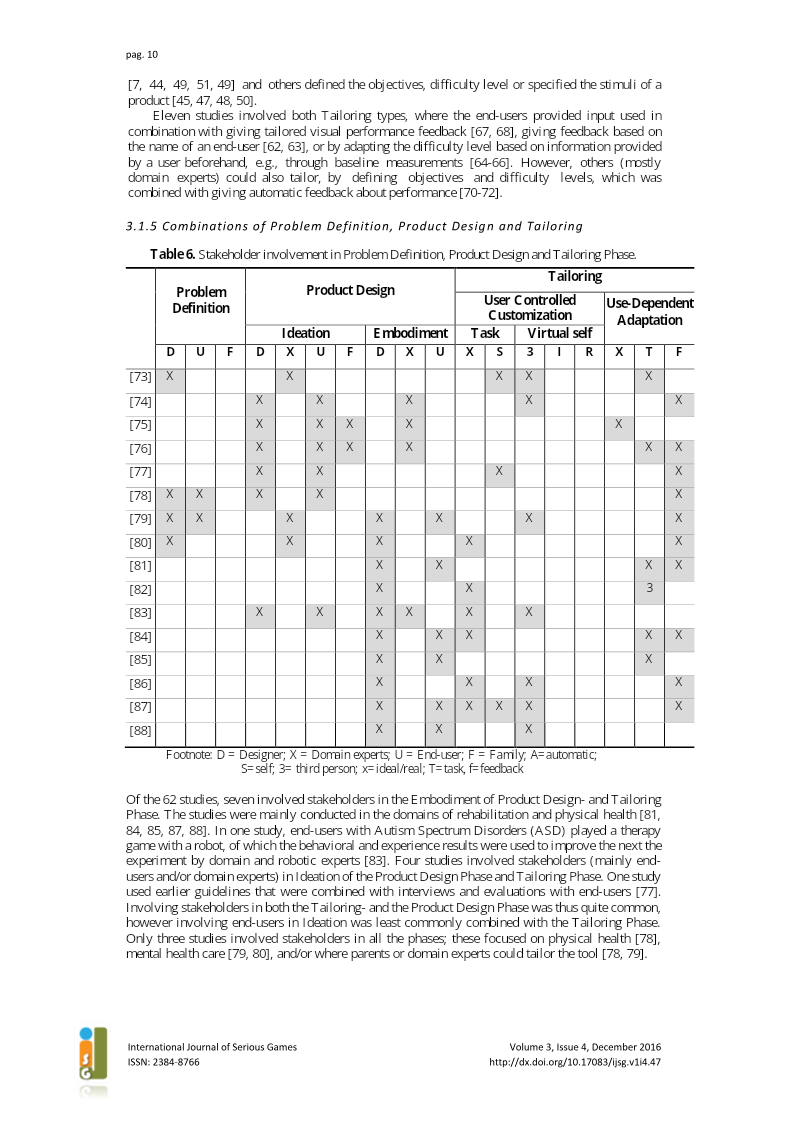
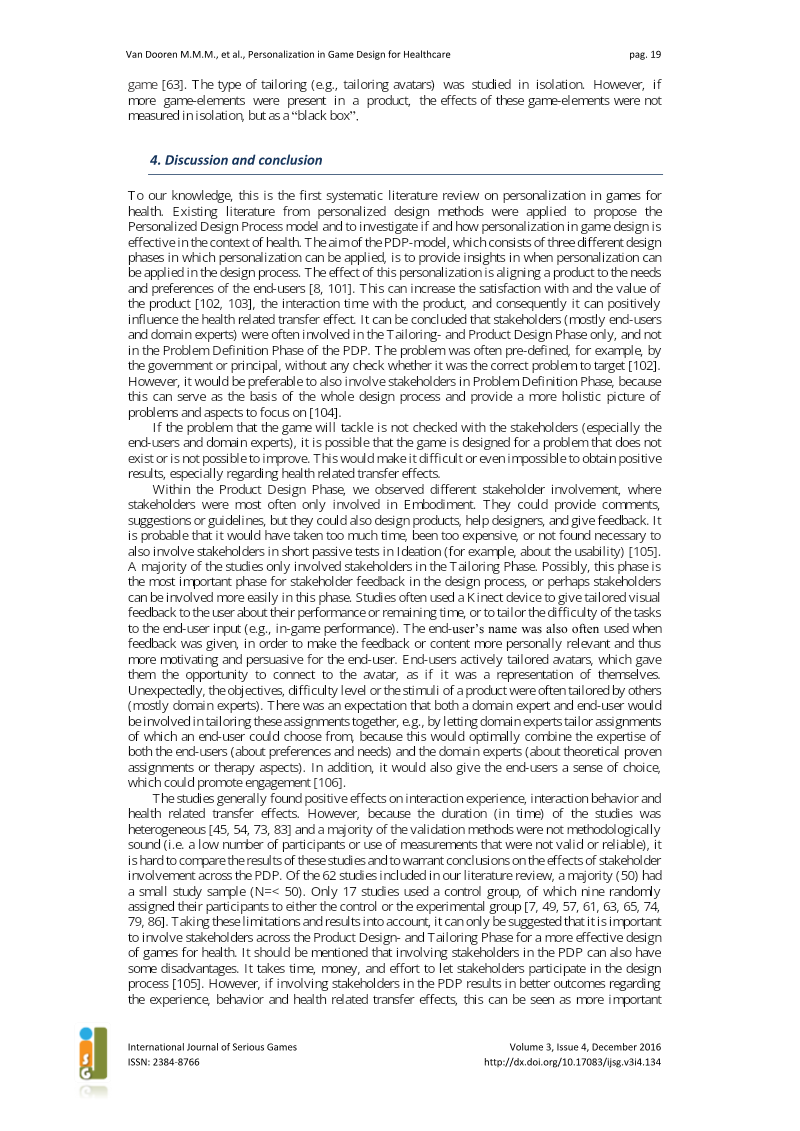
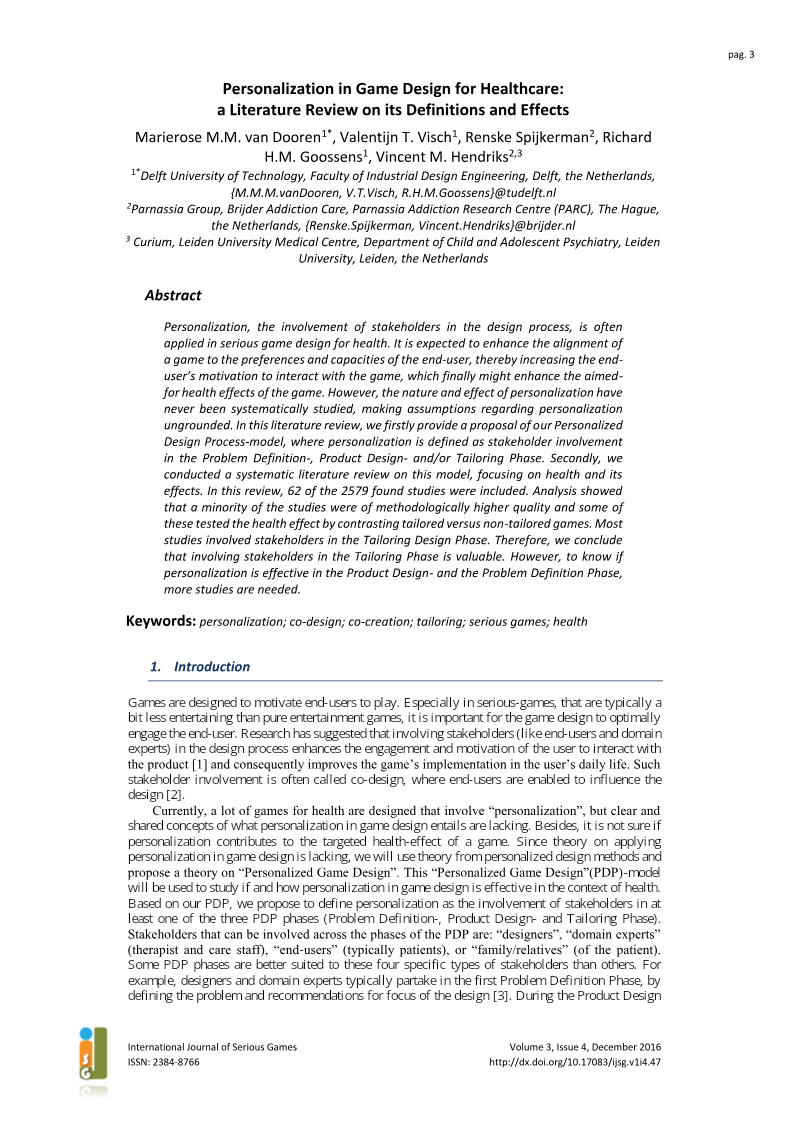
The Personalized Design Process model serves as a framework for integrating stakeholder involvement into the development of healthcare games, categorizing the lifecycle into three distinct phases: problem definition, product design, and tailoring.
- Personalization in serious games is defined as the active involvement of stakeholders—such as end-users, family, or domain experts—during the Problem Definition, Product Design, and/or Tailoring phases of development.
- A systematic review of 2,579 studies identified only 62 that met the criteria for stakeholder-involved personalization, indicating that the field lacks a standardized, evidence-based approach.
- Studies involving stakeholders in the Product Design phase frequently exhibit low methodological quality, though they report positive outcomes such as improved health knowledge, increased social interaction, and better feasibility.
Understanding the Role of Achievements in Game-Based Learning
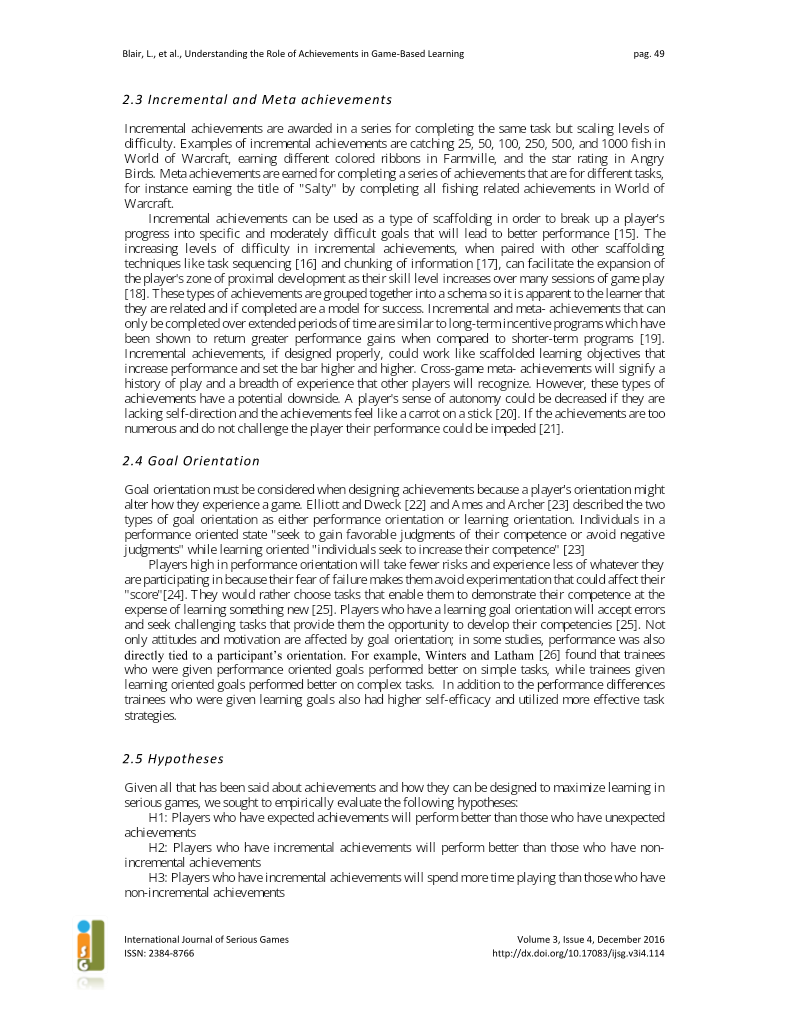
The integration of achievement systems within serious games serves as a critical mechanism for enhancing educational outcomes and player engagement.
- Achievements are most effective when used in combination; while individual achievement types showed limited impact, a strategy combining expected, incremental, and after-play notifications produced the most measurable changes in behavior.
- Expected achievements—where players are informed of goals and requirements upfront—significantly increased player effort and performance compared to control groups, particularly in early gameplay stages.
- Unexpected achievements, while intended to encourage experimentation, failed to outperform control groups and resulted in lower overall effort compared to expected achievements.
Digital Games and Learning Mathematics: Student, Teacher and Parent Perspectives: Malaysia
Digital game-based learning in Malaysian secondary mathematics education faces a significant implementation barrier rooted in a generational divide between students and their adult stakeholders.
- A significant generational divide exists in Malaysian secondary mathematics education, where students are highly motivated by digital game-based learning while teachers and parents remain skeptical of its academic efficacy.
- Adult stakeholders prioritize traditional, lecture-based, and interpersonal teaching methods, frequently dismissing digital gaming tools as distractions rather than legitimate educational assets.
- The implementation of digital learning is hindered by a mutual lack of technical proficiency among educators and parents, leading to a persistent reliance on conventional, passive instruction.
Player Perspectives: What It Means to Be a Gamer
Press Start Player Perspectives Player Perspectives: What It Means to Be a Department of Communication, University of Hyderabad, India The term gamer has been applied in various, often simplistic ways to anyone who plays video games as a preferred leisure activity.
Streaming Video Games: Copyright Infringement or Protected Speech?
Press Start Streaming Video Games and Copyright Streaming Video Games: Copyright Infringement or Protected Speech?

Non-Serious Serious Games
Press Start Non-Serious Serious Games Serious games have been shown to promote behavioural change and impart skills to players, and non-serious games have proven to have numerous benefits.
Scaffolding Role-Playing: An Analysis of Interactions with Non Role-players of All Ages
This paper examines a series of scaffolded live action role-playing (larp) activities, specifically a form of educational larp called edu-larp, used within a STEAM summer program for indigenous youth in Seattle.
- The study is a design-based research project on scaffolded edu-larp (educational live action role-play) within a STEAM summer program for indigenous youth in Seattle, aiming to deepen respectful, reciprocal relationships with lands, waters, and communities by taking up the perspectives of plants, animals, and other more-than-human actors.
- Its core argument is that dominant Western divisions between nature and culture weaken both environmental and educational engagement, and that role-play can help dissolve those boundaries.
- Analysis of video from a five-activity larp series (finale analyzed in depth) with 31 youth aged 4 to 16, plus staff and family members from the local urban native community, found that children took up multiple perspectives on local plant and animal systems and role-played their relationships with nuance.
Nostalgia Videogames as Playable Game Criticism
Robin Sloan's 2016 paper argues that contemporary nostalgia videogames can be understood as "playable game criticism," or "games-on-games," in which designers use the mechanics, aesthetics, and conventions of earlier titles to comment on those works and on players' memories of them.
- Robin Sloan's 2016 paper argues that contemporary nostalgia videogames can be read as "playable game criticism" ("games-on-games"), using the mechanics, aesthetics, and conventions of earlier titles to comment on those works and on players' memories of them.
- The paper's central thesis is that nostalgia games should not be dismissed as mere sentimentality, since they can function as critical explorations of gaming history.
- Sloan draws on literary and film theories of pastiche and parody, Garda's continuum between restorative and reflective nostalgia, and Mäyrä's core-and-shell model to propose criteria for distinguishing these modes.
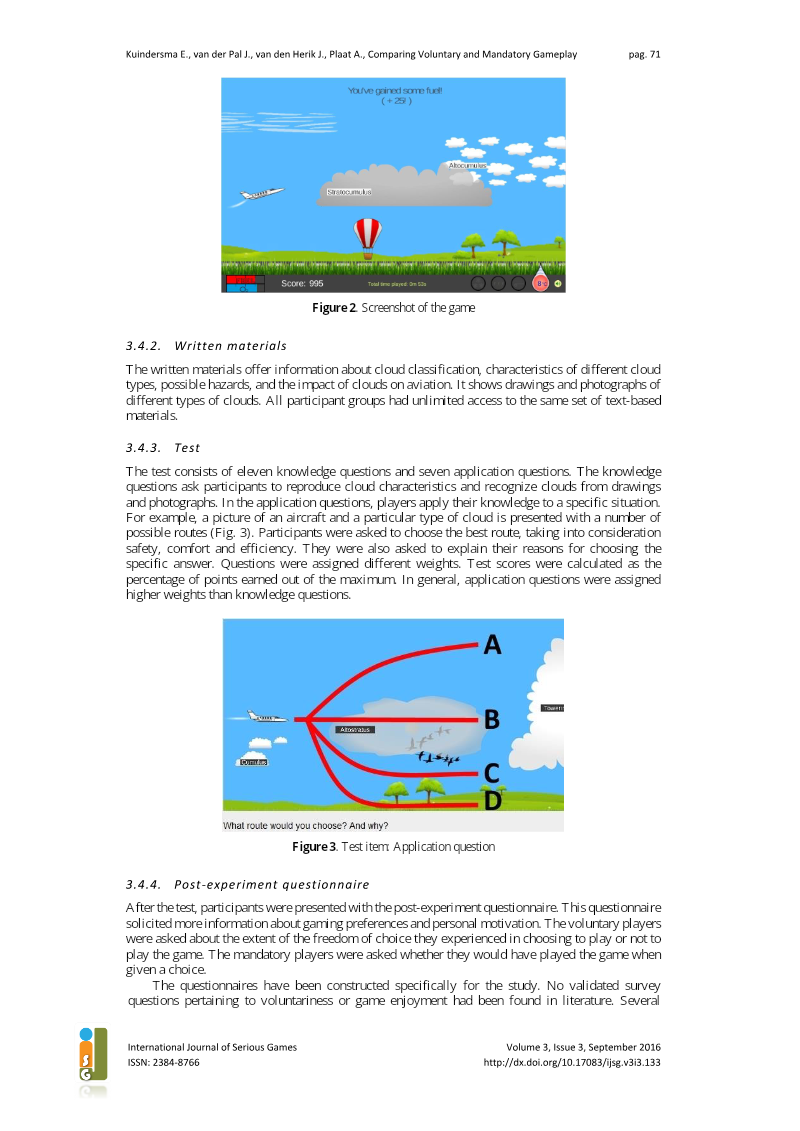
Comparing Voluntary and Mandatory Gameplay
The integration of serious games into professional and academic curricula often rests on the assumption that voluntary participation is a prerequisite for engagement and learning success.
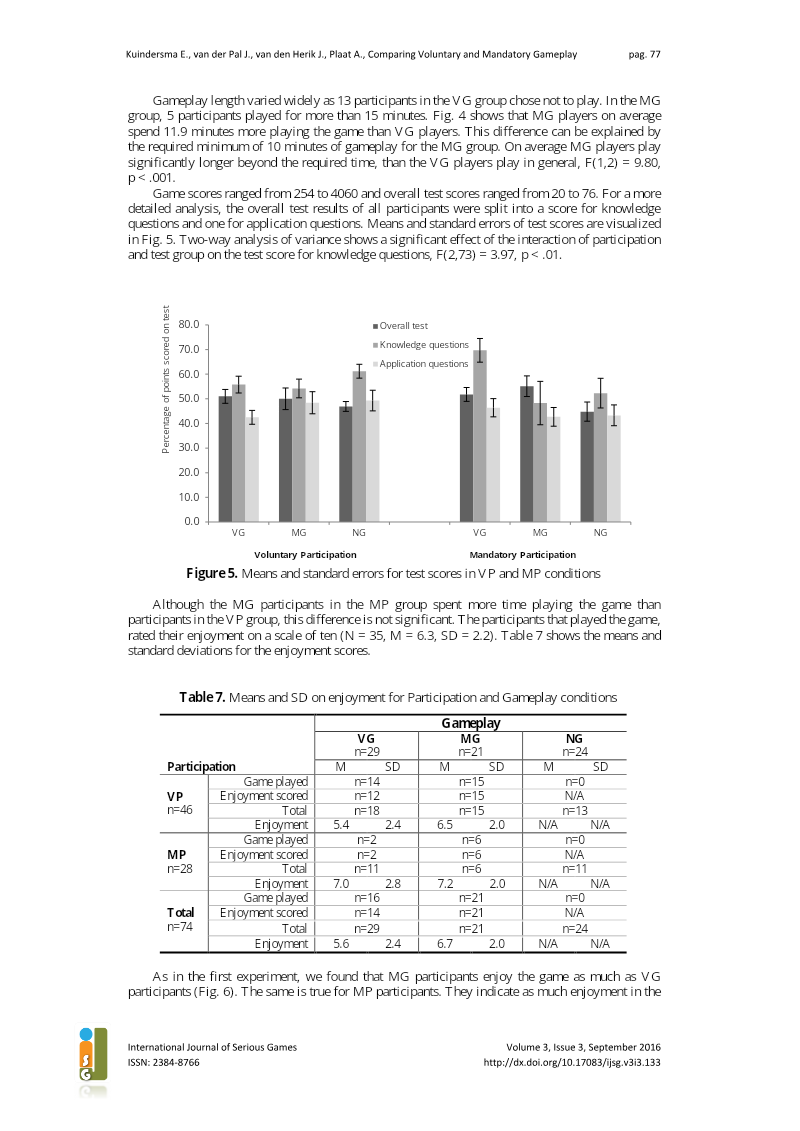
- Mandatory gameplay requirements do not negatively impact user enjoyment or instructional effectiveness compared to voluntary participation models.
- Requiring participation in serious games consistently increases the total duration of user interaction with the system.
- While voluntary participants may report higher initial motivation, this does not result in statistically significant differences in final test performance.
Exploring the Prosociality Domains of Trust and Cooperation, through Single and Cooperative Digital Gameplay in Path of Trust
Path of Trust functions as an innovative educational intervention designed to cultivate prosocial skills, specifically trust and cooperation, among children aged 7 to 10.
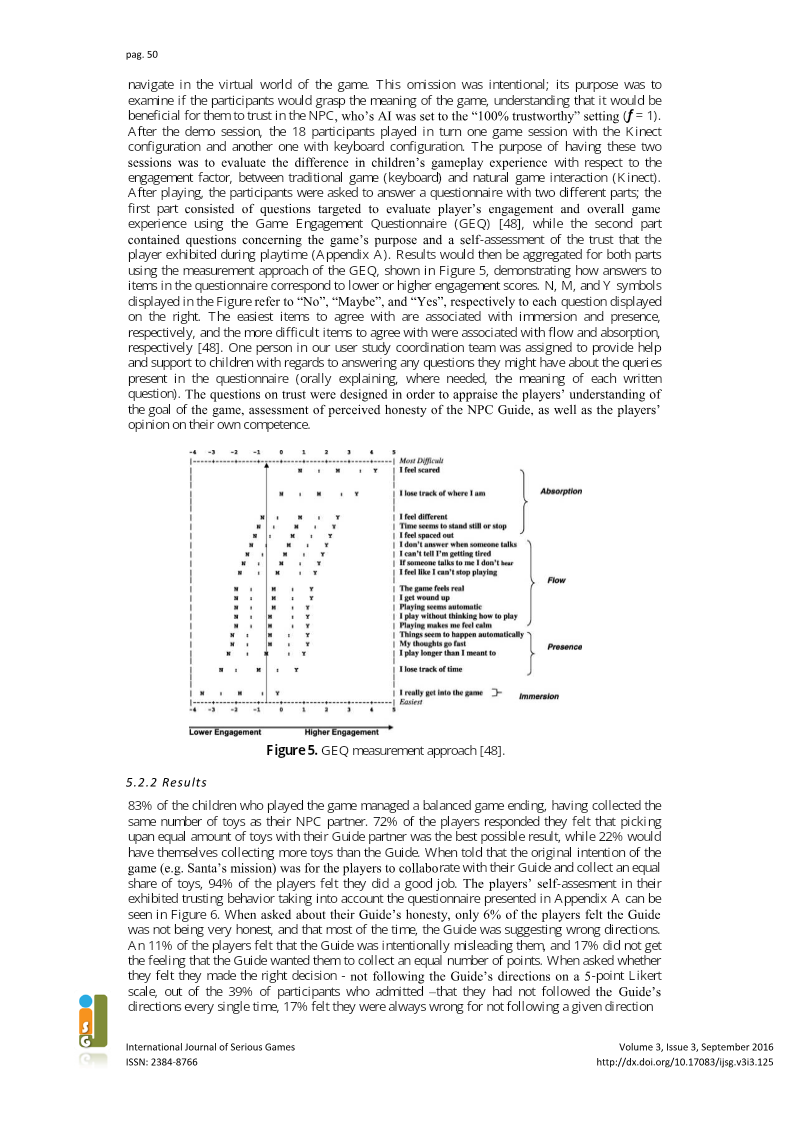
- Eighty-eight percent of children aged 7 to 10 demonstrated intended trusting behaviors after playing Path of Trust, confirming the game's effectiveness in teaching cooperation.
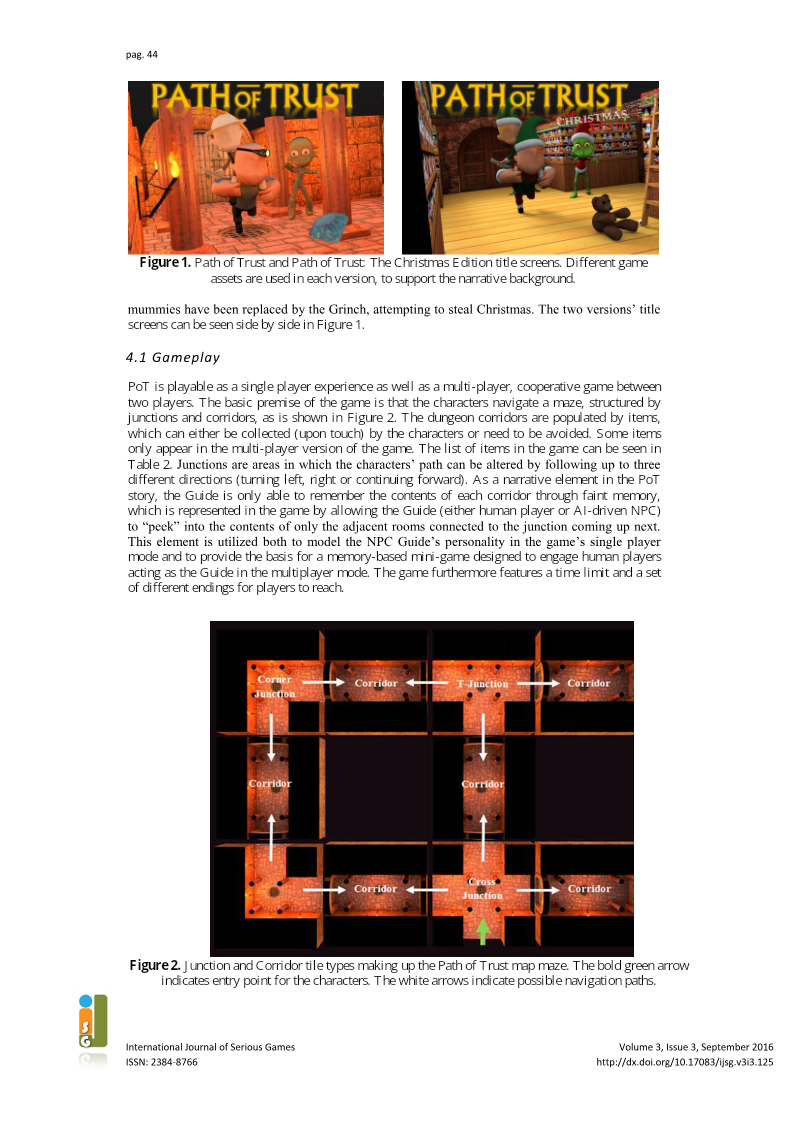
- The game utilizes asymmetric roles, Fog of War mechanics, and mandatory role-switching to force a balance between individual incentives and collective success.
- Participants consistently viewed game outcomes as shared achievements rather than individual wins, successfully shifting the focus from competitive gain to mutual reliability.
Default Characters and the Embodied Nature of Play: Race, Gender, and Gamer Identity
Press Start Default Characters Default Characters and the Embodied Race, Gender, and Gamer Identity Oklahoma State University, USA This paper examines several recent controversies in the gaming and popular culture fandoms that revolved around issues of sexuality, race, and gender.

Female Fighters: Perceptions of Femininity in the Super Smash Bros. Community
Press Start Female Fighters Female Fighters: Perceptions of Femininity in the Super Smash Bros.