1 free read left. Create a free account for unlimited reading + AI research.
Create free accountWhitepaper International Journal of Serious Games
1 free read left. Create a free account for unlimited reading + AI research.
Create free accountWhitepaperInternational Journal of Serious Games
This participation occurs during the Problem Definition, Product Design, and/or Tailoring phases of game development.
Key Definition. Personalization in serious games is defined by the active involvement of stakeholders during development phases.
The Personalized Design Process model serves as a framework for integrating stakeholder involvement into the development of healthcare games, categorizing the lifecycle into three distinct phases: problem definition, product design, and tailoring. By analyzing 62 studies across diverse therapeutic areas—including stroke rehabilitation, cognitive training, mental health, and chronic disease management—the research evaluates how involving end-users and domain experts influences user motivation, interaction behavior, and clinical health outcomes.
While current literature suggests that stakeholder participation, particularly during the tailoring phase, correlates with improved engagement and positive health-related transfer effects, the evidence remains largely theoretical. The field currently lacks the empirical rigor necessary to definitively validate the efficacy of these design processes. Methodological shortcomings, such as small sample sizes, a frequent absence of control groups, and the reliance on non-validated measurement tools, prevent the establishment of a clear causal link between personalization strategies and improved patient outcomes.
Future research must transition toward more robust experimental designs to overcome these limitations. Although traditional double-blind, placebo-controlled trials are often impractical within the complex, integrated nature of game design, there is a critical need for larger, more controlled studies. Establishing a clearer understanding of how stakeholder engagement during the problem definition and product design phases impacts the final therapeutic value of healthcare games is essential. Ultimately, the industry requires standardized, high-quality evaluation strategies to move beyond optimistic projections and provide concrete evidence that personalized design meaningfully enhances the effectiveness of digital health interventions.
International Journal of Serious Games · 2023
International Journal of Serious Games · 2022

International Journal of Serious Games · 2020
International Journal of Serious Games · 2020

International Journal of Serious Games · 2020
International Journal of Serious Games · 2020
International Journal of Serious Games · 2020
International Journal of Serious Games · 2020
International Journal of Serious Games · 2020
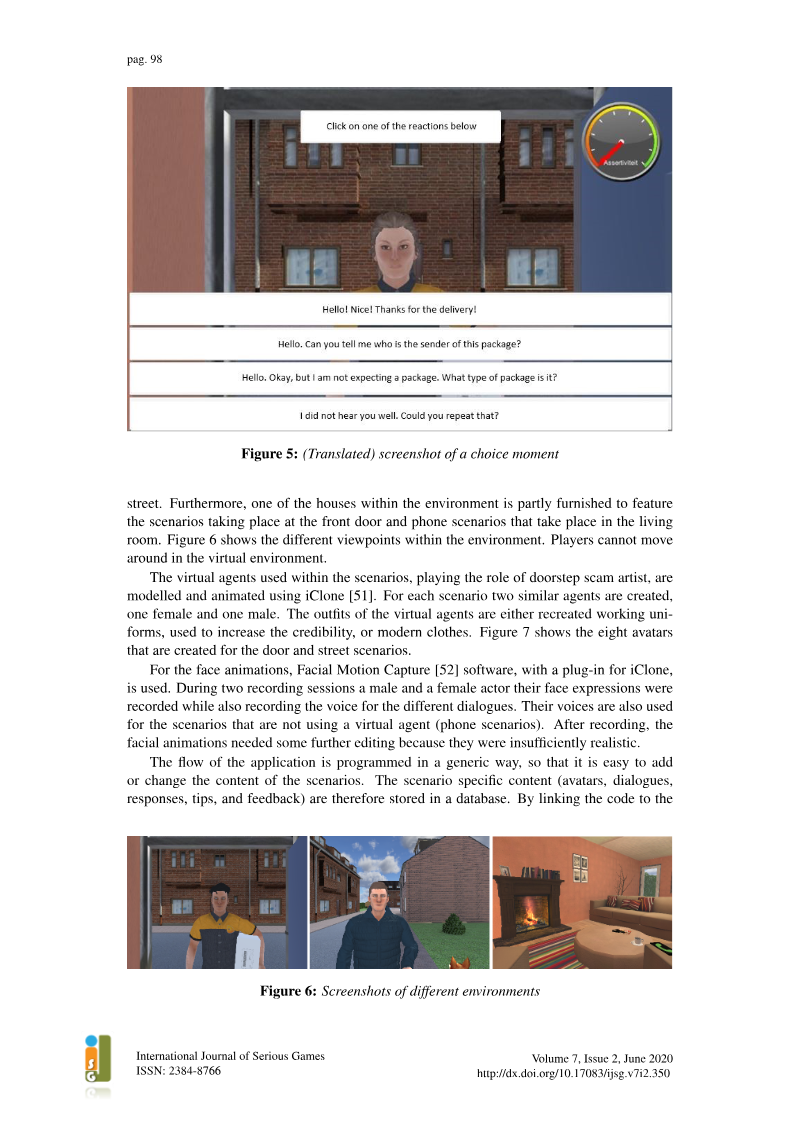
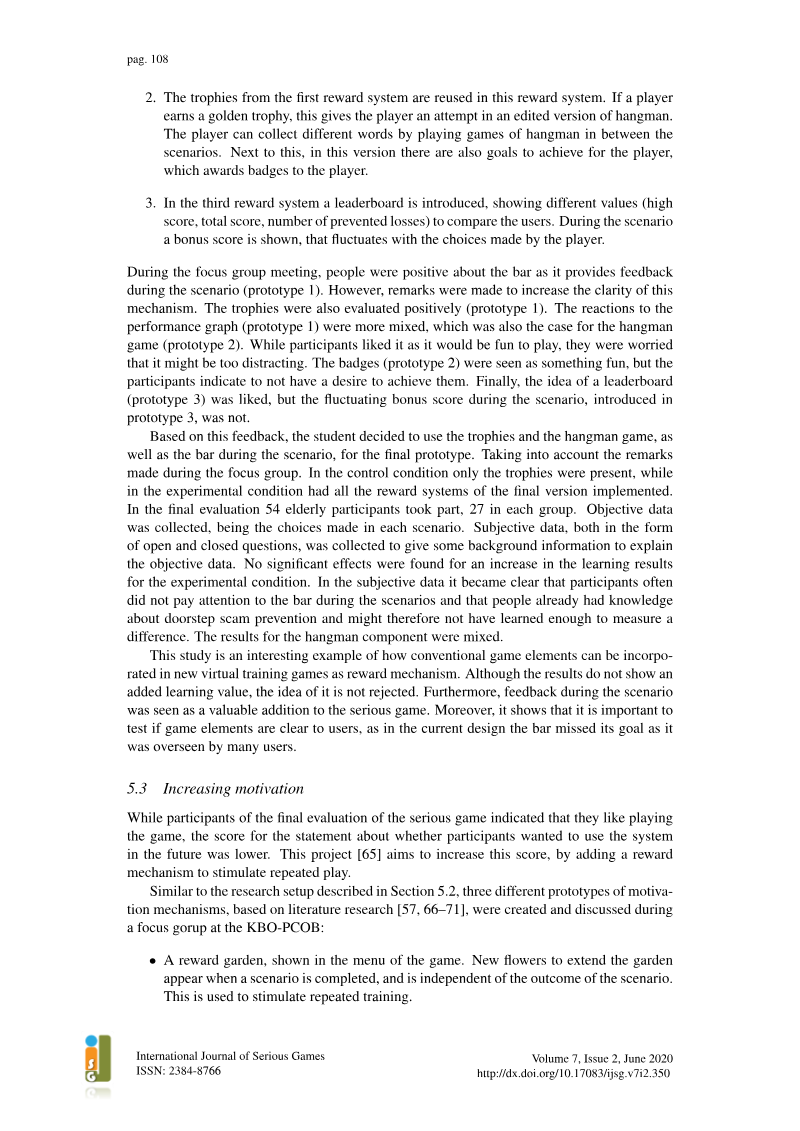
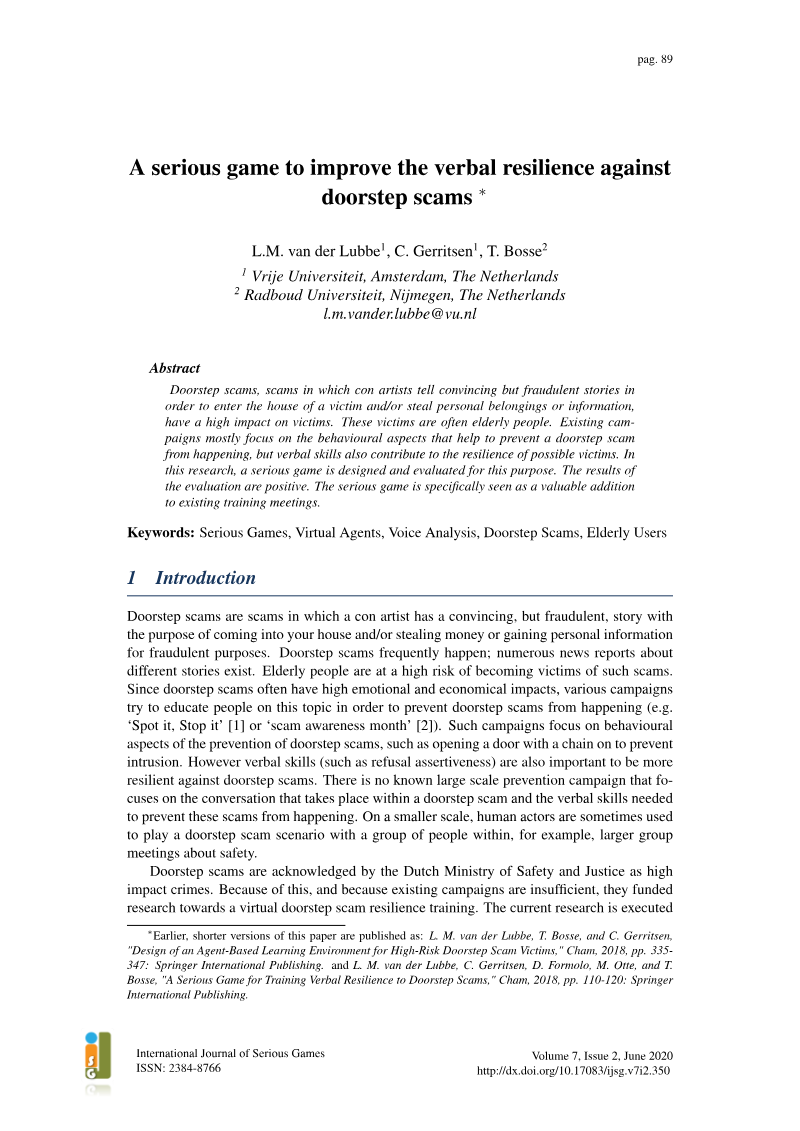
International Journal of Serious Games · 2020
International Journal of Serious Games · 2020
Air Force Institute of Technology · 2020



European Conference on Games Based Learning (ECGBL) · 2026
European Conference on Games Based Learning (ECGBL) · 2025



Homo Ludens · 2024