Game Studies reports and market data
Documents

Understanding Distributions of Chess Performances
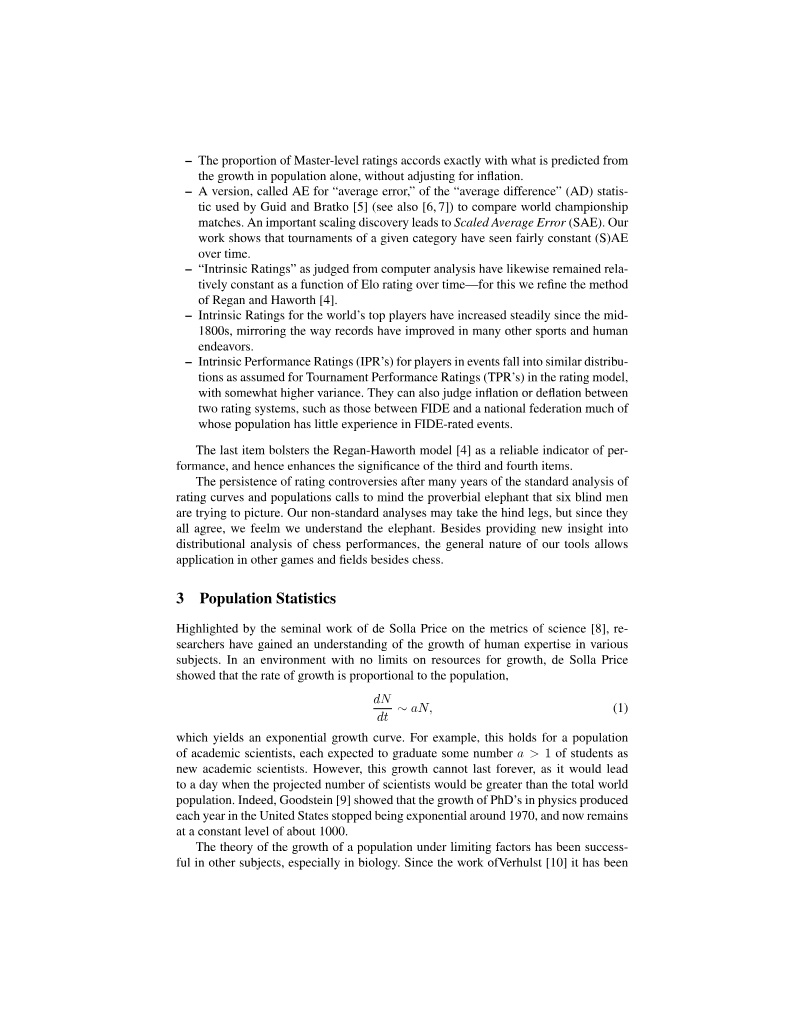
The FIDE Elo rating system maintains long-term stability and accurately reflects intrinsic skill levels across the professional chess landscape.
- The FIDE Elo rating system has maintained consistent performance metrics since 1971, showing no evidence of systemic rating inflation.
- Analysis of over 60,000 games confirms that the standard of play has remained stable over the past several decades.
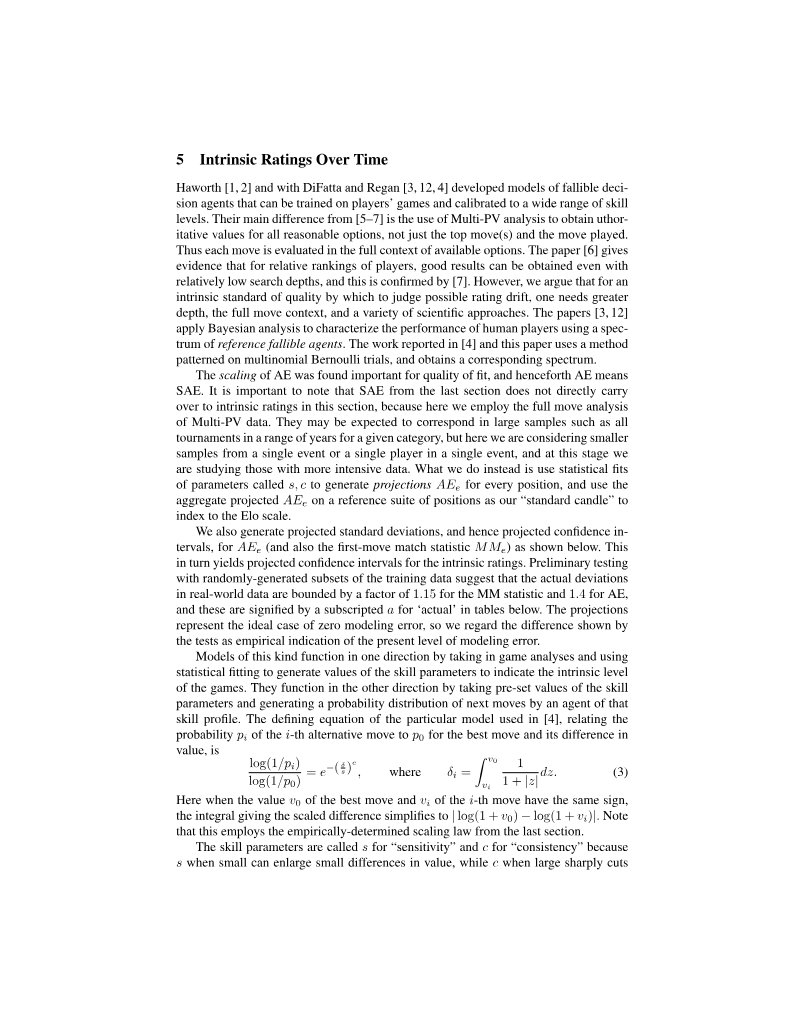
- Global player population growth follows a predictable logistic model, indicating steady and sustainable expansion.
Digital Games as Experiment Stimulus
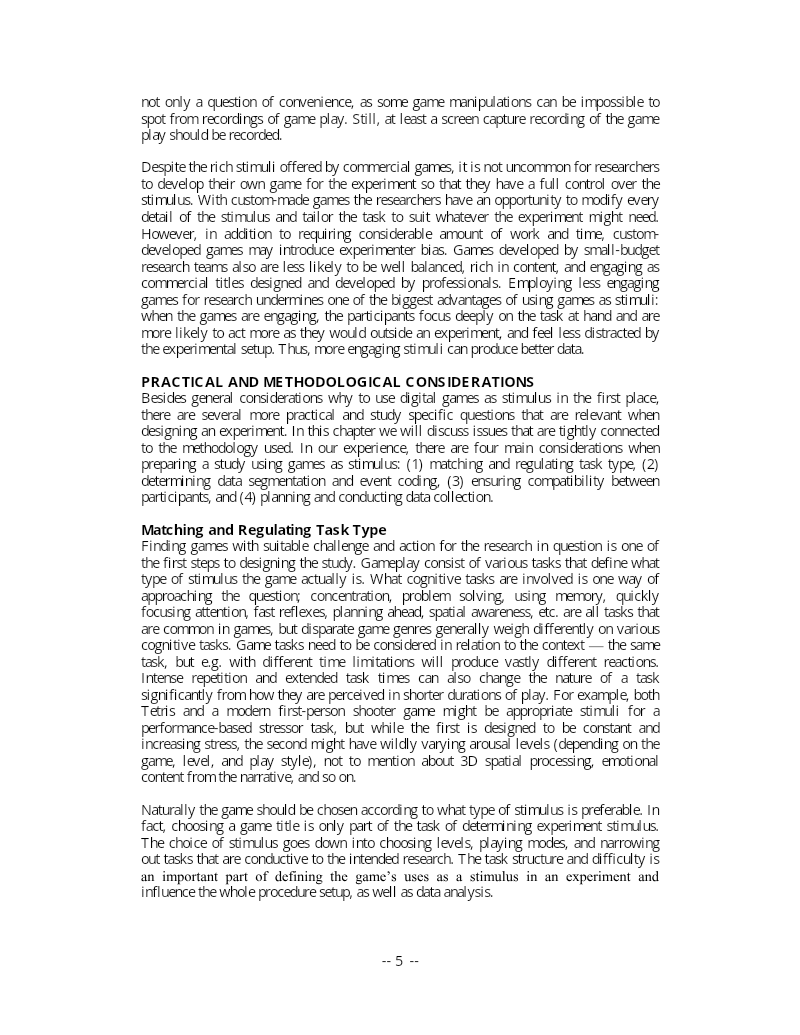
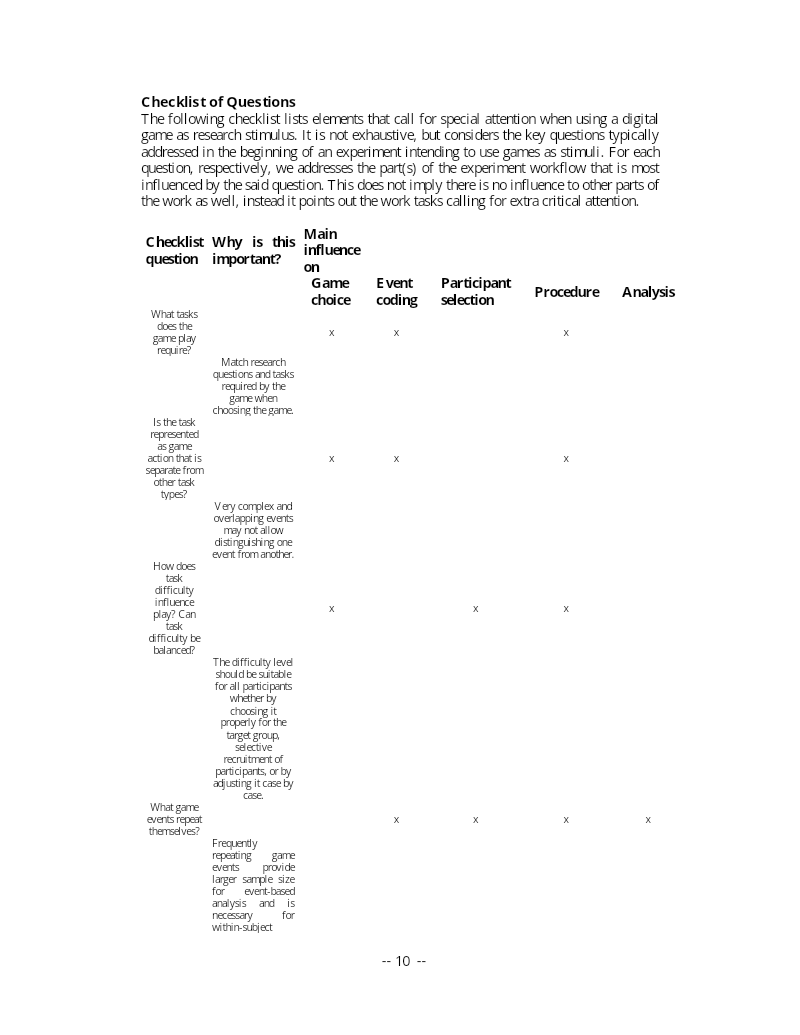
Digital games offer researchers a rich but demanding experimental stimulus, and this work argues that their careful use can advance experimental psychology and human-computer interaction.
- Digital games are a valuable experimental stimulus because they are familiar and engaging to most participants, can safely evoke emotions, and can simulate ethically sensitive scenarios that are hard to recreate in a lab.
- Survey evidence cited in the report shows broad population reach, with 72 percent of U.S. households and 54 percent of Finnish respondents being active gamers.
- Interactive games vary from player to player due to differences in skill, AI behavior, randomness, and prior familiarity, making stimulus control much harder than with conventional experimental materials.


Well Played: Volume 1, Number 1
Well Played establishes a scholarly framework for analyzing video games as complex cultural artifacts, prioritizing the intersection of mechanical design, player experience, and identity formation.
- Effective game design relies on balancing structured constraints with emergent behavior to guide player interaction rather than merely providing content.
- Players develop 'projective identities' by reconciling their real-world selves with virtual roles through a mix of solitary challenges and collaborative social environments.
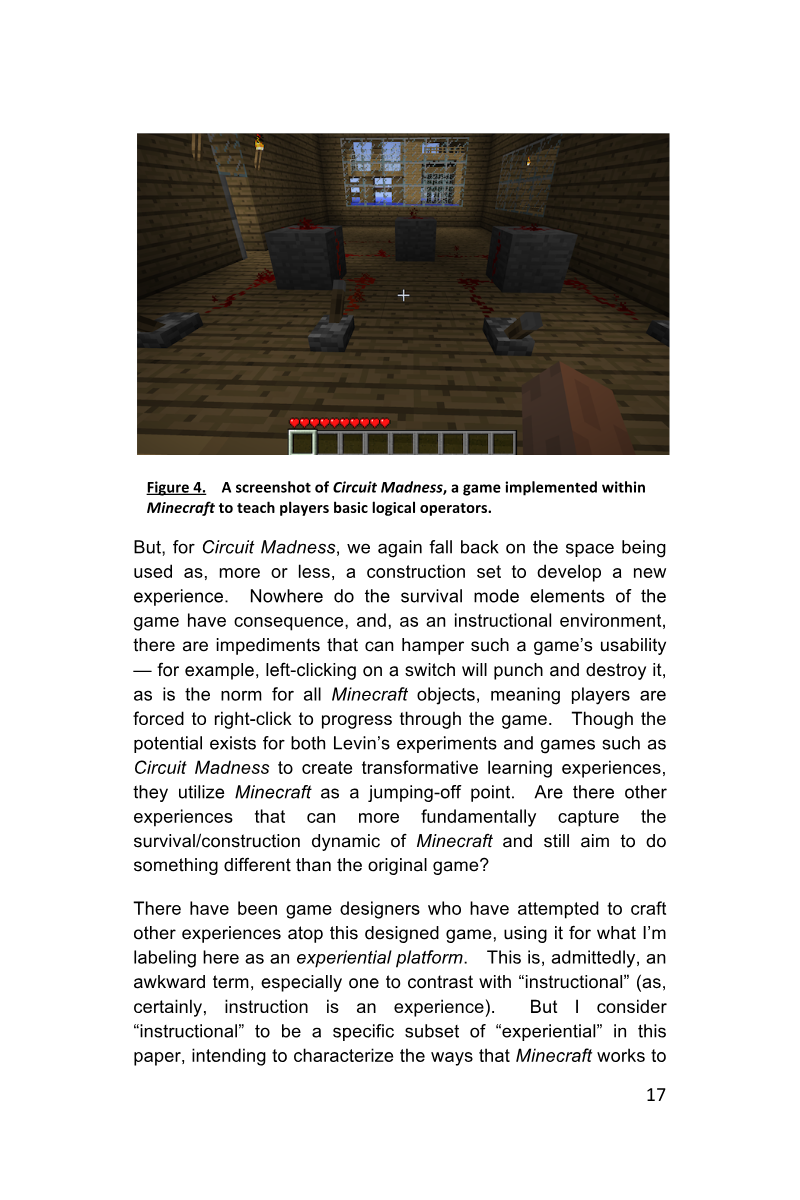
- Design choices directly dictate player outcomes, such as Minecraft’s survival-creative tension fostering experimentation versus Left 4 Dead 2’s linear architecture mandating team synchronization.

First-Person Shooters: Immersion and Attention
First-person shooter immersion has been studied as a multifaceted and still-contested phenomenon, and the research discussed here frames it as a convergence of perceptual, attentional, and design factors.
- Immersion in first-person shooters lacks a single accepted definition, but scholars broadly agree it involves incorporation into the gameworld, emotional involvement, and perceived plausibility rather than strict realism.
- The research frames immersion as a sustained state of selective attention, in which players filter out their physical surroundings and focus on the gameworld, sustained by self-motivated engagement and a sense of progression rather than task difficulty alone.
- Routinized, automated control actions free cognitive resources for gameplay, and Brown and Cairns' three-level model (engagement, engrossment, total immersion) describes how attention shifts progressively toward the virtual environment.


Well Played 3.0: Video Games, Value and Meaning
Well Played 3.0 serves as a comprehensive collection of analytical essays dedicated to the "close reading" of video games, aiming to establish a rigorous framework for game literacy.
Monstrous Textuality: Game Fiction between Postmodernism and Structuralism
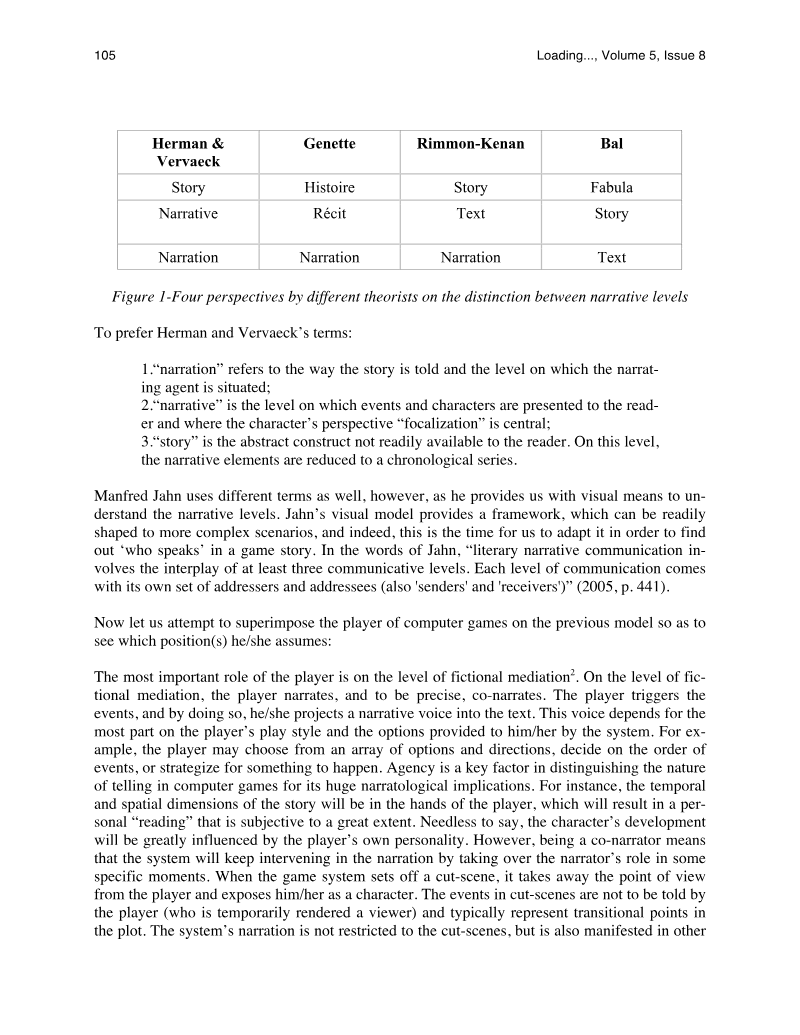
This analysis challenges the common characterization of computer game narratives as postmodern, "monstrous" texts that defy structuralist classification.
- Game narratives are not inherently chaotic or postmodern but are governed by rigid, rule-based structural prearrangements.
- The perceived 'monstrosity' or nonlinearity of digital fiction is an analytical illusion caused by applying inadequate theoretical frameworks rather than an actual lack of structure.
- Using the 2007 title BioShock as a case study, research confirms that player agency operates strictly within the parameters of the game’s programmed code and narrative architecture.
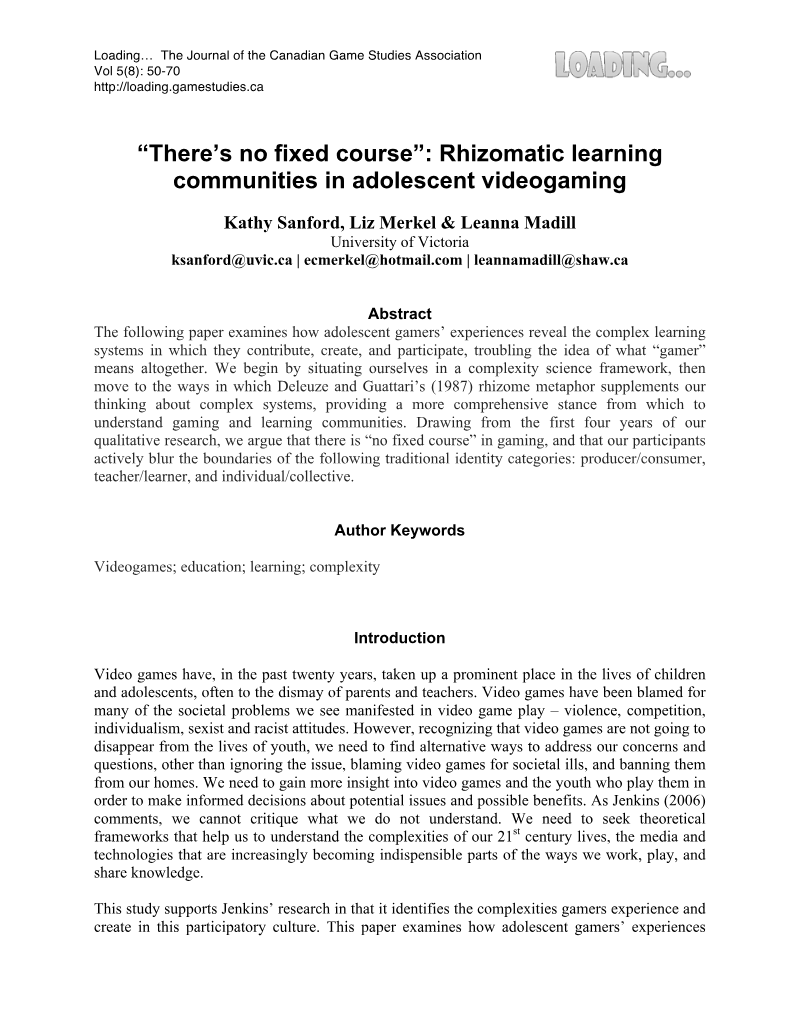
“There’s no fixed course”: Rhizomatic learning communities in adolescent videogaming
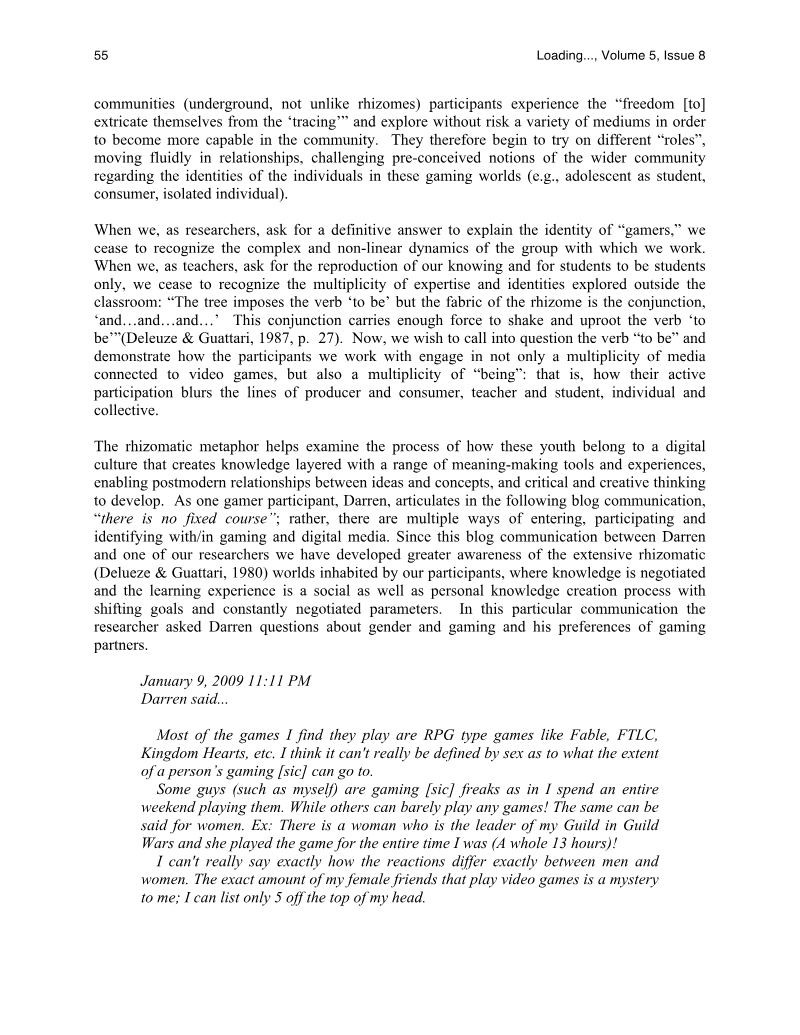
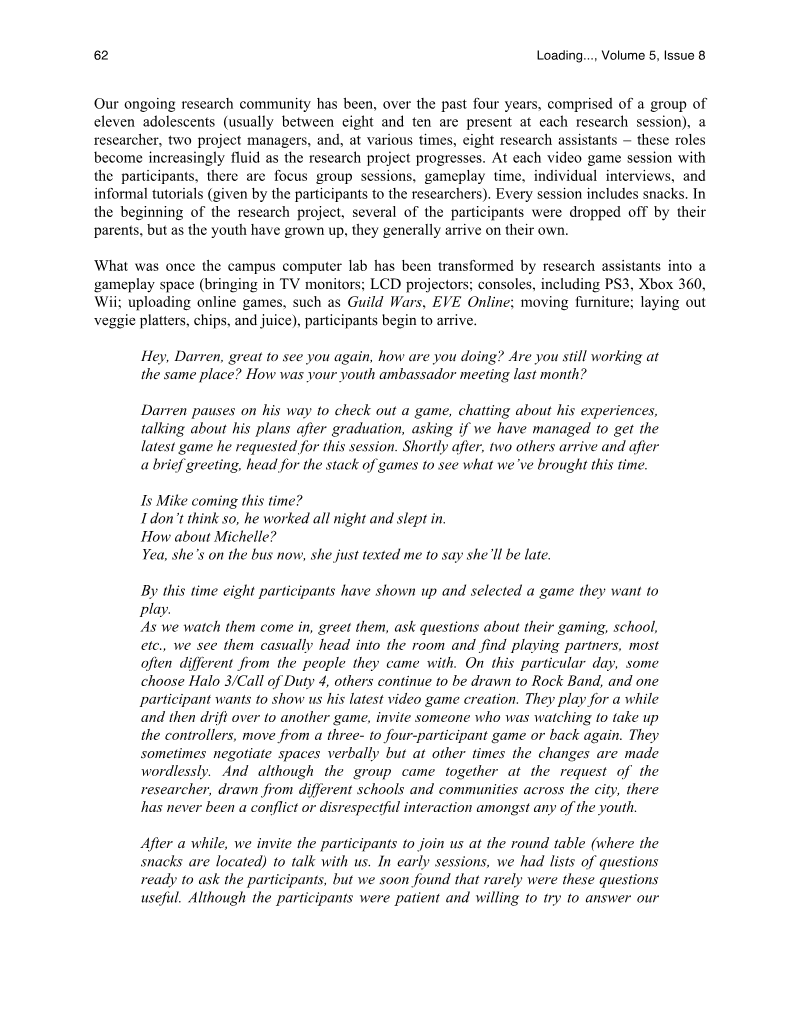
Adolescent gaming communities operate as decentralized, rhizomatic networks that fundamentally challenge traditional educational paradigms.
- Adolescent gaming communities function as decentralized, rhizomatic networks that prioritize organic, non-linear knowledge acquisition over static, outcome-based curricula.
- The traditional distinction between producers and consumers, as well as teachers and learners, is dissolved within these digital spaces, fostering fluid and hybrid roles.
- Participants actively develop creative and critical identities through collaborative activities such as modding, machinima, and collective content creation.
Video Game Presence as a Function of Genre
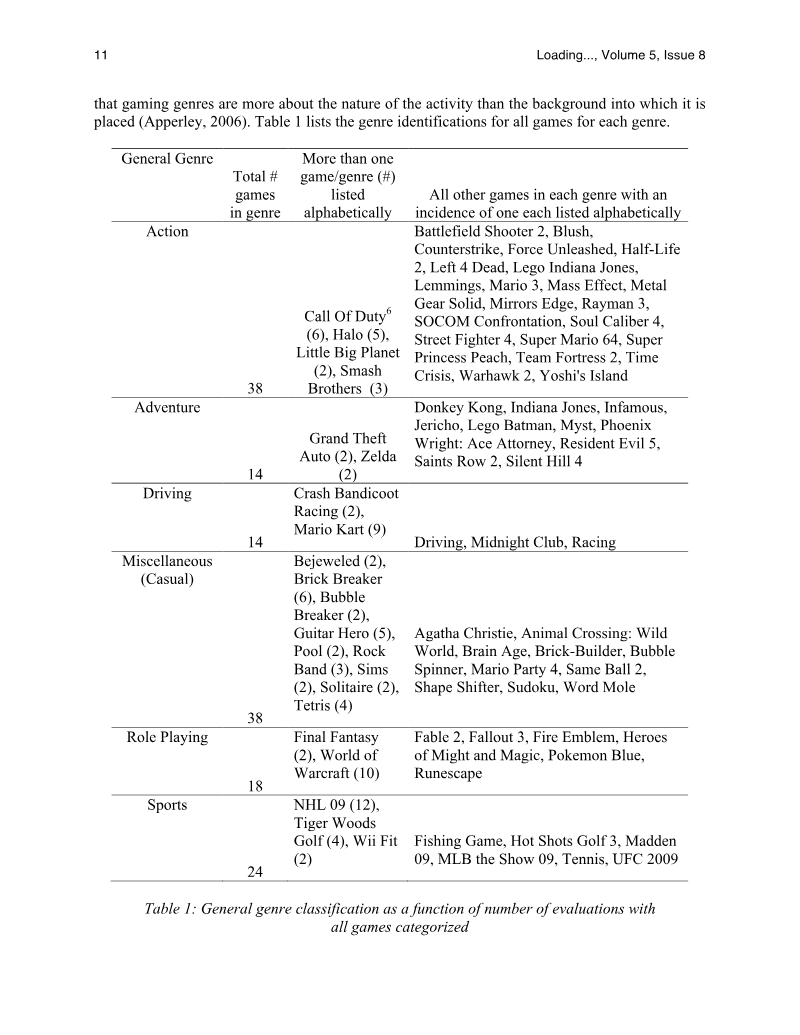
The experience of presence—defined as the psychological sensation of being immersed within a mediated environment—is fundamentally shaped by the structural characteristics of specific video game genres.
- Hardcore genres—specifically action, adventure, and role-playing games—consistently generate higher levels of psychological presence and immersion than casual or cartoon-style titles.
- A factor analysis of 155 controlled participants identified nine distinct components of presence that account for over 70% of the variance in player experience.
- The disparity in engagement between hardcore and casual titles is a measurable psychological response to specific design elements rather than an anecdotal observation.
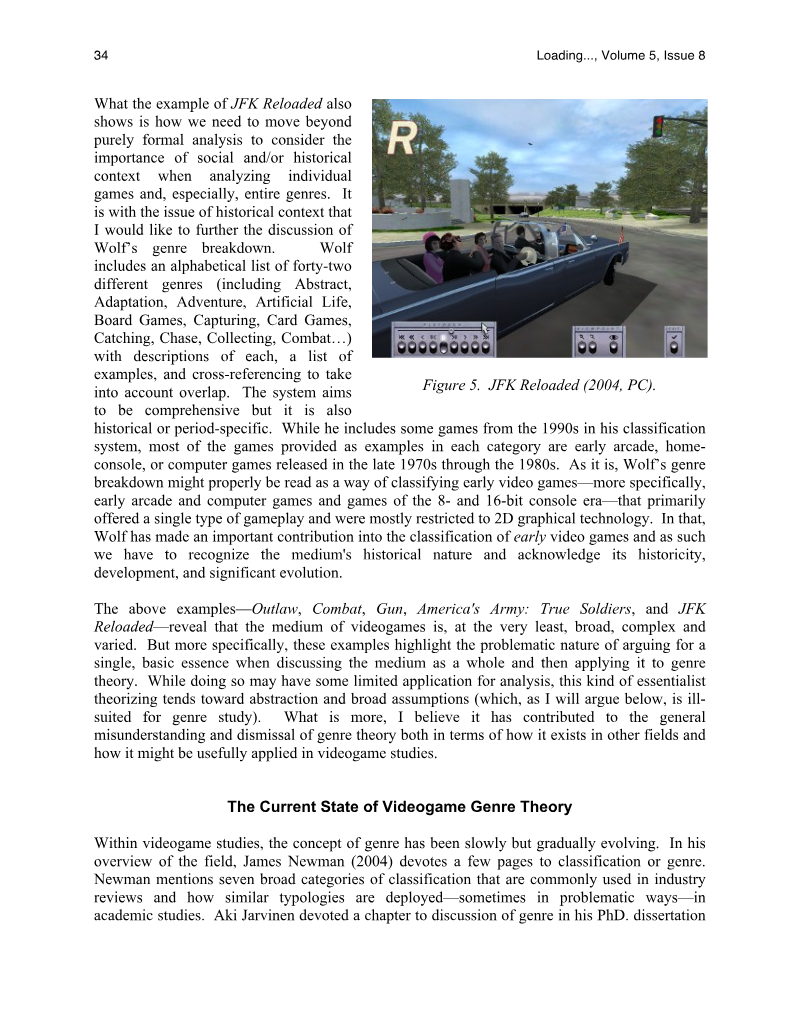
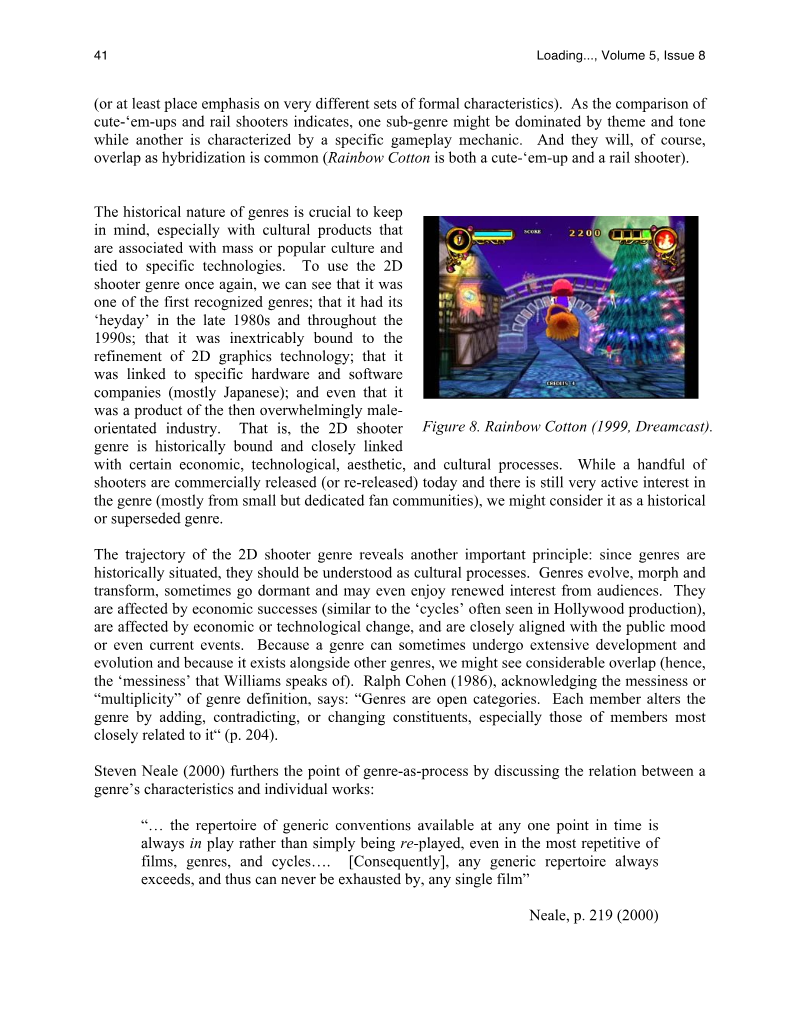
What Defines Video Game Genre? Thinking about Genre Study after the Great Divide
Video game genre study requires a fundamental shift away from rigid, formalist taxonomies toward a holistic, multi-dimensional framework.
- Video game genre should be analyzed as a dynamic social construction shaped by hardware, marketing, and player expectations rather than as a rigid, formalist taxonomy.
- Traditional genre study is limited by the historical divide between narrative and ludology, which fails to account for the medium's inherent complexity.
- Genre classification is an intertextual process that emerges from the intersection of institutional production and diverse audience reception.
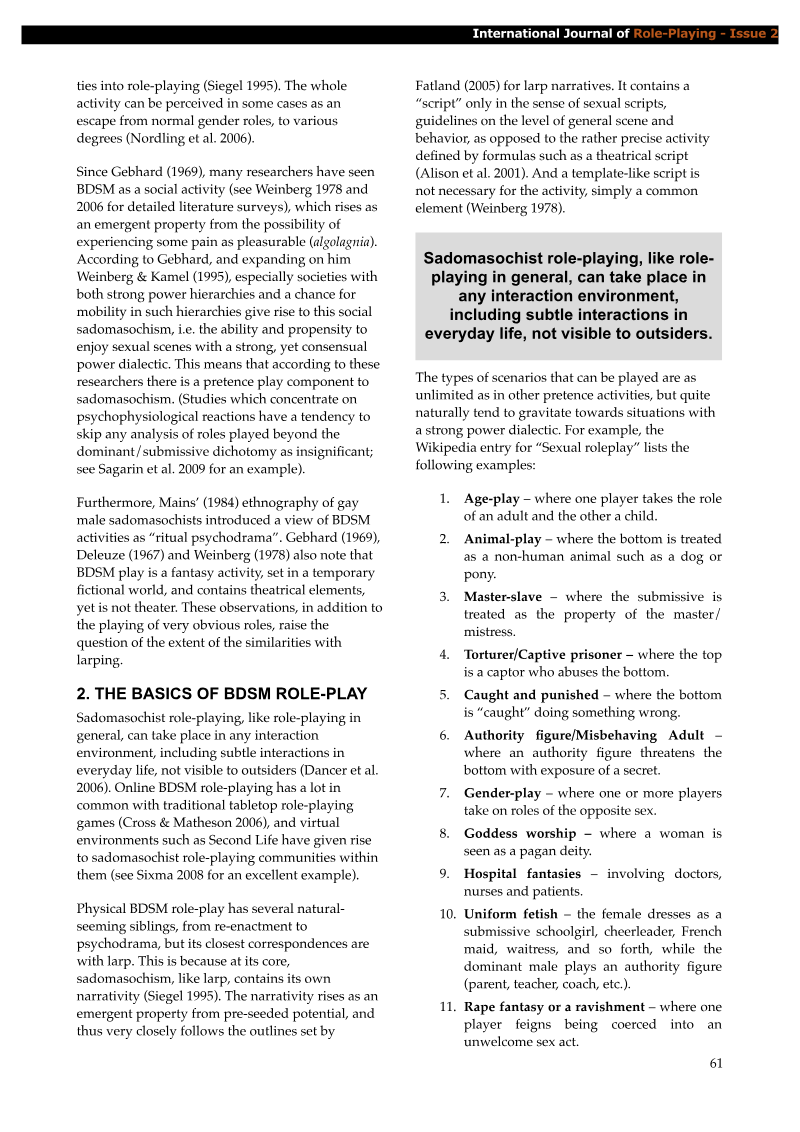
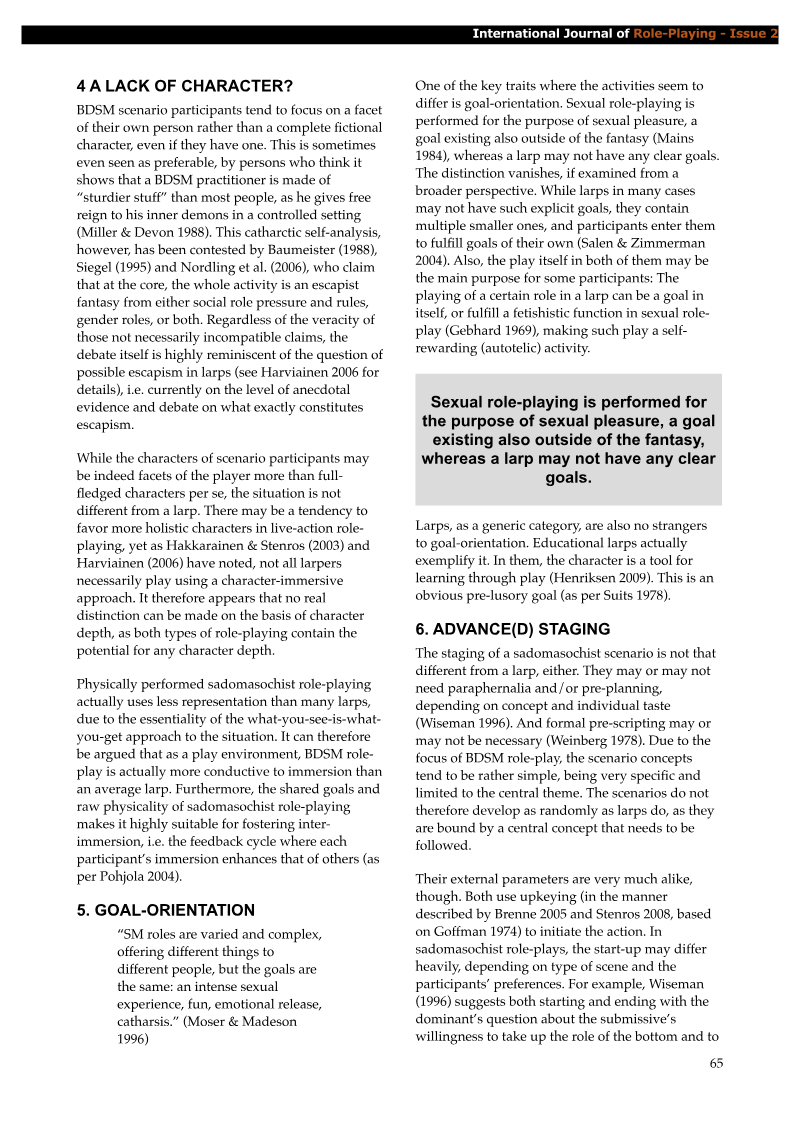
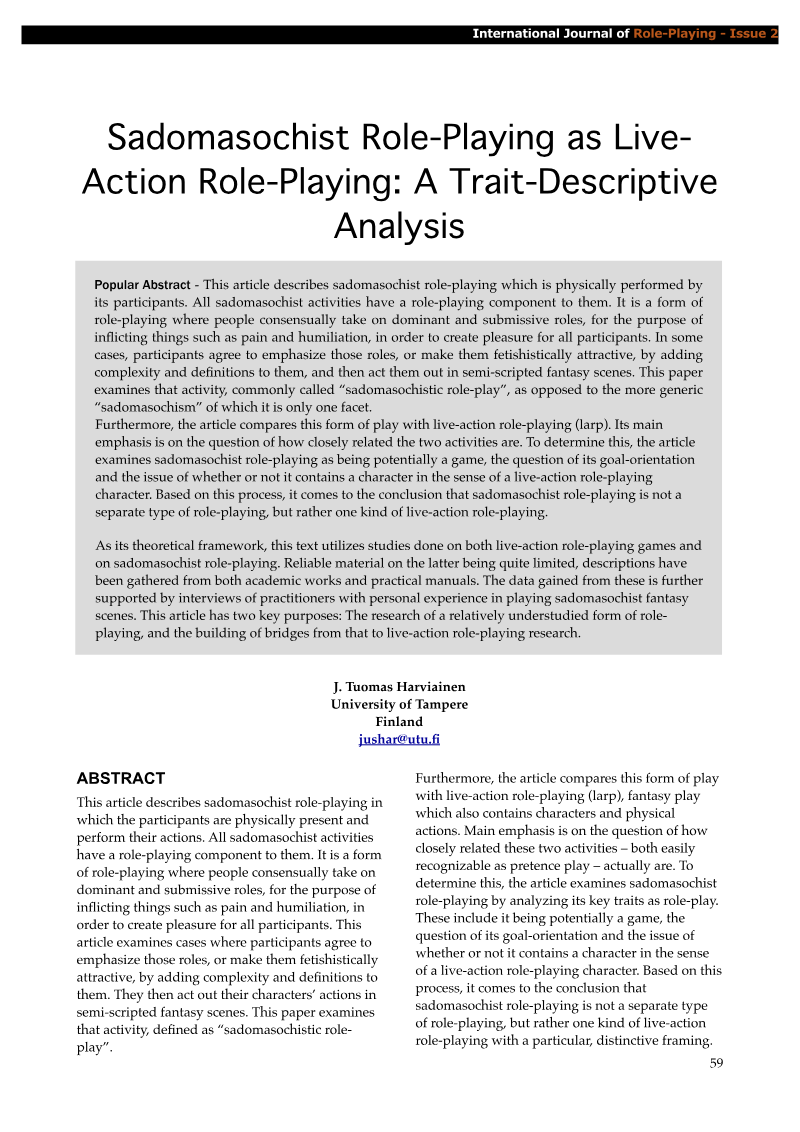
Sadomasochist Role-Playing as Live-Action Role-Playing: A Trait-Descriptive Analysis
Harviainen's paper contends that sadomasochist role-playing, or BDSM role-play, is best understood as a form of live-action role-playing (larp) rather than as a wholly separate category.
- The paper argues that consensual BDSM role-play is best understood as a form of live-action role-playing (larp), based on shared traits such as physical performance, fictional characters, and narrative structure.
- Structurally, BDSM role-play meets established definitions of games and role-playing games, sharing a magic circle, a set of rules, a dominant partner functioning much like a game master, and comparable immersion and staging mechanics.
- The main difference between the two activities lies in framing rather than structure: BDSM role-play is framed as a sexual activity and is often part of a broader sadomasochistic lifestyle, while larp is framed as a game for fun or experiential purposes.
The Consecration of Musical Incoherence
The analysis explores how music compilations, specifically those organized by a single calendar year, function as historiographical projects that assign value to periods of stylistic uncertainty.
- Year-based music compilations, such as 'Meridian 1970,' function as historiographical tools that legitimize periods of stylistic uncertainty rather than tracing clear musical genealogies.
- The lack of aesthetic unity in these collections is a deliberate mechanism that frames historical moments as systems of variation rather than coherent movements.
- Physical compact discs serve as essential boundaries that curate and limit the infinite nature of digital archives, forcing listeners to engage with a fragmented representation of a historical 'cusp'.
Vers un « Nouveau Hollywood »? Considérations sur la métalepse dans le cinéma populaire contemporain
Contemporary popular cinema is undergoing a significant narrative evolution characterized by the frequent use of metalepsis, a technique involving the transgression of boundaries between distinct narrative levels.
- Mainstream Hollywood cinema is increasingly adopting metalepsis—the transgression of boundaries between narrative levels—as a core storytelling device rather than an avant-garde experiment.
- The shift toward structural complexity reflects a strategic industry move to prioritize intellectually demanding, interactive narratives to maintain audience engagement.
- Modern audiences are now expected to move beyond passive consumption, requiring more complex cognitive processing to navigate multi-layered, non-linear cinematic structures.