Loading the document
Key insights
6 slides
New learning models
Adolescent gaming communities operate as decentralized, rhizomatic networks.
These networks prioritize organic, non-linear knowledge acquisition over static, outcome-based curricula. They fundamentally challenge traditional educational paradigms.
Think of it like a sprawling root system, where growth happens in many directions at once, not just up a single trunk.
1 / 6
- 01Adolescent gaming communities function as decentralized, rhizomatic networks that prioritize organic, non-linear knowledge acquisition over static, outcome-based curricula.See it on page 1
- 02The traditional distinction between producers and consumers, as well as teachers and learners, is dissolved within these digital spaces, fostering fluid and hybrid roles.See it on page 17
- 03Participants actively develop creative and critical identities through collaborative activities such as modding, machinima, and collective content creation.See it on page 10
- 04Learning in these environments is inherently social and process-oriented, relying on the cultivation of social capital rather than rigid, hierarchical structures.See it on page 17
- 05The term 'gamer' is an insufficient descriptor for the multifaceted, adaptable roles individuals inhabit within these complex participatory cultures.See it on page 16
- 06Educational frameworks must evolve to mirror the decentralized and highly social dynamics of digital communities to effectively support modern skill development.See it on page 17
Ask AI about this report
Summary
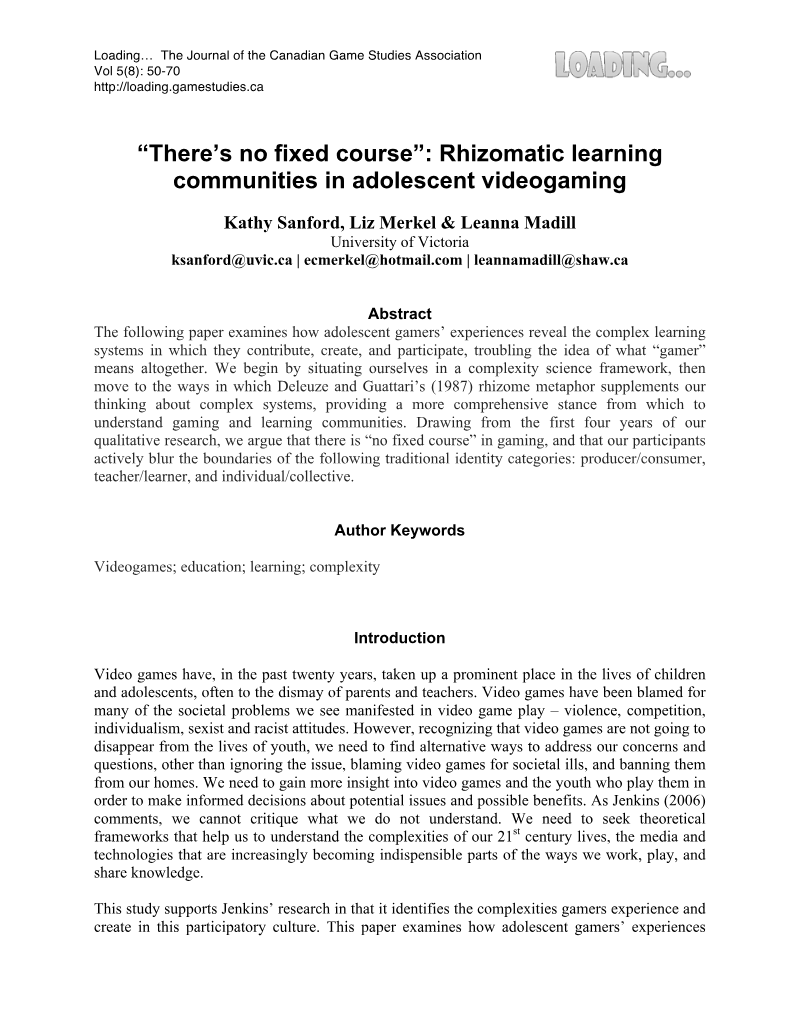
Adolescent gaming communities operate as decentralized, rhizomatic networks that fundamentally challenge traditional educational paradigms. By utilizing a framework rooted in complexity science, this analysis reveals that learning within these digital spaces is inherently non-linear, social, and constantly negotiated. Rather than adhering to fixed hierarchies or static curricula, participants engage in fluid, hybrid roles where the distinctions between producer and consumer, as well as teacher and learner, are effectively dissolved. This collaborative environment fosters the development of creative, critical, and adaptable identities that defy outdated stereotypes of gamers as isolated or passive individuals.
The scope of this inquiry encompasses the participatory cultures of adolescent gamers, focusing on how they leverage digital platforms to engage in activities such as modding, machinima, and collaborative content creation. These open systems prioritize the collective acquisition of knowledge and the cultivation of social capital over rigid, outcome-based assessments. By participating in these self-sustaining networks, adolescents demonstrate a capacity for organic, process-oriented learning that transcends the limitations of conventional classroom structures.
Ultimately, the findings suggest that the label of gamer is an insufficient descriptor for the complex, multifaceted roles these individuals inhabit. Because knowledge acquisition in these environments follows no fixed course, educators are encouraged to shift their focus toward observing the organic dynamics of these digital spaces. Embracing rhizomatic learning models allows for a more accurate understanding of how modern digital communities facilitate skill development, suggesting that educational frameworks must evolve to reflect the complex, decentralized, and highly social nature of contemporary participatory cultures.