Game Publishing reports and market data
Documents

Youzu's successful transition from PC to mobile games
Youzu has successfully transitioned from a dominant PC and browser-based publisher to a major force in the mobile gaming sector.
- Youzu successfully pivoted from a $135 million annual PC and browser-based business in 2014 to a mobile-first strategy, anchored by the success of 'Youth of Three Kingdoms'.
- The mobile title 'Youth of Three Kingdoms' achieved 9.5 million total players and generated over $16 million in gross revenue within its first 20 days of launch.
- Youzu’s monetization model demonstrates high efficiency, with per-user revenue reaching $5.30 after 30 days and $11.00 after 60 days.
How Kabam is looking to crack China
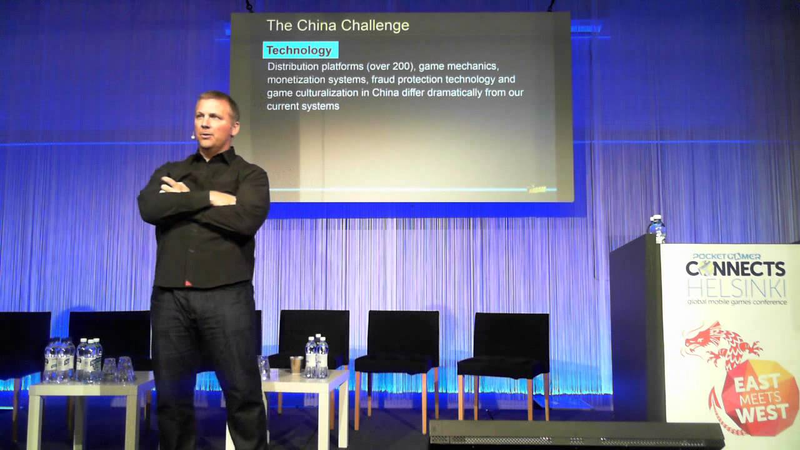
Kabam’s strategy for navigating the global mobile gaming market centers on the necessity of "culturalization"—the deep adaptation of game systems to fit local preferences—rather than simple localization.
- Asian markets including China, Japan, and Korea now account for over 50% of global mobile gaming revenue, yet remain dominated by local developers due to high barriers to entry.
- Kabam’s strategy for market penetration relies on 'culturalization'—deeply adapting game systems like VIP features to local preferences—rather than simple translation.
- To succeed in China, Kabam leverages local partnerships for distribution and regulatory compliance while utilizing its Beijing studio to maintain internal control over code and IP.

Biz Daily: How Com2uS become a world player
Com2uS has successfully transitioned from a localized South Korean mobile publisher into a significant global industry player, driven primarily by the sustained performance of its flagship RPG, Summoners War.
- Com2uS reported Q2 2015 sales of $97 million, representing a 16% increase quarter-on-quarter and over 100% growth compared to the same period in 2014.
- The RPG 'Summoners War' is the primary driver of company growth, necessitating an increase in quarterly marketing and user acquisition spend from $15 million to $18 million.
- Com2uS has successfully pivoted from a local Korean publisher to a global player, with 82% of its Q2 2015 sales generated outside of Korea.

Mike Bithell on strategies for indie success
Independent developers achieve long-term sustainability by prioritizing unique, non-clonable experiences over chasing fleeting market trends.
- Prioritize unique, non-clonable game experiences over chasing market trends to ensure long-term studio sustainability.
- Maintain lean business structures by capping headcount to preserve agility and using rapid prototyping, such as game jams, to test core mechanics.
- Utilize platforms like Early Access to integrate player feedback throughout the production cycle, which aligns the final product with audience expectations and extends the game's lifecycle.
A Generation of Remasters - Welcome Updates or Troubling Omens? - Extra Credits
The proliferation of video game remasters represents a complex shift in the industry, balancing the preservation of gaming history against a potential stagnation in creative innovation.
- The industry's reliance on remasters signals a broader struggle to fund and produce original, high-budget AAA titles due to the high costs and risks associated with new development.
- Publishers prioritize remasters of recent console-generation games because they are low-risk, cost-effective, and leverage existing fan bases to fill release schedules.
- There is an economic paradox where truly necessary remasters of 1990s-era games require complete rebuilds, making them as expensive and high-risk as developing entirely new intellectual property.

DeNA, Samsung and Disney keynote Pocket Gamer Connects San Francisco 2015
The mobile gaming industry is currently undergoing a strategic shift toward high-value intellectual property, curated distribution, and long-term live operations to combat rising user acquisition costs.
- DeNA plans to launch five mobile games featuring major intellectual properties between late 2015 and March 2017, targeting hundreds of millions of users globally.
- Samsung is shifting its app store strategy toward a curated experience, partnering with reputable media sources to recommend a modest volume of high-quality content rather than hosting hundreds of thousands of apps.
- Disney Interactive utilizes a hybrid development model, balancing in-house production with strategic licensing partnerships, such as their collaboration with Kabam for midcore titles and DeNA for regional expertise.

Biz Daily: Why is Gameloft losing its players?
Gameloft’s financial performance for the second quarter of 2015 reveals a growing disconnect between high download volumes and actual revenue generation.
- Gameloft’s monthly active users (MAU) dropped 10% to 162 million, while daily active users (DAU) fell 17% to 19 million in Q2 2015, indicating a significant failure in player retention.
- Despite high download volumes, Gameloft experienced a 5% quarter-on-quarter decline in sales, signaling instability in its transition to a games-as-a-service model.
- Reported Q2 2015 sales of 62 million euros represent a 12% year-on-year increase, but this growth shrinks to a modest 3% when adjusted for currency fluctuations.

Biz Daily: GREE restructures with new offices in Berlin and Melbourne
GREE, the Japanese mobile game publisher, is undergoing a significant strategic restructuring of its international operations.
- GREE is restructuring its international operations by closing a significant portion of its San Francisco presence, which recently saw a 30 percent reduction in staff.
- The company is establishing new offices in Berlin and Melbourne to shift its focus toward European and Australian markets and better align with Western consumer preferences.
- GREE acquired the mobile game developer Twiitch in Melbourne to gain expertise in 3D, mid-core strategy games and modernize its portfolio away from traditional card-battle titles.

Google on IAPs and monetization - PG Connects Bangalore 2015
Building a sustainable mobile gaming business requires a transition away from an exclusive reliance on in-app purchases toward a diversified monetization strategy.
- Developers must diversify beyond in-app purchases (IAP) because 95 to 97 percent of mobile players do not make direct purchases.
- Integrating a hybrid model of IAPs and strategic ad placements, such as native ads and video, can increase total revenue by up to 300 percent through effective network mediation.
- In markets like India with low credit card penetration, reward-based advertising—such as video ads and offer walls—is essential to monetize the non-paying majority.

Disney on games that capture India's imagination - PG Connects Bangalore 2015
The Indian mobile gaming sector is undergoing a significant maturation phase, characterized by a strategic shift from Western-dependent design toward the creation of high-quality, locally relevant content.
- The Indian mobile gaming sector is transitioning from Western-dependent design to a professionalized ecosystem focused on high-quality, locally relevant content.
- Developers must choose between targeting the massive, untapped demographic of first-time domestic mobile users or pursuing established global markets in the US, UK, and Australia.
- Success in global markets requires a data-driven approach, high-quality user experience, and a strategic shift toward premium models in educational and ultra-casual segments.

Biz Daily: What next for Nintendo in a post-Iwata world?
The passing of Nintendo CEO Satoru Iwata has placed the company at a critical strategic crossroads, prompting an evaluation of its future direction in a rapidly fragmenting gaming landscape.
- Nintendo is at a strategic crossroads following the 2015 passing of CEO Satoru Iwata, necessitating a shift in direction to navigate a fragmenting gaming landscape.
- Despite the hardware successes of the DS and Wii during Iwata’s 2002–2015 tenure, the company struggled with the 3DS and the commercial failure of the Wii U, leading to stagnant share prices.
- Nintendo’s institutional hesitation regarding mobile gaming is evidenced by a lack of specific details for its five-title partnership with DeNA, reflecting a broader internal resistance to modern monetization models.

Appodeal's Pavel Golubev on trends in mobile advertising
Appodeal serves as an automated monetization platform designed to optimize revenue for mobile application developers by aggregating various advertising networks.
- Appodeal originated as an internal tool for a publisher managing over 3,000 applications and was commercialized after proving it could triple ad-related earnings.
- The mobile advertising industry is currently transitioning toward increased automation through the maturation of real-time bidding and programmatic exchanges.
- Virtual reality and wearable devices are considered nascent segments that currently lack the standardized user interfaces and consumer adoption required for large-scale monetization.