Game Publishing reports and market data
Documents
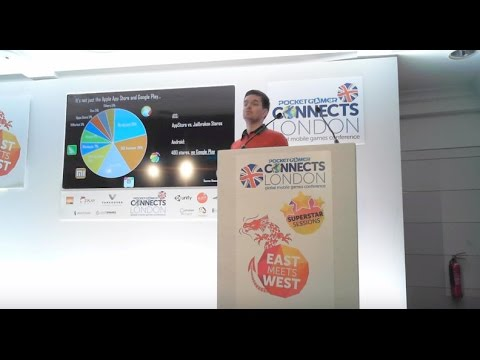
NetEase explains the Chinese mobile games market
The Chinese mobile gaming market has undergone a significant transformation between 2010 and 2015, evolving from a nascent sector into a multi-billion dollar industry.
- The Chinese mobile games market is highly concentrated, with the top 10 companies capturing approximately 50% of the total revenue.
- Market trends show a significant shift toward MMO-style games, which grew from a 14% market share in 2014 to one-third of the market by Q4 2015.
- Android distribution in China is extremely fragmented, with no Google Play presence and a reliance on various third-party stores that often charge 50% to 60% of revenue, though direct downloads via QR codes can bypass these fees.

How to engage with Asian mobile publishers (Tencent, Gamevil, Nexon)
Engaging with major Asian mobile publishers—such as Tencent, Gamevil, and Nexon—requires a strategic approach that prioritizes long-term relationship building, deep market research, and a sophisticated understanding of free-to-play mechanics.
- Asian publishers prioritize developers who demonstrate a deep understanding of free-to-play mechanics, as this is the primary monetization model in markets like China.
- Publishers look for unique, innovative concepts rather than clones of existing hits; for example, Tencent evaluated over 6,200 games in a year but only a small fraction met their criteria for publishing.
- When pitching, developers must provide concrete, honest data, such as retention rates (e.g., Day 1, Day 7) and payment rates, rather than relying on best-case scenarios or anecdotal success.
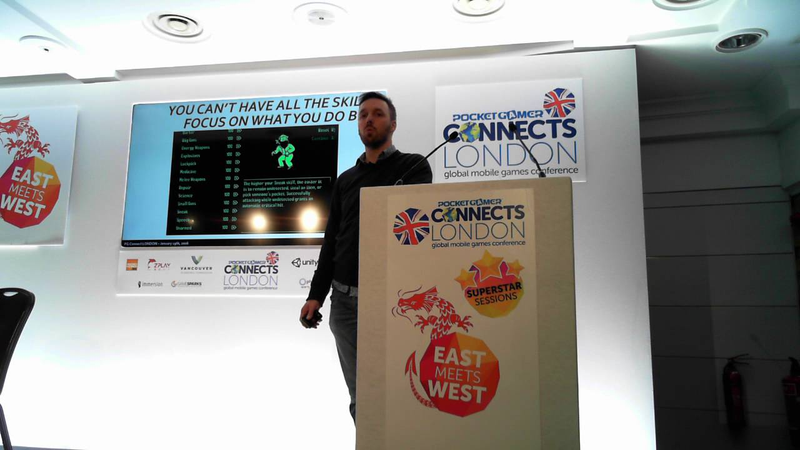
Square Enix Montreal on the hard learnings going from console to mobile success
Square Enix Montreal’s transition from a large-scale console developer to a successful mobile publisher serves as a case study in the necessity of organizational agility and strategic focus.
- Platform store discovery drives over 50 percent of user acquisition, significantly outperforming traditional media and social channels.
- Securing 'Editor’s Choice' or 'Game of the Year' status on app stores can triple revenue compared to standard featuring while generating millions of additional impressions.
- Transitioning from console to mobile requires hiring for a mobile-first mindset, as console-hardened developers often struggle with the leaner, iterative development cycles required for mobile.
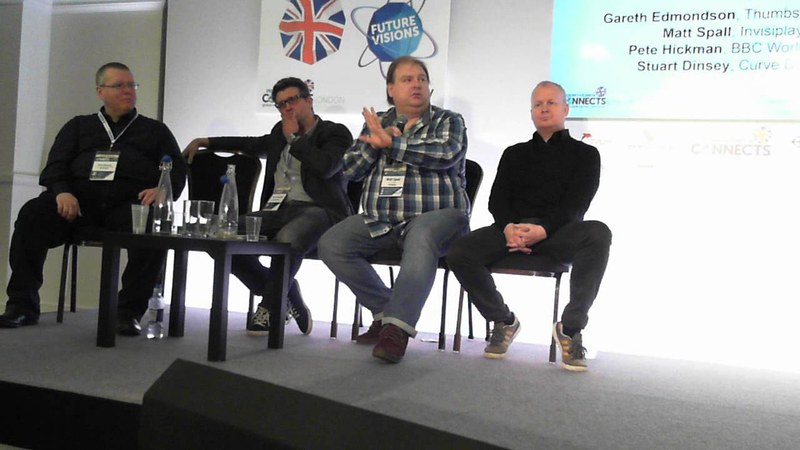
The Old Guard: British Legends panel
The panel discussion featuring industry veterans Stuart Dinsey, Gareth Edmondson, Peter Hickman, and Matt Spall explores the evolution of the British games industry from the 1980s to the mid-2010s.
- Discoverability is the primary challenge in the modern market due to an unprecedented volume of product, rendering high-quality production alone insufficient for commercial success.
- Success in the current digital-first landscape requires integrating robust marketing, active community engagement, and data analytics alongside game development.
- The most successful products prioritize accessibility by being easy to pick up and specifically designed for well-understood target audiences.

GotW: BattleHand
BattleHand, a card-battling RPG developed by the London-based startup Another Place and published by Kongregate, serves as a notable entry in the mobile gaming market.
- BattleHand is a mobile card-battling RPG developed by London-based startup Another Place and published by Kongregate, targeting the mid-core Western market.
- The combat system utilizes a turn-based, team-oriented structure that incorporates elemental affinities—such as earth, water, and fire—to dictate tactical advantages.
- The game differentiates itself from competitors through a steeper difficulty curve and a design philosophy that prioritizes core gameplay mechanics over metagame-driven progression.
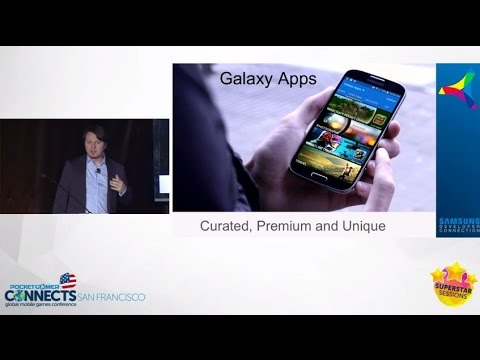
Get discovered on the Galaxy Apps store
Samsung’s Emerging Platforms division focuses on fostering developer partnerships to revitalize the Galaxy Apps store and expand the company’s presence across mobile, tablet, television, wearable, and virtual reality (VR) ecosystems.
- Samsung is transitioning the Galaxy Apps store into a curated, premium storefront to address app discovery challenges by prioritizing quality over volume through expert-led selection.
- Samsung devices currently generate approximately 65 percent of all revenue within the Android ecosystem, a market share the company aims to increase through exclusive, high-quality content.
- The wearables market is projected to reach over 120 million units shipped annually by 2018, maintaining a 35 percent year-over-year growth rate.

Why Nintendo going mobile is the big news of 2015
Nintendo’s 2015 strategic pivot toward mobile gaming represents a fundamental shift for one of the industry’s most historically insular publishers.
- In 2015, Nintendo initiated a strategic pivot away from its historically closed-ecosystem model by partnering with DeNA to enter the mobile gaming market.
- The partnership with DeNA is designed to leverage external expertise in mobile monetization and infrastructure to support Nintendo's transition to mobile platforms.
- Nintendo is prioritizing the stability of its network infrastructure and digital systems, such as Miiverse, before releasing flagship intellectual properties like Mario on mobile.

With a $330M fund, Youzu is going global
Youzu Interactive is positioning itself as a strategic gateway for Western developers seeking to penetrate the complex Chinese gaming market.
- Youzu Interactive has launched a $330 million investment fund to provide capital, R&D support, and distribution to foreign developers seeking entry into the Chinese market.
- The company serves as a strategic gateway to China’s fragmented Android ecosystem, which requires navigating over 60 distinct distribution channels and various social platforms in the absence of Google Play.
- Youzu’s operational model focuses on data-driven localization, exemplified by the title 'Three Kingdoms,' which generated over $100 million in revenue within its first 20 days.

China's Regulatory Environment for Games
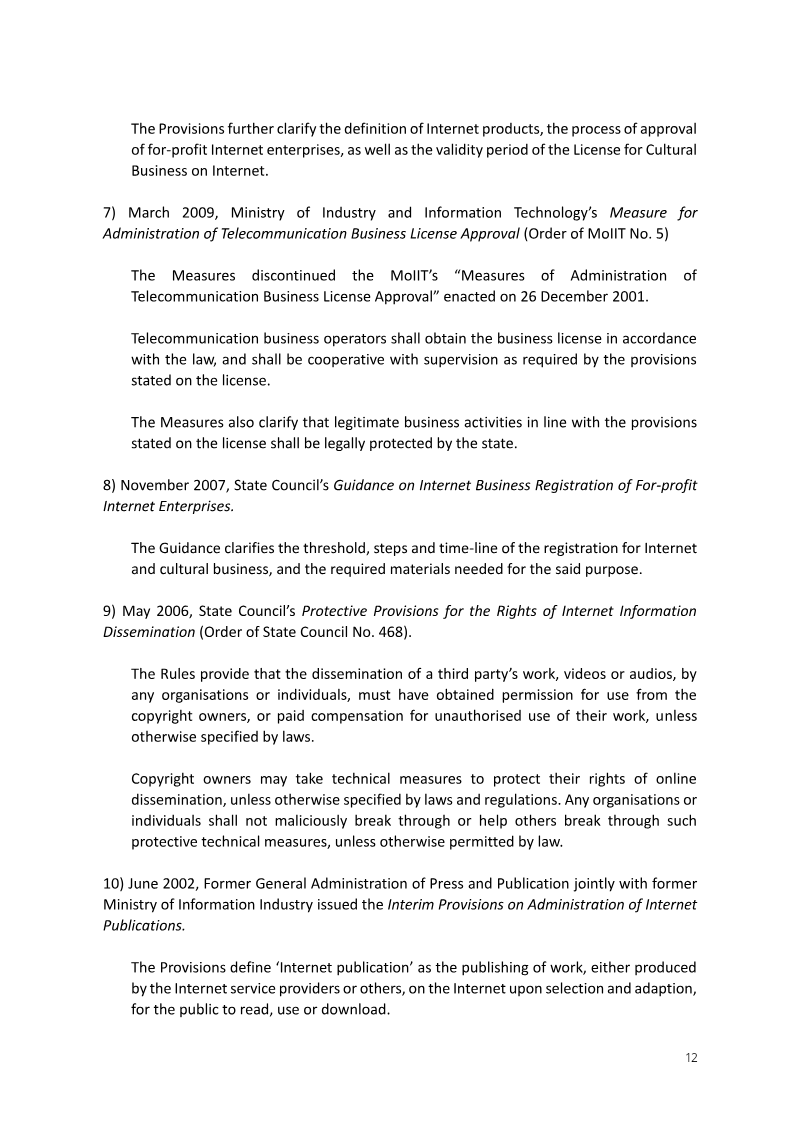
China’s gaming industry operates under a highly structured and rigorous regulatory framework designed to align digital entertainment with national cultural standards and social stability.
- Foreign companies are strictly prohibited from directly operating or controlling online games in China, necessitating complex contractual arrangements to manage intellectual property and profit settlement.
- All gaming titles must undergo a rigorous, multi-agency approval process to obtain mandatory telecommunication and online publishing permits, as well as individual copyright registrations.
- Operators are legally required to implement mandatory anti-addiction systems for minors and ensure all content strictly adheres to national cultural standards and censorship guidelines.

Biz Daily: Apple TV's discovery problem
The launch of the fourth-generation Apple TV has introduced a dedicated App Store and tvOS, aiming to unify the gaming experience across iPhone, iPad, and television hardware.
- The Apple TV platform is suffering from a critical discovery crisis where apps remain virtually invisible to consumers unless they are manually featured by Apple.
- The current storefront lacks essential discovery tools like top-grossing or most-downloaded charts, forcing developers to rely on a limited number of featured slots often dominated by major publishers like Ubisoft.
- Despite launching with over a thousand apps and significant developer enthusiasm, the lack of effective discovery mechanisms is resulting in negligible download numbers and sales for most titles.
Nordic Game Sales 2015: Retail
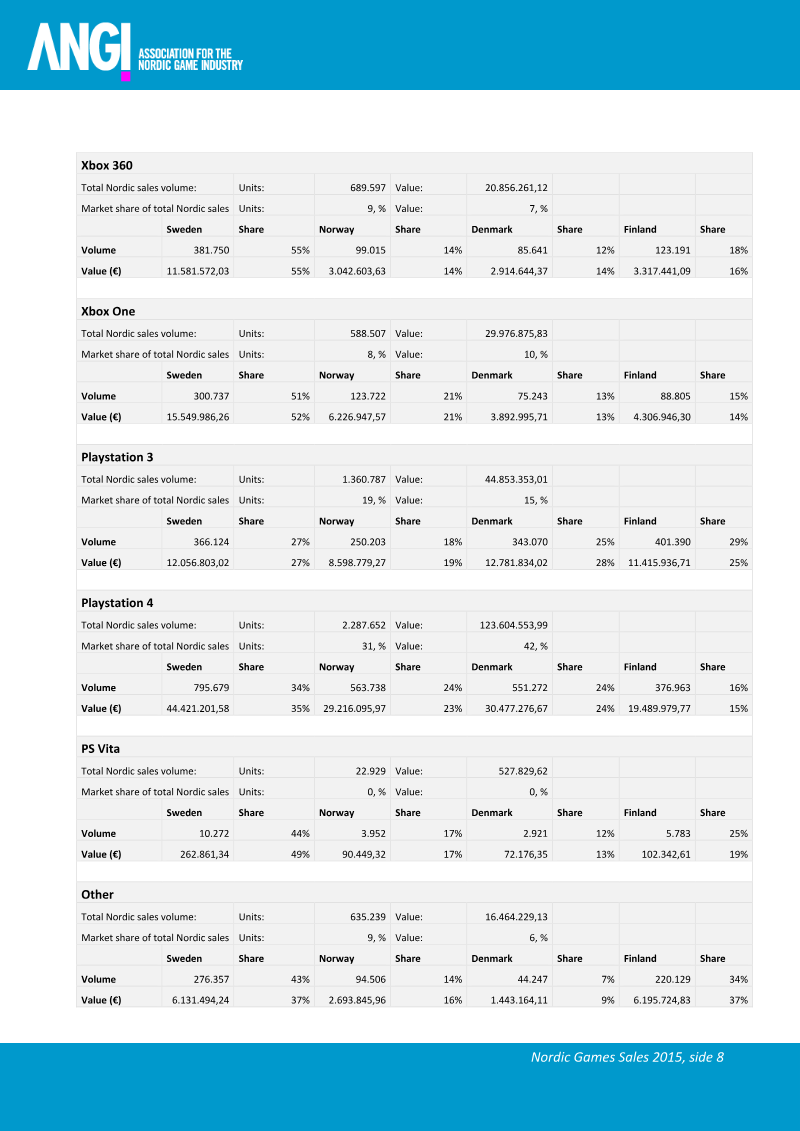
The Nordic gaming market underwent a significant structural transition throughout 2015, characterized by a marginal contraction in physical retail volume and value as consumer behavior shifted toward digital distribution.
- Eighth-generation console adoption drove significant software growth in 2015, with sales increasing by 135% for PlayStation 4 and 85% for Xbox One.
- The Nordic gaming market experienced a structural shift in 2015 characterized by a marginal contraction in physical retail volume and value as consumers transitioned toward digital distribution.
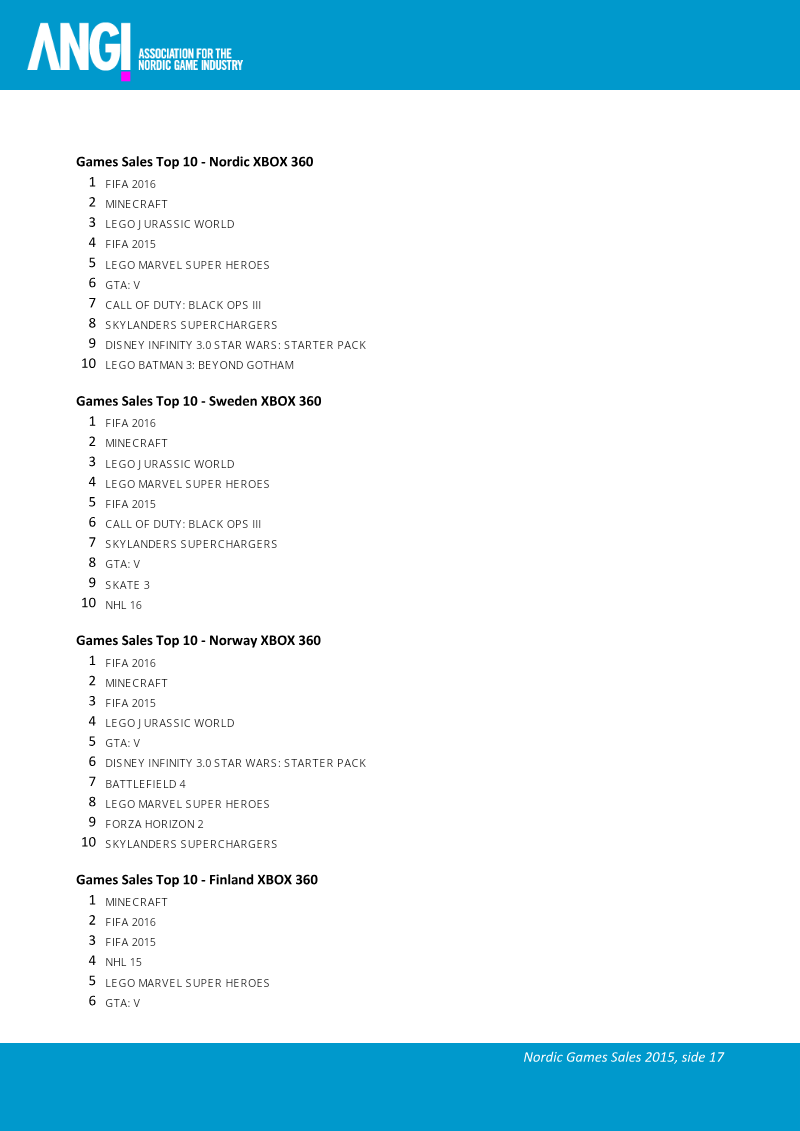
- Retail revenue was dominated by major franchises, specifically FIFA 16, Grand Theft Auto V, and Call of Duty: Black Ops III.

Concept Art House CEO James Zhang on helping Supercell make its Super Bowl advert
Concept Art House provides high-end art, 3D animation, and pre-production services to the global gaming industry, contributing to approximately 500 games annually.
- Concept Art House supports approximately 500 games annually, providing high-end art and 3D animation services for major developers including Riot Games, Blizzard, and Hasbro.
- Mobile gaming is shifting toward console-quality graphics as developers utilize high-fidelity assets to differentiate products in a saturated market and justify rising production costs.
- The integration of established entertainment intellectual properties, such as Jurassic Park and The Hobbit, has become a primary strategy for securing top-grossing positions in mobile app stores.