Game Publishing reports and market data
Documents

EA's Laura Miele on Command & Conquer mistakes, resurrecting Skate and Dead Space, and Battlefield 6
Electronic Arts is currently prioritizing a fan-centric development strategy that focuses on reviving legacy intellectual properties and fostering deep social engagement.
- EA is prioritizing a fan-centric strategy that revives dormant intellectual properties like Skate, Dead Space, and EA College Football to meet demand from Gen Z and millennial demographics.
- Development for Battlefield 6 utilized 92 million hours of gameplay and 30 distinct builds through 'Battlefield Labs' to ensure iterative, community-driven refinement before launch.
- EA is shifting toward a platform-based model for major titles, integrating single-player, multiplayer, and free-to-play modes to accommodate diverse player motivations.

Is Summer Game Fest worth it for devs?
The current landscape of the video game industry is defined by a shift toward targeted digital marketing and strategic platform integration.
- Summer Game Fest has shifted from a broad industry trade show to an intimate, invite-only event focused on high-impact influencer and press relations, making it a more efficient alternative to the high-cost, high-volume spectacle of traditional E3 booths.
- Participation in major streaming showcases during June can drive significant wish-list growth, with top-tier events like the Xbox showcase generating approximately 46,000 wish lists, while smaller indie-focused showcases typically yield around 1,000.
- Epic Games is positioning Unreal Engine and Fortnite as an open-ecosystem alternative to Roblox, focusing on platform-level tech updates—such as persistent level counters—to bridge the feature gap between the two platforms.

Why Everyone Wants A 'Live-Service' Game
The video game industry has increasingly pivoted toward live-service models as a strategic response to the rising costs and inherent volatility of AAA game development.
- The shift toward live-service models is primarily a strategy to mitigate the extreme financial risk of modern AAA development, where production costs have ballooned from $20–30 million to a $200–300 million floor.
- Live-service games provide recurring revenue streams that stabilize companies against the volatility of a hit-driven industry, preventing total reliance on the success of a single, infrequent release.
- The industry's pivot was heavily influenced by the massive success of Fortnite, which demonstrated the profitability of free-to-play models combined with ongoing monetization through skins, seasons, and content updates.
My Five Favorite E3 Stories
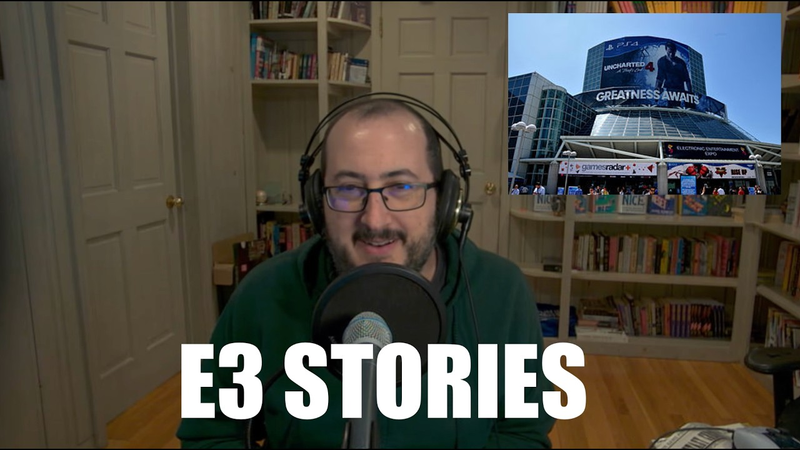
This retrospective explores the cultural and operational evolution of the Electronic Entertainment Expo (E3) through a series of personal anecdotes from a veteran industry journalist.
- The 2011 Wii U announcement serves as a case study in failed corporate communication, where a lack of clear identity during the reveal contributed directly to the console's subsequent market failure.
- E3 functioned as a critical, high-pressure environment for direct interaction between developers and the press, a dynamic that has been largely replaced by more controlled, digital-first marketing strategies.
- The 2015 'Judges Week' demonstrated the value of early-stage previews, as journalists were able to interact with unpolished builds of titles like Fortnite years before its global pivot and success.
Can PlayStation’s Housemarque repeat the FromSoftware story?
Housemarque is currently navigating a strategic evolution as a first-party PlayStation studio, aiming to elevate its historically niche, arcade-inspired design philosophy into the realm of major, top-tier gaming franchises.
- Housemarque is transitioning from a niche arcade developer to a major first-party PlayStation studio by scaling its high-intensity, flow-state gameplay for a broader, mainstream audience.
- The studio currently employs approximately 120 people and is leveraging Sony’s internal resources, user testing, and collaborative infrastructure to support this growth.
- Housemarque aims to replicate the success trajectories of established studios like Naughty Dog and Insomniac Games by treating new intellectual properties as long-term foundations for player engagement.

Record D2C revenue and international studios flock to Spain | Week in Mobile Games podcast
The Spanish video game market has emerged as a significant global hub, currently valued at €2.4 billion with a workforce projected to reach 13,000 by 2027.
- Top games companies are reporting record direct-to-consumer (D2C) revenue, though these gains are increasingly offset by rising user acquisition costs.
- Spain and Portugal are emerging as major European gaming hubs, attracting significant investment from international publishers including Ubisoft, King, Take-Two, Scopely, FunPlus, and Gameloft.
- ARM’s new 'Neural Dawn' technology aims to enable triple-A graphics on mobile devices, though industry analysts question whether players prioritize this level of graphical fidelity over gameplay and social features.

The Real Reason E3 Died
The decline of E3 is primarily attributed to the fundamental shift in the video game industry from physical retail to digital distribution.
- E3 was fundamentally a B2B trade show designed for publishers to secure retail shelf space at major chains like Walmart, Target, and GameStop, rather than a consumer-facing event.
- The shift from physical to digital game distribution, which saw digital sales reach 80% to 90% of total volume for major publishers like Xbox by 2021, rendered the traditional retail-focused trade show obsolete.
- The decline of E3 began in the late 2010s as major publishers like PlayStation and Xbox withdrew from the LA Convention Center to host their own independent events or pre-recorded showcases.
The new Paramount Games: 'We are not looking to chase GTA'
Paramount Games has established an integrated business unit designed to transform the company’s intellectual property into a cornerstone of its broader entertainment strategy.
- Paramount Games has launched an integrated business unit that combines internal studios and a dedicated publishing arm to transition from traditional licensing to a sustainable, high-quality production model.
- The company is pursuing a 'responsible ambition' strategy that prioritizes narrative-driven AAA experiences over the high-risk, massive-budget development models used by industry giants like Rockstar Games.
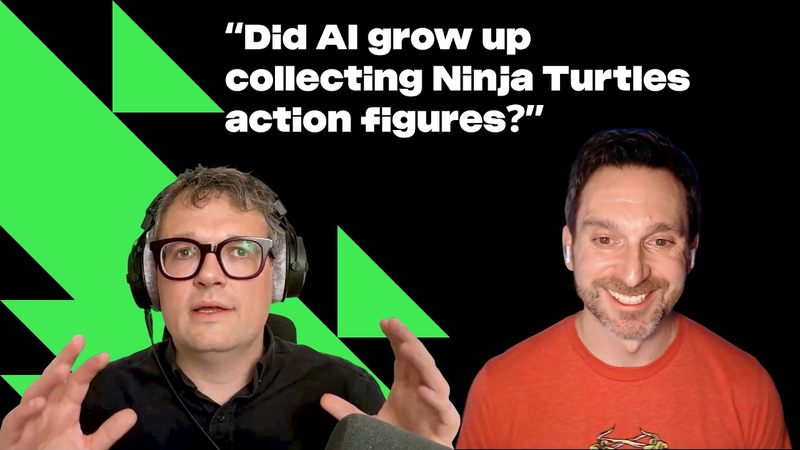
- Creative authenticity is maintained by pairing specific intellectual properties with developers who have a genuine passion for the source material, exemplified by the partnership with PlatinumGames for 'Teenage Mutant Ninja Turtles: The Last Ronin'.

TWIG #386: CoD MW4 Revealed, Sony's State of Play, Bungie's End and 007 First Light
The global gaming industry is currently navigating a period of significant structural transition, marked by a pivot toward current-generation hardware and a reevaluation of long-term profitability strategies.
- The Asia-MENA gaming market is projected to reach a $103 billion valuation by 2030, though Western publishers struggle to compete against local developers who currently command a 90 to 95 percent revenue share in those regions.
- Major publishers are shifting away from legacy console support to prioritize technical performance and modular mechanics, as seen in the upcoming Call of Duty: Modern Warfare 4, even at the cost of immediate unit volume.
- Sony is maintaining profitability despite declining first-party unit sales by successfully leveraging third-party revenue and console exclusivity strategies.
Vietnam Game Industry Monthly Report: April 2026
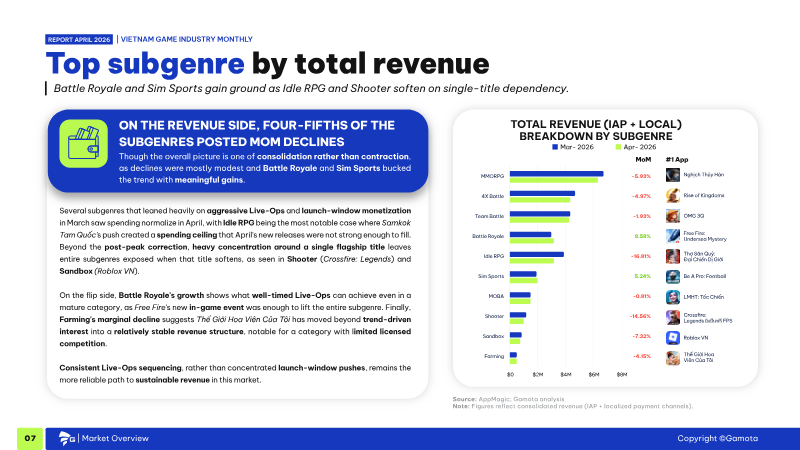
The Vietnam Game Industry Monthly Report for April 2026 provides a comprehensive analysis of the mobile gaming landscape, focusing on market performance, emerging trends, and regulatory shifts.
- Vietnam's mobile gaming revenue remained stable at $22 million in April 2026, despite a 5.29% decline in total downloads compared to March.
- The Team Battle subgenre experienced a significant surge in popularity, recording a nearly 60% increase in downloads driven by anime-themed intellectual properties.
- Market entry success in Vietnam is increasingly dependent on genre hybridization, such as the approach used by 'Haunted Room' and 'Total Football VNG' to combine established mechanics with global brand recognition.

Why Games Now Take 6+ Years To Make
The modern video game industry is characterized by a significant increase in development cycles, with major titles frequently requiring six or more years to reach completion.
- Major video game titles now frequently require six or more years to complete due to a combination of technical, organizational, and creative challenges.
- The demand for extreme graphical fidelity has forced a shift toward exponentially larger development teams, creating significant communication and management overhead.
- Systemic mismanagement, including frequent shifts in project direction and the ineffective use of pre-production phases, leads to substantial wasted effort and repeated revisions.

How Mina The Hollower Became A 'Make Or Break' Moment For Yacht Club Games
The independent studio Yacht Club Games, known for the success of the Shovel Knight franchise, currently faces a critical juncture with the release of its latest title, Mina the Hollower.
- Yacht Club Games reached a critical financial juncture following a six-year development cycle for Mina the Hollower, forcing the studio to implement staff layoffs and consolidate resources to ensure future viability.
- Mina the Hollower has achieved strong commercial performance and a 92 Metacritic score, serving as a vital revenue source to replenish the studio's exhausted financial reserves.
- The studio's previous strategy of splitting its team to pursue multiple projects, including a shelved 3D Shovel Knight title, led to fragmented communication and hindered creative cohesion.