VideoThe Game Business
The new Paramount Games: 'We are not looking to chase GTA'
9 Jun 202640 min video
Transcript
The games industry and the market itself has shifted in such a way where I think it would be really irresponsible to get over our skis and try to grow to a company of a thousand people overnight. It's not just about, "Oh, how do we exploit these IP? How do we extract as much value from them?" I think that is the worst possible way to go about this business. No matter how many great IP we have, we need to be developing more. We can't just rest on reheating the same stories and the same characters over and over and over.
[music]
Hello and welcome to the Game Business Show with me, Christopher Dring. At Summer Game Fest this weekend, the entertainment giant Paramount announced a brand new games publisher and division called Paramount Games. The firm also announced two titles. An all new version of Teenage Mutant Ninja Turtles: The Last Ronin. It's different from the one that had been announced before and is being developed by PlatinumGames. Plus,
they announced a new Star Trek horror game made by Bloober Team. Those are the horror experts that worked on games like Chronos and Silent Hill. That's on top of other projects including Avatar Legends, the fighting game, which they're making, and Marvel 1943, which is being developed by Skydance New Media. Both of those are now part of Paramount Games. We've been here before, of course, where big entertainment companies enter video games with lots of promise only to then back out. And of course, this new Paramount Games is launching just as Paramount is looking to acquire Warner Brothers, which has a big games team of its own. Now, to help me understand the vision, the plans, and why we should be optimistic about this Paramount Games initiative, I am joined by Shawn Kittelsen, SVP and head of creative and production at Paramount Games. Hello, Shawn. Welcome to the show. How are you?
Cheers, Chris. Good to be here.
I Thank you for saying cheers. That makes me feel very um
Very at home.
Very welcome, yeah. Um So, let's let's begin with pretty basic question, which is tell me about Paramount Games. What's come together here?
Yeah. Uh So, I'm the head of creative
and production for Paramount Games. So, what does that mean? What is Paramount Games? Prior to the Skydance merger with Paramount, there was a a nominal Paramount Games, but it was really just a licensing team working within the consumer products division. And at Skydance, we had Skydance Games, which was comprised of two internal studios, Skydance New Media, which is Amy Hennig's team that's working on Marvel 1943, and Skydance Interactive, which is the award-winning VR team behind The Walking Dead: Saints & Sinners, and Skydance's Behemoth. Um once the once the merger came through, it was clear that for the company and for David Ellison, games was a bigger priority. It was something that was discussed prior to the merger as hey, in the new world, to be a global entertainment company in the 21st century, games has to be a pillar for content. So, we need to create that business unit. So, we took the internal
studios that we had from Skydance. We took all of the licensing with uh you know, IP like Teenage Mutant Ninja Turtles, SpongeBob SquarePants, Star Trek, and so on. And uh we brought those together into one company, one integrated business unit, and built a publishing umbrella over that. So, we're not just focused on licensing, and we're not just focused on developing games internally. We're also picking up games and co-developing games with external partners, and building a new publishing business within Paramount.
Wow. This is a question I know I don't think you can answer, but cuz
I'll try.
is Warner Brothers going on as well, does that mean we might this might all change still?
Right now, we're just focused on on Paramount Games. It's business as usual. I think there's there's a long road between here and any transaction with Warner Brothers closing and any decisions being made and we've been at work on this for a while and it's been a
priority for for the company. So, it it continues to be a priority and we're setting up projects for the long haul. So, I don't think any any of our priorities today will change in the near term.
Yeah, could be really cool, I guess, but we'll have to see. I mean, there's been quite a lot of hiring going on then if you built a publishing unit and you're actually doing deals with external developers beyond the licensing stuff that you were doing already.
We're expanding. We've been hiring throughout the year and I think we're we're going to continue hiring. Like, but we're definitely taking the approach of slow and steady rather than trying to explode mass mass expansion. So, we're taking This is something that you and I've talked about previously, but but the games industry and the market itself has shifted in such a way where I think it would be really irresponsible to get over our skis and try to grow to a company of a thousand people overnight. I it's it's better to go incremental and make sure that every hire, every project, there's
a really clear purpose in the road map and that we're we're building with a lot of diligence instead of with just a voracious appetite.
But there's a middle ground, right? Because we've seen before big entertainment companies pushing to game. Some of them do it tentatively. Some of them do it a little bit too ambitiously. Um in fact, I remember interviewing Paramount Digital Entertainment in I think it might have been E3 2012.
Wow.
Which didn't obviously that didn't last that long.
[laughter]
The Star Trek game that launched it was not great. But why why is this why is this different?
I I think the the biggest difference is we have a crew of people who are are you know, seasoned games professionals and that was one of the things that was was different at Skydance in the in the first place. So, all of us being veterans of the industry and and having come from other lives and having made hits elsewhere. Dealing like there were opportunities to do something different and do something better and that we had a
an open mind in David Ellison to saying, "Yeah, we can do things our own way." Um but the biggest difference I think from prior Paramount would say forays into games is just we've already made some some pretty substantial investments into key projects. And the first one being that we're we're announcing and talking about The Last Ronin. The Last Ronin is a AAA Teenage Mutant Ninja Turtles game that is being fully funded and published by Paramount Games.
Yeah.
Uh developed by Platinum, the best possible partner, but we've made a a commitment with them and we're going to see that through and bring that game to market and that project represents I think every single one of our business pillars and every single one of our creative pillars in a in a single game. This is what we want to represent what the company can do.
Okay, you preempted my next question. I was going to talk about The Last Ronin.
[laughter]
But still on beans, I'm sorry.
It's great. It makes the connection
between the questions perfect. Um well, okay. I will ask a little bit more about those pillars, but before I do that, last I checked this game was being published by THQ Nordic I think and was being made by is it Black Forest Games. So, what's what's changed here?
So, when I started and when our team started, myself and Dan Brig and the rest of the the executive team over here, that previous version of The Last Ronin was already not happening.
Okay.
Like we we came in and we said, "So, what's up with The Last Ronin?" And he said, "Oh, that's that's gone away." So, we immediately said, "What can we do with The Last Ronin?" And that's that's a no-brainer game to make. We knew that there were not plans to move forward with something theatrically for Last Ronin. I'm a huge Turtles fan, grew up with the Turtles, was the target audience for The Last Ronin. The people who grew up with Turtles and have seen the world change and have seen themselves change and they would look back nostalgically, but also want to be
able to to embrace a new world for a new generation and fight for what's right. Uh so, we we started looking at partners. Platinum was a really compelling partners with their track record with games like Bayonetta and Nier: Automata. They worked on a Turtles game previously. Uh that, you know, I I'll let them tell that story, but again, different different Paramount team, different expectations and and maybe not the best conditions. So, we approached it with, "What if we gave you the best possible conditions to make the best possible game?" Uh and we found them to be an incredible partners. So, yeah.
You beat me to my Platinum question about that 2016 game. Okay, we lost that. But, it isn't just that though, cuz I noticed that Ninja Gaiden 4, that fans modded that to have the Ninja Turtles in it. So, it there is clearly an audience of people there that associate what Platinum are doing and some of the games they make with that sort of
Yeah.
with that IP.
Yeah, I mean, if you're if you're talking about not just like a ninja
action, but a sort of a very high-impact, fast-paced combat that is accessible, but has this sort of really steep skill curve if you are so inclined to be the sweaty who who goes for uh who goes for that hardcore experience, that's a Platinum game. And when they came in and pitched Turtles, their pitch for Turtles was more than what I had expected, especially because you when you're working with a Japanese team, you're talking through a lot of translators. And I was expecting a Platinum pitch for, "Hey, we're going to do this bombastic action and and here are the systems and instead they came in and they pitched a game about the seasons of life and regret and change and all the things I talked about about growing up a a fan of the Teenage Mutant Ninja Turtles and then seeing the world change and wondering if that that dream you had when you were a child is still alive or if it's dead and buried and wanting to reclaim some of that. So they
had a pitch that spoke to their passion as fans. That's one of our key pillars is is by fans for fans, right? Like we want games to be made by people who really really love these franchises.
You said the game takes all your pillars.
Sure.
Talk me through those and what what is it that it's that's ticking?
Sure. So the first one I already said it by fans for fans, right? Like we want everyone who works on these games to be as passionate about the games as we are. It's not just about oh how do we exploit these IP? How do we how do we extract as much value from them? I think that is the worst possible way to go about this business and I didn't get into this business to be a soulless value extractor and my early experiences working on things like the Arkham franchise really have informed my opinions of what the best way to approach adaptations for games are which is like channel a true and genuine and
absolute pure love of the stories and the characters in the world. And I think when you do that when you channel that fandom into your your work and your creativity, it resonates so much more with an audience and if it resonates really really well with the core audience who loves that IP there's a much greater chance it's going to resonate beyond that core audience because people who really love Turtles or Star Trek or SpongeBob are going to talk to all their friends who are sort of turtles adjacent and say, "You got to play this." And if their friends are like, "Oh, I'm turtles adjacent. I'm not core like you." They they might say, "No, no, no, this is so good. It's it's the one you have to come in for." Uh so, we want that energy. That's that's a key pillar. The other uh pillars are your right fit, right IP. Uh so, we we want to that's not just about being a fan, but is does this team actually have a track record
of consistency and quality execution in the genre within which we're we believe that this game should be made. Uh does the IP fit that genre in innately, inherently, or are we trying to force something into something? I think could you make a cozy turtles farming game? Sure. Do you have to get really creative and squint to to see how that fits? Yeah. If you say The Last Ronin at Platinum Games, the immediate reaction is, "Well, that just makes sense." And that should be the feeling every single time. Like, the team and the track record and the consistency that they have just speaks to there's a much lower risk that you're going to come out with something that isn't a good fit. Um then we're looking at really like cost-effective AAA. So, we are not looking to try to chase GTA. Uh I just watched your your last show on GTA. Um
[laughter]
ha ha ha and we're not we're not trying to chase our way into hundreds of bill- hundreds of millions of dollars uh in in budgets that then put not only the the game itself at a high risk of not making its money back, but then put everyone who's been working on it at high risk because we've we've bet the company on on one title. We want to take appropriately sized bets for where the market in the games industry is at today. And that means everything from exploring new ways of working with co-developers and support teams and partners so that we're scaling efficiently and effectively to having a really strict governance process along the way where we are not trying to start with a team of 300 people on day one, but we are starting with a small team that's working on core vision, core mechanics, story, and art and concept and then gradually as we are validating each of those pieces of the game building up to the point where we feel
confident to say, "Okay, let's scale production and and go forward." Um a lot of people you can speak to that, but that discipline is actually really hard to practice because there there are often forces outside of whether it's well, we've got all these butts in seats and we need to keep them working or it's just like the institutional momentum of well, can't we make it faster? Can't we get to that revenue event faster? So, to have patience and a bit of foresight is something that doesn't always come naturally to the games industry and we're trying to make that intrinsic to our core business.
That's quite interesting. Obviously, games budgets, you know, this is is people plus time basically and so those are conversations on this show around how can you lower the cost of game development? Which seems to me that you make them with fewer people or you make it faster or both. And inevitably, and I think a lot of shareholders love to hear it, people talk about AI as a
Yep.
do that. And some people will talk about maybe outsourcing to Eastern Europe or
markets where the development costs are lower. But I think what you're saying there is actually it's just it's sort of being patient and disciplined and and the other thing that I think is a probably focus, right? You know, and not trying to do everything and just trying to make sure if you can get, you know, do do sort of like a Claire Obscure which it feels very AAA in many many ways, but it doesn't do everything.
Right.
And it just does the thing it does very very well.
That's a That's a pretty tight core team on Claire Obscure that worked very small for years before they scaled with a lot of external partners to to bring that game to to polish into final. I think that's like you said, it would be really easy to win points with investors by saying, "Yeah, we're going to just use AI to make everything faster, cheaper, better." But the reality is those tools have not reached the point of maturity yet to where we can say there are truly meaningful savings to be found.
Yeah.
For one thing, while there are perhaps accelerative properties to coding that we can we can achieve with AI today, actual content development and generation is not moving that much faster and and certainly not improving the quality of the content that that we can create and develop. We want human hands to be on our products. We want these things if we want if we say by fans for fans and then we put AI in.
Yeah. Yeah. Yeah.
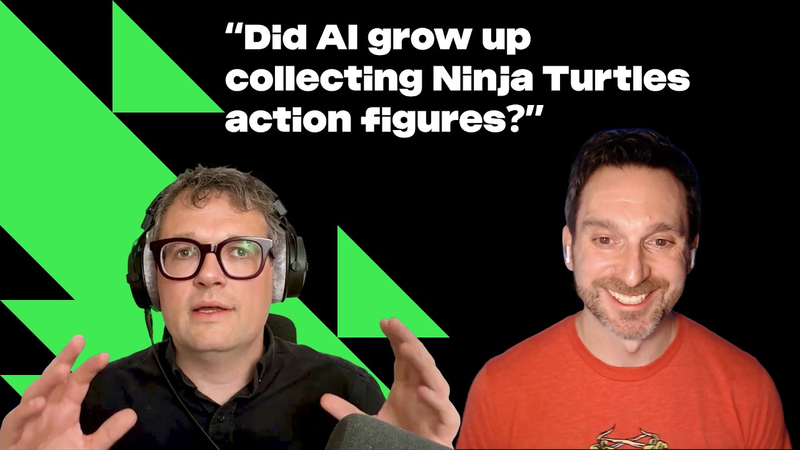
And say, "Oh, who So who made the decision about what's good and what's fun?" Well, we let the computer decide. Did the computer grow up collecting Ninja Turtles action figures and comic books and and like dreaming of of skateboarding in the sewers? No.
Okay. Good AI is all well and good but an AI tool that doesn't impact creative in my world is um you know, when we when I do this whole interview, I'm recording you now and when after this it will it will spit out a transcript of this interview, right?
But it won't be great. I'll have to go through and fix it, right? It won't just be a perfectly pure transcript of every um uhs and everything gets in there. I
have to sort all that out. It does speed up transcription. It probably
Mhm.
half the time. But transcription didn't take me a week. Like it wasn't It's like it's not allowing me to do multiple extra interviews. It won't allow me It won't give me huge amounts of time. It has some benefit, but it's not going to move the needle in a massively significant way. Obviously, I don't want to relate everything that's going on in AI to just what I'm doing. You know, I know people can do presentations faster now. And people can do these other things. I think that's great. Also, I think when you give people a bit more time, I don't think people necessarily do more.
It goes in two directions. What we found is if engineers find that they can code faster using AI, they're just going to try to code more features. So, now you have scope creep to manage.
Yeah.
Because there's a lot of stuff downstream from from code that needs to catch up to all of that. So, you you still have to really carefully manage your scope. And then there's also I think maybe one of the the best possible benefits that again doesn't get you to a finished game
faster, but might get you to a better finished game is the opportunity to sort of for certain types of games and certain types of features model out paper versions
Yeah.
or like interactive text or HTML versions of of certain systems so you can actually run through systemic progression and and see how that how that loops through through multiple iterations without needing to put everything through a content integration pipeline into blueprints in Unreal and then spit out a build and then have a bunch of play testers. You can maybe do more of that stuff in advance. Uh but again, these are not these are not quantum leaps forward
Yeah.
in the speed of development or in the scale of teams and investment for development.
These are some of the best AI answers I've ever had. I wasn't actually planning to ask any AI questions in this one. I thought I'll give AI I'll give Shawn a break. I won't I won't I'll I'll for the first time in any interviews for like months, I just won't mention AI. And I've done it anyway.
Look, it's the water in which we swim right now.
Yeah.
So, we we can't get away from it.
Yeah, well Let's go back to these pillars because you talked about IP fit, genre fit, and fans. That's why the Star Trek game, right? Because this sounds
Yes.
Star Trek's a really fascinating IP because as a piece of TV, it crosses genres. Like one minute it's a comedy, one minute it's a it's a horror, one minute it's a noir detective drama, right? One minute it's a western cuz it can it does those sort of things. So, I guess you could go in any direction with Star Trek. It probably could fit into a cozy game as well as a a blockbuster first-person shooter. You've gone with horror. With Bloober Team, which is obviously perfect match genre-wise. I'm guessing they're fans, too. And and how did that come around? Were you looking specifically for a horror title?
No, no. In in some ways, it's pushing Bloober to a a a different side of horror where with what you've seen in Chronos: Before the Dawn and Silent Hill 2, that's a team that has executed at a
very high level on survival horror. And now with Star Trek, then when you talk about that authenticity, and with Star Trek in particular, right? This is a franchise that crosses multiple generations, multiple iterations. Uh you have this for all of the IPs, but especially something as legendary as Trek, this this sense of it's not brand management, it's cultural stewardship. All right, we we have to preserve this this thing that that is really meaningful to generations of of fans and make sure that it's preserved for the the future generations to enjoy. And so, if we went and said, "Okay, just make a horror game and slap Star Trek on it." That wouldn't work, I don't think, for the Trek fans or for horror fans. Um and Bloober was really really excited to first of all, channel some really authentic Trek lore, bringing back
Michelle Forbes as Ro Laren, a fan-favorite character from The Next Generation, uh to a game that is pushing more towards like psychological thriller and and and less of the like it's it's not necessarily as gory or over the top as a Resident Evil or a Dead Space. Uh so it's a little bit more sophisticated in that sense than than your typical. But it's also going to deliver those survival action thrills that you want from a game like this. So Bloober uh has been a fantastic partner and they've worked really closely with our team to make sure that what they're doing is authentic and our team has been really pushing to make sure that we can we can take track deep enough in a in a mature direction that Star Trek Shadow Frontier stands on its own but has enough of that familiarity for the fans to attract them. But it is a very fine line to walk and that project was one that uh was a
licensed game when we when we started Paramount Games this this iteration of Paramount Games and we had discussions for months with Bloober about the creative direction of the title and we watched the development of it uh and once they showed us their vertical slice which again when we're talking about this more disciplined process the vertical slice really has to prove to us a lot about the potential for the game. It should be that we can see the game in microcosm in the vertical slice and it's not a matter of proving whether or not the game can work from that point on. It's just a matter of scaling the content and building building the rest of the story and the campaign. And that vertical slice was fantastic. It was one of those things that I I I remarked I I saw stuff I saw a lot of stuff at GDC and very few things that actually stuck out as yes this is the thing and that vertical slice was one of those those things you see that you're like hey we should talk about more than licensing. We should talk about how we
can bring this to the Trek audience and throw the most support behind it as possible. So, that was what led to a publishing conversation.
I just recently I say recently, I relatively recently watched the Strange New Worlds.
Ah.
Obviously, the stuff with the Gorn and things is genuinely quite scary.
Yeah.
It's a very freaky sort of episode, very alien-esque in a way. I can see how that would fit.
That's what I think the really interesting thing about working with a team like Bloober is you know they can do scary.
Mhm.
You [clears throat] know they can go really
dark
and grim. And then what Trek brings to it is there's there's Yes, you can go dark, you can go scary, but at some point you have to come into the light. There has to be some kind of aspirational values uh that Starfleet embodies.
Yeah.
And uh and that's that's you know the Federation and Federation values is the twist on the on the standard Bloober formula that takes it from I think you
know, a survival horror game to an elevated sci-fi psychological thriller uh survival action game.
There are other games that you've worked on, obviously mentioned Skydance and the Marvel title, but also Avatar. I think Avatar Legends is there a game involved?
Avatar Legends, the phone game, yes.
Yeah, yes.
[laughter]
The name is very direct.
Call it what it is, no one will have to wonder.
As someone who runs something called The Game Business, I completely agree. [laughter] And the Is it all licensed sort of based on on an existing brands that you're working on, or are you looking at original IP as well?
So, one of the one of the pillars that we we didn't talk about that's that's like a deeper pillar for the business is just the idea that games can be the origin for the next great franchise. So, uh we are committed to both like I think Last Ronin is a good example of Last Ronin being a a super popular series of comic books or graphic novels,
um but that that hasn't had an adaptation into mass media yet. Uh that we can we can hey, we can build a new iteration of a known franchise in games and prove how much of an appetite there is and how big the audience is for something like Blast Ronin and then use that to support a future film adaptation or a television series or what have you. Uh but that's that's what we can do with the IP that we have that exists. I think that for any global entertainment company, there's a finite amount of of content that you can put out for a given franchise before you exhaust the audience and and before you need to kind of pace things out. So, no matter how many great IP we have, we need to be developing more. We we can't just rest on reheating the same stories and the
same characters over and over and over. The fans of those stories and characters will eventually say, "Stop. Stop. We [clears throat] we want something different." So, uh we are exploring a portfolio that includes um the franchise IP that that's already got a giant fan base. We're exploring emerging IP, so things that haven't been adapted into into uh games or or mass media before and and bringing those to games and saying, "Hey, here's the launchpad to that larger audience." Uh and then we're we're actually working on some original IP as well.
Wow.
So, um I think we have to have a mix and that diversity is is what will create a more sustainable business long-term where we don't want to rely on, you know, just a few pillars. We we we want to be able to say in any given year that we have multiple shots on goal and multiple opportunities to connect with fans and audiences. And if that's something that they've been
excited about or if that's something that we are introducing to them and getting them excited about for the first time, like we want to build franchises, not just inherit them.
Wow. Are you mostly partnering with studios for this stuff or are you looking to build out your internal capacity any further and you've got those two studios?
Everything. We we're [clears throat] taking the approach of we can we can create games internally, we can partner with teams, and then we can license for any of the areas where we're either not prepared to invest or where we think it it's strategically just not the right time to invest. So, um we are we are looking at all all angles. But again, it's incremental and very intentional and in sort of the ways that we've been building the slate initially. You've got things like The Last Ronin where we were pushing for that from pitch. Let's go. We should be making this in-house and and funding it. And then there are other times like with Star Trek Shadow Frontiers or Avatar Legends
the Fighting Game Let me just rattle those off. Uh where those start both games started out as these were these were games that that were licensed uh at that we that we saw had really great potential, that were putting out really great pieces of software, and the team at Gameplay Group that's working on uh fighting game for Avatar. That is that that team is punching so well above their weight class with the quality of that game. It is for for core fighting game players, it holds up to I think a competitive uh benchmark
Mhm.
of does this game play can this game play compete at Evo? Right? Can this game play excite the sweaties, the Sonic Foxes of the world, the Maximilian dudes of the world? Um and and it can, but it also is an extremely accessible game that looks super authentic that's going to be accessible to kids who just think Avatar
is cool and want to mix it up with their favorite characters. So, that's another example of this very intentional strategy of where we see quality, we want to pursue it and pour support into it. Which is why we're we're engaging with Game Player to publish that game.
That's interesting. That genre is starting to get a lot of new competitors emerging in it.
A lot of new competitors. I think that what's interesting with Avatar is that it's a one-v-one fighter coming out in a year of tag fighters.
Mhm.
Between like Tekken and Them's the Breaks versus and like a lot of a lot of what we see in the fighting game scene right now is tag fighters and we've got ourselves a competitive one-v-one.
They all look good, though.
Yeah.
You think No, you never know. I wouldn't bet against any of those.
No.
What sort of games are we talking about here? Are we primarily thinking sort of single player I mean, I know fighting games are multiplayer titles, but the sort of premium games, should I say, or is live service part of that? What what's your thinking?
So, we're phase one right now, right?
Like this is we're still it's been less than a year since the merger between Paramount and Skydance and we've been in build mode for the last 9 months now or more. Uh so, we've done a lot within this first year. We have a long way to go to before we hit all our goals. Phase one is more about single player and I think that's where when we talk about what fits for for the the IP that we have and that we're working with. Single player it's it's where the studios that we're working with have made their bread and butter and and where their skill sets lie, it also, I think, makes the most sense uh for for a lot of these these franchises because people come to these stories and characters and worlds in Star Trek or Turtles because they love those characters, and they love those worlds, and they love
those stories, and they want to be immersed in those those worlds. And starting my career working on Arkham games was really formative for me.
[laughter] [snorts]
So, I'm I'm I'm [clears throat] a little biased, uh but I think that long-term, absolutely we want to get into more live service. Uh I we want to get into more platform plays. We want to get into mobile. Um but for the time being, we can find really great partners to to work with on on a licensing basis or in a co-financing basis. And again, take those incremental steps until it really makes sense to bring something in-house.
We had Hasbro on relatively recently, and they were saying that they're they're same thing, they're focusing on single-player or action RPGs and those sort of things. That's where they're going with their D&D games. You have a shared um partner in Scopely, right? They do Monopoly Go, and they do Star Trek, and it's like, "Well, they know they know how to do that. We our expertise is actually in the other things. So, we're going to do that other thing, and we're going to license out to them these sort of things, and maybe we
could we could get involved at some point, but maybe not."
You can't really go halfway into mobile.
No.
Yeah, like it's a big investment, not just in development, but in uh marketing and live services and user acquisition. So, if we go in, we have to go in with a pretty significant investment, and I think it's it's very difficult to build that, and you see a lot of companies crash on the rocks going going half measures.
It's what Hasbro was saying that um you know, this there's a high ceiling in mobile, but you know, that the floor's low. In the game that you're making, even if they don't necessarily work out, you'll make some of your money back. Whereas sometimes you go into something like free-to-play, there's a chance you'll spend loads of money and make nothing back, and that's a completely different risk outlook, I guess.
Um yeah.
It sounds like you're publishing quite a lot, or you're you're working on quite a lot of different titles.
We're busy.
What is your capacity? What can you How much How much Is there Is there a number that you can handle?
Um I don't know how much I can say right now, but we're we're certainly like I
said, we're we're looking at building toward a future where we are at multiple titles a year. And again, not just relying on one or two tentpoles. That in itself is a it would be a very high-risk way to run the business. We need to have something for every season, so to speak, and we need to be playing in a in a mix where we're not competing with our own IP within the same window. So, you know, we're lucky that we we have more mature properties, we have the Nicktoons and SpongeBob and and really strong kids properties, so um I think making sure that we have titles that speak to audiences across the board throughout the year is our is our primary goal, and I probably a red dot would appear on my forehead if I started talking about specific numbers and release cadence.
Well, then I probably won't ask my next question, which was
Go for it.
What What was the scale of investment that you're putting behind this stuff? I know we've talked about These are AAA games?
Yeah.
You're trying to do them in a in a
responsible way. That's That's my reading of what you what you've said.
Yeah.
So, it it seems like there's quite a level of ambition. It's just not reckless ambition.
Yeah. I I think it's not reckless ambition, it's bigger than an indie investment
Mhm.
would be, uh but that's also part of the DNA of of the Paramount brand is we're we're going for blockbusters. We're going for crowd-pleasers. We want to find big audiences. So, what we do has to punch through the noise, but it doesn't always have to punch through the noise uh at great expense. Sometimes it can Sometimes it can punch through with great innovation, with just having the right fit. There's a few teams that we're We can't talk about yet, but that I'm really excited about because I think that it's again, it's going to be that combination of wait, this this game from this team that makes so much sense, and that will drive a lot of organic conversation. And then making sure that we have best-in-class technology and production values behind all that, so we can make really fantastic entertainment
that appeals to the broadest possible audience.
Are there any particular IPs you'd like to say I'm I'm obviously you can't be You want to be careful cuz you might You might be working on them. Are there any particular IPs that you'd like to you think might be fun?
[laughter]
Uh
amongst your slate?
I mean, if if I set aside my business brain and just talked about what would be really fun,
Mhm.
maybe Jackass. Uh I mean,
[laughter]
I would I would I would be very embarrassed.
There's a lot You know, like, I grew up in the '80s and '90s, so there's a lot in the MTV catalog that speaks to me that I'm always sort of
Yeah.
looking at uh out of the corner of my eye, thinking like, we could do something really fun with you, but um aside from a really amazing racked-off physics game starring Johnny Knoxville and Steve-O and the Jackass crew, I actually think I'm What's What's really exciting for me is that when I look across our our long-term plan, 5 years or 10 years, even, um we're we're checking a lot of the the boxes on
my bucket list.
I thought you were going to steal my final question there, which is what What Where would you like to see Paramount Games in 5 years?
Uh well, it's interesting. I think Paramount Games is not going to be a typical stand-alone games publisher because it is part of this bigger entertainment company. So, what I would like to see for Paramount Games, aside from growing beyond the the staple of we always want to make that first-person narrative-driven deeply immersive game experience that that brings fans into the world so it connects with the characters, but I think we'd definitely love to see us build out into live service, do a lot more with creators and UGC and creating platforms for UGC. I would love to see our games be very mod-friendly and community-friendly. I think that's part of how you convert and scale something that's a big success as a single-player game into an evergreen platform, so it's
not just a one-and-done. Um and and in the the the biggest and best possible sense I'd I'd love to see games considered a pillar of content alongside film and TV for Paramount for evermore.
Wow.
I I think when when people think of Paramount, I don't just want them to think of film and TV. I want them to think of film, TV, games. And then put those alongside each other on the Mount Rushmore of of content.
Brilliant. Sean, thank you so much. Good luck with it. The game's looking interesting.
Thank you, sir.
The studios are obviously great, and I look forward to them coming out.
Awesome, man. Well, I I appreciate getting some time to talk with you again, and it's going to be quite a summer. You've got you've got a busy few weeks coming up, so best of luck to you getting through all that.
Thank you. So, that's it for today's episode of the Game Business Show. We'll be back with more from Summer Game Fest in the days and weeks ahead. If you want to make sure you don't miss a podcast, you don't miss a newsletter, head to the gamebusiness.com, put in your email
address, and you'll get an alert every single time we put out something new. But, that's it for me today. Until next time, thank you for tuning in. Kirk or Picard?
Picard.
Uh we're going to Sisko. Um
[laughter]
Paramount is obviously known for its streaming service as well. Do you think video game streaming will become a mainstream proposition?
Absolutely. I think that's inevitable in the long term.
If you could work on any other entertainment IP not owned by Paramount, what would it be?
Ooh. I can't say. Cuz I'm trying to get it right now.
[laughter]
All right. I'll let you off. Leonardo, Donatello, Raphael, or Michelangelo?
Oh, Michelangelo, all day. I'm wearing a Raphael shirt, so I feel I should burst into flames, but but but Mikey, all day.
And what advice would you give to any developer looking to work on a licensed property?
I would ask if they they really love
that property. Right? Because you're going to spend years of your life and and sacrifice a lot of time. I've done that tour of duty, and right now I'm I'm writing [music] the story on Last Ronin. It's the first time I've written on a game since like Mortal Kombat, and I am living and breathing Last Ronin along with the team. If you are going to work on something based on something that you love, be prepared to love it so much that you might need a break from it. When you finish the game, you have to be willing to make that sacrifice.
Auto-generated captions from YouTube — names and numbers may be misheard.



















Comments