Game Publishing reports and market data
Documents

Building Bridges Instead of Silos - Celine Pasula, Ubisoft RedLynx
Celine Pasula, Managing Director at Ubisoft RedLynx, argues that the future of the gaming industry lies in breaking down traditional silos between mobile, PC, and console development.
- Cross-platform development is not merely a technical challenge of porting games between devices, but a strategic imperative to embrace diverse player preferences and reach audiences across mobile, PC, and console simultaneously.
- Industry data indicates that an increasing number of players are actively mixing platforms, creating a solid foundation for developers to prioritize cross-play and unified progression.
- Leaders must foster 'psychological work safety' to enable teams to innovate, speak up, and take risks, which is essential for navigating the complexities of cross-platform development.
The Alternative App Store Bootcamp: The 7 Things Developers Need to Know - Itai Cohen.
The rise of alternative app stores represents a significant shift in the mobile ecosystem, driven by evolving global regulations such as the European Union’s Digital Markets Act.
- The mobile ecosystem is shifting from a closed 'walled garden' model to a fragmented, competitive landscape, primarily driven by the European Union’s Digital Markets Act.
- Regulatory changes are enabling sideloading on iOS for the first time, bringing Apple’s distribution model closer to the existing flexibility of the Android ecosystem.
- Developers must expand their strategy beyond payment processing to include device access, storefront management, publishing workflows, and security requirements.

How Will you Create More Value for Your Users in 2024 - Jan Kuhlmann, Xsolla.
The mobile gaming industry currently faces significant headwinds, including rising user acquisition costs, high platform fees, increased market competition, and a post-IDFA regulatory environment that complicates data collection.
- Mobile developers are increasingly adopting direct-to-consumer web shops to bypass platform fees and mitigate rising user acquisition costs in a post-IDFA environment.
- Web shops can drive incremental revenue growth of 12% to 20% while shifting 30% to 40% of total revenue toward developer-owned platforms.
- Implementing a web shop strategy can boost average revenue per paying user (ARPPU) by over 30% and increase player retention rates by up to 62%.
Reinventing Successful Game Launches - Jesse Lempiäinen, Geeklab.
The current mobile gaming landscape is highly saturated, with approximately 700,000 titles competing for attention.
- Most new mobile game launches fail, as evidenced by the fact that only one game released in 2023, Monopoly GO, reached the top-grossing charts in the United States.
- Game development should shift from a linear, internal-focused process to a continuous loop of external validation, where developers test concepts with real audiences before committing to full production.
- Early market validation is cost-effective, requiring as little as $1,250 to gather initial insights and gauge market traction through surveys and simulated app store pages.
From Waterfall to Bidding Everything you Need to Know - Alasdair Pressney, Chartboost.
The transition from waterfall to bidding represents a fundamental shift in mobile advertising monetization, driven by the need for greater efficiency and reduced latency.
- The transition from waterfall to bidding is driven by the need to eliminate the latency inherent in sequential server calls, which currently limits impressions per daily active user.
- Bidding improves monetization efficiency by allowing all demand partners to compete simultaneously for inventory in real-time, rather than relying on manual, bucketed waterfall structures.
- Publishers often adopt a hybrid model that integrates winning bids into existing waterfall structures to balance competitive pricing with the granular control and transparency they are accustomed to.

Panel: Direct to Consumer in 2024 - How to Create Powerful Web Store Experiences.
The transition toward direct-to-consumer web stores has become a strategic imperative for game developers seeking to mitigate the impact of high platform fees and regain control over their player relationships.
- Developers are shifting to direct-to-consumer web stores to bypass high platform fees and regain control over player data as organic discovery within major app stores declines.
- Successful web store strategies prioritize value-added bundles and loyalty programs over simple discounting to avoid destabilizing in-game economies.
- Core games are currently seeing significant revenue gains from direct web channels, whereas casual titles face higher friction in user acquisition.

Panel: Surviving & Thriving: Why Being Part of the Right Ecosystems Matters.
The game development industry thrives when studios operate within integrated ecosystems that prioritize talent mobility, cross-sector collaboration, and predictable government support.
- A robust game development ecosystem requires a high density of competitors to facilitate the cross-pollination of talent and provide a support network during industry downturns.
- Government-backed tax incentives, such as British Columbia’s 17% digital media tax credit, provide essential stability for studios, provided these programs have a long-term, non-partisan track record.
- Successful game studios often leverage real-time engine expertise to diversify into adjacent sectors like theme park attractions, film, and VR, which helps mitigate risks during gaps in gaming project cycles.
How To Sell 1 Million Copies Of Your Game (In A Week)
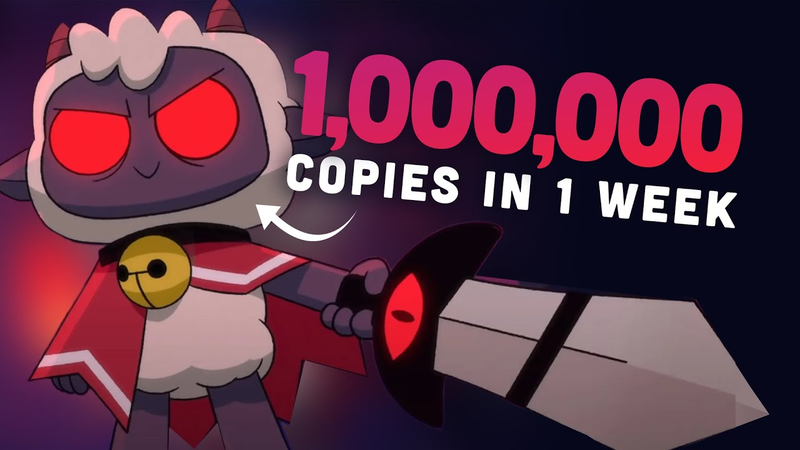
The success of the indie game Cult of the Lamb, which achieved over one million sales within its first week, serves as a case study for effective game design and marketing.
- Success in the indie market requires a strong, easily communicable 'hook' that combines novelty with familiarity, such as the 'Big Butt' principle (e.g., 'Binding of Isaac but with cult management').
- Developers should prioritize replayability by avoiding 'single-use' content, favoring genres like colony sims or roguelites where game systems provide long-term engagement.
- Effective game design often relies on brutal iteration and A/B testing rather than rigid adherence to a Game Design Document (GDD), allowing the game to evolve based on how it feels during play.
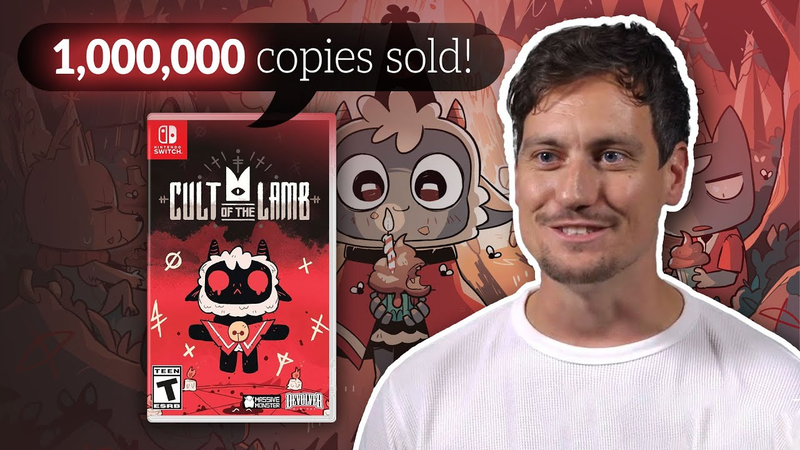
How This Game Dev Sold 1,000,000 Copies of His Game (In A WEEK) — Full Time Game Dev Podcast Ep. 007
The commercial success of Cult of the Lamb, which achieved one million sales within its first week, serves as a case study for the efficacy of high-concept game design and agile production methodologies.
- Massive Monster achieved over 1,000,000 sales of 'Cult of the Lamb' within its first week of release.
- The development process for 'Cult of the Lamb' relied on brutal iteration and A/B testing systems rather than following a rigid, pre-written game design document.
- The team utilized three core design pillars to guide development, ensuring every feature and decision reinforced the game's central vision.

Hyper Success with Game District Publishing - Igor Bazhanov, Game District.
Game District, a prominent publisher based in the Middle East and North Africa (MENA) region, is shifting its strategic focus toward a sustainable, cash-flow-driven publishing model.
- Game District is shifting its publishing strategy from high-risk 'moonshot' hits to a 'Cash Cow' model that prioritizes projects where lifetime value consistently exceeds cost per install.
- This strategic pivot is a response to a 50% decline in global venture capital funding and an 11% drop in hyper-casual, hybrid-casual, and casual game downloads recorded in Q1 2023.
- Game District, which has scaled to over 500 employees and one billion total downloads, is launching a formal publishing initiative to provide third-party developers with direct access to internal product, analytics, and development expertise.

Web Shops for Mobile Games - Andrey Kalugin, Xsolla
Web shops function as a critical direct-to-consumer extension for mobile games, enabling developers to bypass standard platform fees and significantly improve profit margins.
- Web shops enable mobile game developers to capture incremental revenue growth of up to 20 percent by bypassing standard platform fees.
- Top-tier web shop implementations achieve conversion rates between 40 and 60 percent among targeted player segments.
- Successful web shops can evolve into a significant revenue pillar, eventually accounting for 30 to 40 percent of a game’s total mobile platform earnings.

Palworld Explodes / Riot Scales Back / Newzoo’s 2024 Report / Bullish Trends
The global gaming industry is currently navigating a period of intense operational recalibration, characterized by both the explosive success of independent hybrid titles and widespread corporate restructuring.
- The gaming industry is undergoing a period of significant downsizing, with approximately 4,000 layoffs recorded in early 2024 as companies correct pandemic-era hiring excesses.
- Riot Games has initiated a major restructuring, laying off 11% of its workforce and closing its Riot Forge label to shift toward a more focused, project-centric model.
- Newzoo’s 2024 forecast projects conservative industry growth of only 1%, reflecting market contraction, persistent inflation, and a move away from overly optimistic financial projections.