Game Publishing reports and market data
Documents

TWIG #278 The AAA Studio Model is Dead??? And who are the BIG Gaming VC Funds good for?
The modern gaming industry is currently navigating a period of structural tension between traditional AAA development and the evolving demands of venture capital and transmedia integration.
- Despite industry speculation, high-budget AAA titles remain the primary drivers of revenue and player engagement according to data from Newzoo and Circana.
- The pursuit of Hollywood-style transmedia adaptations often fails to yield significant incremental revenue relative to high production costs, indicating a lack of strategic alignment for long-term growth.
- Venture capital firms like a16z and Bitkraft are creating market instability by pressuring portfolio studios to pursue high-risk, unicorn-style returns that conflict with sustainable development.

The Bleeding Edge: Building Games on Discord, ChatGPT, and Beyond
The gaming industry is currently undergoing a structural transition defined by a shift toward platform fragmentation and the integration of generative AI into development workflows.
- Over the next decade, more than 50% of total player engagement is projected to shift from traditional PC and console ecosystems to non-traditional platforms like Discord, Roblox, WhatsApp, and TikTok.
- Generative AI integration can accelerate game development cycles by up to 80%, significantly lowering barriers to entry and enabling niche titles to compete with established franchises.
- Market data indicates a growing consumer preference for high-quality, mid-priced games, challenging the long-standing dominance of traditional free-to-play business models.
It's Better To Be Friends: Marketing "Asks" and the Reality of Game Production
Successful game development requires a fundamental shift in how studios manage the relationship between production and marketing.
- Integrate marketing teams into the development process early to identify and plan for required assets, rather than treating marketing requests as last-minute interruptions.
- Build marketing needs directly into the development schedule, treating assets like trailers, demos, and screenshots as core deliverables that must be planned for alongside game features.
- Aim to spend only 10% of total project time on final asset production by completing the bulk of the planning and preparation work well in advance of marketing deadlines.
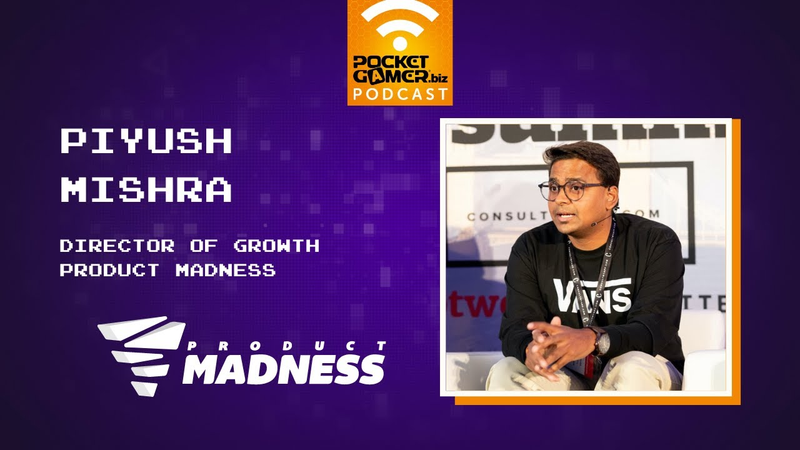
Product Madness’ Piyush Mishra On Smart Questions For Smaller Studios
Smaller mobile game studios must transition away from expensive, traditional soft launches toward a model of strategic, low-cost concept validation.
- Marketing must be integrated into the product development process from the start, as marketing teams provide essential data-driven feedback on target demographics and user retention that product teams cannot identify in isolation.
- When evaluating game viability, studios should benchmark against current genre standards—such as 30% D1 retention and 7% D7 retention in the Social Casino space—rather than relying on historical performance or internal success metrics from older titles.
- To minimize early-stage UA costs during soft launches, studios can test in lower-cost markets like the Philippines, Malaysia, or India to validate basic retention metrics before moving to high-value markets.
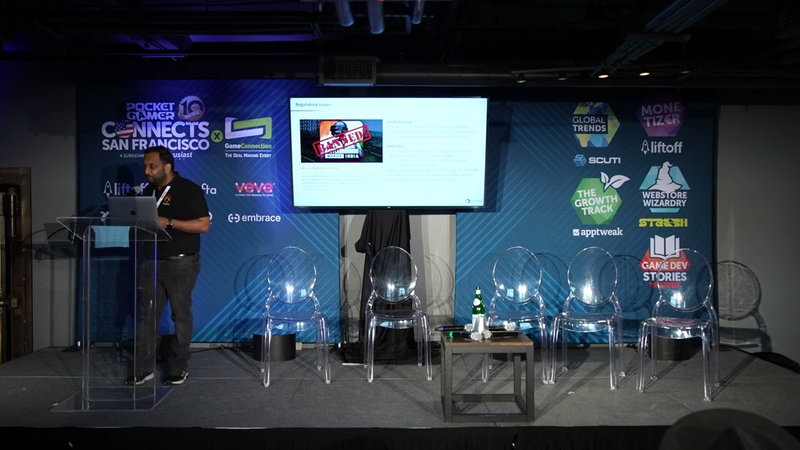
India’s Gaming Revolution, Opportunities & Challenges, Vamil Doshi, Nazara.
The Indian gaming market represents a rapidly expanding sector, characterized by a massive user base and significant growth potential for international developers.
- The Indian gaming market reached 568 million gamers in 2023 and is projected to grow from $3.1 billion in FY23 to $7.5 billion by 2028, representing a 20% CAGR.
- India is the world's second-largest market for game downloads, recording 15.4 billion downloads in 2023, with 66% of the gaming population now residing in tier 2 and tier 3 cities.
- Monetization is shifting toward mobile casual games, with 25% of Indian gamers now making in-app purchases and the average revenue per paying user (ARPPU) growing 10x between FY19 and FY23.
YSO Corp: How to get a billion downloads?
YSO Corp, a French technology-driven mobile gaming company, has achieved significant scale by prioritizing automation and internal tool development.
- YSO Corp achieved one billion game downloads in three years by managing a portfolio of 180 titles with a lean team of approximately 50 employees.
- The company maintains operational agility and profitability by prioritizing extreme automation and developing proprietary in-house tools for analytics, user acquisition, monetization, and creative generation.
- YSO Network, the company's internal advertising platform, is currently ranked among the top three in the casual gaming industry for user acquisition.
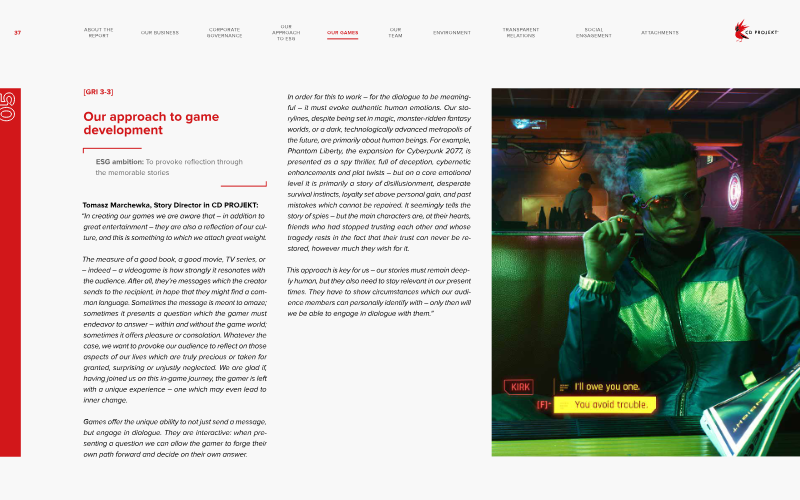
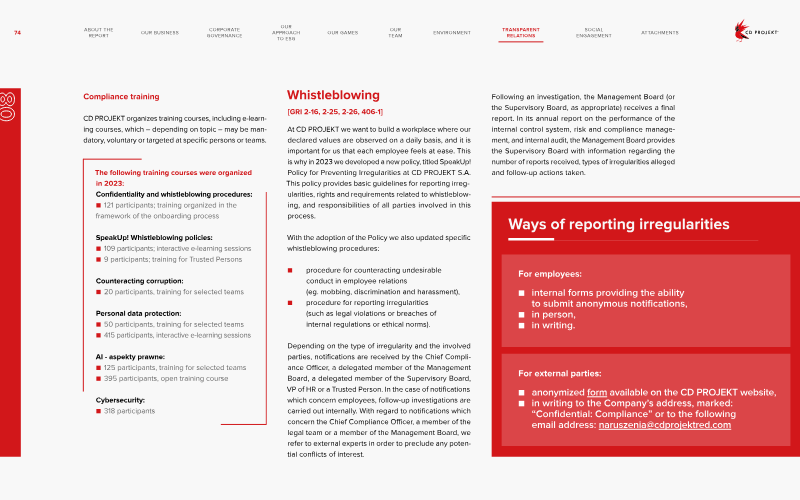
CD PROJEKT Group Sustainability Report 2023
The CD PROJEKT Group’s 2023 sustainability disclosure marks a pivotal transition toward formal non-financial reporting, aligning the organization with upcoming CSRD and ESRS standards.
- CD PROJEKT Group reported 1.23 billion PLN in consolidated revenue for 2023 while maintaining a global workforce of 1,168 employees.
- The company achieved high EU Taxonomy alignment, with 81.3% of revenue and 83.9% of capital expenditures classified as environmentally sustainable.
- CD PROJEKT became the first Polish game developer to secure EU EMAS certification, despite an increase in Scope 1 and 2 greenhouse gas emissions due to the return to office-based work.
A Huge Publisher Played My Game And.... (Devlog)
The process of securing a partnership with a major indie game publisher requires a combination of professional outreach, industry networking, and a willingness to iterate based on expert feedback.
- Securing meetings with major publishers like Devolver Digital can be achieved through cold emailing, but leveraging long-term industry relationships—such as connections made at events like PAX—significantly increases the likelihood of a response.
- A professional pitch deck should be a simple, accessible website containing a 10-minute polished demo, a video introduction, clear game hooks, and a high-level overview of the team and development schedule.
- When negotiating with publishers, adopt a 'show, don't tell' strategy by proactively developing specific assets—such as updated game design documents, new mechanics, or character cosmetics—to address their concerns before they are formally requested.

Century Games: How a Top 20 Mobile Publisher Found Success on Roblox
Century Games has successfully transitioned from a traditional mobile-first publisher to a prominent developer within the Roblox ecosystem.
- Century Games transitioned from mobile-first development to Roblox by abandoning rigid, curated onboarding in favor of social-first mechanics and peer-to-peer learning.
- Strategic brand integrations within high-traffic titles like Livetopia outperform standalone branded experiences by leveraging existing player affinity to reduce acquisition costs.
- Data-driven features, specifically deep avatar customization, have been shown to increase average session lengths on the platform by up to 30%.
Unlocking Global Growth with Google Play's Robbie Hopkins & Romain Mardot
Global expansion represents the most significant growth opportunity for mobile game developers, as consumer spending in international markets currently outpaces domestic growth by a factor of three.
- International consumer spending in mobile gaming is currently growing at three times the rate of domestic markets, making global expansion the primary driver for industry growth.
- Custom store listings that utilize region-specific color psychology and culturally relevant imagery can increase monthly active users by more than 3.5 percent.
- Developers should implement automated pricing tools to adjust in-app purchase costs based on local purchasing power, while using integrity protections to prevent VPN-based price exploitation.

Crafting an Unbeatable Game Thesis with Phillip Black
A game thesis serves as a strategic, logical argument for a game’s existence, moving beyond personal preference to provide a persuasive case for investors, publishers, and internal development teams.
- A game thesis functions as a strategic business proposition that justifies a project's existence to stakeholders by proving market viability and resource alignment.
- The framework requires answering five core questions: market size, specific opportunity, balance of innovation versus standards, content retention pipelines, and monetization hooks.
- Developers should hedge risk by adopting proven mechanics from successful industry titles while innovating in areas where competitors are limited by legacy constraints.
Launching Monumental Franchises with Supercell's Kasım Zorlu
In an increasingly saturated gaming market, the challenge of launching and sustaining monumental franchises requires a return to fundamental principles rather than a reliance on fleeting industry trends.
- Long-term franchise viability is driven by community-first marketing, where developers treat the player base as active contributors who shape the game's evolution rather than passive consumers.
- Mobile devices act as the primary hub for consumer decision-making, meaning that even for PC or console titles, failing to optimize communication for mobile screens is a critical strategic failure.
- Successful franchise management requires balancing long-term brand equity with short-term operational execution, regardless of whether the development team size is ten or one thousand people.