Game Publishing reports and market data
Documents
two & a half gamers session #12 - Metacore 65M loss, Niantic 1 hit wonder, Industry conference guide
The mobile gaming industry currently faces significant challenges regarding user acquisition strategies, the sustainability of metaverse platforms, and the evolving utility of professional conferences.
- High-budget celebrity-led television advertising, such as Metacore’s $20 million campaign, is failing to deliver measurable returns compared to traditional digital user acquisition channels, leading to significant financial losses.
- The mobile gaming industry is struggling to replicate the success of foundational hits like Pokémon GO without the leverage of established intellectual property, highlighting the risks of relying on single-hit titles.
- Professional industry conferences like GDC and Gamescom have shifted in value from formal, lecture-based education to informal, face-to-face networking, which senior practitioners now view as the primary benefit of attendance.
From Hypercasual to Hybridcasual - The Estoty Portfolio story (#86)
Estoty has established itself as a major force in the mobile gaming sector, amassing over one billion downloads and 200 million active players through a strategic evolution from hypercasual titles like Johnny Trigger to more complex hybridcasual experiences.
- Estoty has transitioned from a hypercasual model to a hybridcasual strategy, focusing on refining a core 'arcade-survivor' gameplay loop across multiple titles with varying themes.
- The studio's shift to a direct-to-consumer model highlights the industry trend where developers are moving away from publishers like SayGames to retain control over their own UA and product roadmaps.
- The success of 'Alien Invasion' (scaled in October 2022) compared to a previous, failed fishing-themed iteration demonstrates that theme selection is a critical driver for lowering CPI and reaching a broader target audience.

How Hyperbeard Became Mexico's Top Game Publisher
HyperBeard has established itself as the leading mobile game publisher in Mexico by shifting the industry standard from individual title performance to a cohesive, ecosystem-based growth model.
- HyperBeard achieved market leadership in Mexico by shifting from individual title performance to a cohesive, ecosystem-based growth model targeting young adult females.
- The company utilizes a 'feeder' strategy that funnels users from low-acquisition-cost titles into higher-monetizing games to maximize total lifetime value across the entire portfolio.
- By treating their catalog as a unified brand, the studio bypasses the limitations of the post-IDFA landscape where traditional, isolated user acquisition has become prohibitively expensive.
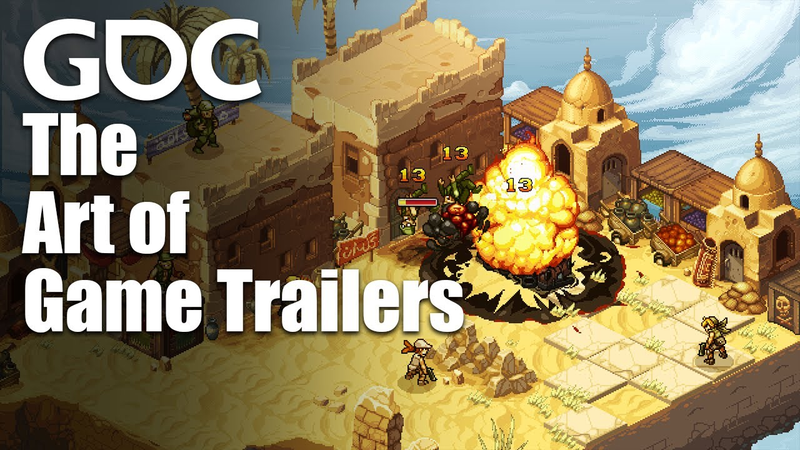
All Game Trailers Are Not Created Equal
Game trailers serve as critical marketing instruments that require tailored strategies based on their specific purpose, platform, and audience.
- AAA trailers function as technical showcases for console hardware and often utilize cinematic structures, whereas indie trailers must prioritize immediate gameplay loops, art direction, and world-building to differentiate themselves in a competitive market.
- Animated trailers carry significant financial risk, costing between $1,000 and $4,000 per second, and can create player backlash if the animation style creates a misleading expectation of the game's actual art direction.
- Always create a rough cut of a trailer using your own voiceover before hiring a professional, as this process effectively identifies pacing, script, and footage issues before incurring expensive recording costs.
Unpacking Krafton’s Strategy: PUBG, New IPs, Investments & More!
Krafton is currently undergoing a strategic evolution, transitioning from a company defined by the singular success of the PUBG franchise to a diversified global publisher focused on scaling creative innovation.
- Krafton is diversifying its portfolio beyond the PUBG franchise by investing in a multiplatform pipeline that includes inZOI, Dark and Darker Mobile, and Dinkum Mobile.
- The company utilizes a decentralized operational model, supporting specialized spin-off studios with infrastructure and resources while maintaining studio autonomy.
- Krafton is aggressively integrating deep learning and artificial intelligence to improve development efficiency, enhance anti-cheat security, and create more immersive NPC experiences.
TWIG #282 Is Netflix Games in trouble? Xbox PR stumble 🤕
The gaming industry is currently navigating a period of strategic recalibration, marked by the rise of sophisticated advertising technology and the faltering ambitions of major entertainment platforms.
- Netflix Games is facing a potential 2025 restructuring after struggling to convert its $1 billion investment into meaningful engagement, with daily active users currently representing less than 1% of its total subscriber base.
- AppLovin is emerging as a dominant force in performance-based user acquisition through AI-driven technology, positioning the company to potentially consolidate the market by acquiring entities like Unity.
- Microsoft’s gaming division is suffering from significant reputational damage following recent studio closures and project cancellations, while its planned mobile store is currently viewed as a limited web-based storefront rather than a competitive ecosystem.
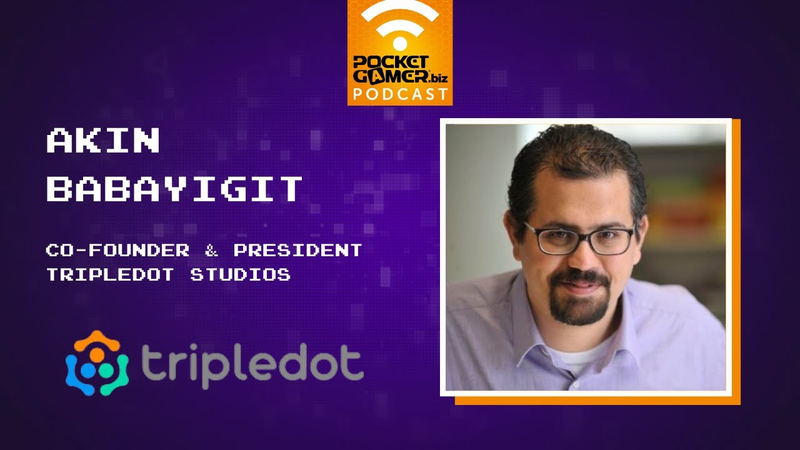
Tripledot Studios' Akin Babayigit On Understanding The Business Behind Great Games
Mobile gaming represents a massive, underserved global market that rewards disciplined execution over traditional creative-first development.
- Tripledot Studios achieved rapid growth by entering the saturated solitaire market with an ad-based model, proving that superior execution in a known, high-demand category can capture significant market share despite existing competition.
- Successful mobile games are characterized by long-term retention curves, such as day 90 or day 360 metrics, which serve as more reliable indicators of commercial viability than day one retention alone.
- Mobile gaming represents over half of the estimated $300 billion global gaming market, yet the sector currently lacks a dominant, singular 'poster child' comparable to major console and PC publishers like EA or Take-Two.
How to Reduce App Store Commission
The mobile application industry is currently undergoing a significant shift in payment processing, driven primarily by the European Union’s Digital Markets Act (DMA).
- The European Union’s Digital Markets Act (DMA) is forcing Apple and Google to allow third-party payment options, effectively ending the industry-standard 30% commission model.
- Apple has introduced a tiered commission structure for external payments ranging from 15% to 20%, though this is often offset by a core technology fee tied to annual install volume.
- Google has reduced its commission to 27% for developers who opt to use alternative billing systems instead of the standard platform processing.
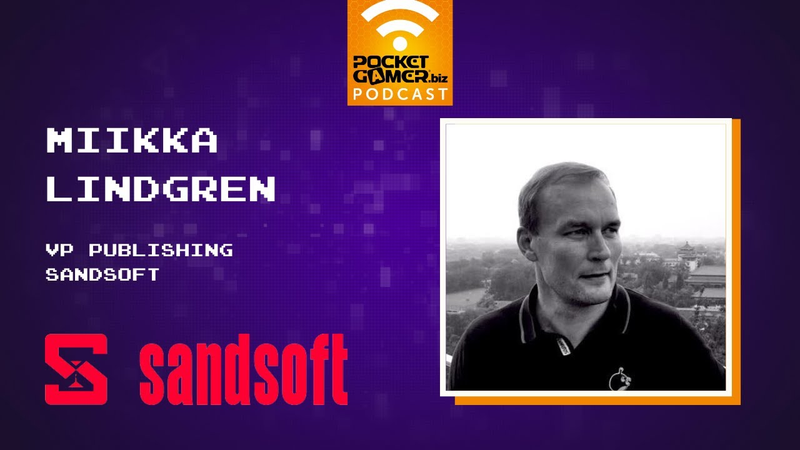
Sandsoft's Miikka Lindgren On Massive Opportunities In The MENA Game Market
The Middle East and North Africa (MENA) gaming market represents a high-growth frontier characterized by intense competition and significant consumer spending power.
- Chinese gaming companies currently dominate the MENA market by investing heavily in deep localization, culturalization, and dedicated regional operations.
- Publishers must shift from intuition-based development to rigorous, data-driven frameworks that validate game design and marketability through real-world audience testing.
- Successful market entry requires a mobile-first strategy that blends casual and core mechanics to create expansive, accessible experiences with high long-term engagement.

GungHo Business Report Vol. 41
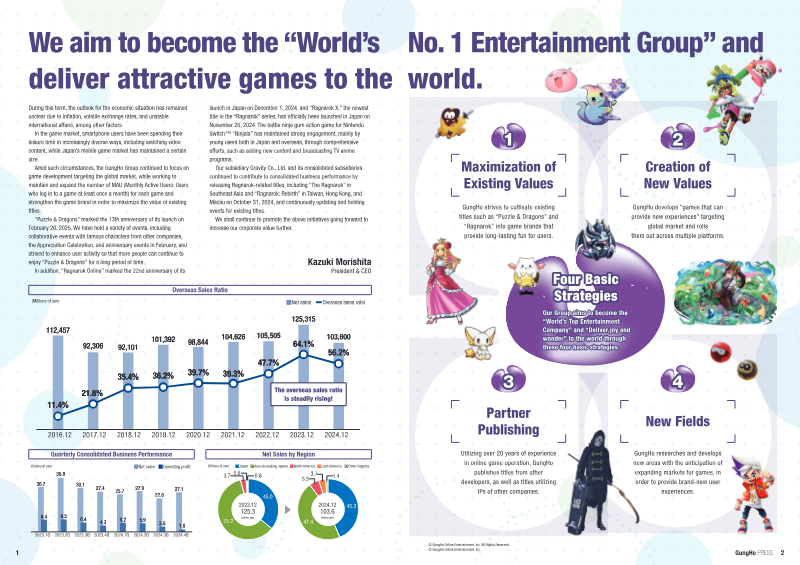
GungHo Online Entertainment aims to establish itself as the world’s leading entertainment group by delivering high-quality gaming experiences across global markets.
- GungHo reported 103.6 billion yen in net sales and 17.49 billion yen in operating profit for the 2024 fiscal year.
- International expansion is a primary growth driver, with overseas sales now accounting for 47.7% of total revenue.
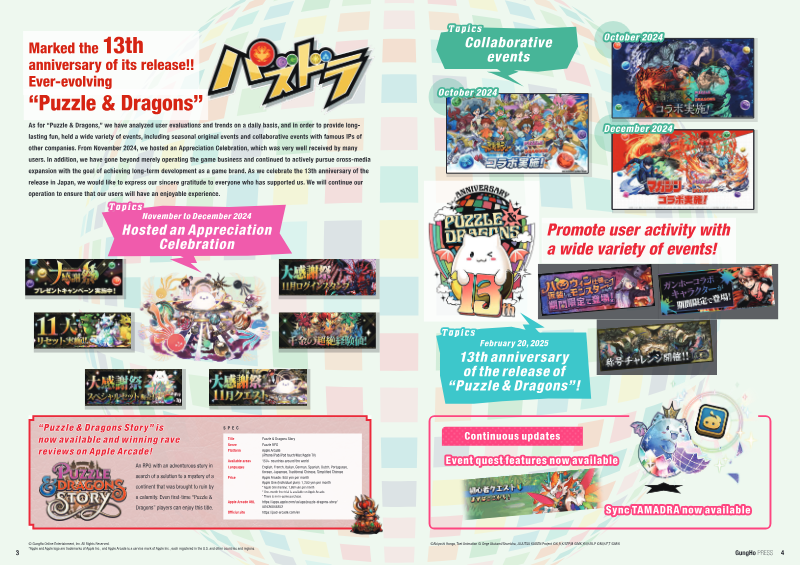
- The 13-year-old title Puzzle & Dragons remains the company's core financial pillar, supported by new releases like Disney Pixel RPG and the Japanese launch of Ragnarok X.

Secrets to Sustainable Success on Roblox with Andrew Rose, CPO at Voldex
The Roblox ecosystem represents a unique paradigm for game development, characterized by high organic discovery and a creator-led culture that prioritizes community engagement over traditional marketing.
- Roblox enables sustainable profitability by leveraging organic discovery and social graphs, which effectively eliminates the need for traditional paid user acquisition.
- Firms like Voldex achieve scale by acquiring successful user-generated content titles and applying professional live-operations strategies rather than developing new, high-risk games.
- Operational success requires a hybrid model that balances nimble, community-driven development with structured, data-informed processes like A/B testing and roadmap planning.
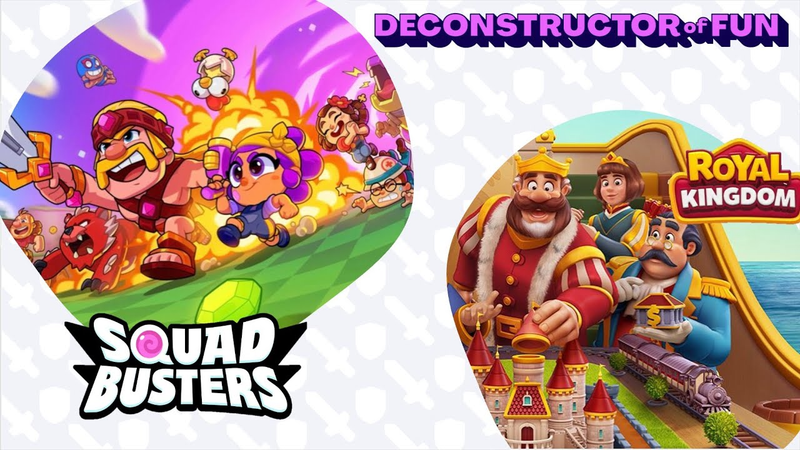
TWIG #279 Supercell's Squad Busters vs. Dream's Royal Kingdom
The gaming industry is currently navigating a period of significant structural and strategic recalibration, characterized by the failure of aggressive debt-fueled consolidation and a shift in how intellectual property is monetized.
- The gaming industry is shifting away from aggressive, debt-fueled consolidation, exemplified by the collapse of Embracer Group’s buy-and-build strategy and its subsequent split into three entities to manage debt.
- The era of standalone celebrity-branded mobile games has ended due to audience fragmentation, with the industry pivoting toward lower-risk, limited-time in-game collaborations and events.
- Mobile market performance is currently mixed, with Monopoly Go seeing a decline in active users despite sustained revenue, while Helldivers 2 maintains steady player retention.