VideoNaavik
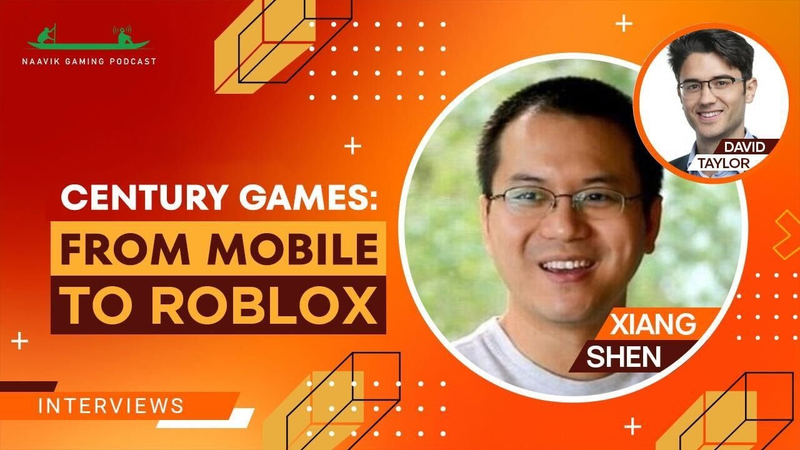
Century Games: How a Top 20 Mobile Publisher Found Success on Roblox
26 Mar 202474 min video
Transcript
Welcome to the Naavik Gaming Podcast, where it is our mission to explore the business and future of video games. We bring together the industry's brightest builders, investors, and thinkers to keep a pulse on current events, dissect emerging trends in games, share lessons learned, and have a great time. This podcast is also part of Naavik's growing ecosystem, which ranges from free and premium research to consulting and advisory services. For more information, visit www.naavik.co. This episode is brought to you by Overwolf. With over 1,500 games supported, 165,000 creators, and 38 million monthly active users, Overwolf is the guild for in-game creators. Whether you're a gamer, creator, or game studio, Overwolf is the ultimate destination for integrating UGC in games. For game studios, Overwolf
offers CurseForge for studios, a white-label solution that lets game makers and publishers easily integrate mods safely and seamlessly into their games, both existing and new, at zero cost. It's battle-tested by AAA studios and games, including Maxis with The Sims 4, Studio Wildcard with ARK, Take-Two Interactive, and others. For creators, Overwolf is the all-in-one platform that enables creators to build, distribute, and monetize in-game apps, mods, and game servers. In 2022, Overwolf paid over $160 million to in-game creators, proving that they truly value the talents and contributions of the gaming community. You can check out everything Overwolf has to offer at overwolf.com or check out the details in the show notes. And with that, let's jump into the episode. Welcome to the Naavik Gaming Podcast. I'm your host David Taylor, and today I'm joined by Shang Chen, the CTO of Century Games, a top 20
mobile publisher according to Sensor Tower and the creators of the recent breakout hit Whiteout Survival, which drew in 500 million in in-app purchases over the past year according to the most recent Sensor Tower estimates. What makes Century Games particularly unique is their willingness to experiment with new platforms such as Roblox and that's where we'll be spending most of our time today. Century Games has two successful Roblox experiences in Livetopia and MetLife and that they launched from scratch over the last few years. Given how difficult it is to be successful on Roblox with original experiences, I'm excited to learn how more traditional developers can find success on Roblox and how this fits into their broader strategy as a successful mobile developer. Shang, welcome to the podcast. It's great to have you here. Thank you for having me, David. Could you share a bit about your background and how you ended up at Century Games just to kick us off? Yeah, sure. Uh, I am a all-time game developer. Uh, I started working on game industry since I graduated from college. Um, my first company was in Ubisoft developing AAA games. Um, been working on several AAA game titles
Ubisoft and Electronic Arts and I started working on uh, MMO RPG games on PC then um, to the uh, web page games and mobile games pretty traditional path over the past two decades. Um, been working also working at Tencent and also briefly a year uh, at Roblox uh, developing infrastructure over there. Uh, and I eventually I realized I am a game developer or that plan platform developer so I left Roblox starting my own startup uh, building mobile games. Uh, my investor was FunPlus which was the same entity with Century Games uh, before uh, before us being off. And uh, I think in 2019 uh, I think 2018 Century Games there was a spin-off from FunPlus and Century Games started developing games by own.
They were looking for CTO so they they found me and I think that was a good opportunity so I actually merged my team into Century Games. Uh so now that's today and actually very interesting team I founded where at that time was developing Roblox games so that's actually a perfect combination between our team and Century Games. Got it. And so just today before we sort of jump into the Roblox side of things what what's your role at Century Games today? What do you cover and and um what are you working on a day-to-day basis? So I'm a CTO of Century Games so I work on mostly uh technology including essential technologies uh and also the infrastructures for our mobile game business as well as Roblox because I was the founder of the development team. Uh so yeah that's pretty much my everyday life so working a bit here and a bit
over there and uh talking to a few other Roblox developers for sure and Roblox platform of course. Uh so yeah most of them my time was still on mobile game but Roblox to be honest is taking a lot of my my time for sure. Awesome. Well that's that's great because we want to talk about Roblox today. I mean Whiteout Survival is obviously an incredibly exciting game. Um Navic actually did a deep dive on it so for those listening uh be sure to check that out if if you want to if you want to learn more about what what made Whiteout Survival successful at least from Navic's perspective. Um but um going back to sort of the Roblox side of things you just mentioned that you started um you had sort of already started working on Roblox before you came to Century Games. So I'm curious to just hear the sort of how that came together, what made you interested to start developing Roblox games? Yeah, so, you know, I had some background at Roblox. That was very like long ago. It was 2013 and 2014.
Uh Wow. But, I've been always keeping an eye on the company on the platform. Uh and you know, I think back in the end of 2016, uh there's a rapid growth uh started at Roblox. Uh and we paying a lot of attention over there. Everyone is paying a lot of attention over there at that time. Uh I think in 2019, I started realize, "Okay, there might be a really good opportunity for game developers uh on that platform." Uh so, I actually had uh cuz I you know, I was I was still running my startup at that time. We had a few mobile game title. Uh not huge success, but still good enough to support the team. But, you know, I always keeping up I keep an eye on opportunities and I I was feeling there was an opportunity on Roblox platform. So, I had a team of about like five people started doing
some initial and research and uh prototypes on the Roblox platform building some Roblox games. Um mostly game prototypes. And then there was a kind of the acquisition. So, we we we got merged into Century Games and we discussed with our CTO and feel like because Century Game already had a pretty strong presence on uh mobile. Uh so, it doesn't make a lot of sense for our team to to just uh uh working on something that there is already infrastructure at Century. So, it's actually the best interest for our team to to for my previous team to dedicate on Roblox because you know there was a a new trend. Uh that's why like I literally converted my entire team to the Roblox developer team back in 2019. That was That was how we started doing Roblox development. A little bit kind of um you know,
it's it's not a deterministic path, but but still like we end up doing doing Yeah, I I can give you if you want to here I can give you a little bit more details about that like like what's our first title and was it successful? Like That would be great. I think a lot of a lot of folks listening are probably interested to hear like what was it like? Um you know, what was the learning curve like? What was the onboarding experience onto Roblox like? Um so that you know, if they're interested in building on Roblox, they can sort of manage their expectations for how it how long it takes to get ramped up and be able to make an impact. Yeah. Yeah, so absolutely. So um it it's very interesting and I I I would totally love to share with professional developers cuz I will being a professional developer or or seasoned developer, you would think that you probably have an upper hand on the Roblox platform uh given that a lot of developer on the
platform indie developer, some of them are kids. Uh so they don't have a lot of experiences as you do. Uh that was what we think. We we we literally said like uh I I hope there are not not a lot of Roblox uh developers listening to this podcast. I was thinking we were talking and joking like let's teach those kids how to make games. That was like literally what we said at that time. We were like we're totally thinking we're going to dominate that. So um we we So we we took our mobile game experience uh into our first game we made. The game is still running. Uh, the game is called Mega Mech. Um, so it's a mech battling game and it's like a uh uh, I think there was a a mobile game as a similar to that called uh Robot Arena. I'm sorry, I I kind of forgot. It's been so many years. Um
So, it's basically a mech battling game and it Oh, yeah, I've seen that actually. It's pretty cool. that game probably 100 100 concurrent player right now. Uh, I don't know. Uh, it's it's actually pretty good. before actually. It was bigger before, yeah. The game hasn't been updated for over 3 years, I believe. So, you can you can see how interesting this platform is still doing I mean, you you you have like 100 concurrent player. Sometimes I had multi 100 concurrent players. Uh, it's just not too bad. So, so we had uh that game it's a lifespan like a year developing that. It was really good graphic quality. I even showcased that to Roblox uh team and they were excited about it. Everyone was excited about that. Uh So, we think, "Okay, so that going to be a mass hit." And we launched the game. It was some good feedback. But
immediately like literally the game didn't take off. Like there was there was like the maximum I think 4,000 concurrent player, but mostly because Roblox promoted the game. They were we like we did a lot of user acquisition through the ads network Roblox ads network. Uh, but it didn't trigger the platform search and discovery algorithm at all. Uh, cuz we know the the the uh retention was pretty bad. It was I think on there I think it was on there like 15%. It was like uh a bit between uh 10 and 13, I believe, at that time. So, so yeah, we tried a lot of ways to patch that, but didn't really get work. Um and then we kind of tried to understand what's going on. It's a game had a really good graphic at really in our opinion really good onboarding experience. Um
so, the biggest lesson we've learned is that we took the mobile game experience too heavily uh into the platform, uh which is not really compatible with the platform's user expectations. Uh and to to be more specific, uh because we saw this game is very strategical, uh very tactical, so we need to teach those players how to play the game. Plus, we saw those players they they were young, they don't have a lot of uh FPS or TPS experience. So, we we tried to teach them how to play the game. So, it's a pretty like in in terms of mobile standard a pretty hands-on onboarding experience, like very curated uh ready experiences. Uh we thought that was right. We thought that was definitely right for making a
mobile game. As you you download a new mobile game, it's like nearly all the arrows teaching you how to play the game, like every you can't make a single one mistake over there cuz they just like curated everything for you. That was not the case for Roblox because Roblox players they play in cohort, or they play with their friends. That was a a obvious play pattern on the platform. I clearly after a years of observation and understanding, that's what we found. Um so, one typical scenario is uh they they they do a lot of like play dates. So, they uh they play uh those games with their schoolmates, classmates, their friends, their cousins. Um and they always just like cuz players they have different progressions in different games. So, if
uh they're bringing a new player and they had to go through that tutorial experience, it's actually really disconnected. So, it basically not really allowing them to play together. So, they actually shut down the Roblox social feature severely. Uh that in our opinion, that was the biggest issue for that game. That was why we uh in Lightopia, we kind of had no tutorial at all. You land into the game, you have everything you can play with immediately. Uh so, that's basically the biggest lesson we've learned from uh working on MechaBreakers. Uh also, like as like as a professional developer, that was the very hard lesson learned. I hope anyone who want to enter the Roblox space can listen to uh our experience that could basically help you to avoid that. Yeah. The imagine the biggest the mistake.
Yeah. Yeah, no. I I and I love that insight of thinking about the end user and what they how they're using Roblox to engage. Like to think about this is a play date. This isn't necessarily like a game session. So, how do we facilitate more social experiences in order to to sort of you know, deliver or that they have as as as, you know, as a player. I'm curious then, you know, I know that you guys have deep experience on, you know, 4X games and and strategy games. I'm curious, you know, what was the process to decide on Livetopia, which is a role-playing game, which something that was sort of a departure from what you had worked on previously? Yeah, actually, Century Game not only developing 4X games, but we also develop casual games. So, a few of our pretty good titles, yeah, including those uh you know, we we launched Livetopia before we launched Wild Horse Survival, actually. So, our backgrounds were more
on the casual side. So, we had a few pretty successful casual game including Family Farm Adventure, Dragons Scape's Adventure, even Frozen City was a casual game. Uh And and also a few games like Idle Mafia, like kind of idle game. So, yeah, we had a lot of casual game background. So, it's actually pretty natural for us to develop casual game. There was another reason why we created Livetopia uh was uh we actually felt that was a opportunity I mean the role role player to the RP game space cuz at that time Brookhaven, even today Brookhaven is a I mean you have to say it's a top two Roblox experience. So, we we saw the massive success of Brookhaven. And we looked into Brookhaven, we feel like the game barely
gets updated and then the graphic was very like in my opinion old school. So, we feel like if we modernize the game environment, we add more features to that, make it bigger, it there be an opportunity, but that's basically why we wanted to develop Livetopia. Super interesting. And you know, going back to what you said before around player expectations, I mean, there's sort of a an expectation that these games are going to appear, you know, like they were made by a teenager, young game developer, um you know, an element of jankiness, if you will. I'm curious if you sort of took that into mind when developing Livetopia or were you thinking let's you know, do a professional, let's make this look as as pristine as possible while taking the best um you know, gameplay patterns from from the top game, you know, Brookhaven. Yeah, yeah. So, as I mentioned, we learned a lesson. So, I uh
also the advice to any professional developer wants to enter the uh Roblox space is uh try to learn from the native developers, um cuz they they actually know what their audience are looking for. Um and they've been in on the platform for for years, even some some of them are for over a decade. And they they they have a very deep understanding of the audience. Uh so, yeah, take Did you hire native developers? Uh we yes or no. So, we we we talked to them very actively. We They They were contractors working with us, uh but because a lot of our team, they are based in Singapore and China, so we we don't find a lot of local native developers,
so we end up hiring uh But also, you know, we had an existing team, but we actually Yeah. Uh yeah, there was a lot of local hiring, but we talked to a lot of them, they were working with us, uh but not converted to full-time employees. But but yeah, but the thing is in my opinion, the the most important thing is really just to learn from the native developers and also just observe the players pattern. We actually, because you know, all these servers where most of them are open, so you actually will be able to just to jump into a server and observe the players behavior and we will play together with the players. And it's pretty funny cuz the player knows who's many players know who are the developers. So sometimes I jump into a server, they recognize me and they just wanted to hang out with me and it's actually pretty interesting
experience and I it gave me the opportunity to ask them directly like what do they think it was right, what were they looking for. In my opinion, it's like more authentic feedback rather than just you have those polls or those kind of feedback bullet white boards that you ask them to put on their feedback was in my opinion more passive. This is more active. So so yeah, I I like yeah, I like a lot playing together with them. That's it yeah, that's definitely something that sets Roblox apart, I think, is just like the ability to go into servers and just watch players engage and and you know, do the research by you know, watching their their watching their behavior. I I've had that experience myself and it just being able to see the like chats like when people run into issues, they'll write the question in the chat and say like, "Hey, how do I do this thing?" And so if you're in the servers
and you keep seeing the same question again and again, you're like, "All right, we have something that we need to to address if people can't figure out how to do, you know, the UI too figure out how to get that objective completed. That's right. Believe it or not, the chat is actually one very important metrics we are measuring. The more active, at least for role-playing games, the more active the chat it is, I typically the more successful the game is. If you jump into a Brookhaven server, you will find there was a lot of chats happening all the time. If you go into a Livetopia, you will you will you will see like fewer chat. If you go to less popular role-playing games, sometimes the chat is dead. So, it's actually pretty important. And I think for many other Roblox games, that's the same. Pretty much most, I would say like 99% of Roblox game have chat enabled. And actually, chat is an also a pretty
native way for player to learn how to play. They they learn it just to ask in those chat channel how to play if they don't know if they don't know. So, and that was like why sometimes the the hands-on tutorial is not really needed because they just ask others cuz this is Believe it or not, this is a super social environment. It just player they they don't Yeah, they they just talk. They they they they don't they don't feel anything. They they just they want to make friends. Like sometimes you enter a server, you you just immediately receive friend request. It's very normal. Yeah, I always tell people that like Roblox you know, for all the game experiences on there is essentially what AOL Instant Messenger was for for my generation. It's just like a place where you go after school to hang out with your friends digitally, you know. Yeah, yeah, it's it's it's actually more
like a social platform rather than gaming platform. I I I totally believe so. Uh and and another interesting metrics is uh the I I believe I don't have the specific number, but players uh brought in by friends, I think it's like five x more engaging than frie- the the organic players. Uh interesting. Three x or five x, definitely like multi-fold uh engage more engaging. And they they monetize they monetize they monetize better as well uh by a pretty big margin. Uh so so that's yeah, so that's why a lot of game they they have those like invite friends feature uh not because like they they want to use this to They are but but friends are like one way is to allow you to acquire more users, but more important this is the way to allow you to acquire more like
users uh but high high quality users. So this is my point. And high quality users triggers platforms search and discovery algorithm. And this actually funnels you you like more organic traffic into your game. So this is actually a pretty good circuit circuit circuit. Yeah, I I'm thinking of a a data point I can't remember how recent it was, but you know, in the last 2 years I think Roblox shared a data point that um players play eight different games on average per play session. So you know, they're much more transitory in nature. And so anything you can do to retain players is is definitely valuable cuz the majority of your your player base is actually through acquisition. Yeah, yeah, exactly. Awesome. Well, I'd love to like dig deeper into to Livetopia at this point and just sort of understand what's going on with Livetopia. So I mean, you guys have been doing a lot of brand activations um and you know, from my perspective, I think partnering with an existing
successful game is a much more effective way to get um, get impressions on on your brand if you're if you're a brand owner, brand manager. And so, I'm curious just from your business perspective, like you know, with the Roblox take rate, how big of an opportunity, how big of a of a how how important is that brand revenue for the ultimate business that you have in Livetopia? You might not believe that our two we make more money from brand integration than from the platform last year. Um, that's really a pretty important part of our revenue for for Roblox business. Uh, the the thing about Livetopia is it it's a contemporary role-playing game, so it naturally fit brand integrations. Uh, it's just like a virtual world, and so it's so easy to just to build a Nike store, a Lego store, in in the game.
Uh, so so we literally could take any brand integration as as long as they are family-friendly. Um, they give us a limited opportunity. Something like some Roblox game, they they they have like very limited they're like, for example, uh, some uh, like like role-play sorry, the fantasy games, they they they have very limited brand choices. Very limited choices to do brand integrations, but but we are more. So, um, so yeah, this allow us to really just select a a very good brand partner. Um, and as for brand integration, uh, I I can I can share a bit of best practices that you you think that's good for the audience. Yeah, that'd be great. Okay. Um, so so first of all, so one of the big lessons we have learned is uh
try to make that very organic. You don't want to just uh bring a brand integration in a completely different experience and integrate that into your game experience. Uh which actually going to drive your players away. Uh we had a few uh which actually reduced our uh game play metrics. Hurting the uh game discovery. Uh cuz you know, the algorithm the model is always I think the model is got refreshes every day. So if you're your metrics uh was affected, so technically your model will send you less traffic. Uh which at the end of the day you don't want to see that as a Roblox developer. So try to integrate the the brand content in very organic way. For example, for role playing games, we want that to be a role playing uh scenario, right? Uh we actually had some very successful brand integration. For
example, LEGO. We we we literally built a uh a small part of LEGO City. There are uh skate park. Uh there are like a uh LEGO building that you actually can will be able to customize. Uh there are LEGO vehicles. So player will be able to drive around. Uh so those got like liked by the players a lot. Um there are some uh clothing store which was also a pretty good uh integration in Life Tokyo because, you know, a lot of players they they just want to Oh, by the way, I I can share a very interesting um findings. Uh for role playing games, uh you one very important feature everyone should integrate is the avatar feature. You should allow the player to change their avatar in the uh experience. Even the player will be able to change their avatar avatars through
Roblox website. Uh but the very net native way to allow them to change their avatar in game is actually uh making a huge difference cuz we actually AB tested that. With or without a avatar integration, uh there going to be 30% of play session impact. 30% is huge. Uh in terms of in Yeah, average session length, you mean? The average session length, yeah. So, if you take away the the avatar in-game avatar store, and they're going to be the average session length is going to be reduced by 30%. Uh speaking of avatars, I kind of Can I just ask a quick question on that, though? So, like when you did that test, did you already have an established audience? Because sometimes I think that the avatar customization, it's just sort of another thing that a player has to do before they get into the you know, the the activity the activity of of the game. Um I'm
curious, did you test that before you had a critical mass and people had already bought into being you know, players of Livetopia? Or have you Did you AB test that at the very start? Uh no, we actually tested that in Well, cuz we had uh another game called Skytopia. It was That was mostly just like a small experience cuz we uh at that time we created I believe that was a one-year anniversary of Livetopia, and we decided to just to create a event uh in event kind of sin- in that environment uh for the player to celebrate the anniversary. Uh They really liked that a lot, so we uh spin that off as a uh standalone experience so called State Tokyo. It's a futuristic uh city. Um But that's the bare minimum of the uh Live Tokyo game. And we saw a very low uh
session time, which really translate into a very bad retention. Uh but we wanted just to use that a as a test that. So, we were thinking like what what was missing? Why why like they are kind of a similar game experience uh was was a spin-off uh while this was that. So, we kind of trying to add those missing features one by one. Uh the biggest one was the avatar cuz we took the avatar feature away from that. And when we add that back, immediate 30% increase of play session. So, session lines. Yeah, that was that was the experiment experiment that we did. No, I just It's awesome that you have access to that data and that you're able to AB test. I think, you know, Roblox's analytics platform has come a long way. So, I imagine when you were doing this 3 years ago, 2 years ago, that you had to sort of build your own analytics tooling in order to to run these. Yeah, that's the upper hand of a
professional developer. So, we actually had the ability to build our own uh analytics tool. Uh even today when we were running uh brand integrations cuz they they need customized analytics. Um for example, brands want to see uh how long players stay in their brand experience, uh how many uh uh like interactions the player had uh with the brand avatars outside brand NPCs, for example. Um which so far Roblox avatar Sorry, Roblox uh uh analytics tool didn't support the customized uh analytics, but they they are going to support that very soon as I told. Uh So, so yeah, so we we we had our we are still using our customized BI uh analytics tool today. Um
and going going back to the uh brand integration, like uh I was I was talking about we wanted to do more organic, like clothing uh brands uh we because of the avatar skins, player want to try try on those new clothes over there. It's actually very natural for for clothing uh brands to have clothing shop in the game, so player can try actually those uh clothing uh from from different brands. Um so that that's actually the in my opinion the biggest uh takeaway from brand integration. So, for all the new brand integrations, all brand activations always uh kind of suggest them to do that in a more organic way. Uh so, for example, there were some brands that were building obby in Livetopia. It was not bad experience, but I it it's certainly not the what the player were looking for. Um they they actually enter Livetopia for roleplay experience uh
rather than just the obby challenges. Uh by the way, obby uh which is very familiar for Roblox audience, which is obstacle course. Uh cuz if they want to play obstacle courses, they they can just to play like obby games on Roblox. They don't need to go into a obby experience like Livetopia to play obstacle courses. Uh so so yeah, uh that's that's something I would uh recommend. Awesome. And just just like tell us or or maybe we can talk a little bit about the the value proposition for brand brands working with Livetopia versus, you know, building their own experience from scratch. I was like, I want to ask this question. I think I have some numbers here. All right, so this is from your brands in Livetopia 22 2022 numbers. So, you had 314 million total brand experience visits. You had 12 brands activate. You had 5.2 million average monthly active players in a
brand experience. You had 12 million total engagement hours of brand experiences. And you had 58 million total virtual brand items acquired. Um so, those are some pretty crazy numbers. I mean, as someone who came from building the building brand experiences, you know, we would tell brands, you know, 5 million visits is is, you know, a good number for the first year. And these aren't just like, you know, these activations I think are just like a month long and you're already eclipsing what we would do in a year. And I don't know how much you guys are charging for these experiences, but, you know, you know, presumably, you know, we would charge hundreds of thousands of dollars for these original brand experiences to be launched. So, I think, yeah, when you talk about ROI, like for for money in, my from my perspective, working with existing game like Livetopia delivers a much higher ROI. There's a lot of There's a lot of room for for, you know,
capturing margin there between the cost of building an original experience and just activating in something like Livetopia. Absolutely. Yeah. So, by by the way, all of these numbers are public. We just shared that in the livetopia.com website. So, if anyone wanted to check in other than the 2022 number, we also have 2023 number. I think both were shared on that website. So, so yes, I uh to just to answer your question, the in my opinion, the biggest value proposition for doing brand integration into existing successful uh Roblox experience is the massive user base it already has. Um so, typically, like you said, you spend like uh hundreds of thousands of dollars building a experience. If If you say a a bespoke uh standalone experience, you spend that much money building that, and then you need to do user acquisition, right? Roblox has its immersive ads, uh
many other ways or you can do influencing marketing, uh but they all cost you addi- ex- extra money. Um so, and so, basically, on top those uh hundreds of thousands of dollars, you still need to spend hundreds of thousands of dollars to get your initial traffic. Uh the problem is, if the game metrics was bad, those traffic you got from user acquisition or marketing won't trigger the platform discovery algorithm. So, after you finish the campaign, your player account will just a drop sharply and eventually to zero. And there's basically just a you get for all the money you spend, and there is no like at but no bonus you get. But for uh Livetopia uh or or any other similar game experiences, because they are more like
called an evergreen game experience, so Roblox send organic traffic every day. So, for example, for Livetopia and Mecha Life, um we both receive like uh uh hundreds of thousands new players in each day. I mean, at least like a definitely six digit. I I I forgot the number nowadays, but definitely definitely six digit new players each day. From the Roblox engine. Uh and these player, they enter the game, they will immediately see the brand content. And they they will engage with those brand content. It's just more than impressions because if you do that well, you integrate that game content into everyday play. So they will actually just play the game. And also, there are a lot of returning player for that total player metric like with these these games and all the other successful game because these game have very good retention metrics. So there
are a lot of returning player. They return that the game they return to the game everyday and they will continue play the brand integration. And believe it or not, a lot of standalone brand experience like player enter that, they they play the content, they just leave. And pretty sure a lot of those standalone brand experience had a very poor retention metrics. Um because otherwise they they they'll be they'll be picked up by the discovery algorithm, right? Because they would not that that means their metrics look bad. So that those Imagine that's the biggest value proposition for doing brand integration in existing uh experiences. So you basically get the extra marketing effect by spending the same amount of money. Yeah, and I also think that you get sort of a halo effect as well because, you know, when you create a original experience from scratch, a branded experience, people just look at it as
this is an advertise this is like an advert game. Like it's this is an advertisement. This isn't made for me. Like I'm going to get out of here as quickly as I came in. Whereas if you are integrating an existing game that someone has, you know, a relationship with, they trust, you you the developers, they they feel, you know, a sense of identity with that game. You having that having your brand in that genus builds that affinity. Um and and so I think like there's just so many reasons why building an existing experiences makes a lot of sense. Um all right, so I just want to move I just want to move on and talk about Metro Life um just briefly cuz you guys launched another game, which is an RP game. I'm curious, what was what was sort of the thought process for launching an additional RP game versus exploring other genres on the platform? Yeah, yeah, not just you. A lot of people asked us cuz it's it's weird kind of we are competing with ourselves, right? Life Topia was doing a lot of brand integration, but we also had another ideas how to improve the game.
But because we we had to do we had another commission like commitment to brand integration, we actually couldn't spend a lot of time improving the game uh to the direction we want. So, we end up discussing we end up discussing like how about we just the putting all of our new ideas into a brand new game. That was it. Um so, for for Metro Life, there were uh a few things we we we start when we uh when I had uh the the game uh created. So, the first thing was a relatively innovative gameplay, which is kind of more of the control of UGC. Uh cuz you know, in in this RP game, player will be able to build their houses, build their vehicles. Most of them were preset like Roof
Raiders completely preset. You can't even customize that. And Life Topia has like very small kind of customization feature. Um There There's a game called Welcome to Bloxburg. There was a pretty uh full customization, but that's a premium game. You have to pay for that. Every player will be able to access. So, for Metro Life, we saw that we give player certain degree of freedom of customization. So, we actually allow them to customize their furniture, customize wallpaper, like floor, and pretty much a lot of things. And also their vehicle. They will be able to just make a full customization of their vehicle, their wheels, their uh like pretty much everything about their vehicle. And this is one thing. The other thing is uh we We actually had a pretty innovative idea. It's not innovative. It
was like from GTA 4, like integrating phone into the game. And at that time, there was no uh such thing on the Roblox uh ex- any other Roblox experiences. So, we wanted to kind of integrate all the gameplay feature into the phone cuz it was so uh a daily thing to players, so familiar to the players. Um So, we actually introduced the phone to to the uh uh uh the roleplay game. Actually, this concept got uh borrowed by a lot of experience like the recent There was a game called uh My Life Together. It was also very successful. Like They did that in a even better uh way. They actually integrated Snapchat into that. It's super smart, super well executed. Yeah, yeah, yeah. So, that's very, very smart. Um That's amazing. I'm surprised that's in Roblox's terms of service that you can that you Oh, no, no. They It It's not No, not the
real Snapchat Oh, okay. in there. It's like Yeah, you basically took a selfie and you share it with your friends or any like player in the server. Uh they can respond to you. Yeah, yeah, yeah. So, it's kind of the Snapchat feature. Um this is actually pretty viral at that time when they launched that. There was a lot of YouTubers they they uh they broadcast that. Um that should make that game pretty successful. Yeah, I saw that at some point. It was, you know, a top 10 game uh yeah, even top five for a second. Yeah, you're right. So, uh another thing is like we we wanted cuz you know Roblox are doing age up uh initiatives uh all of these years and there are definitely a increase of uh like uh older player. So, we kind of wanted to create a more realistic environment compared to the more of a
cartoonish art style of Livetopia. So, me and my team we looked at at that We we uh inspired by a game called uh Berry Avenue, which is also very well done. Uh so, their art style actually really in my opinion one of the best in my opinion the art style of the role playing game. So, we borrowed a lot of their concept as well. So, like all these all these together like we couldn't do that for Livetopia cuz it's already existing established game and also a lot commitment to brand integration. Like we can't just like we change the game for one day and those brand was thinking about like the old style. Um so, we just yeah, a lot of limitations. So, we end up doing a new game. Uh it turned out to be working really well. Uh They're definitely not competing cuz it's a much more broader space and um and and they just have their own audience playing those games.
Well, one of the things that I wonder about when you do launch a similar game like we see with the with a lot of Obby games that they'll you have, you know, um you know, developers who have create, you know, tens, hundreds of Obbys uh and they're just basically moving their player base across different Obby games over time. And so like one of the things I was wondering about is when you launch this other role-playing game, was there opportunities for some cross-marketing and and pushing some players into to Me Life from Livetopia in order to get the algorithm going um so that it would start to, you know, organically send you new players? Uh we thought about that. We actually uh did send a in-game banner uh and in-game photo in Livetopia telling Livetopia player, "Okay, we developed a new game called Me Life and uh if you're interested, give it a check." Uh but we were not thinking about migrating those players to to the new uh
experience. We were mostly thinking using that as advertisement uh opportunities like in-game a cross-promotion type of thing. Um I I I believe uh yes, you're right. Uh some some some Obby game, not just Obby game, there are simulator game if you know that. Um they migrate their old users uh to the new games or sequel they develop. Uh it was pretty successful. And just for our audience, um so Obby stands for obstacle courses and simulator games are sort of just like number go up games where you, you know, click a button and numbers go up and then your character gets more powerful. Yeah, yeah. Cuz these games cuz the there is a very uh obvious trait for these game is their content are consumed really, really quick. Um and basically just you play the game for like an hour and you pretty much know
what's going on. Everything going beyond was repetitive experience. You just make that stronger and stronger. Just number goes up, right? Obviously just like challenge like a harder obstacle courses. But the gameplay essentially all the same. So that's why like they are long-term retention with typically bad. So it makes perfect sense for them to migrate their player to a different scene of game. Uh before play for games like role playing, the player going there really just a hanging out with their friends. So those are like social features over there. So it's just a yeah, they they'll be there like forever as long as you keep updating the content. So there's doesn't make sense to migrate them to other games. Makes sense. And so go and just you know, Metro Life ended up having 600 million million visits. So I mean, that's a lot for for Roblox and and
yeah, I think it's a testament to sort of your team's ability to to know what works for players. I've seen many you know, more traditional game developers struggle to even have a tenth of of those numbers. So kudos to you guys for being able to not just do it once but do it twice. I think that's definitely demonstrates it's not just luck that that you guys are able to be successful. Which is which is in many cases I think, you know, how people are successful just because it's you know, they got lucky and we only see the ones who are successful. We don't see the millions of developers who never, you know, were able to figure out discovery. So I wanted to talk about Century Games launching a mobile game for Livetopia. Curious just sort of the strategy behind that. I I thought it was really interesting because you know, you can you can really have a large audience on Roblox, but it's difficult to monetize that audience. You've been obviously successful in figuring out ways to do that through a
brand advertising. But I'm curious if there was sort of any thought process around moving players to high more highly monetizable platforms from from Roblox. So the idea for creating a mobile version of Livetopia was technically not trying to migrate the player to a more platform that was better monetization. It was trying to take advantage of the established game IP and bring that to a broader audience. That was the original idea for doing that. If you look into the Livetopia mobile version, which is called Livetopia Party, it's quite different from the Roblox version. Cuz when we were designing the game, we were thinking that it should be quite a different audience on the mobile space. Like we kind of wanted to add more gameplay features over there because it lacks all the social features
from a established platform like Roblox. It just doesn't make sense for player who doesn't know each other to jump into a game and start chatting with each other and and there is no like existing like avatar support like what Roblox already supported. So So So yeah, we actually add another party games just like Egg Party and which is pretty Yeah, pretty hot these days. That's like Fall Guys. Fall Guys or Stumble Yeah, like Fall Guys, like Stumble Guys. Exactly. So Cuz that those are established battle tested game mode that work on mobile. So we kind of introduce a lot of those things. And also UGC levels, which actually is still under development which will be online soon. Uh so we kind of trying to blend those things with the existing Livetopia experience, which is the social
family-friendly casual experience. Like player can still drive cars in a small town and build their house and invite their friend for a house party, things like that. So it's kind of the blend of a Roblox experience, Livetopia Roblox experience with the party game experience. Uh at this point we are still working on that. Uh we haven't seen a very strong metrics that will kind of give us the confidence to do massive marketing yet. Uh so we we actually did some marketing test um in in some countries. But we haven't seen the the number yet that we are satisfied, very satisfied with, but we we are definitely confident about the future of the game, so we will be continuing working on that. That's great. Um a lot of, you know, what comes to mind based on what you said is just you know, a lot of people look to are
are looking at Roblox as a potential platform to develop new IP rather than thinking about it as a monetizing platform, but really to to grow an audience for for IP. And I'm curious if you know, based on what you're seeing, do you feel like that's the case? Like does Livetopia have a strong IP? And and how do you differentiate the strength of the IP from the strength of the gameplay for your for your mobile game? Yeah, yeah, so I I totally believe in that. I can say, you know, the Roblox player they are uh Gen Z, they are relatively young, but they grow, right? So uh if you feel I just like Disney's strategy, they they build a IP when people are young and they recognize the IP and they grow older and they still know the IP, so they're always going to be a fit at different age. Uh, so we are a strong believer that we believe if you can if you manage to build a strong IP on
Roblox, you should be able to grow this IP uh, together with your player, your audience. Uh, so that was the initial idea for doing all these things. Uh, I think so far we like there is a there is no strong proof that this works because we haven't like make that matrix work for the mobile version of that game. But we are definitely seeing a lot of organic traffic. So like for example, for most of century games again, uh, we do heavy UA. Uh, so we have to just keep spending ads uh, to acquire users. And but for this particular game, like in the past, I believe in the past months or two, we haven't spent a dime in marketing dollars. It's just all organic growth. Um, so I can't tell how many of them were
from because I caused by the IP effect, how many of them were just recommended from their friends or like from the Google Apple platform. But I I feel the brand cuz I definitely see like discussions in our Discord servers and players saying, "Oh, is this from Roblox?" Uh, like there are discussions over there. Um, so I I think I think eventually we're going to make that right. Like we're we're not there yet, but I'm I'm strong believer of this. So it sounds like, you know, the the IP is definitely an asset. It's, you know, going to reduce your cost per install. Your cost per install is zero right now. Um and and you're just trying to figure out sort of how to make a a game that people want to stick around and play for for uh a long time. Yes. Yes. Awesome. Um that's great to hear and I think uh our audience will definitely be
interested in in um digging deeper on that. So um in the interest of time, I want to just think about, you know, zoom out a bit and think about how Roblox fits into Century Games' broader strategy. Um so Century Games had that had a recent breakthrough hit in Whiteout Survival and I'm curious, you know, given that this is just a massive success, how do you has that shifted your strategy? Has that shifted how you prioritize building on Roblox versus building uh for for, you know, iOS, Android, etc.? Yeah, it has has no impact to our Roblox business, has no impact to our uh plan on Roblox. And first of all, our Roblox studio is profiting. Uh it doesn't make sense to kill a profiting business at all. So um second, like uh you know, I myself uh spend a lot of time on Roblox and people been asking like, "Is it really worth your time?" I
still believe so. So I I kind of feel this is it I mean I can't say this is the the future, but this is part of the future. Like UGC is always in my opinion the future of gaming. Uh and Roblox is the pioneer of UGC space and I definitely don't want to miss the opportunity here. So uh regardless uh how much we make from Roblox, I mean, I think it's definitely going going part of our strategy. And and another another thing about that I just mentioned briefly earlier is you don't you don't need to do any you don't need to spend your marketing dollars on Roblox at all. It's just organic traffic all the times. Like the money you've earned on Roblox platform is just your net revenue. You don't you don't Yeah, you don't you don't pay any marketing dollars at any point. Maybe maybe just a very small ones to get cold starts, but after that you don't need to
spend a dime. Um so so this is a pretty profiting business. And another thing, like I said, it's it's growing over time and and the the first of all the the players, they all grow with you. And if you can build a strong IP, just like I mentioned, you potentially could make this a evergreen business. And So another thing I'm I would I would say I want to say is I'm a strong believer of AI. I I I feel like AI and UGC are combined together are the future. Uh I mean Roblox is always saying like or one of their motto is powering imagination. And uh I I always think the biggest obstacle to imagination is the expertise of the game
creator. This you know, and we have like 8 billion people in the world and there are so many great ideas. Only like I think a fraction of them will be able to realize that because they know how to to coding, they know how to create like art, like 3D models, animations, effects, sound effects, all those things. But, you know, with the help of AI and it's approaching at very fast speed and eventually and this this eventually might be just a matter of years, even shorter. Uh, we will be able to just to tell the engine to create the thing we want. And I know Roblox is pioneering this area and then if like it is just so natively fit to his their UGC strat- strategy. It was always strategy and they ultimately the
creator will be able to just to tell the engine to create something for them by using like text and it's just that the sky is the limit. Literally, that's it. Doesn't this take away your competitive advantage, though? Like like if everyone is a creator, then, you know, you as Century Games don't have an advantage because now you basically, you know, you've gone from I think there's, you know, reported there's 5.4 million developers on Roblox today. There's 350 million, roughly, monthly active users. So, you know, imagine a world where you're not It's already super competitive, but imagine a world where you're going from competing with 5 million developers to 350 million developers. Yeah. Isn't from a business perspective, isn't that sort of a scary proposition for you? Yes, that's a very good point and it it I don't Another game developer being concerned AI will take away their job or things like that. It's actually very
similar. My point is if you don't embrace that, you will be replaced. It's similar. It's just as a game developer, if you don't embrace all these new tools, you don't like keep the same pace with them, you eventually will be replaced by others. So, that's why I I I want to keep in mind and that not just to keep in mind, but just really just battling the front end um with all these opportunities. Uh so, when they are here, we take advantage them as a first like first time mover rather than just a follower. That's That's my point. Yeah, and Roblox has introduced some AI features already. I think they first launched them maybe 12 months ago. Um where and they have a a feature called assistant, which is sort of like co-pilot for GitHub. I'm curious. Yeah. Have you, you know, experimented with these features? Are they helping Century
Games with Roblox development? And what are some of the what are some of the needs that you have as a developer that you think AI can really um support on? Yeah, yeah. So, yeah, we definitely tried all we we are nearly on beta test of every every new Roblox features. Um So, so we we we we tested them. They They haven't been uh in a in my opinion, the production needs for most of our projects. Um And you know, for example, many of our projects were brand integrations, and those uh really can't really help us. Uh they they have a very specific reason for not doing that. What are the things that AI the current AI features enable? So, they have those uh texture uh So, so one thing is they're working on just the uh text to uh model generation. Uh they haven't get that nailed down. Uh they they right now have the ability to
just to select a model from a uh a store of like tens of thousands of more models by just the using the user input. Uh but they haven't done the just the generative AI creation part of that yet, but they've done the texture creation, which I actually tested that was pretty well done so far. They're still improving that, but you know, for Roblox, they have uh, a lot of moderation work needs to do for any of the new features they release because their audience is relatively younger. So, so a lot of constraints for releasing that to public. Uh, so so yeah, we we we won't be able to test a lot of new feature. I know the team been working really hard on that. Uh, and I've been kind of doing some of the internal test with them. Uh, but not most of them haven't been released to public yet. Yeah, I I mean I I totally agree with
what you said before of UGC and AI being a perfect fit and I think there are a lot of if there is an opportunity for there to be a new platform, a new UGC game platform that, uh, you know, reaches the size of USN, Fortnite, um, or Roblox, it'll probably be through through, you know, the innovation of of AI and and being able to scale content that way. I'm curious, do you think that Roblox can move fast enough in order to to ensure that you know, they're they're sort of the preeminent uh, UGC AI or AIGC platform or do you think that that, um, this is sort of an opportunity for um, you know, new new companies to to make an impact? I I think it's opportunity for everyone. And everyone realize that. Uh, and I I was at at Andreessen Horowitz demo day. I think very like in my opinion, 90% of the projects were AI
related. Even some of them not be there. So, like VCs spend hard money also there, new projects are utilizing AI one way or another and all the existing platform embracing AI. Um, Yeah, it's not not just a formal. It's In my opinion, it's a It's a racing to do. You you you need to act fast. Otherwise, you you are in danger, seriously. So, so yeah, for for Century Games, we we have we we actively investing into AI as well. So, we We have all our AI team and pretty much most of our game projects, we use AI while we are another. Um Some of their like of improve their productivity. Some improve their live ops. So, and some we have some AI native games as well. So, yeah, we we
Yeah, we're doubling down there. And I think everyone should. If you don't do that, someone else will be doing that. Awesome. And just while we're on the topic of other platforms, how do you see Fortnite? Is that part of Century Games future at all or are you mostly going to be focused on Roblox going forward? Yeah, we looked into Fortnite. We We haven't started doing that. The primary reason Two reasons. One is they they don't allow in-app purchase yet. All their revenue share was through play time. So, web share. So, which in my opinion, not our strength. Um And the other thing is the they don't allow external link external data transfer yet, at least as far as I know. So, for example, we won't be able to do
our Sorry, the the analytics tool on their platform, which kind of I mentioned earlier was our upper hand. So, just to cut the line of our hands. So, we don't have an advantage over there. Um So, yeah, it's pretty pretty much those two primary reasons. But, but we we'll keep an eye on that as well. Yeah. Yeah, I think that I mean, they definitely have a lot of potential, but a long way to go too before they achieve that potential and you know, get up to speed with with the capabilities and and um the modability of Roblox. I I think just to wrap up, I'd love to sort of hear your perspective. Do you think other mobile or traditional game developers should be looking at Roblox or UGC games in general? Um or is this sort of something that you've carved out for Century Games and, you know, is is not something that you would expect other developers to spend much time on. All right. For example, uh small studios, if you focus on one area, you
probably don't want to diversify your energy to too many platforms. It's not good for you. For big companies, if you have the bandwidth, you know, you definitely should take a look in my opinion. Um But, one thing I would say is whatever new opportunity or new platform you're looking at, like be patient and and stay humble. Uh as I just mentioned at the very beginning, so you will be learning lessons even sometimes that others have told you uh like get to avoid. But, until you really hit that by yourself, you probably won't take that very serious. So, um So, that the thing is like you need to have some patience. So, uh to kind of overcome those. Like, if we failed the first project, and we decide to cancel the the developments, then there will
there'll be no Live Topia, no Metro Life, uh no uh Century Games your world. business at all, no brand condition at all. So, uh we we failed the first project and actually developed another game and they all also failed. Uh that game didn't even see to the market. So, um and then till we got this Livetopia was our third project on the platform. Um so, yeah. You need to have a lot of patience and you need to learn from others, uh stay humble. Um I think that's my advice to other students. That's great. Well, I mean, so what would you say is the opportunity for like a large game company if they're if they're considering it, if they have the bandwidth to experiment on with UGC? What what's sort of the value that they could, you know, potentially realize down the line? It's actually pretty similar to ours. Um so, even even at the time when uh Century was not as big as today, we are still
pretty profitable on mobile game and uh at that time it was Facebook game. Uh we're still running some of our long Facebook game, by the way. Uh they're pretty profitable and but looking to another platform, in my opinion, is always uh as a big studio I mean, a mid mid mid not mid studio, uh it's always something you should look at. Um cuz there are always new opportunities. Unless you're very comfortable with where you are and you kind of know how to innovate within your space and you're just so deterministic that your your next opportunity just rely in your existing uh whether platform or genre, you you should just take a look outside of the world and um cuz there are always new opportunities there. Uh that that's that's our at least Century's uh uh
philosophy cuz we we try all new opportunities like VR and MR, all those things, AI. Uh we just never never like unless you feel like there is absolutely no chance for you. Which could be true in some circumstances. For example, we we don't try console game uh because we just feel it's it's too far away from our expertise. And there are few genres we don't touch. Um like MMORPGs, things like that. Even I myself is is very heavy MMORPG player and just a understand those uh territories will not be really just a good for us. But if you like Roblox platform is like why I said I suggest others to take a look, it doesn't require a large team, a huge investment into that. It's just like a small area. You can just whether have someone who's interested in that area or just hire some experienced developers who's familiar with that platform. Just give
it a try and you who knows, you might be surprised. Yeah, makes sense. So, be patient and experiment and who knows what'll happen. You could find yourself with a few extra million dollars in your pocket and as UGC scales, you know, maybe even more. Um well, thanks so much, Shawn. It's been awesome to have you on the podcast and uh I'll be looking forward to tracking all of Century Games' success going forward um both on Roblox as well as on mobile. Yeah, thank you, David. Thanks for having me here. If you enjoyed today's episode, whether on YouTube or your favorite podcast app, make sure to like, subscribe, comment, or give a five-star review. And if you want to reach out or provide feedback, shoot us a note at [email protected] or find us on Twitter and LinkedIn. Plus, if you want to learn more about what Navic has to offer, make sure to check out our website www.naavik.co. There, you can sign up for the number one games industry newsletter, Naavik
Digest, or contact us to learn about our wide-ranging consulting and advisory services. Again, that is www.naavik.co. Thanks for listening, and we'll catch you in the next episode.
Auto-generated captions from YouTube — names and numbers may be misheard.




















Comments