Game Engines reports and market data
Documents

Visual Effects Summit: Lessons in Lens Flares
This presentation provides a comprehensive guide to understanding and simulating lens flares for real-time visual effects in game development.
- Lens flares have evolved from a technical art task into a core VFX requirement, necessitating a conceptual understanding of optical light interaction rather than reliance on procedural generation.
- Lens flares are categorized into two primary types: spherical lenses, which produce radial rays and circular bokeh, and anamorphic lenses, which feature horizontal streaks, oval bokeh, and a 2.39:1 aspect ratio.
- Key flare components include glare (contrast reduction), ghosts (inverted/reflected light source copies), halos (often linked to chromatic aberration), and lens dirt (simulated surface debris).

Create A BREATHTAKING 3D Level In Unity (In 6 mins)
Effective 3D environment design in Unity relies on an iterative, intuitive workflow rather than rigid pre-planning.
- Prioritize a cohesive color palette early in the design process, such as pairing low-saturation base colors with vibrant accent tones, to establish a strong visual identity before finalizing assets.
- Establish environmental scale and atmosphere by manipulating basic terrain, implementing a simple gradient Skybox, and adjusting fog settings before adding complex details.
- Use hyper-simplistic geometry modeled in Blender—such as primitives for trees and buildings—to maintain a consistent, stylized aesthetic while keeping technical overhead low.

How To Make A 3D Level In 15 Minutes
This guide outlines a streamlined workflow for constructing 3D game environments within the Unity engine using the ProBuilder toolset.
- Establish a grid-based foundation in Unity using ProBuilder to ensure gameplay mechanics like jump height and movement speed remain consistent with the physical level layout.
- Utilize a blockout-first methodology by constructing simple, abstract geometric shapes to define spatial flow before applying aesthetic details.
- Maintain strict adherence to global snapping settings and consistent texture tiling parameters to ensure uniform mapping and efficient material application across the mesh.

It's like RAY TRACING but for AUDIO | Simon Ashby from Audiokinetic
The primary function of audio middleware in modern game development is to bridge the gap between static sound asset creation and the dynamic, unpredictable nature of interactive environments.
- Audiokinetic’s Wwise is a specialized sound engine that integrates with game engines like Unity, Unreal, and Godot to manage dynamic audio behaviors at runtime, distinguishing it from linear digital audio workstations (DAWs) used for pre-rendered assets.
- Unlike linear media production, game audio requires dynamic mixing because player actions and environmental variables—such as character distance or occlusion—are unpredictable and must be calculated in real-time.
- Wwise supports cross-platform development by allowing audio to be mixed around a 3D listener, enabling the endpoint device (console, PC, or mobile) to adapt the final output to the user's specific hardware, such as binaural headphone rendering.

Finding Space For Sound: Acoustics in 'Avatar: Frontiers of Pandora'
The acoustic architecture of Avatar: Frontiers of Pandora represents a significant evolution in planetary-scale sound design, utilizing the Snowdrop Engine to deliver high-fidelity, context-aware audio within complex organic environments.
- Massive Entertainment evolved the Snowdrop Engine's acoustic systems from 'Tom Clancy's The Division 2' to support planetary-scale environments in 'Avatar: Frontiers of Pandora' while maintaining high-fidelity city-scale effects.
- The 'Slapback 4.0' system utilizes a dual-layer emitter strategy that separates early reflections, optimized for rapid response to oncoming geometry, from late reflections, optimized for long-tail diffuse reverberation.
- To manage performance, the engine uses a 'Ring of Local Origins' and emitter cannibalization, where reflection points are dynamically shifted or killed based on the player's movement and raycast sanity checks.
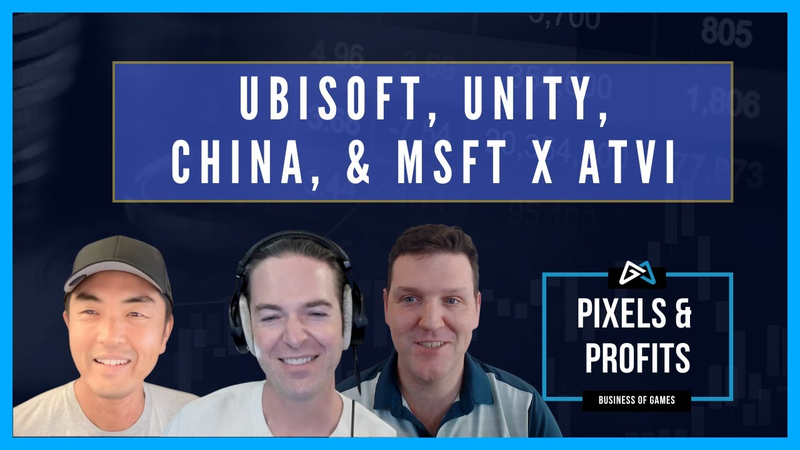
Game Industry Hot Takes: Ubisoft's Struggles, Unity's Revival, and Microsoft's Game Pass Gambit
The global gaming industry is currently navigating a period of intense structural volatility, characterized by the decline of legacy development models and the struggle to integrate massive acquisitions.
- Ubisoft faces significant operational challenges, with analysts suggesting the company should pivot to a leaner model focused on its core Assassin's Creed franchise rather than high-budget, underperforming titles like Star Wars Outlaws and Avatar.
- Unity is undergoing a corporate turnaround under new leadership, marked by the strategic decision to eliminate controversial runtime fees to stabilize its 70% market share in game engine technology.
- AppLovin has emerged as a dominant force in mobile advertising, generating $1 billion in quarterly revenue and demonstrating strong free cash flow that positions it as a high-growth, maturing tech entity.

Week in Mobile Games E33 - Destiny: Rising heads to mobile and Unity's charm offensive
The mobile gaming industry is currently navigating a period of significant structural and strategic realignment.
- Genshin Impact has solidified its market dominance by surpassing $5 billion in mobile revenue within the Chinese market.
- Bungie and NetEase have partnered to develop Destiny: Rising, a strategic entry into the mobile shooter market, though analysts express skepticism regarding its potential for global blockbuster success.
- Unity is attempting to rebuild developer trust by launching Unity 6 and formally canceling its controversial runtime fee following a period of significant internal layoffs.

Session: Multiplayer Mastery: Key Considerations for a Successful Start - Robert Boehm, Photon.
Effective multiplayer game development requires strategic planning and a deep understanding of network architecture before production begins.
- According to the 2024 Unity Gaming Report, only 62% of game studios perform formal planning before beginning multiplayer production, a critical oversight given the technical complexity involved.
- Multiplayer game architecture requires managing latency and jitter through fundamental netcode techniques, including snapshot interpolation, client-side prediction, and lag compensation, to ensure a playable experience.
- Choosing the correct network topology is essential for project success; options include state synchronization (for general objects) or deterministic engines (for specific genres like fighting games or racing sims).

Curated Panel: Behind the Game: Strategies for Building the Tech That Powers Today’s Top Titles.
Modern game development necessitates a strategic shift toward early-stage commitment to live-service models, where technical infrastructure and monetization strategies are integrated into the initial prototyping phase.
- Building internal tools carries significant long-term maintenance overhead and documentation requirements, making third-party middleware the preferred choice for most studios unless the technology is a core strategic differentiator.
- Live operations require distinct skill sets and team structures compared to the incubation phase, with successful scaling often necessitating a transition from small, multi-functional teams to specialized groups focused on content, scheduling, and live service management.
- Modern game development requires integrating live-ops and service-experience infrastructure into the project from the very beginning, rather than treating them as post-launch additions.

Game Tech: The Hidden Force Behind Gaming’s Challenges and Opportunities
The gaming industry is currently undergoing a critical transition as traditional development models struggle to meet the demands of modern live-service environments.
- Legacy monolithic architectures designed for static releases are creating systemic dependencies that force unsustainable headcount expansion to maintain production velocity.
- High-performing studios are transitioning to modular, loosely coupled architectures and DevOps practices to achieve the iterative workflows necessary for live-service stability.
- Investors are increasingly prioritizing studios that utilize microservice backends and automated testing to mitigate bug-related costs and improve profitability.

Building a Creator-Focused 3D Engine with Hiber
Hiber aims to democratize 3D world creation by providing a lightweight, browser-based engine that removes the technical barriers associated with traditional game development.
- Hiber has scaled to 6.5 million user-generated worlds and 1.2 million creators by utilizing a lightweight, browser-based engine that removes the need for large downloads or complex coding.
- The platform enables a direct-to-consumer model by allowing brands to embed 3D experiences directly into their own websites, bypassing high revenue commissions typically charged by major app stores.
- Hiber’s user base is evenly split between the United States and emerging markets, with a primary demographic of users aged 13 to 18.
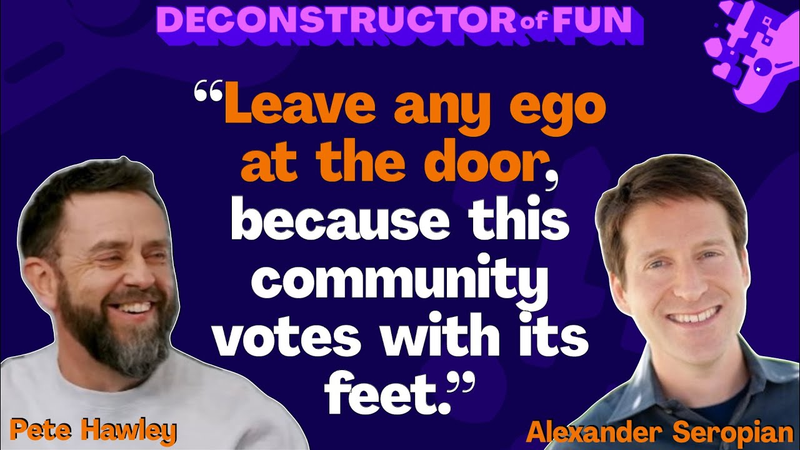
UEFN Magic and Frustrations with Game Industry Legends
The Unreal Editor for Fortnite (UEFN) represents a fundamental shift in game development, functioning as a high-velocity environment that allows creators to bypass the multi-year production cycles typical of AAA gaming.
- UEFN enables rapid prototyping by bypassing traditional multi-year AAA production cycles and leveraging Fortnite’s existing player base as a distribution platform.
- Successful UEFN islands can achieve up to 90% return on investment due to significantly lower server and user acquisition costs compared to standalone titles.
- The platform currently operates as a power-law market where success is driven by community-centric, social-first experiences rather than traditional top-down development models.