Game Engines reports and market data
Documents
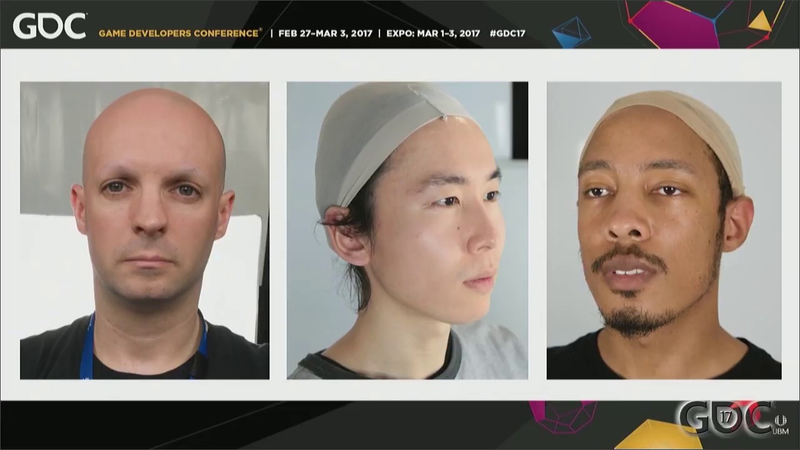
Achieving High-Quality, Low-Cost Skin: An Environment Approach
Square Enix has pioneered a transformative approach to character skin rendering by applying environment art principles to character design.
- Square Enix reduced character sculpting time by 40 percent by shifting from custom-sculpted 4K micro-detail maps to a tiling texture system.
- The new workflow utilizes generalized human pore patterns and tiling textures to maintain high-fidelity skin rendering while eliminating the need for unique, memory-intensive high-resolution assets.
- Artists use vertex painting to blend shared detail textures, allowing for granular control over skin elasticity and age without requiring changes to the underlying technical foundation.

High Dynamic Range Color Grading and Display in Frostbite
The Frostbite engine has undergone a comprehensive architectural transition to modernize its high dynamic range (HDR) pipeline, moving from legacy methods to a flexible, clean-sheet approach.
- Frostbite transitioned to a new HDR pipeline that decouples creative color grading from display hardware, ensuring visual consistency across diverse HDR10 and Dolby Vision devices.
- The engine adopted the ICtCp color space, which effectively separates saturation from brightness to eliminate hue-shifting artifacts in high-intensity lighting and mid-tones.
- By shifting tone mapping to the final stage of the rendering pipeline and isolating UI elements, the engine maintains artistic intent while scaling across varying hardware capabilities.
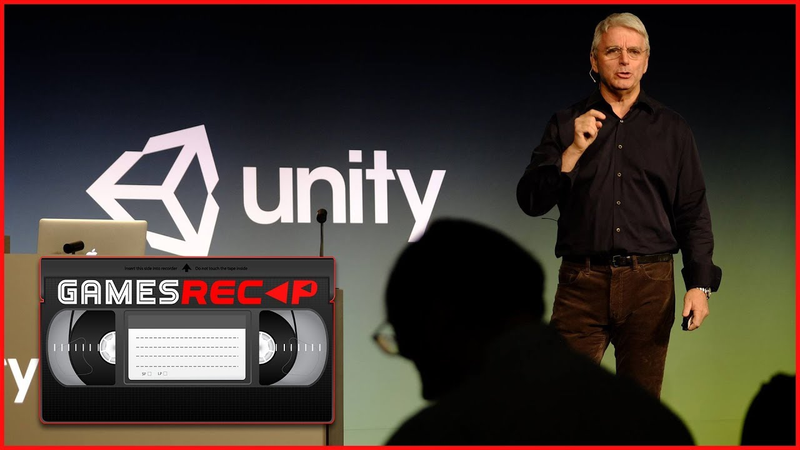
Unity IPO | Games ReCAP Episode 028
Unity has achieved a $6 billion valuation following a $525 million investment round, positioning the company for a potential public offering in early 2020.
- Unity has secured a $525 million investment round, resulting in a $6 billion valuation and setting the stage for a potential IPO in early 2020.
- The transition to a public company will likely force a shift toward aggressive monetization strategies, specifically targeting revenue growth through the Asset Store and adjustments to licensing fee structures.
- Unity must expand beyond its core mobile and indie gaming markets by positioning its engine as a foundational platform for real-time simulations in industries like aerospace and smart technology.

How To Make A 2D Game (Unity Basics)!
This analysis explores the technical architecture and development workflow of a 2D side-scrolling game, specifically focusing on the Unity engine implementation of a project titled Once Upon a Coma.
- Performance on hardware like the Nintendo Switch is optimized by using screen boxes to deactivate objects outside the player's current view, significantly reducing GPU and CPU load.
- High-resolution Photoshop assets can be reduced to under one megabyte without noticeable quality loss by using Unity’s crunch compression for PNG exports.
- Visual depth in 2D side-scrollers is achieved through an orthographic camera system that calculates parallax movement speeds based on an element's position on the z-axis.

Haxe: The little known secret to scalable, cross-platform game creation
Haxe is presented as a powerful, open-source, cross-platform programming language and development toolkit that serves as a viable alternative to more mainstream game engines.
- Haxe is a cross-platform toolkit that translates a single codebase into multiple high-level languages or bytecodes, enabling deployment across web, mobile, and console platforms without proprietary vendor lock-in.
- The language supports high-performance development through specialized frameworks including OpenFL, HaxeFlixel, Heaps, and Kha.
- Haxe has been used to develop commercially successful titles such as Dead Cells, Papers, Please, and Northgard.

Prototyping Your Game With A Gamepad (Adobe XD Tutorial)!
Effective game development requires seamless collaboration between technical developers and creative designers to prevent miscommunication and wasted production time.
- Adobe XD allows developers to map physical controller inputs, such as D-pad directions and action buttons, directly to menu navigation triggers for real-world UX testing.
- Using 1920x1080 artboards in Adobe XD ensures prototypes align with the standard display resolutions of major gaming platforms, including Steam, Nintendo Switch, PlayStation, and Xbox.
- The software’s auto-animation feature creates fluid transitions by automatically interpolating changes in scaling, opacity, and position between identical object groups on different artboards.
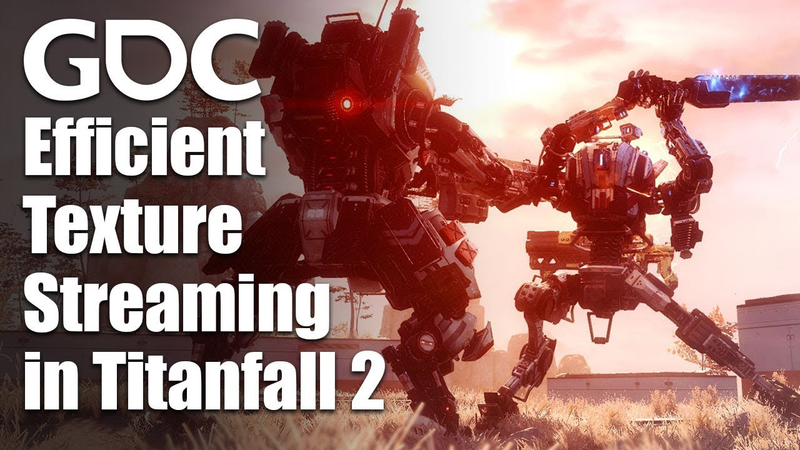
Efficient Texture Streaming in Titanfall 2
Optimizing texture streaming in Titanfall 2 centers on a sophisticated prioritization system that moves beyond simple distance-based metrics to ensure high-fidelity visuals within strict hardware constraints.
- Titanfall 2 optimizes texture streaming by using a cost-benefit metric that divides pixel coverage by texel count, allowing for dynamic mip level management beyond simple distance-based metrics.
- The engine utilizes a dynamic memory buffer that achieves a 9:1 compression ratio to manage high-fidelity assets within strict console hardware memory constraints.
- Runtime performance is maintained through asynchronous I/O and a dedicated texture creation thread, which effectively minimizes driver-related hitches.
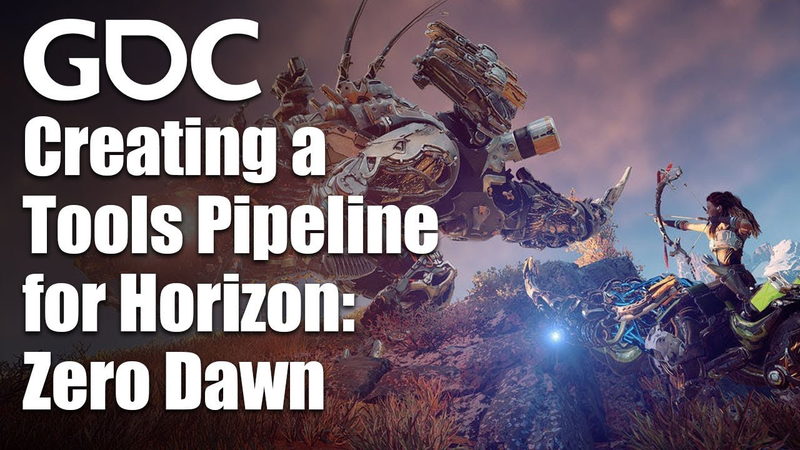
Creating a Tools Pipeline for Horizon: Zero Dawn
The development of Horizon: Zero Dawn necessitated a fundamental overhaul of legacy, fragmented toolsets to address critical inefficiencies and poor user satisfaction.
- The development of Horizon: Zero Dawn replaced fragmented legacy tools with Decima, a unified, engine-integrated environment that ensures the editor experience matches the final game output.
- The architecture maintains system stability by running the editor and game as distinct processes that communicate via a transaction-based system.
- A diffing utility automatically generates undo and redo commands, removing the need for manual command-pattern implementations while ensuring data reliability.

Let's Try: Godot Engine - Is it good?
The Godot engine serves as a viable, lightweight alternative to industry-standard tools like Unity and GameMaker Studio 2.
- Godot is a highly efficient, open-source alternative to Unity and GameMaker Studio 2, specifically optimized for 2D game development.
- The engine features a portable, lightweight design that requires no formal installation and offers rapid load times compared to resource-heavy industry standards.
- GDScript utilizes a Python-like syntax, significantly lowering the barrier to entry for developers transitioning from other platforms.

Marvel's Spider-Man: A Technical Postmortem
The development of Marvel’s Spider-Man centered on the challenge of rendering a dense, high-fidelity Manhattan while maintaining a consistent 30 frames per second.
- The development team reduced the memory footprint per city tile from 20 megabytes to under 12 megabytes by implementing advanced asset management and runtime calculation techniques.
- Engineers utilized a grid-based streaming system that loads geometry and textures based on player proximity and velocity to maintain a consistent 30 frames per second.
- The engine manages 600,000 city objects using a 'hibernate' system to ensure visual density without degrading performance.

Tree's Company: Systemic AI Design in Just Cause 3
The systemic design of artificial intelligence in Just Cause 3 relies on a modular architecture that balances emergent, open-world behavior with the precise requirements of scripted mission content.
- Avalanche Studios utilized a hybrid AI architecture for Just Cause 3 that combined behavior trees for high-level logic with utility functions to rank and select optimal positions or targets based on environmental variables.
- Content designers were empowered to customize AI behavior by filling out exposed parameters in the engine, which were then dynamically read and utilized by the behavior trees at runtime.
- The team implemented modular 'micro-behaviors' as external tree objects, allowing designers to inject specific tasks—such as flying a helicopter to a point—into the main AI logic without requiring custom programming for every scenario.
Visual Effects Bootcamp: The Rise of Realtime
The rapid evolution of real-time visual effects is fundamentally reshaping the creative landscape, necessitating a shift in the professional profile of visual effects artists.
- Real-time visual effects are shifting from traditional particle simulations toward a multidisciplinary requirement for rigging, programming, and tool development skills.
- Artists are increasingly utilizing data-driven techniques like motion vector flipbooks and vertex animation textures to bake complex lighting and fluid dynamics into shaders for high-fidelity performance.
- Procedural tools and analytic simulations, such as spline-based trails and mesh-based particle systems, are replacing traditional physics-based approaches to provide greater artistic control and efficiency.