VideoThe Game Business
"Reviving Sega will be the greatest achievement in my career"
1 Jul 202527 min video
Transcript
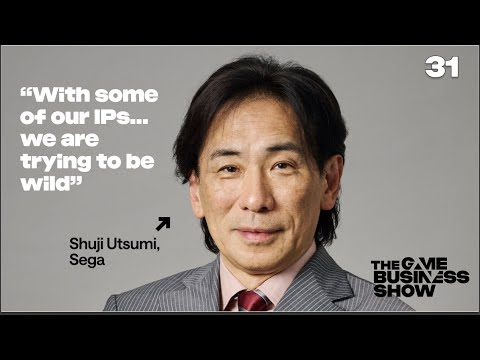
I was you know for a while with the music industry music industry is tough and movie industry is tough look at video game industry I mean the basis is still expanding so while it's getting tougher maybe for console but you know game business overall still growing I mean opportunity to reach more and more people now I'm rejoin Sega I'm uh working on reviving Sega I think I want to Hey, this is going to be my greatest achievement in my career. [Music] Hello and welcome to the game business show with me, Christopher Ding. I'm here at Sega's offices in Burbank, California, to meet with Shuji Utsumi, the CEO of Sega Europe and Sega America, where we're going to talk about all sorts of things. Sega's futures, Sega's past, Utsumi's own career, and indeed what we can make of the latest trends and goings on in the video games industry. Enjoy. Hello, Sumi Sam.
Welcome to the show. Hi. I wanted to start by talking a little bit about your career cuz you've had quite the career in video games and actually entertainment. Um, you were at PlayStation, then at Sega during the Dreamcast era, which is my favorite era. Um, you had stints at Disney and Warner Music as well. Looking back at all that, what would you say have been your biggest achievements? Well, I've been in this uh business roughly 30 years already. And my first encounter in the video game business was to write the business plan for video game business slash, you know, PlayStation business for Sony. Wow. and I was the first two employees at Sony Computer Entertainment of America. And during that time there are so few people. So I was playing like a corporate guy to third party relation to product acquisition. So I started up the Sony's localization group, producing
group for acquisition and then I, you know, I'm proud that Richer Bundo is was my deal. So for the PlayStation launch. Wow. And then afterwards I I joined the Sega, right? And then I was in charge of first party of a Dreamcast product including uh uh Sonic Adventure, Space Channel 5, Crazy Taxi, just a radio. It's my favorite. So yeah, I mean I I've been proud of it, but I don't want to say that's the greatest achievement in my career. Afterwards, I was with Disney. I've been doing Kingdom Hearts deal and also I started my own company with my partner uh Tatsy Mizuguchi doing Luminous and Metros game. At that time Luminous was number one Metacritics on PSP and then Metas was number one critics you know figures
for uh Nintendo DS. But I want to say the, you know, getting back to your question, now I'm rejoining Sega and I'm working on reviving Sega, you know, and I think I want to say this is going to be my greatest achievement in my career. Greatest achievement is still to come. Well, well, let's talk Sega then because actually it feels like there's been a bit of a good run. There's been some interesting hits and in the movies as well. It's been a busy year actually for Sega. Um, what are you finding that's working for you at the moment? Um, what have been your biggest recent successes at Sega? Yeah, there is a series of good incidents coming up. Uh, like you know the good hit from of course Sonic thanks to the you know movie and also we are reviving Persona very well and also Yakuza is like a dragon series getting
to be really good. So I I would say generally I mean the reviving Japan studio is constantly helping us compared to the past you know better you know uh results. What's caused that revival in Japan? What's what's the cause of it? It's not just Sega. It seems to be happening across the whole of Yeah. For some reasons, when I joined Sega, rejoined Sega, the Japanese studio was somehow paying attention to the domestic market like a Japanese market more even though Sega is such a beloved company among western audience, you know, they were, you know, somehow paying very small attention to these kind of audience. Okay. So we change hey the kind of attitude to let's say uh hey the whole gamers in the world uh audience. So in the system wise we decide to have
you know a Japanese and also global title international title launching at the same time and then having all platform including PC at the same time and then you know trying to prepare marketing document whatever for the international market at the same time. So once you know in the past we just Japan first video game first then moving into you know uh global market. So by changing the system studios started to think oh we have to prepare in the early stage. So that that somehow, you know, helped their thinking process to develop a game because it's obviously the home of video games really and it's wonderful to see um I think the game awards there was all these Japanese games and yeah just doing so well. Well, I'm going to go back to the question asked about Sega and recent successes. But perhaps the flip of that question is what are you struggling with at the moment? Where are your where are your big challenges?
Well, we have many challenges. Mhm. Uh one of the you know biggest challenges is the uh uh gas business for us the game companies with a strong record tend to have strong gas business global console/PC standalone business is getting to be better but we are still working on making that gas business global so that's uh one of the big challenges another challenge is maybe trans media I mean we we taking a shift to trans media business which is like you know outside the video game we are trying to strengthen the business through licensing and also working with the uh movie folks and TV folks music folks to expand the audience having a deeper engagement to fans so that business we is going well but still we just you know
strengthening that you know efforts So the these are the current big challenges. I'll ask about the trans media stuff in a moment, but so the the gas the sort of games as a service stuff. Um what are you doing there to try and that's a really difficult market. It's a really competitive market. Exactly. That's a challenge. That's why we I call challenge. So, so for example, we acquired the company called Roio, Angry Bird company and then they have deep knowledge of uh global mobile business and they they have very strong IP like Angry Bird. So we we somehow feel like the fit between the companies like Robio and Sega uh is good and then actually we are working closely to have Sonic mobile game working closely with Robio right now and then we are giving them to have access to our IPs including Sonic to
come up with yeah nice welcoming uh gas titles. It's it's interesting obviously because Sega used to be in many ways one of the pioneers in this space with games like Fantasy Star and um and and I remember Football Manager online all these sort of things. Um it's always been there but it's obviously you know they're so these big live service games are so big now. Um well I'll ask about actually I'll ask about the Sonic movie obviously because he's he's he's a he's a movie star now almost more than a games uh icon. Um, how have you found translating the success of the movies though back to the games? Is that have you been have you been successful there do you think? I mean the movie success really giving us a nice impact to video game business. The movie definitely expand the uh fan base. So now Sega is as you just mentioned getting me a star game. So uh yeah the movie business
really help us our business on the video game side. Also lots of companies have different approaches. Some people do lots of activity around the movies to promote the games and some people sort of let it breathe itself and and it's really I think we're all still it seems some companies are still trying to work that out but you've been doing the Sonic movies for a while now on to the third one. service. A lot of people look at the Sonic movie and what you've done there as almost an example for the rest of the industry at the moment. Um, right. It's not really a question, but it is. Yeah. I mean, what's really interesting is, you know, I mean, when I just started to be get involved in the video game business, I was I picked up the game called Crash Bandicoot. And then actually we are asking some of the movie you know studios if they they are interested in that property into the movie but I was treated like a hey this this is like you know video game was like a toy business like you know they
didn't really take it serious and then at that time the f you know big movie is getting to the video game business like you know a whole Disney you know character based uh movie was you know brought into video game you know during that time now game IP is getting to the uh you know movie business I'm translating the video game is getting to be the culture finally and then that big culture is moving into the uh movie so I see the really you know big shift of the industry that's I'm really happy about I was on BBC radio um a couple of weeks ago around the Minecraft movie and the presenter of that show said to me, "Is the games industry queuing up at Hollywood store to get games turned into movies?" And I replied, it was a beautiful setup. I replied with, "No, it's the other way around. The movie
industry is queuing up." Exactly. The games industry. And it reminds me, I spoke to Tom Kolinsky last year around um uh talking about the age rating situation in the 90s and he was talking about how the movie industry wouldn't help with the age rating situation because they were like they saw us as this toy industry and I thought it was quite quite how how times have changed. Um there were so many different Sega games. So there's Sonic and then there's Football Manager and there's Total War and there's Persona. How would you describe Sega's identity in 2025? I mean uh that's a good question because I'm trying to somehow you know figure it out what would be the best way but you know I see all these kind of studios I mean I was with the music industry for a while so I see these kind of you know group of people like a label manager persona yakuza like a dragon I mean all these you know production line like a label like you know kind of uh you know different kind of art direction
attitudes and also uh uh you know culture but what's really common is attitude toward the quality and also attitude toward the kind of personality and creativity we encourage them to be somehow in any you know I mean IPS pushing the kind of edge trying to be something new trying to to provide the audience new simulation so that's the kind of value that we like to have a common Sega I guess is the one to always somehow empower the gamers to really stimulate and challenge their norm. So that's how I see SAG. That's how you see Sega. You've talked in the past about wanted Sega to take more risks, but game costs are so high and they're continuing to rise. How do you balance that pressure amongst the
desire and the ambition to take bigger bets? Um yeah, how do you do that? Well, I mean uh Seda is unique in a way that we have many IPS and many studios uh dealing with the uh different you know different kind of uh IPs in a way to me like a management point of view it's like a portfolio. So we have some solid you know business line you know taking less risk I mean like you Sonic of course production base is getting bigger but somehow you can count on sorry return but some other IPS we trying to be wild it's higher risk but potentially higher return so it's like a you know IP port for while having a common infrastructure and then you We are having a a a trans media and also strong title that gives you a longer tail. So
having a high quality game is in the end in ending up giving you a more stable revenue in the future. So that's the kind of attitude that we are having I guess as well if you deliver a game that has that quality you can do movies and all of those sort of expansions like you've done with with Sonic. And then Sega is a a kind of a getting attention from uh you know this Hollywood you know uh group of people. So providing right product I mean the game business you get attention. So that's our belief right now. You're continuing to invest in older IP as well. Thankfully you mentioned some from the Dreamcast era that I'm excited to hear come back. But how careful do you have to be to ensure Sega doesn't just become a nostalgic retro business? Yeah, I mean uh that's another really good question because this is something we I'm always talking to studio de you know developers while we caring for lore of the product we
need to be innovative at the same time to really attract the new audience. Luckily nowadays everything around 2000 year 2k is getting to be hop again hip again. Yes, it's a good tailwind for us but at the same time that means we need to have some good elements I mean new elements including the game. So developers I mean uh I believe you know they they understand you know both nostalgic element element and new element is important so that it's understanding of the developers of the market is the key. Yeah, and I have to say I'm excited that you're reinvesting in so many um older brands from a somebody you talk about there's this theory Matt was a Sega person that said it to me that nostalgia works about 20
30 years in the past right so anything you know people who are in their 30s perhaps in their 40s they start being nostalgic for their youth and that's what gets them to go back which is the reason why I guess early naughties early 2000s stuff is doing doing so well at the moment there were a lot of games you mentioned Jet Radio for instance that Sega worked on at the time that I think should have done better I think perhaps might do well in a games industry today. So I guess even though it is nostalgic, it is retro, maybe these are things that might have a a better chance in today's market, right? It's a very broad question this one. Where do you see the growth opportunities in video games today? There are many areas for growth. I mean emerging countries now you know everybody plays video game including mobile games. So in the past we don't even think about Middle East as a market but the emerging markets for the video game and Africa is of course India of
course emerging markets. So that's why we are pushing a global initiative because distribution wise reaching them the market is not that difficult. It's just digital. So that's one market and also video game is getting you know more mass. So even when we started the PlayStation we didn't take a female as a kind of seriously a game market. But nowadays even my you know my mom doesn't play video game but but my sister of course you know play you know video games. So I mean everything is changing so the market is you know generally growing but core side is getting to be tough because you know there are so many games around so you need to be really have a high standard. So that's that's a really a big challenge. I've been seeing um and it's easy to say this. You can
look at the games that have been successful and there'll be lots of games that haven't been successful. But I'm seeing games that are quite that have a focus on a specific audience that if you do a very good job of that, you might end up breaking out and reaching more and more people. We saw that recently with um Expedition 33, for instance. And I think this really plays to Sega's strengths cuz most of your games are very aimed at a very specific audience. You do a very good job of that and then they reach people who perhaps never even considered that sort of thing. Yeah, that's really I'm happy that to hear that because we are targeting some specific audience in a deeper way. M you think this is specific but if it goes deep then sometimes you have a chance to goes bigger. So rather than targeting huge group of audience we rather target you know kind of narrow but deep and then try to expand yeah
from them. Yeah. And with DA we've seen a lot of games do that very well. Well let's let's talk about the Nintendo Switch 2 has just launched. How many games do you It's well your totally six games right now. Six five six games. Yeah, three launch wise three but but uh you know we are I don't know how how many uh uh games we have announced but uh there are lots of games coming up. Yes, you've supported it in a big way but the console market seems to be going through a bit of a tough moment. How are you feeling about it the console market broadly? Yeah, I mean broadly I mean since I was uh you know launching member PlayStation I I have a big attachment to console business and Nintendo has been playing amazing role and they have achieved a lots of Jesus I mean a great contribution to this area I didn't switch one to be that successful nobody
did nobody did right but saying so the big huge trend like a PC PC has a reach of a global market and mobile of course technology base in terms of graphics you know it's getting better and better so I want a console to stay longer bigger but the big trend wise it's not easy easy time I guess I still see consoles as being that interim like people who may start off on mobile, maybe Angry Birds, maybe Sonic on mobile, where do they go from if how do we turn them into sort of gamers who want a slightly more, you know, hardcore experience perhaps? They don't necessily jump straight to PC. There's there's that that's the role of PlayStation and Nintendo and like like as I said, I mean game is getting to be a culture. So you you play in many different kind of styles like sometimes
you want to you know relax and play in the living room having a big screen that's one way sometimes you want to do to kill time uh you know playing mobile games and PC game you know you sit in front of a desk and you want to do something serious blah blah blah so I mean game has a lots of way to give you a different way to spend time and enjoy. So among all these kind of activities, console I want to believe is going to give us a very nice, you know, uh, opportunity to enjoy the game, you know. I do know it's it's just a very tough Yeah. market at the moment. It's almost unpredictable. We've been here before, though. I was told handheld gaming was over. Then the Switch happened. It was only 20 15 years ago. Everyone told me PC gaming was over. Yeah, you find these things come around and it is it is just very challenging out there I think for every games company. Yeah, but you say so like I was you know for a while with
the music industry music industry is tough and movie industry is tough. Look at video game industry I mean the basis is still expanding. So while it's getting tougher maybe for console but you know game business overall still growing I mean opportunity to reach more and more people. So you know game business is has been evolving with the evolution of the technology. So I'm uh optimistic about it. We're all competing for that time aren't we? And there's just not enough of it. Yeah, I had a couple of other questions, but we kind of talked about them, which is talking about the challenges in the market at the moment. We've kind of I think covered most of them. Um, is there any other um challenges in the market that you're seeing that you've got any um viewpoints on? You have already sort of answered this question. Well, always there are good titles coming up, there are good entertainment coming up. So
building the fan base and then keeping their you know fan trust and attention in the longer term is a challenge. So that's why we have a trans media we have some other you know way to reach the audience because the game company entertainment companies are fighting for the time fighting for the fan base. So that's a challenge. There's a Sonic game in Roblox. Am I have I got that right? Yeah. Yeah. And that's the sort of thing I guess as a way of reaching people but also keeping them engaged in the franchise, right? Exactly. So Roblox younger audience I mean we want to reach them then I you know ideally we want them to get in the video game business you know movie side maybe also. So I mean having that engagement of the IP is our challenge and then we are trying to have that kind of design and environment
for the IPS these days. They're all different entry points, right? You could come in via Roblox, come in via the movies, you could come in from the games, could be from anywhere like mobile. Yeah. And mobile of course. Well, I ask one more question then is where would you I often say where would you like to see yourself in 10 years but that seems so far away. And where would you like to see Sega in in 5 years? Right. Well, right now I think Sega is uh regarded as a a video game company and then I really like to revive you know I mean Sega's spirit like sometime around 2000 sometime even like 80s you know we are regarded as a very cultural company like you know I I believe Sega is a company to you know bring rock and roll if you compare to the m to the music industry. I mean Tom Karinsky, he did a pretty good job, you know, to really, you know, impress the audience. Hey, Sega is kind of new way of dealing with a video game. So, uh, arcade
business, we've been really having a mindset of rock and roll, trying to provide always new stuff. Nowadays, Sega, we want Sega always trying something new and different at the same time, respecting the old times too kind of nostalgic audience. So in a way I want to see five years later we know Sega as a kind of IP companies, game companies with the kind of a mindset that people would feel like, oh this this company is really empowering the gamers. Wow. Well, I I hope so. And I I think you'll get I think that's I I don't know. I think Sega is a little rock and roll still. Yeah. Yeah. I hope so. I hope so. I think games, you know, whether it's metaphor or um uh even Sonic has a certain uh punky vibe. Um I mean even even what's funny is Angry Bird having that kind of attitude too.
So So we that's why one of the reason why we you know asked them to join our group. Yeah, it's a good fit. Well, thank you so much. Thank you for joining us and I hope you enjoy the rest of the show. Yeah, thank you Chris. Thank you. Thank you. Thank you. Thank you.
Auto-generated captions from YouTube — names and numbers may be misheard.



















Comments