Game Development reports and market data
Documents

Latest Go-To AI Stack For Solo Mobile Developers: Claude Code & Nano Banana
The modern landscape for solo mobile and game developers has been transformed by the integration of advanced AI coding agents and specialized image generation models.
- The primary challenge for solo mobile developers has shifted from technical execution to marketing and user acquisition, as AI tools now handle the bulk of development labor.
- Claude Code functions as a terminal-based coding agent that automates project scaffolding, file management, and real-time debugging, eliminating the need for manual copy-pasting.
- Nano Banana provides high-speed, high-fidelity image generation for game assets and UI components, accelerating the prototyping phase of development.
How I Would Start Game Development (If I Started Over)
Aspiring game developers should prioritize the cultivation of a unique creative identity over the passive consumption of industry content.
- Prioritize the development of a polished vertical slice over traditional gray-box prototyping, as the initial fifteen minutes of gameplay are the primary determinants of long-term commercial success.
- Anchor project development on a core hook that aligns with your specific personal strengths in art, narrative, or atmospheric design rather than chasing fleeting market trends.
- Secure exclusive rights to custom music to ensure streamers and content creators can monetize gameplay footage, which is essential for driving organic discovery.

The TikTok of Games
The instant gaming market is undergoing a fundamental transformation, shifting toward low-friction, snackable experiences that prioritize rapid iteration over the high-cost, formulaic models of traditional AAA studios.
- Remix.gg functions as a platform for instant, zero-install games that leverage AI to democratize game creation, allowing users to build and launch titles in 5 to 10 minutes.
- The platform targets Gen Z and Millennial audiences by focusing on snackable, culturally relevant content that mirrors viral trends, such as TikTok memes or real-world events.
- Creators on the platform have already earned tens of thousands of dollars through game jams, with plans to integrate tokenization to further scale monetization and reward systems.
How To Actually Finish Making Your Game
The primary challenge for many independent game developers is the inability to transition from building prototypes to completing full-scale commercial releases.
- Transitioning from prototype to commercial release requires shifting from initial concept excitement to long-term strategic planning and emotional resilience.
- Developers must select projects they are genuinely passionate about to sustain the deep personal investment required for multi-year development cycles.
- Establishing a concrete finish line—such as creating a Steam page, securing a publishing deal, or setting specific financial goals—is essential to transform abstract ideas into high-stakes commitments.
Build an Online Game In a Simple Database
SpacetimeDB functions as a cloud-native relational database designed to serve as an operating system for real-time multiplayer games.
- SpacetimeDB is a real-time relational database that integrates directly into a program's memory, eliminating the need for network serialization and deserialization between the application and the database.
- The architecture allows game clients to act as read replicas of the server's state, enabling developers to build admin tools, AI agents, or third-party integrations without writing additional server-side code.
- By executing code in a transactional context directly alongside the data, the system simplifies infrastructure and reduces latency compared to traditional client-server models.
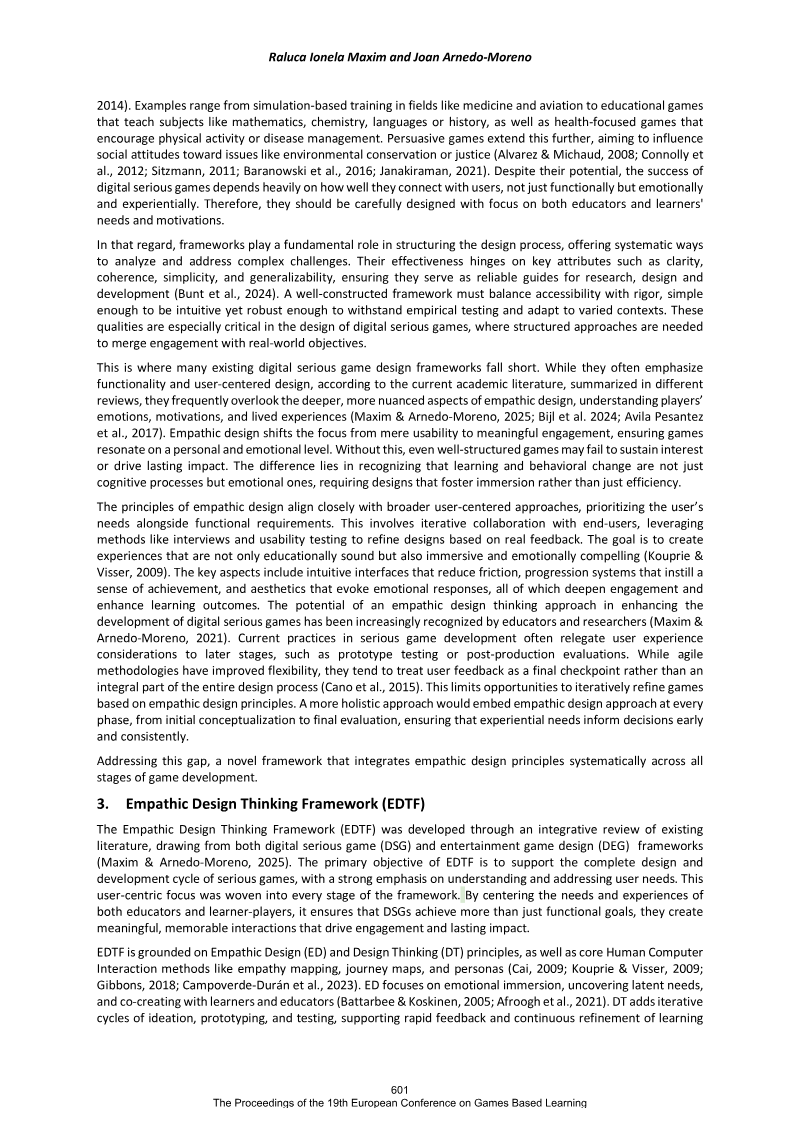
Expert Validation of an Empathic Design Thinking Framework: For Digital Serious Game Development
The Empathic Design Thinking Framework (EDTF) is a ten-phase, user-centered model for developing digital serious games, distinguished by its integration of co-design and iterative user research across the entire development lifecycle rather than only at late stages.
- The Empathic Design Thinking Framework (EDTF) is a ten-phase, user-centered model for digital serious games that integrates co-design and iterative user research across the entire development lifecycle, rather than only at late stages.
- Eighteen serious game developers and designers evaluated the framework through design science research, rating it 4.5/5 for usefulness, 4.2/5 for comprehensibility, 4.3/5 for ease of use, 4.0/5 for usability, and 3.8/5 for feasibility.
- Reviewers especially praised the framework's phased structure and iterative testing, with the Empathize and Iterative UX Evaluation phases receiving particular approval.


A Co-Design Protocol for a Serious Game Supporting Emotion Regulation in Children
This document presents a protocol for developing a serious game (SG) that aims to build emotional knowledge and emotion regulation (ER) skills in school-aged children, specifically those aged 6 to 9.
- The report is a protocol, not a completed study, so it presents no empirical results; its expected outcomes (enjoyable, educationally effective play and transfer of strategies to real life) remain untested.
- Its central thesis is that co-design, with children, parents, teachers, and healthcare professionals as equal partners throughout development, can yield a more relevant, engaging, and effective digital intervention than tools built by researchers alone.
- The proposed game is a multiplatform narrative experience for children aged 6 to 9 in which players identify emotions and choose between adaptive and maladaptive regulation strategies in realistic situations, grounded in Gross's Process Model of Emotion Regulation and Ekman's framework of basic and complex emotions.

From Chance to Strategy: Advancing Educational Games About Vertebrates for Elementary Students
This study describes the iterative redesign of an educational board game intended to teach Grade 4 and older elementary students to classify vertebrates into fish, amphibians, reptiles, birds, and mammals.
- The original educational board game Amass Me, which relied heavily on dice-rolling and a dichotomous key, produced an 83.8 percent average post-test score among 29 Grade 4 students, statistically above an 80 percent benchmark, but testing exposed problems with excessive chance, limited strategy, cumbersome symbols, and long play sessions.
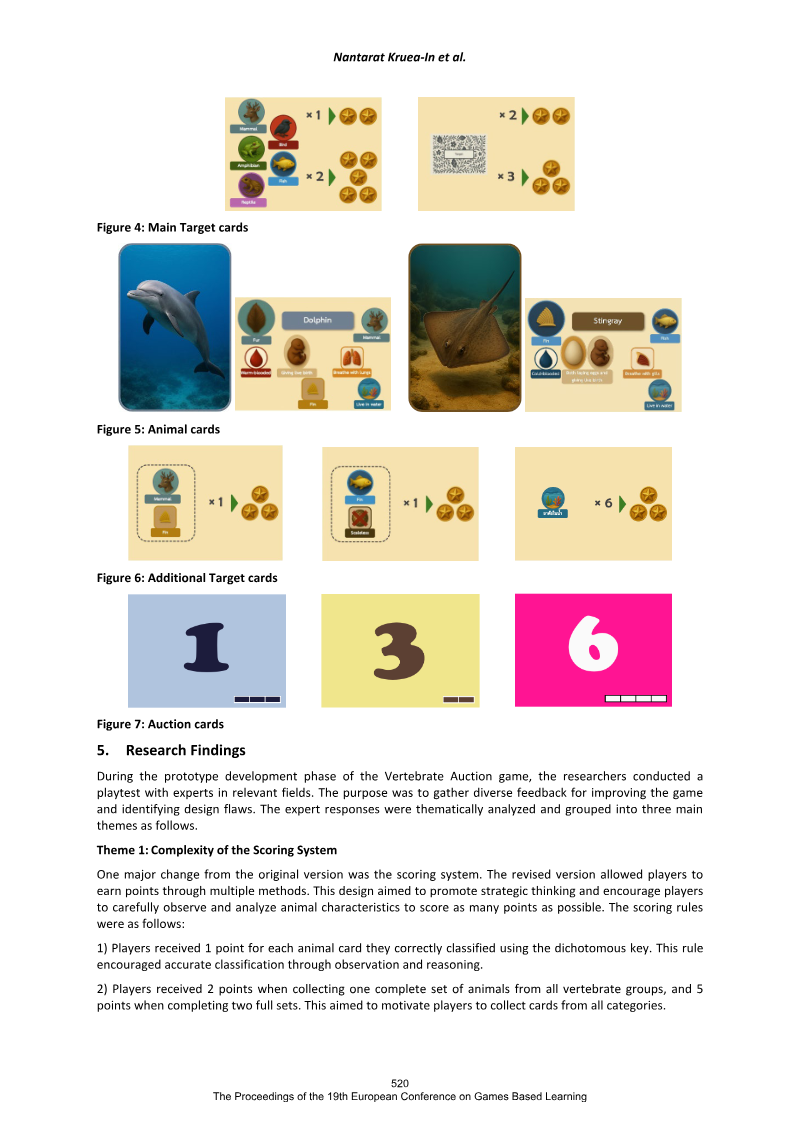
- The redesigned game, Vertebrate Auction, reduces reliance on chance by emphasizing trait observation, bidding-based strategic selection, shared target cards, and a tiered scoring system to teach classification of fish, amphibians, reptiles, birds, and mammals.
- The study used a design-based research approach across two phases, combining classroom observation, informal interviews, post-game assessments, and expert playtesting with science educators, teachers, game designers, and students aged 10 to 13.

Game Over (GO!): A Transformative Model for Entrepreneurship Education through Game-Based Experiential Learning
The Game Over (GO!) model is an entrepreneurship education approach developed at a Colombian higher education institution that uses gamification and experiential learning to have students design physical games addressing real-world and Sustainable Development Goal (SDG)-aligned challenges.
- The Game Over (GO!) model, developed at a Colombian higher education institution, uses gamification and experiential learning so students design physical games addressing real-world and SDG-aligned challenges, pairing prototyping with wildcard challenges, real entrepreneur case studies, and iterative user feedback.
- Across five course editions held between 2023 and 2025, 652 students produced 117 prototypes, with roughly 80% aligning with one or more SDGs, most often SDG 4 (Quality Education), SDG 3 (Good Health and Well-being), and SDG 12 (Responsible Consumption and Production).
- About 80% of student teams revised their designs after receiving user feedback, which the authors present as evidence of iterative thinking.



A Structured Approach for Designing Effective Serious Games for Learning: Analyzing Requirements to Derive Key Components
This document proposes a structured framework for designing serious games for learning, addressing a gap in existing approaches that do not clearly specify how concrete game components should be organized to balance educational effectiveness with entertainment.
- The paper proposes a structured framework for serious games that derives 16 functional requirements (FR1–FR16), clustered into seven categories (pedagogy, rules, interaction and communication, assessment, goals, adaptation, and representation), and maps them to concrete design components.
- Assessment and adaptation are treated as core modules of the framework because of their central role in educational outcomes and their applicability across game genres.
- The framework distinguishes structural components (game mechanics, challenges, player profiles, adaptation mechanisms) from dynamic behavioural components (assessment, adaptation, event handling) to help multidisciplinary teams align pedagogical goals with technical implementation.
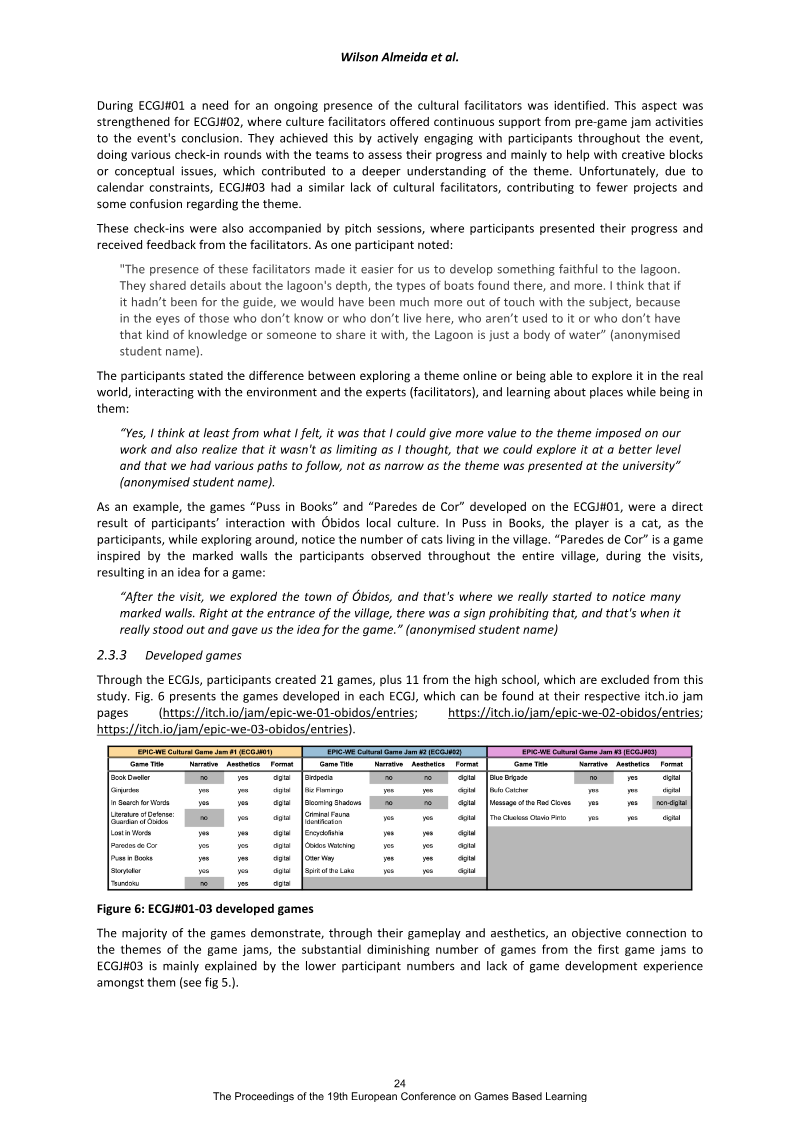
Cultural Games Creation: An Applied Game Jam Model
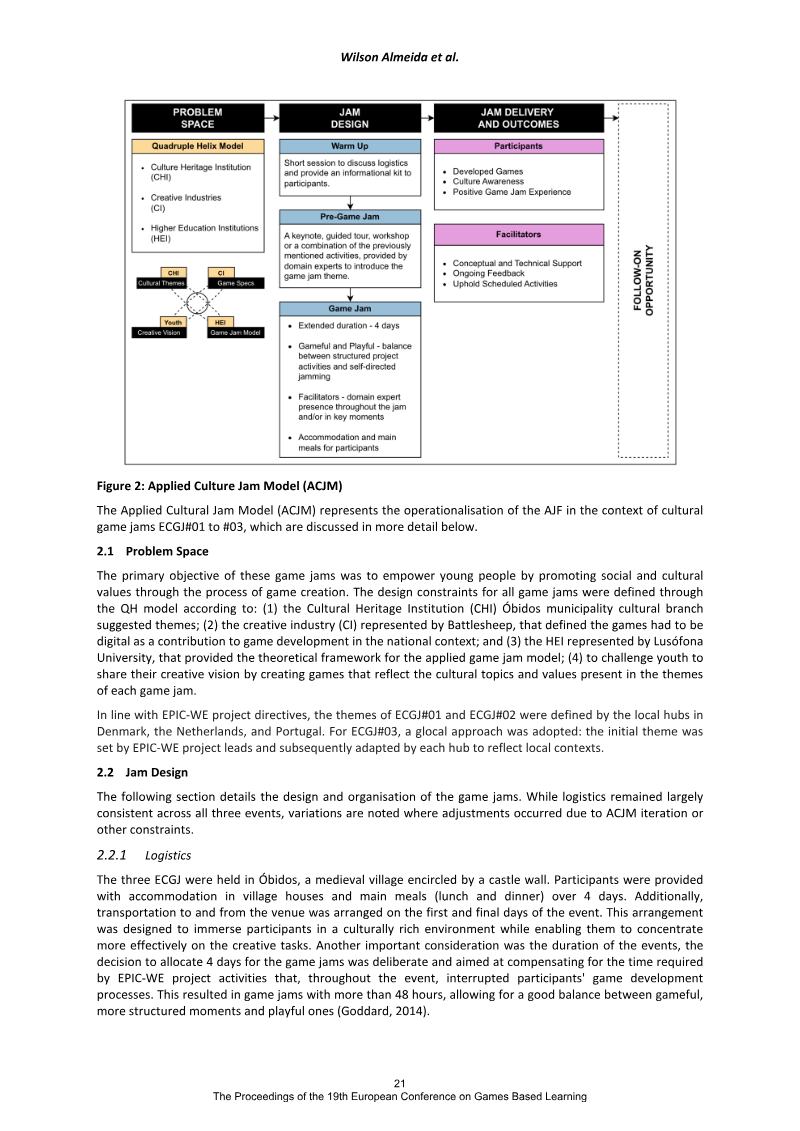
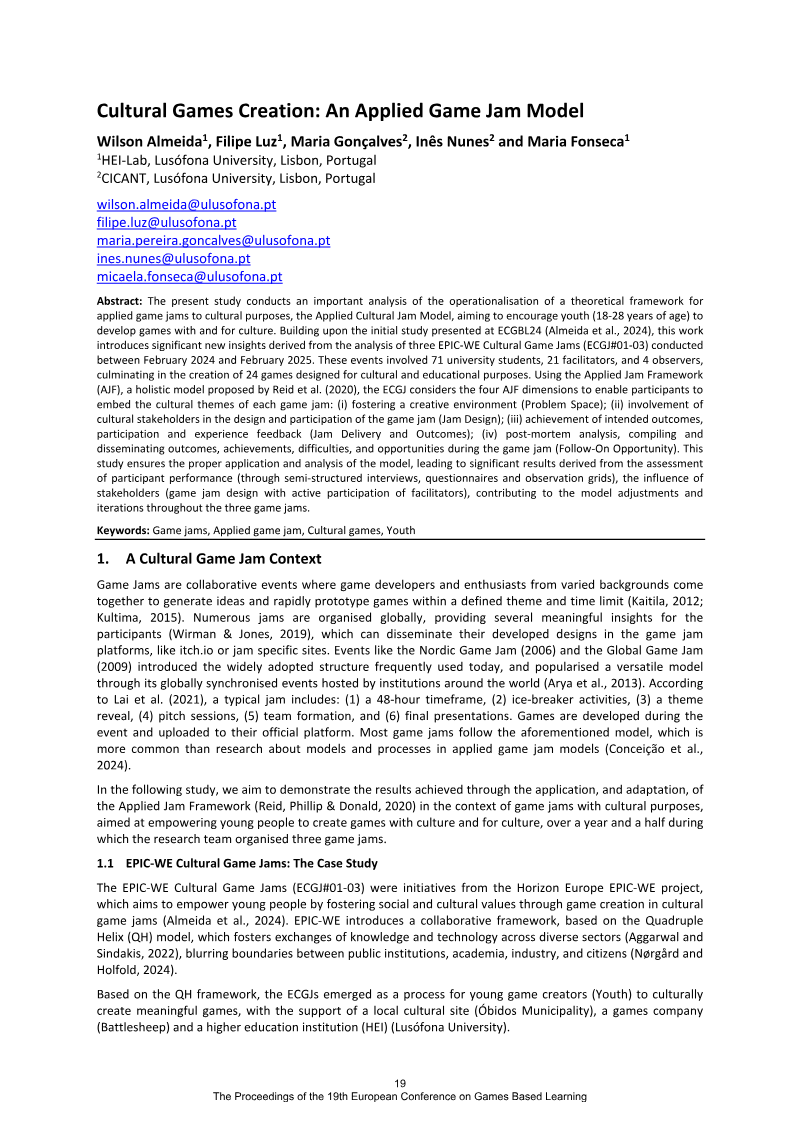
The Applied Cultural Jam Model examined here adapts the Applied Jam Framework to cultural game creation, operationalised across three EPIC-WE Cultural Game Jams (ECGJ#01–03) held in Óbidos, Portugal, between February 2024 and February 2025.
- Facilitated, on-site cultural engagement is essential to thematic depth: ECGJ#02, which had continuous cultural mentoring, produced the strongest games, while ECGJ#03, with less experienced participants and limited facilitator presence, yielded the fewest games and reduced sophistication.
- The model departs from the conventional 48-hour game jam by running four-day events with pre-game warm-ups and pitch sessions, and it relies on a Quadruple Helix collaboration linking a municipality, a games company, a university, and youth participants.
- Across three Cultural Game Jams (ECGJ#01–03) held in Óbidos, Portugal, between February 2024 and February 2025, 71 university students, 21 facilitators, and 4 observers produced 24 games.
Designing a Gamified Learning Tool for Enhancing Project Monitoring Skills in Technical Engineering Projects: An Interdisciplinary Approach Integrating Project Management and Systems Engineering
This paper proposes the design of a gamified boardgame, the Project Monitoring Game (PMG), intended to help students practice the execution and monitoring process groups of technical engineering projects.
- The paper is a design proposal for the Project Monitoring Game (PMG), a gamified board game meant to help students practise the execution and monitoring phases of technical engineering projects, not an empirical evaluation.
- The authors argue that higher education covers project initiation and planning well but rarely exposes students to the high variability of real project execution, where progress must be tracked and baselines adjusted.
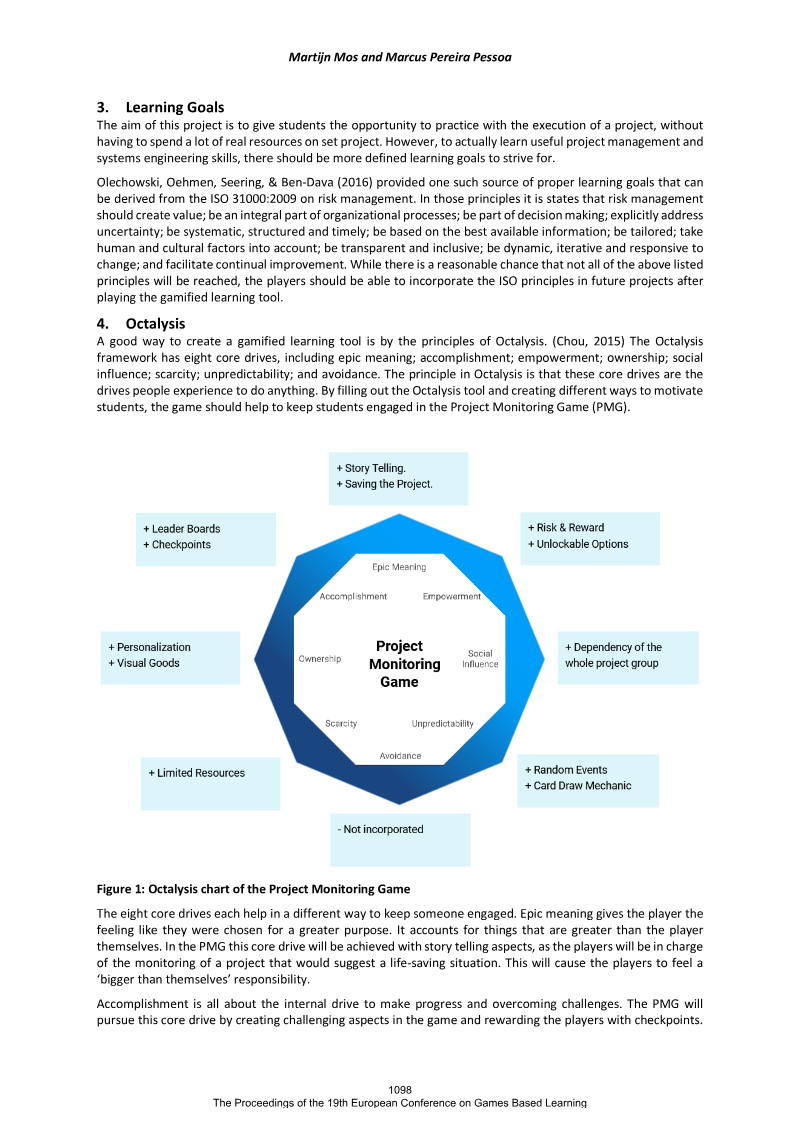
- The game's learning goals are derived from the ISO 31000:2009 risk management principles, and the design is structured around Chou's Octalysis framework, with each of its eight core drives mapped to concrete features.